Photos: D. Austin, www.daustinphotography.com
Kimberly Orvtiz Spring 2011
Photos: D. Austin, www.daustinphotography.com
Photos: D. Austin, www.daustinphotography.com

DJs and lovers of vinyl are in mourning following the closing of the Fat Beats New York City store September 4, marking the end of an era in hip-hop. After 16 years, the legendary chain known for promoting and preserving the legacy of hip-hop is closing up shop literally; the final store in Los Angeles will close September 18.
Before shutting its doors for the last time, Fat Beats provided its customers with a week-long celebration to remember. Each day during its final week the iconic store hosted a smorgasbord of hip-hop talent and legends including Ras Kass, Artifacts, Masta Ace, Just Blaze, Pete Rock, DJ Premier and Immortal Technique.
The closing of Fat Beats last location is another unfortunate example of the turbulence that has been affecting the record industry since the dawn of the digital age. But there is an open window to Fat Beat’s closed door; Fat Beats will continue to operate through its online store, www.FatBeats.com . They are also planning to open a hip-hop lifestyle location in the near future.
Photo courtesy of Duane Smith

My first introduction to David Banner was the video for “Like a Pimp,” a hodgepodge of booty-shaking women encircled by horny men and quick flashes of racist iconography. As I watched him on my screen looking like a neo Kunta Kinte, running through a cemetery of the so-called “un-segregated new south” with a shredded Confederate flag draped around his neck, my first thought was hell had ascended to Earth. Martin Luther King, Malcolm X and Jam Master Jay must have been performing 360 degree spins in their graves. Is “Like a Pimp” what the civil rights movement and hip-hop had been reduced to? Was David Banner another country coon looking to sling the musical equivalent of crack rock to the music industry and make a fast buck? What did this man really have to say?
 As I learned more about Lavell Crump, I realized “Like a Pimp” was just one half of the complex coin that is David Banner – his stage name. The persona of this Mississippi-born rapper is more than just “Like a Pimp,” “Play,” “Get Like Me,” “Cadillac on 22s,” or the writer, producer and arranger for Gatorade’s “Evolve” commercial. What I would come to learn is David Banner is one of the most profound, engaging hip-hop artists/producers in the game; he is a graduate of Southern University, a mentor, an actor (with parts in Black Snake Moan and This Christmas) and funny as hell. I also learned he is a part time New Yorker, owning a residence in Harlem.
 Although my first taste of David Banner was watching “Like a Pimp,” my real acquaintance came this summer at 92Y Tribeca. On June 29, Hot 97 radio personality Peter Rosenberg hosted a live Q&A with David Banner and 9th Wonder to discuss Death of a Pop Star, a collaborative album set for release November 9. Since the event was open to public, I decided to arrive at the venue early, but it appeared that I showed up too early. There were no long lines as I had anticipated, only a lone black man standing outside of 92Y Tribeca dressed in checkered button down t-shirt and jeans. I thought he resembled David Banner, but he wore none of the clichéd adornment associated with hip-hop artists, especially one on his level. Before I could fix my lips to say, “Excuse me, are you David Banner,” a few men joined him and they quickly entered the venue. I entered shortly after them and sat in the lobby as people trickled in, once the lobby began to fill, the small theater was opened and the audience began to claim seats.
 While waiting for the session to begin, I sat and nodded my head to hip-hop classics. In between vibing to EPMD and Big Daddy Kane, I began to question the meaning of the title Death of a Pop Star. Video Killed the Radio Star is more than just a song, it is a fact. Music videos have propelled artists into stars and created icons. What was David Banner trying to purge with Death of a Pop Star? Was he attempting to kill the pop star residing within, or was he trying to pull hip-hop back from the slippery slope of mediocrity that has been on heavy rotation on most major radio stations and music networks? The music stops, David Banner, 9th Wonder and Peter Rosenberg take their seats on stage and my questions will soon be answered. “Actually I had come up with the idea where I wanted to do something similar to the Actor’s Studio for rappers. I feel that since I’ve been doing this album with 9th Wonder, people out there feel like all of a sudden David Banner can rap. But I feel like I’ve been rapping all the time,” he explains.
“I think [it’s] because of our strong 808 presence, our southern drawl and the things we talk about are not on TV, so they are not commonplace. If I say something about Mississippi, people have no point of reference. So I was thinking if [9th Wonder and I] did an Actor’s Studio, people would have the opportunity to hear what I was saying. Charley Greenberg does my internet marketing and he said that Peter Roseburg does something similar, so we put our ideas together so we wouldn’t have to recreate the mold.”
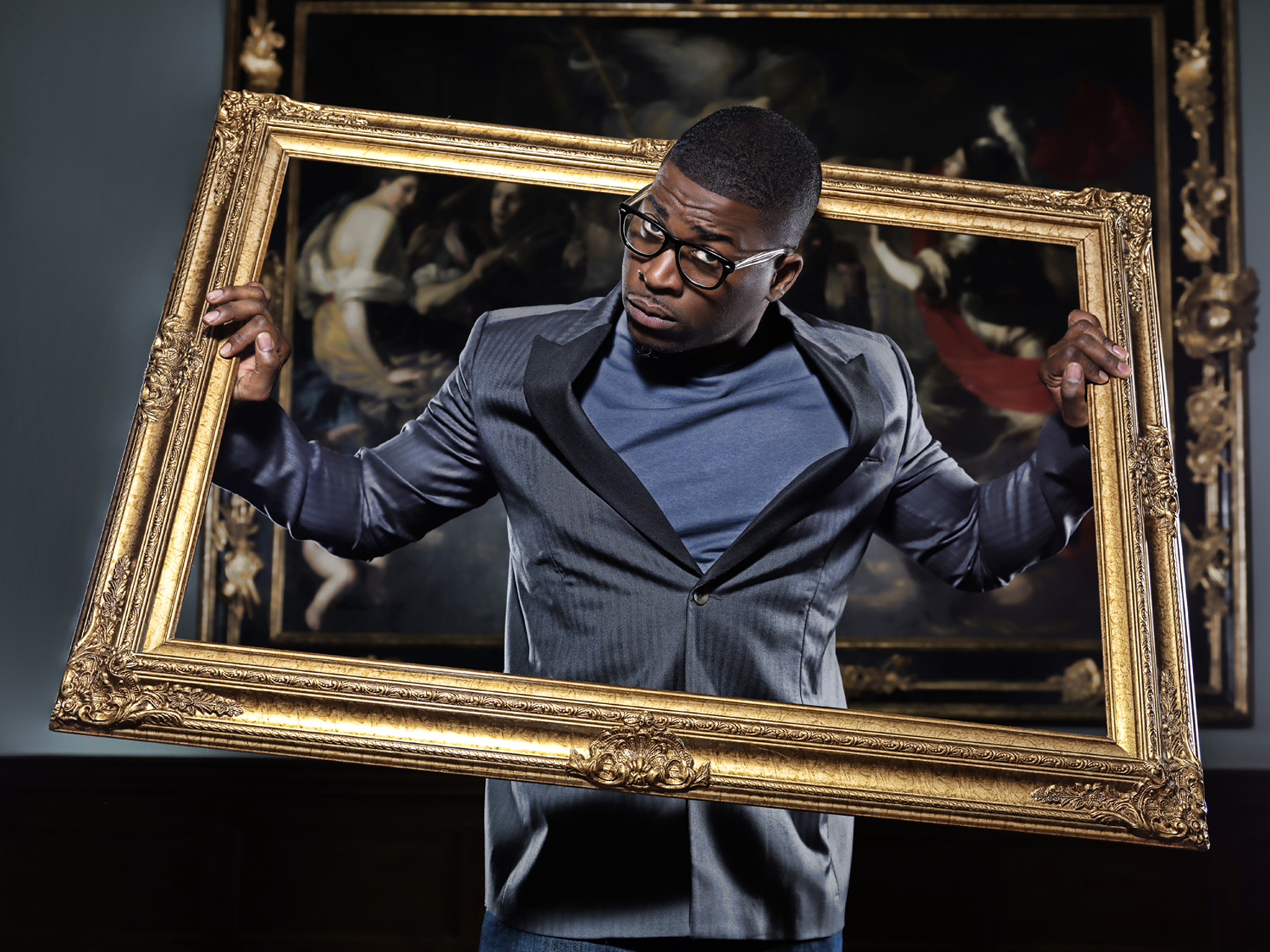 The Q&A was extremely successful and introspective, even David Banner admitted the response was better than he anticipated. The questions asked by Peter Rosenberg took members of the audience inside the mind of David Banner and 9th Wonder – two men that have shared the same experiences growing up in the south as well as similar views on the state of black music. They also shared the back story of how the collaboration and the album came to fruition. In addition, they revealed intimate stories such as the counseling David Banner sought after a personal crisis. “I learned to write about it instead of holding it in. You know a lot of the stuff I talk about in my music is true. I can bare my feelings on a record and not really have to worry about no backlash ‘cause I’ll beat ‘em,” he says as we both break into laughter. “A lot of people are going through some of the same things that I’m going through,” he adds, “but a lot of men connect showing pain with weakness and that’s not true. “
 Since the Q&A was an open forum, the session turned into a symposium about the current condition of hip-hop rather than just a typical celebrity meet and greet. David Banner and 9th Wonder became eloquent spokesmen representing hip-hop with the same verve as a senator representing a state. Instead of standing on their proverbial soapboxes and imploring the audience to buy Death of a Pop Star thus increasing their bank accounts, they enlightened those in attendance about not only the elevation of hip-hop, or the lack there of, but also the business behind the art. Most people will agree that the streets dictate what is hot. Most people will also agree that once industry executives realized the monetary value of hip-hop, the artistry in the music began to diminish. The phrase “Hip-hop is dead” has been the subject of many arguments and debates, it also came up during the Q&A and David Banner has an adamant opinion on the subject.
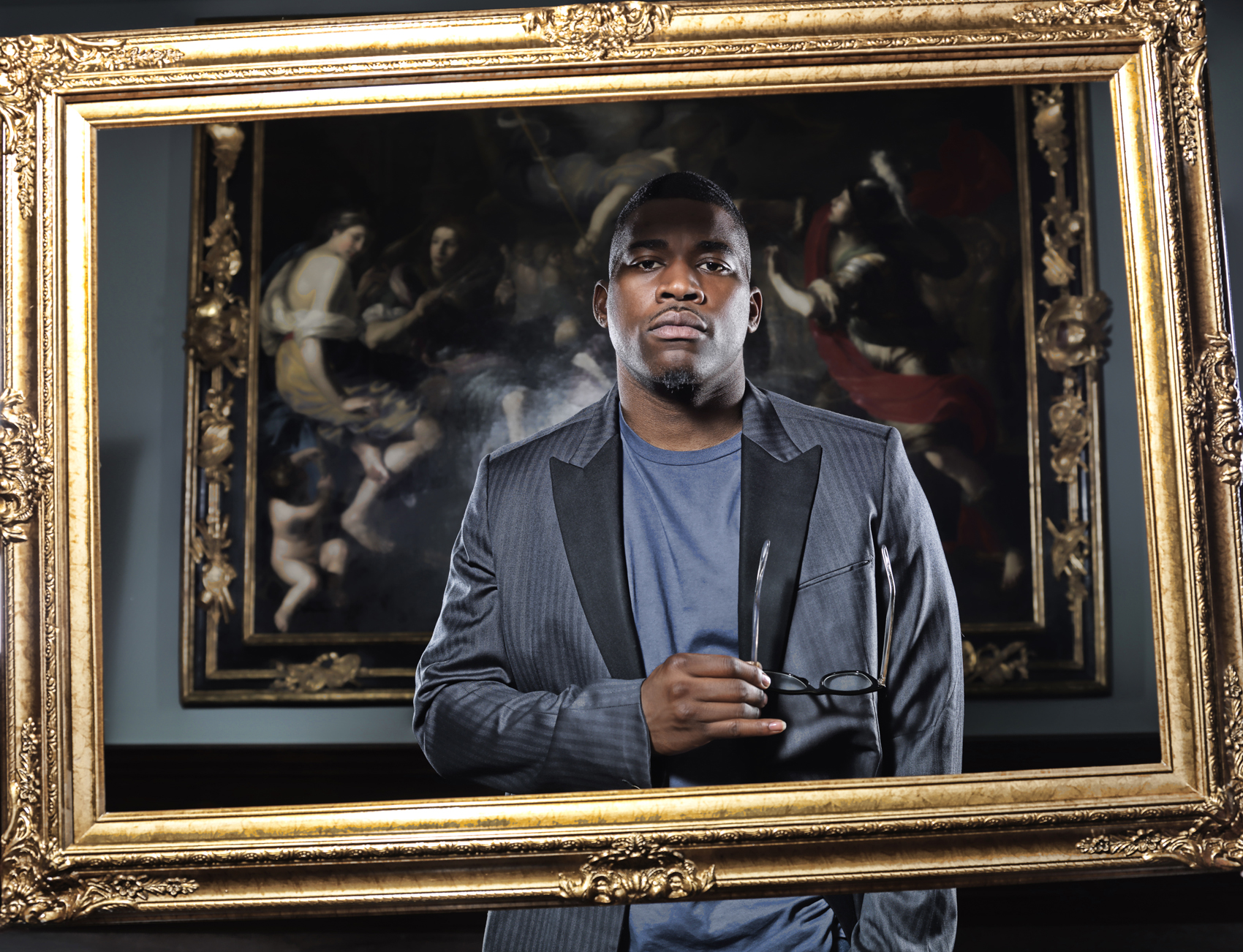 “I think hip-hop being dead is some bullshit. I think the people that used to be in power are not in power no more [and] they can’t make hit songs. They tell kids that hip-hop is dead because that is the only thing they can do to try to regain some power. They can’t rap their way out of the hole. Hip-hop ain’t dead to me,” he says, “hip-hop has always been a reflection of society. Society is f**ked up right now so hip-hop is suppose to reflect that. Kids don’t have a good educational system. They don’t have good television anymore. Where do kids get substance to rap about? The problem is our parents made a lot of mistake in the ‘80s with crack and people trying to chase the American dream, and they didn’t raise their damn kids. Then kids starting getting pregnant, they weren’t raised, and now you have children raising children. It’s our fault; it’s bigger than music. And black people are really afraid to address the real problem. The real problem is not young black men rapping; it’s old white men in power.”
 Besides creating a great dialogue about hip-hop’s longevity and the ills that plague its community, the Q&A also was a public listening party for Death of a Pop Star. In between questions from Peter Rosenberg the audience previewed a different track. David Banner commanded the members in the audience to change our focus not only literally, but figuratively with this album. Death of a Pop Star is a tour de force, a pivotal album coming at a crucial time in hip-hop. Instead of focusing on gimmicks, it harkens back to the days when pure skill, lyrical ability and hot music created hits. Death of a Pop Star is a “grown ass” album for “grown ass” people, addressing themes that are a concern to any individual 30 and above. The topics explored are so essential that members of Gen Y could also find a clue by listening to this album.
 Death of a Pop Star does not only attempt to restore balance in an industry dominated by ring tone sales and iTunes downloads, it also an endeavor that brings symmetry to David Banner’s catalog. On “Slow Down,” David addresses stripper lifestyle many women resort to in order to make ends meet. “Channel 3” is a revealing portrait about the trappings of success. “A lot of people talk about what they would do if they had money, but they ain’t ever had money, so they don’t know the pressures that come with it,” he states, “I literally went from being homeless to running a million dollar corporation in two weeks. The pressure from people, family, friends and everybody placing their problems on you, the pursuit of always wanting more…it just didn’t feel right.”
 There is no facet of Death of a Pop Star that does not reflect a strategic blueprint aimed to provoke thought, even cover art is a stop –you-in-your-tracks conversation piece. “I wanted to make people uncomfortable,” David explains about the cover, “I wanted people to wonder if it was a movie or a book, and if it was an album was it rock or jazz. I wanted people to ask, ‘What the hell wrong with them niggas?’”
 Music is similar to justice in the fact that it is supposed to be blind. In today’s music scene, an individual can crossover regardless of color, creed or in some cases talent, but as countless cases have shown the public, the verdict Lady Justice wields can be determined by the amount of money spent on the defense. Music is the same. At the end of the day, it is CD, ring tone and iTunes sales that speak the loudest, not critical acclaim. David Banner and 9th Wonder may have tried to even the musical landscape by creating a work that could be considered a future classic, however without the sales to prove it this album could fall into hip-hop obscurity. David Banner has a message for all who like to chew on the subject of hip-hop’s future as an art form, “It all about the finances dude. If you want hip-hop to be successful, go buy a hip-hop record that is where the power is.”
Photos and video courtesy of Audible Treats

In June, the annual Tony Awards celebrated Broadway royalty, but the hottest ticket on the Great White Way actually belongs to one of the oldest royal figures to ever sit on a throne. Tut-mania descended on Manhattan this spring when Tutankhamun and the Golden Age of the Pharaohs made its debut at the Discovery Times Square Exposition, located on 266 West 44th Street. New York City is the final stop on a world-wind tour that marks the last time the relics of King Tutankhamun will ever leave Egypt.
 This is not the first time that the boy king has captivated the Big Apple. In 1979, The Treasures of Tutankhamun (King Tut) exhibition was displayed at the Metropolitan Museum of Art. Tutankhamun and the Golden Age of the Pharaohs has 50 artifacts from King Tut’s tomb, only a portion were shown during 1979 exhibit, as well as 80 additional artifacts from the tombs of his ancestors and other high-ranking notables.
 Ever since the tomb of the ancient pharaoh was unearthed in November 1922 by Howard Carter, he has been shrouded in mystery. Who was King Tutankamun? How did he die? Was he murdered? Who were his parents? Tutankhamun was one of the last kings of Egypt’s 18th Dynasty. Although, much of his life is still unknown due to the eradication his records and those of his ancestors by ancient Egyptian officials, the world knows more about Egypt’s most popular ruler than it ever has before.
 Tutankhamun was the son of pharaoh Akhenaten and Kiya, one of Akhenaten’s minor wives. His birth was believed to be around 1343 B.C. His father created upheaval during his reign by moving the country’s capital from Memphis to Akhetan, now known as Amarna, and banning polytheistic worship in favor for the new, monotheistic religion of Aten. In 1333 B.C., Tutankhamun ascended to the throne at age 9 or 10. At 12, Tutankhamun married his half-sister, Ankhesenamun, Akhenaten’s third daughter by his wife Nefertiti. During his reign, King Tut moved the country’s capital back to the city of Memphis and reinstated polytheistic worship. The boy king also changed his name from his original moniker of Tutankhaten, to Tutankhamun (meaning “the living image of the god Amun”) in recognition of the state’s rejection of Aten. Tutankhamun died from unknown causes in 1323 B.C. while in the ninth year of his reign. He left no successors; the mummified fetuses of two stillborn daughters were found in his tomb.
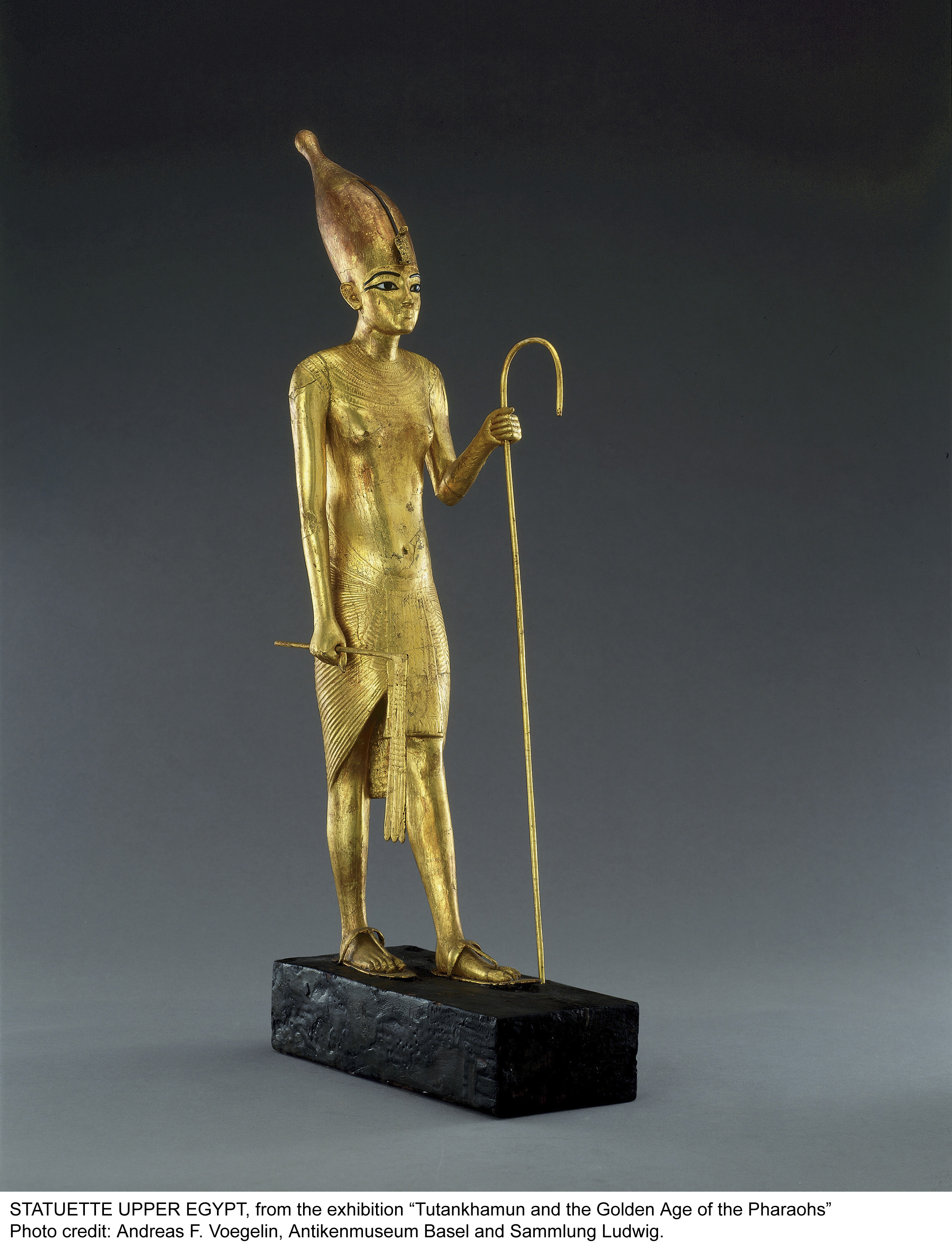 An X-ray taken in 1968 exposed damage to his skull, which could have been caused by a fall, blow to the head, or during mummification and caused Egyptologists to contemplate the theory of foul play as a cause of death. Recently, the boy king’s mummy underwent a CT-scan as part of a landmark, five-year Egyptian research and conservation project, partially funded by National Geographic, in an effort to inventory and scan all of the known mummies in Egypt. This study debunked theories of assassination as the damage to Tutankhamun’s skull occurred after his death. DNA studies conducted in Egypt further showed that he suffered from malaria and may have died from complications from a broken leg. Although King Tut’s remains lie in a climate-controlled vitrine in his burial chamber in the Valley of the Kings, the Tutankhamun and the Golden Age of the Pharaohs exhibition includes some of these scans as well as the first 3-D replica of the ancient pharaoh created by sculptor Gary Staab.
 Along with the amazing, life-like replica of King Tut’s mummified cadaver, the exhibition displays the most splendid collection of ancient Egyptian artifacts anywhere outside of Egypt. Breathtaking…awe-inspiring… jaw-dropping…eye-popping…overwhelming, adjectives that fail to justify the majesty of what is to be discovered after stepping through the doors of the Discovery Times Square Exposition. The antiques along with the narration of legendary actor Omar Sharif via headset intimately transport the patrons into the daily life of the boy king and those in his court. Last month an additional item joined the exhibit, a chariot, which has been permitted to leave Egypt for the first time. Of the six chariots that Howard Carter discovered in King Tut’s tomb, this antique from the Antechamber is exceptional because it is the only one that appeared to be used. The construction of the chariot was lighter and simpler than the other five. There is speculation that it may have been used as a traveling chariot, on the battlefield, or on hunting expeditions. There is also a theory that King Tut may have died after a fall from this chariot.
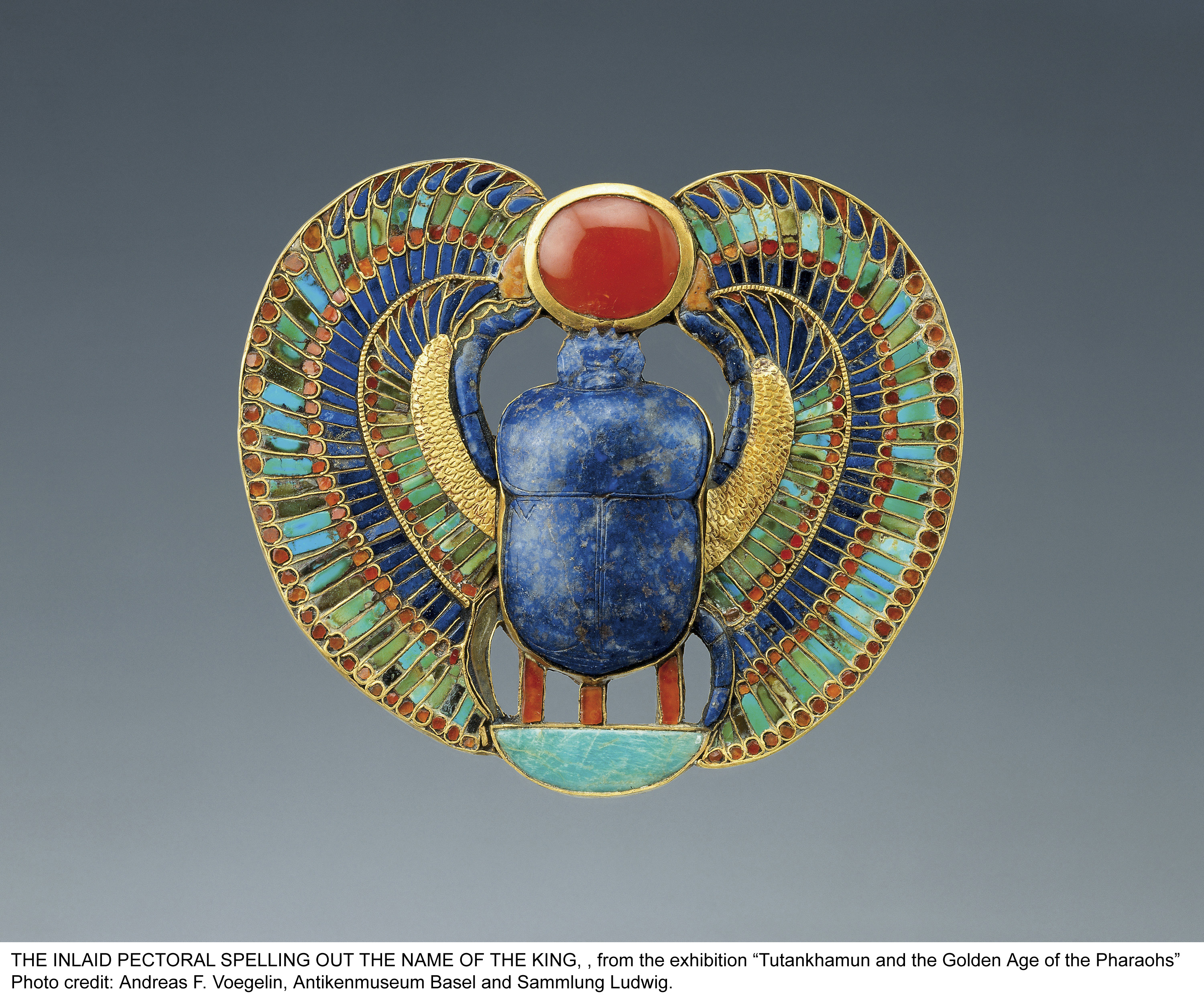 The ancient Egyptian phrase “forever and for eternity” never felt as palpable to me as it did when I visited Tutankhamun and the Golden Age of the Pharaohs. Perhaps it was the golden sarcophagus or the replica of Tut’s mummy that spurred the feeling, but as I walked through the exhibit I could feel the presence of King Tut. Finally his story was being told like it never has before. I also felt the spirit of Howard Carter, the archeologist that first revealed the pharaoh to us, and suddenly the exposition became otherworldly. It was if a Stargate had been opened and we were all visiting an undisturbed dimension that has no concept of time. A feeling of immense humility overcame me as I viewed the spectacle and glory of a culture that has influenced almost every civilization that has come after it. I realized that with all our modern know how, we can never duplicate the wonder of these relics, which is raison d’être for our continued fascination.
 Considering the locale of the Discovery Times Square Exposition, the ticket price for Tutankhamun and the Golden Age of the Pharaohs is quite affordable ($29.50 for adults, $26.50 for seniors and $19.50 for children) and part of the ticket sales is helping to fund a new Grand Museum in Cairo. Broadway has played birthed and played host to countless stars, but none is as incandescent as Tutankhamun. This exhibit will remain in the Big Apple until January 2, 2011 when the boy king and his gilded chariot return to Egypt to rest for good. FAMERS do not miss this exhibit. It is an experience that you will take with your forever and beyond.
Photos: Andreas F. Voegelin and Sammlung Ludwig
Slideshow: F.A.M.E NYC Editor
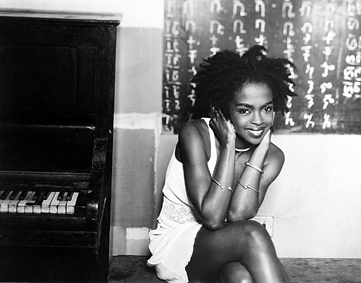
For its first original music documentary, BET decided to put women center stage in My Mic Sounds Nice: A Truth about Women in Hip-Hop. The film discussed the idea what it is like to be a female in the male dominated realm of hip-hop from industry vets like MC Lyte, Salt-N-Pepa, Missy Elliot, Trina, Eve, Medusa, Lady Bug Mecca and more. My Mic Sounds Nice also featured commentary by Kevin Liles, Swizz Beatz, Chuck D, Quest Love, Russell Simmons, Jermaine Dupri, as well as members of the media such as Big Lez, journalist Smokey D. Fontaine and others.
The documentary begins with the start of hip-hop creating its buzz on the streets of New York City during the late 70’s, early 80’s and placed a much need spotlight on the female pioneers such as Angie Stone, Sha-Rock, Roxanne Shante and others. It progressed into what is considered by most hip-hop heads and aficionados as the “golden age of hip-hop” during the mid ‘80s to early ‘90s as female MCs like Queen Latifah, MC Lyte, Salt-N-Pepa and others cemented their place in hip-hop history. The foundation these ladies paved ushered in what I call the “Hailey’s Comet “of female hip-hop artists – a flash of ladies that shimmered during the mid ‘90s and eventually faded into the horizon as the new millennium evolved.
My Mic Sounds Nice also explored the concepts of the hypersexualized MC like Foxy Brown, Trina and Little Kim, MCs that exploded based on talent and originality like Missy Elliot and Lauren Hill, as well as the pressure of being a female MC, a pressure Nicky Minaj is surely feeling now as she is attempting to resurrect the idea of a female MC back into the industry’s collective consciousness.
After the first 20 minutes, I was well on my way to giving this documentary a D+, and the “D” was not for dope. I felt like I was watching an over packed suitcase bursting at the seams, bustling on an airport ramp to nowhere. I contemplated how director/executive producer Ava DuVernay could cram over 30 years worth of history as well as the question of the disappearance of the female MC into an hour-long documentary. But as the film continued, I began to see the method of her madness. The film was just as elusive as the notion of a female hip-hop artist in today’s industry. Slowly my opinion changed from skepticism to optimism. My Mic Sounds Nice is not a hurried, crash course in being a woman in hip-hop. Instead, it is a well crafted mosaic of opinions created to provoke thought and evoke change. Like the peep shows that littered Times Square in the ‘80s, it played with viewers mind – tantalizing, teasing, forcing the viewer to demand more as the credits rolled. If Ava DuVernay wanted the streets to percolate with the question of “Where are the female rappers,” then she has certainly sparked the debate with this documentary. I give My Mic Sounds Nice an A for astonishing and thank Ava DuVernay for tackling a subject that is long overdue.
Female MC’s From NYC
Every Thursday, SPEAKEASY NYC hosts an “invitation-only” cocktail party at the Sky Terrace, located on the 15th floor of the Hudson Hotel. The awe-inspiring view of Manhattan and the Hudson River coupled with the neatly manicured shrubs, open lounge spaces and hammocks, makes the summer in the city even more enjoyable.
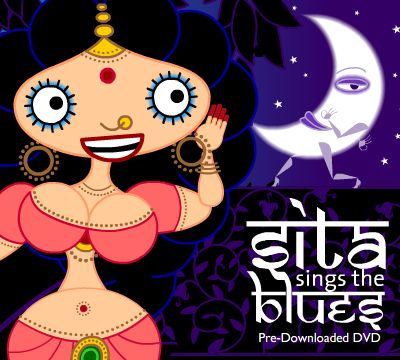
Last Thursday, the exclusive party featured a guest appearance by cartoonist and animator Nina Paley, the writer, director and animator of the 2009, soon to be cult-classic, Sita Sings the Blues. Sita Sings the Blues is an ingenious animated movie that explores the theme of breaking up. Cleverly woven are two stories, the first is the Sanskrit epic the Ramayana, which tells the story of Rama and his wife Sita. The second is Nina’s personal story which starts with her happily married in San Francisco and ends with her in Brooklyn recovering from an email from her husband stating her marriage is over.
I was first introduced to this short animated film last year, watching Channel 13 on a lazy Saturday night. I was enchanted with the idea of turning a classic like the Ramayana into a cartoon and pairing it with 1920’s jazz music (Sita’s musical numbers are tracks by Annette Hanshaw). I am pleased to say that curiosity did not kill the cat. Sita Sings the Blues is the most entertaining animated short I have seen. It is naughty, thought-provoking and fun and reincarnates the wonderful music of the “Jazz Age” in a way that is accessible to a modern audience. Another aspect of the film I appreciated was parallel journeys of Nina and Sita, two women from different eras and cultures struggling to stay devoted to men that did not appreciate their worth.
After the event I watched the Sita Sings the Blues again. FAMERS if you have not seen this animated short, I encourage you to download it. It is definitely one to keep in your archives.
To watch or download Sita Sings the Blues click www.sitasingstheblues.com.

This weekend venture out to 259 Elizabeth Street and become a child of the revolution! AMIVECTIO is having a sample sale with prices ranging 50 – 70% off limited edition wovens, tees, fleeces and more. Patrons will receive a complimentary beer with a minimum purchase of $25. Shopping on a Saturday afternoon with a brewski in hand, that is what F.A.M.E NYC calls a productive afternoon.

Maybe it is his Aries ego that spurs him to boldly go where no one has gone before or boredom with the status quo, but fashion’s rumor mill has been working overtime with reports that Marc Jacobs is planning to create a plus size line early next year. No official announcement has been made yet.
Scuttlebutt began swirling after a tweet from Robert Duffy, president of the Marc Jacobs label, stating:
“We are in talks now. For plus sizes,” Duffy tweeted. “Listen, we are in the very beginning stages of talking to a partner about plus sizes.” He also revealed the problems he has buying clothes. “I’m a big guy 6ft 4in, 210 lbs. [It’s] not easy for me to find clothes,” he wrote. “Of course I can have them made. I know how everyone feels. I try to diet but… I don’t like the phrase plus-sizes. Any suggestions?
“We gotta do larger sizes,” he added. “I’m with you. As soon as I get back to NY. I’m on it! It will take me about a year. But stay with us.”
The fashion industry is known for changing muses, creating gods and goddesses of the runway and reincarnating trends, but the attitude of promoting double digit sizes is a change that is slow to be embraced. Sample sizes do not run bigger than an 8, but one fact fashion’s elite seem to forget is plus size women love labels and shopping too. If Marc Jacobs’ plus size line does come into fruition, it would be a welcome change to the fashion industry and might spur other designers to do the same.


FAMERS, ready to have some Vegemite with your turkey? If not, then you probably do not want to spend your Thanksgiving with Jay-Z and Bono. In recent Jigga news, Live Nation.com announced that the rap mogul will be joining the rockers from Ireland as a special guest when U2 brings their 360 tour to Australia and New Zealand.
The Aussie leg of the tour is set to begin at Auckland’s Mount Smart Stadium on November 25 with stops in Melbourne, Brisbane and Sydney and makes a final stop at Perth’s Subiaco Oval. Tickets go on sale September 3 with almost 45% of the tickets priced under $100.
U2 just recently resurrected the 360 tour in Turin, Italy this month after taking a brief hiatus to allow frontman and humanitarian Bono to recover from back surgery. Along with sharing the stage, Jay-Z and U2 also share the dubious distinction of being some the richest entertainers in a sagging music industry. F.A.M.E NYC told you that Mr. Carter topped the list of hip-hop’s cash cows in Forbes Magazine, but Forbes also reported U2 was the top grossing band for 2009, earning $300 million with their tour. The 360 tour is also poised become the top-grossing tour in history, outselling the Rolling Stones’ “Bigger Bang” tour, which grossed $558 million in 2005-2007, according to Billboard Boxscore.
Along with giving fans a “best of both worlds” tour bill, these entertainers are solidifying their claim to remain number one next year.
 F.A.M.E NYC Magazine