Jersey Girls

Broadway has always had an affinity for rock and roll’s golden era – it is almost like its secret golden goose.  The music from that time in America’s history is everlasting, resonating good feelings from those who lived during the 50s and 60s and converting new fans within each generation that followed.  In addition, Baby Boomers are mostly the faces that make up the audience, it only is logical to produce musicals that would cater to their ears and wallets.  Jukebox musicals like Smokey Joes Café, Million Dollar Quartet and Jersey Boys are all successful testaments to the formula of infusing early rock and roll music with a book from that time period.  Jersey Boys has been going strong on Broadway for five years – now it is the ladies turn.  Baby It’s You debuted on April 27 at the Broadhurst Theatre adding another chapter to Broadway’s love story, or should I say stories, with rock and roll.
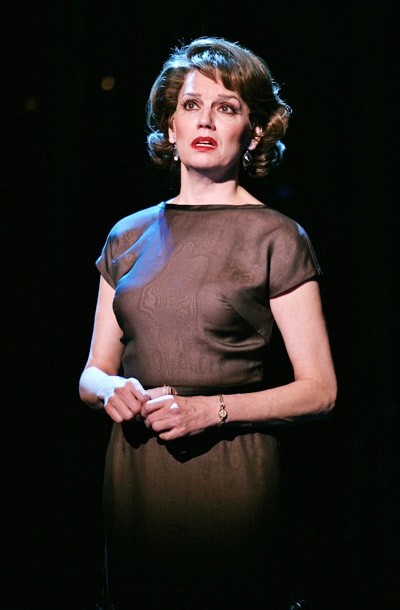
Baby It’s You is a loosely based on the life of Florence Greenberg – a real housewife from New Jersey, and mother of two who stepped out of her kitchen and into the music business.  She was a trailblazer and integrator, helping to make the Shirelles the first major female vocal group of rock and roll with the a number one single on the Billboard Hot 100.  She also founded Tiara, Scepter, Wand and Citation Records and along with songwriter and producer Luther Dixon, helped to launch the careers of Tammi Terrell, Chuck Jackson, The Isley Brothers, B.J. Thomas, The Kingsmen and Dionne Warwick. In 1976, she retired from the music industry, and sold all of her labels to Springboard International.  In 1995, the 82-year-old visionary died of heart failure in Teaneck, New Jersey.

The production strictly follows the paradigm of a jukebox musical.  The music and lyrics are all derived from previous released songs.  Theses songs are then used to craft the book and facilitate the plot through the play’s myriad musical numbers.  Baby It’s You is set between 1958 through 1965 and takes place in Passaic, New Jersey and New York City.  Harmonizing the show’s story along with the music and current events of that era is Jocko a spirited narrator/DJ that operates on payola – the system for “breaking records” in those days.  When Florence is first introduced to young Shirley Owens, Doris Coley, Beverly Lee and Micki Harris by her daughter, they are students at Passaic High School practicing in the schoolyard.  She immediately sees potential in them and changes their name from The Poquellos to The Shirelles.  She becomes their manager, surrogate mom, producer and biggest fan.  Once she teams up with Luther Dixon after forming Scepter Records, the Shirelles really begin to shine and their signature sound is created and duplicated.  Along with the triumphs Florence had, Baby It’s You also chronicles her struggles getting started, the disintegration of her marriage as well as the effects her success had on her relationship with her children.  The musical also briefly covers the decline of the Shirelles and the departure of Luther Dixon from Scepter Records due to the changing musical climate of the mid and late 60s.
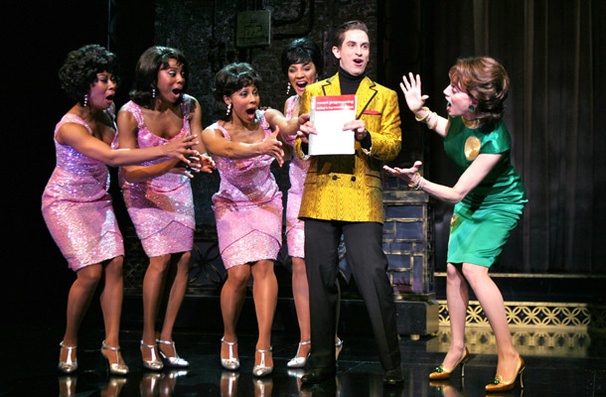
If anyone were to ask me my opinion about Baby It’s You, I would say, “Baby, it’s a hit!”  It is a solid gold trip down memory lane in a 1959 fishtail Cadillac with an awesome soundtrack to compliment the journey.  By today’s standards, if this musical was an album it would go platinum several times over.  Anyone that loves to watch the oldies revues on PBS will be in poodle-skirt heaven watching this show. The weaving of the musical numbers with the story is nearly flawless.  Floyd Mutrux and Colin Escott should be praised for the baby they conceived and created.  Costume Designer Lizz Wolf and Scenic Designer set the mood visually – it is akin to viewing a rolling set of Happy Days or American Graffiti mixed with a little Showtime at the Apollo.  Like Rock of Ages the band is on stage instead of the orchestra pit, sliding forward and back during the musical numbers.  The choreography, courtesy of Birgitte Mutrux, captured the exuberant dancing of the 60’s along with the graceful and sometimes over-the-top moves performers used on stage.  But as much as I enjoyed Baby It’s You, there was one minor disconnect for me.  One pitfall a jukebox musical can fall into is the overuse of previously recorded music, which turns the production into an elaborate anthology instead of art.  Mutrux and Colin Escott could have used a little restraint when choosing the music and how it correlated to the overall story.  It almost appeared as if they wanted or did use every popular song in Scepter’s catalog. Had the music not been so endearing, this could have been a major problem.  But trust me when I tell you FAMERS this issue is minute.  Their accuracy to pair a song with a situation the cast is confronting is almost 100%.  Using “Mama Said” to express Florence’s discontentment with being a housewife or “The Dark End of the Street” to illustrate the illicitness of Florence and Luther’s affair, provides the audience with an aural exclamation point that they could thoroughly enjoy.  After all, it is the music that is the star of any jukebox musical, and the cast does a groovy job of making these classics relevant again.

I am such a sucker for Beth Leavel, in my sound book, she can do no wrong.  She was the perfect choice to play Florence Greenberg – funny, sensitive and boy can she belt a tune.  She brought a star quality to the role and offered a wonderful homage to woman who knew what “girl power” really meant.  Allan Louis gave a genuine performance as Luther Dixon.  Besides Leavel and Louis, the rest of the cast played multiple roles.  Geno Henderson is the MVP of the show playing Jocko, Chuck Jackson, Ronald Isley and Gene Chandler.  If this was MSG instead of Broadway I could confidently say that the Knicks would make it to the finals.  Erica Ash, Kyra Da Costa, Crystal Starr Knighton and Christina Sajous enrapture the audience as the Shirelles and other singers of that era.  Their ability inspires delight and their energy is infectious.  
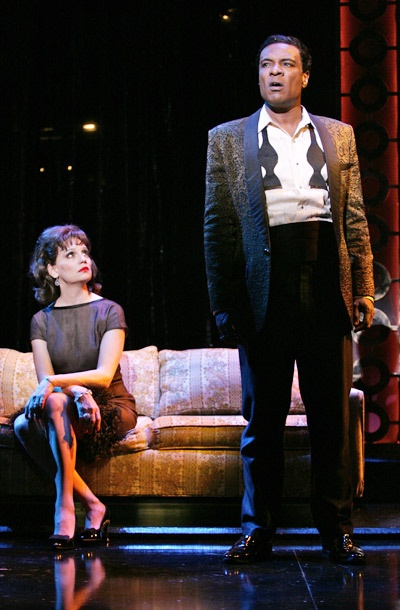
From the first song to the last the audience is sold on Baby It’s You.  And I was right there with them singing along in my seat, moving my feet to the beat.  In 2006, Jersey Boys took home the Tony for Best Musical.  My prediction, there is no dark end of the street in sight for this musical, Baby It’s You will twist and shout its way to the podium to snag some awards in June.

Photos:  Broadway.com
Triangle Offers Homage to a Centennial NYC Tragedy

March 25, 2011 marked the 100th anniversary of the Triangle Shirtwaist Factory fire.  The inferno was the most deleterious industrial catastrophe in NYC history and ranked the fourth highest in casualties from an industrial accident in US history.  It was also the most mortiferous tragedy in Manhattan until 9/11.  The sweatshop blaze, located in the Asch Building on 23-29 Washington Place, resulted in the deaths of 146 workers, most of whom were Jewish and Italian immigrants.  Because of locked doors, people jumped to their deaths and created outrage with the community and politicians alike. But the fire’s lasting legacies were not just the deaths, it was the legislation passed to improve factory safety standards and the creation of the International Ladies’ Garment Workers’ Union. 

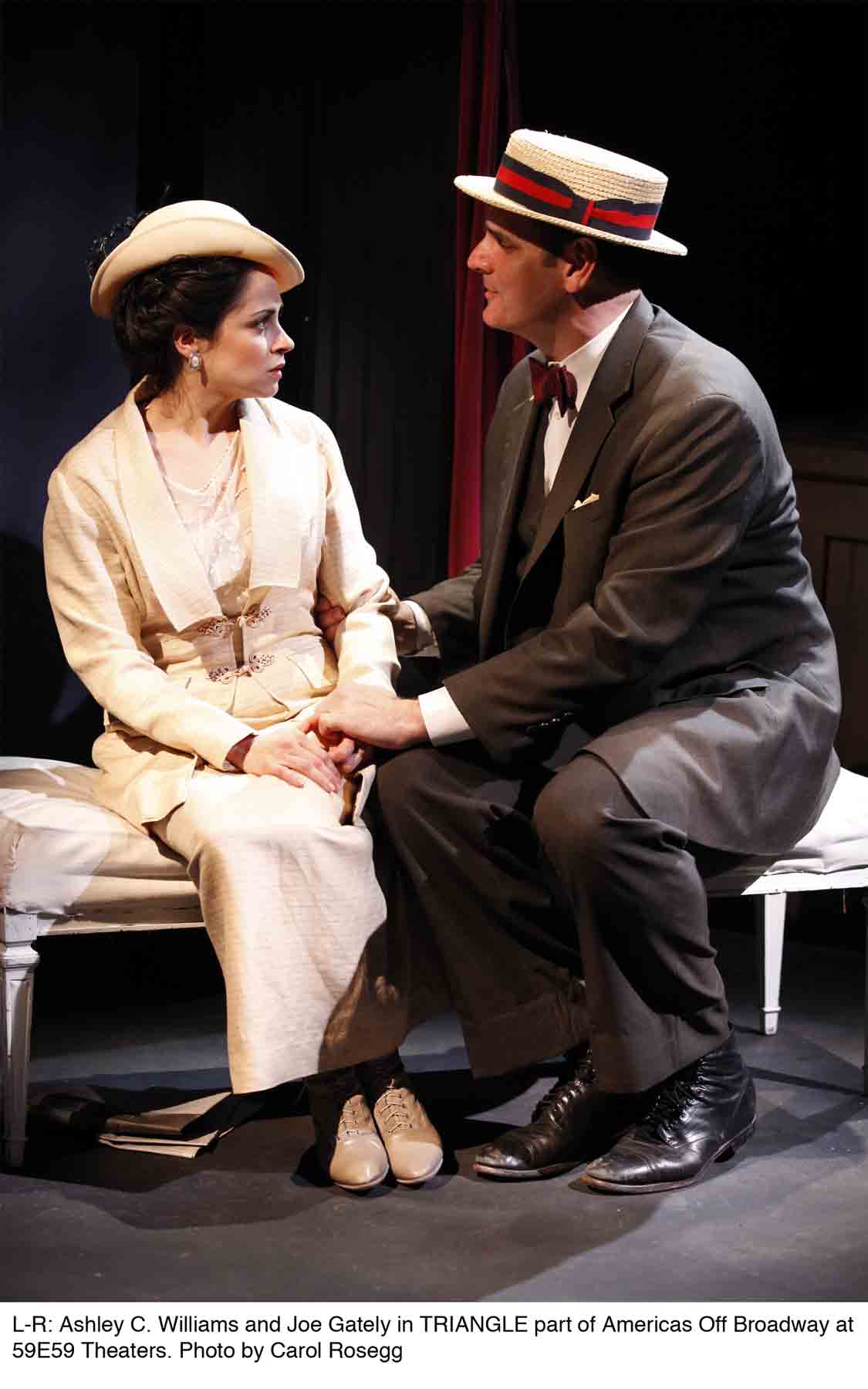
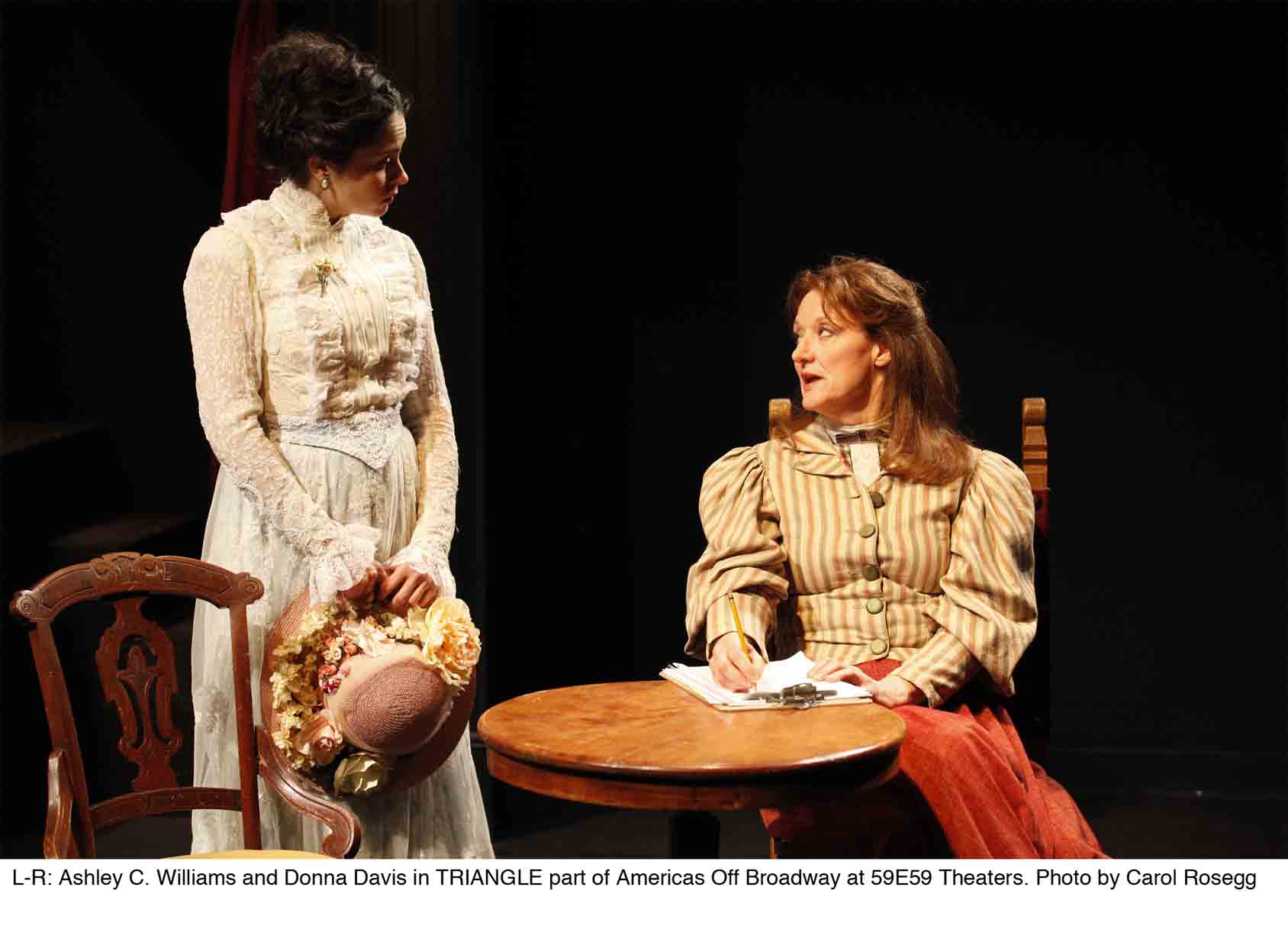
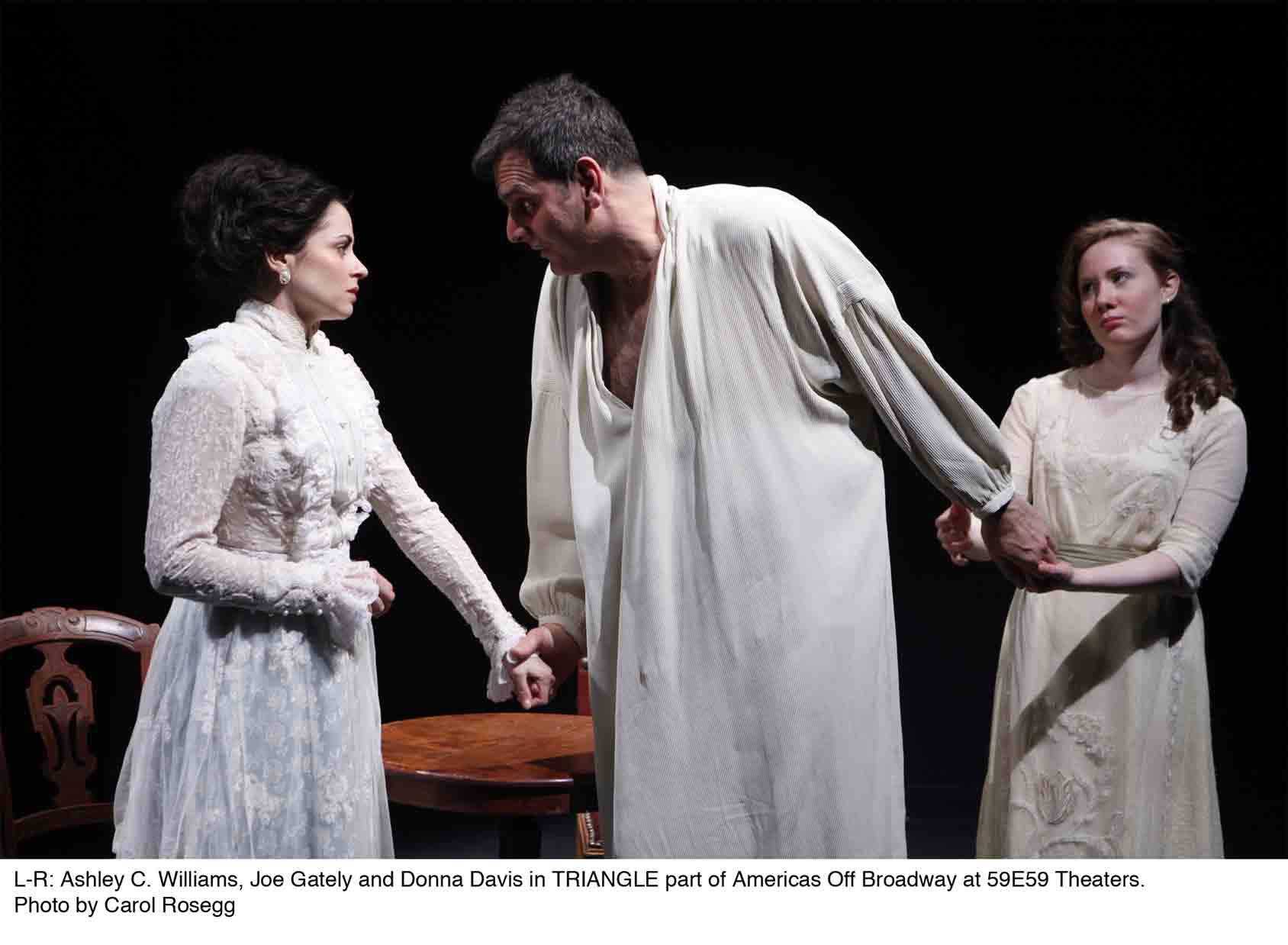
Currently, the Americas Off-Broadway series offers a production that exhumes the ghosts of that tragedy and the lives it affected with TriangleTriangle is a 120 minute drama that recounts the adulterous liaison between “Big” Tim Sullivan and actress Margaret Holland against the backdrop of the Triangle Shirtwaist Factory fire and the events that followed.   When young, beautiful Margaret goes to audition for Big Tim at his headquarters, he is already known as “The Boss of the Bowery.”  Along with being a one of the prominent politicos of Tammany Hall, he was also the kingfish of various criminal enterprises which included prostitution, gambling and extortion.  Margaret, a highbrow, progressive woman, becomes seduced by Tim’s immoral, yet captivating demeanor.  Tim immediately recognizes Margaret’s beauty and casts her in his productions out of state.  While Margaret continues to tour on the acting circuit, she and Tim fall in love and have an illegitimate daughter named Mary Catherine.  But the Triangle Factory fire forever changes Margaret, Tim and Mary Catherine.  Margaret tirelessly works as a reformist, causing a strain on her relationship with her growing daughter, and blames Tim for taking kickbacks.  Guilt spurs Tim into using his political muscle to aide the reformers and sponsors legislation limiting the maximum number of hours women were forced to work despite his failing health from syphilis. 

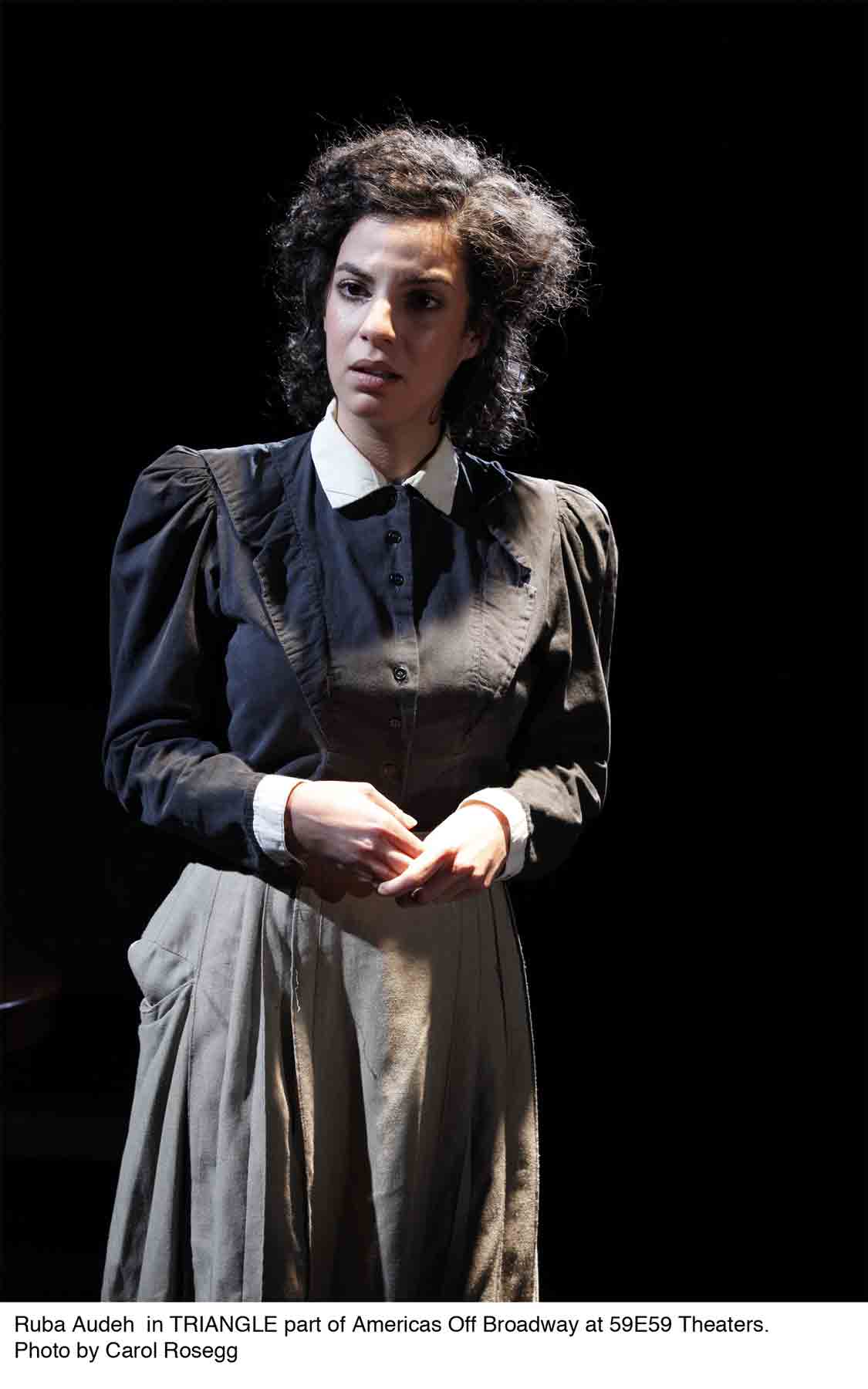
One aspect I find with Off-Broadway productions is that they are generally hit or miss.  This production teeters somewhere in the middle.  At best Triangle is a nondescript tribute to the legacies of the women and men who perished in Triangle Shirtwaist Factory fire, focusing more on the love affair between Tim and Margaret instead of the immigrant men and women who toiled and died in the fire.  It reminded me of Spike Lee’s Summer of Sam, a think piece that provided a glimpse into the lives of people placed in a stressful situation.  The acting in Triangle impressed me more than the story itself, and when the play did focus on the fire specifically, it showed flashes of brilliance.  Ruba Audeh is superb, playing dual roles as a young Jewish girl and a former Triangle Shirtwaist worker turned hooker – her scenes are some of the most telling, emotional moments of the play and will painfully stick with you like burnt clothing on skin.  Donna Davis and Dennis Wit are very engaging as Cathleen Murphy and Izzy Weissman, a common law couple on Big Tim’s payroll.  Their banter and narration throughout the production not only offered comic relief, but prevented the show from dragging.  They, along with Audeh, are without a doubt the most memorable characters and performances.  Joe Gately, Ashley C. Williams and Michaela McPherson round out the cast giving fine performances as Tim Sullivan, Margaret Holland and Mary Catherine. 

Triangle’s final performance at 59E59 Theatre is May 1.  It is my conclusion that parts of this show were greater than its sum.  Overall, Triangle is a satisfactory play that produced solid performances, but the jury is still out on whether this drama did or did not deliver on its commitment to honor the victims of the fire.

Photos:  Carol Rosegg

Traces of Africa


As the start of the Tribeca Film Festival approaches, many New Yorkers are unaware that another film festival has already been underway.  The African Film Festival is now in the third week of a two-month fete that celebrates and presents African arts and culture in all of its various hues.  This year marks the festival’s 18th season, which not only showcases films, but also features a gallery exhibit, fashion show, Q&As with directors and actors and live performances.  The festival kicked off on April 2 with a enlightening and inspiring panel discussion with screen legend and human rights activist Harry Belafonte, crochet artist and griot Xenobia Bailey and British-Nigerian filmmaker and former BBC journalist Zina Saro-Wiwa at the Museum of Art and Design, located on 2 Columbus Circle. The festival will travel to different locations throughout New York City before it concludes on May 31. 

The United Nations has proclaimed 2011 to be the “International Year for the People of African Descent.”  While I think it is wonderful that the achievements of Africans and people of African ancestry are celebrated for a month during the year or recognized by a global institution such as the UN, I would much rather applaud the efforts of African Film Festival, Inc. who have been assiduously pushing to make sure that the filmmakers of post-colonial Africa have a voice and a venue to display their talent as well as educate the public about the multiple faces of Africa.  The African Film Festival ensures that continent of Africa remains a relevant topic for dialogue not only in the arts and culture scene, but within the global community as well.

To learn more about the African Film Festival, its mission, the films screening this year, the locations and ticket prices, click http://africanfilmny.org/.

Logo courtesy of African Film Festival.com

Intonations of Love

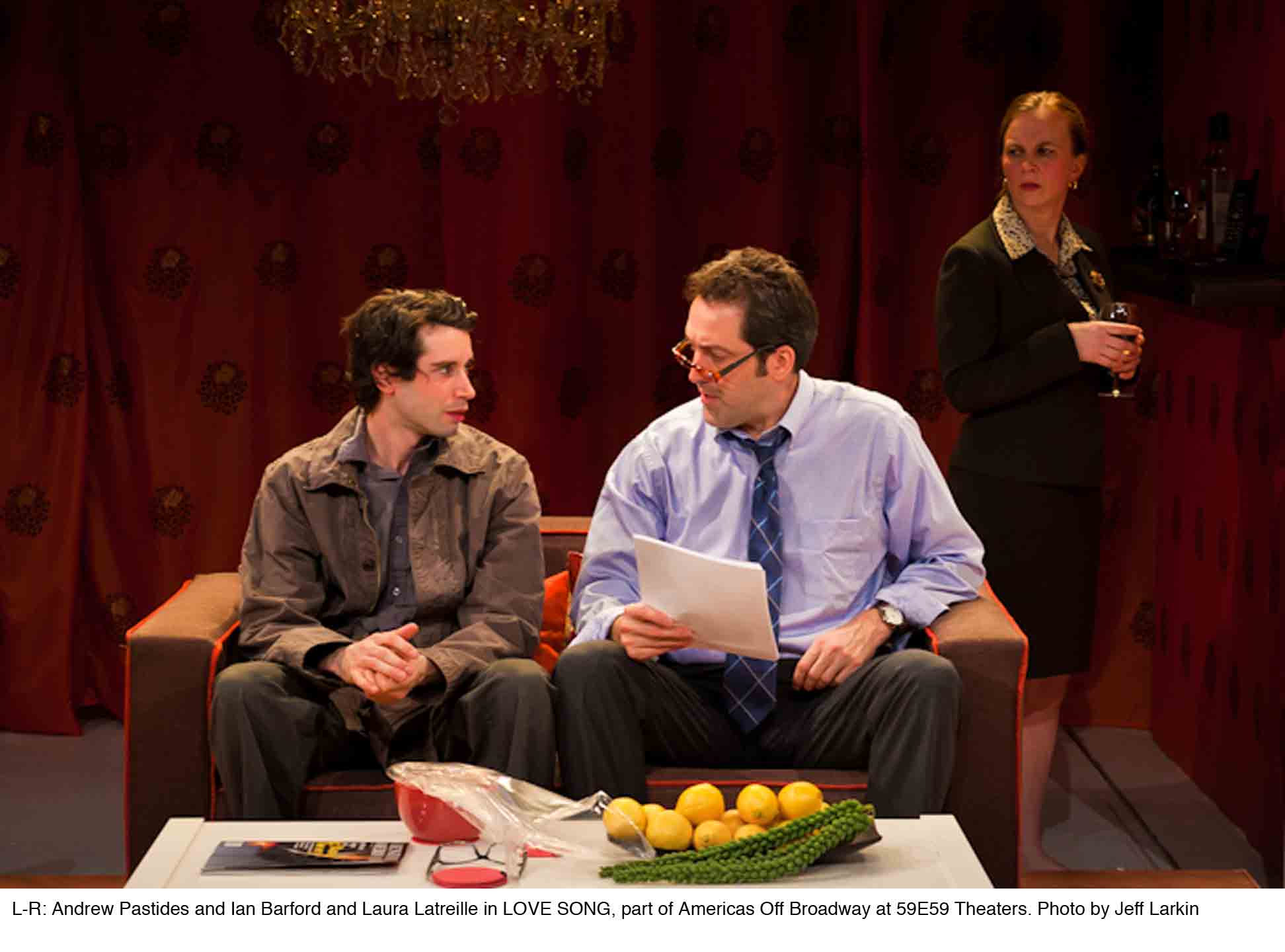
Love is an all-encompassing entity.  It can be displayed through all five senses.  You can hear the sounds of love coming from a bedroom or pining through a radio.  You can see it dancing in someone’s eyes or in their gestures.  There is a different aroma that follows a couple in love – even food taste different when the person preparing it is in love.  In contrast, a person lacking love in their life is as anemic as a person living with diabetes.  And this is where the audience finds Beane, the tragic, young protagonist of John Kolvenbach’s brilliant romantic comedy Love Song, when the play begins.

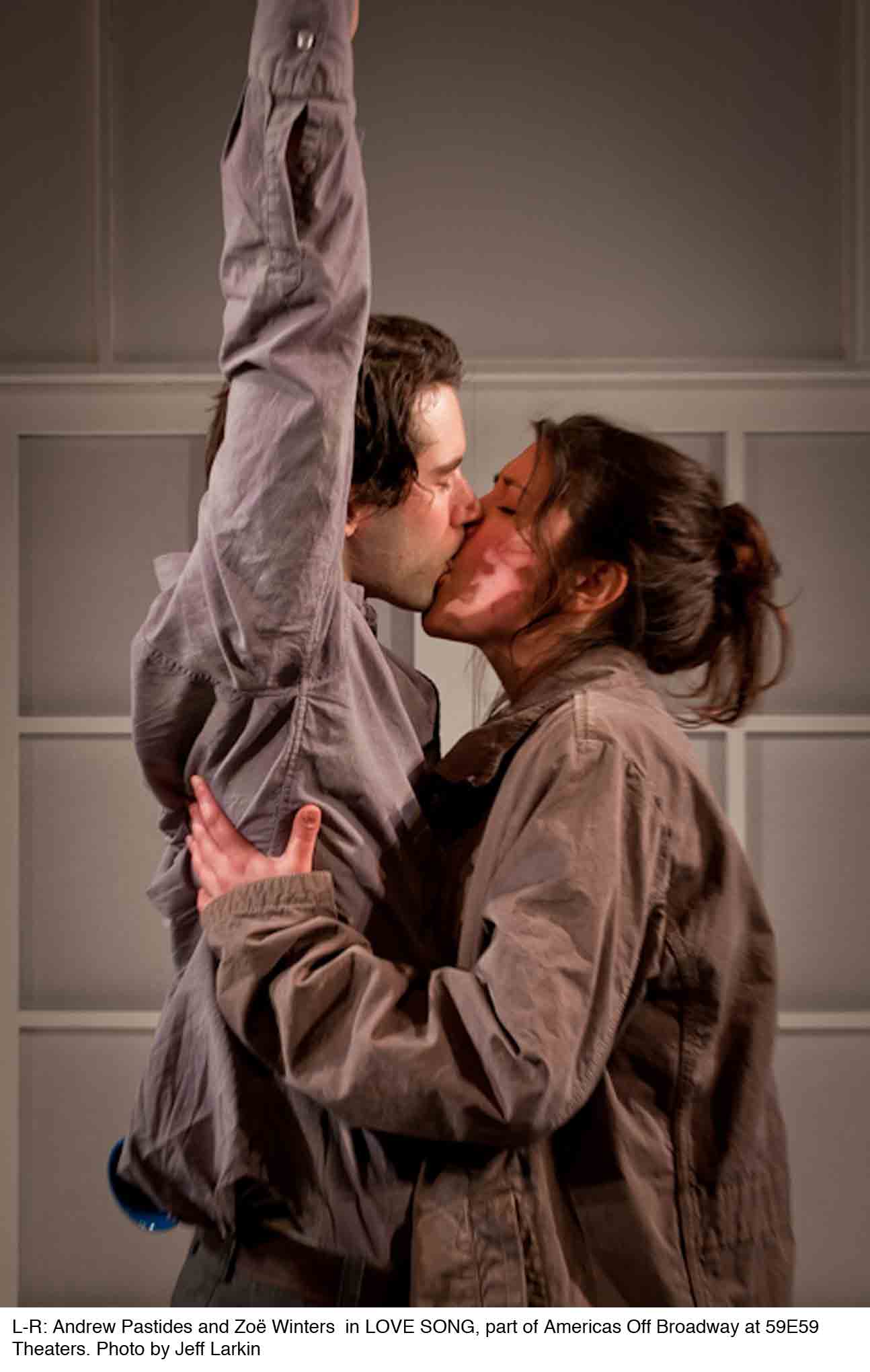
To say that Beane is an eccentric would be an understatement.  He lives alone in an apartment void of furniture; his worldly possessions include a cup, a spoon, a couple of pairs of socks, two button down shirts and two slacks.  Beane is a shadow and likes it that way.  Like the boy in the bubble, he encloses himself in an orb to survive, but for Beane his oxygen is filled with misery.  He desires no interactions with humans, if he desires at all.   Outside of work, the only people Beane sees are his sister Joan and her husband Harry, an upwardly mobile couple too busy with work for Beane or even themselves for that matter.  Then along comes Molly, a hellcat/burglar that robs Beane and incidentally develops a weird infatuation for him as does Beane for her.  Suddenly, the light in Beane’s dreary world has been turned on.  His whole outlook on life changes, which does not go unnoticed by Joan and Harry.  In fact, Beane’s new attitude is contagious and assists in reigniting the romance in Joan and Harry’s life. Molly is like the Sazón that adds essential flavor to a dish of arroz con pollo – there is only one problem with her – she is as real as the Easter Bunny.  Once Beane’s secret is out in the open, he must decide whether to move forward or shrink back into the existence he once had.

Love Song is one of the best character studies I have ever witnessed.  It is Punch Drunk Love on LSD – a wild, trippy ride into the dimensions of love, loneliness and lunacy – three paths that can sometimes run side by side or collide into each other like a messy intersection.  Playwright and director John Kolvenbach aims for the heart and hits his target dead on the mark.  I adore this comedy; it is great theatre plain and simple.  The cast radiates even brighter than the light Beane has been trying to avoid all his life.  Laura Latreille and Ian Barford are a scream as Joan and Harry.  Their chemistry was extremely organic.  Zoe Winters is the most convincing imaginary girlfriend I have seen and Andrew Pastides makes quite an impression as Beane.  Love Song is playing a limited engagement at 59E59 Theatres until May 8 as part of their America’s Off Broadway series.  There are many tales of love in the world, but this one that should not be missed.

Photos:  Jeff Larkin

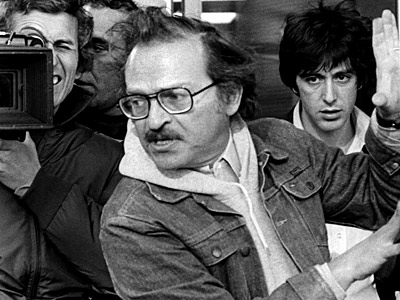
F.A.M.E NYC Remembers Sidney Lumet

“While the goal of all movies is to entertain, the kind of film in which I believe goes one step further. It compels the spectator to examine one facet or another of his own conscience. It stimulates thought and sets the mental juices flowing.”  – Sidney Lumet  

Dog Day Afternoon12 Angry MenPrince of the City…Serpico…Night Falls on Manhattan…The Wiz, no other director offered as many complex stories about New York City as Sidney Lumet.  I was initially introduced to his movies when I was a child.  My mother was (and still is) a television czarina and a classic movies junkie.  AMC was the channel of choice in our household, and while I wanted to see the latest and greatest on HBO, we always ended up watching a film with an epic musical score, cast of 1,000’s and actors who were megastars before I was even thought of. 

12 Angry Men was my first Sidney Lumet film.  It was different from most of the other films I had seen.  The score was incidental; almost all the scenes took place in a stuffy jury room, but the breadth of the actors masterful command of the dialogue and emotion of the story, filled each frame to its fullest capacity.  This film left an indelible impression on me about the justice system – what the system could be when used correctly and to its maximum potential.  From then on I was hooked.  I devoured Sidney Lumet films like a kid pigging-out on penny candy.  For me his films were like partaking in a free sociology class, even before I was required to take one.  While watching a Sidney Lumet movie I learned lessons about human nature; lessons that I am still attempting to master today.

Sidney Lumet’s stories generally focused on the grittier side of the city – the side that is least attractive at the surface – but like the snip of sand that gets caught in a clam, he knew that it is from grit that a pearl is ultimately cultivated.   His movies were like deep seas pearls, oddly shaped, unique works of art that should be coveted and displayed for their beauty and preciousness. I want to thank Sidney Lumet for all the magnificent shades he painted of the Big Apple on celluloid.  In a time in which all the artisans I looked up to as a young girl seem to be crossing the great divide to the other side where spirit and body no longer coexist, his genius will surely be missed, but his movies will always serve as a reminder of what good filmmaking really is.

The Promise Delivers

To walk a mile in someone else’s shoes is a task most people can conceive, but rarely can be executed.  Why, because it is more difficult to actually live another person’s experiences than one might believe.  This is why empathy is such a virtuous emotion.  Thanks to the exquisite delivery of Scottish actress Joanna Tope, the audiences watching The Promise embark on a 90-minute trek following in the footsteps of Maggie Brodie in an alluring monologue that holds the viewers captive from the first sentence. 

The Promise, a drama inspired by true events, centers around one climatic day in the life of twice retired school teacher Maggie Brodie.  She is an alcoholic struggling with the ghosts of her past – her father’s pride and demeanor (which she inadvertently inherited), her disdain for religion, the broken relationship with her little sister and vampish ways with men.  But Ms. Brodie has one thing on her side, she has always been able to keep a promise.  On this day she is called back to do a substitute teaching gig, her ability to keep a promise will be tested as a new student matriculates into the classroom – a young Somali girl named Rosie who refuses to speak.  Maggie sees little Rosie as a mirror and instantly connects with her.  When community leaders, who have arranged a deal with the school to have a ritual performed in class, attempt to free Rosie of her evil spirits, Maggie’s demons come full circle as she zealously defends Rosie and the promise she made to keep her safe and not disclose her secret.

Playwright Douglas Maxwell has written a gripping story that reminds me of Ravel’s Bolero.  Just like the classic composer, he excels in bringing drama to a frenzied crescendo.   Both he and Joana Trope are Scottish imports that I would not mind having around for a while.  Too bad countries cannot trade actors and playwrights they way the NBA trade players.  Watching Joanna Tope sashay across the stage in fire engine red patent leather pumps like a weathered gunslinger aching for the opportunity to get her gun off is a rare treat – her commanding presence is sexy and spellbinding. She is a definitely a force to be reckoned with.  The only problem I had with The Promise is its limited run at 59E59 Theaters.  The final performance is April 17; FAMERS, make a promise to yourself and go see The Promise before it ends.  It is a covenant of terrific theatre with a twist you will never forget.   

Photos:  Niall Walker

How to Win Fans and Change Your Persona

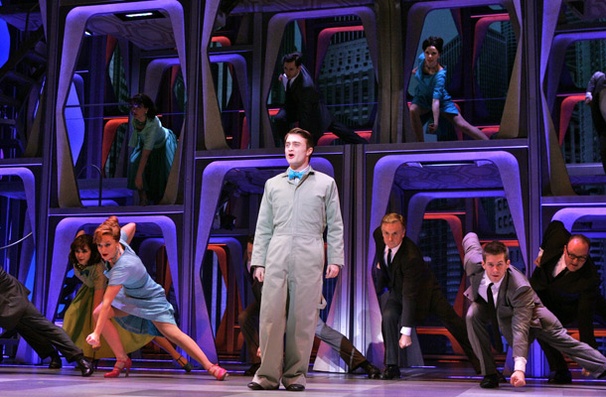
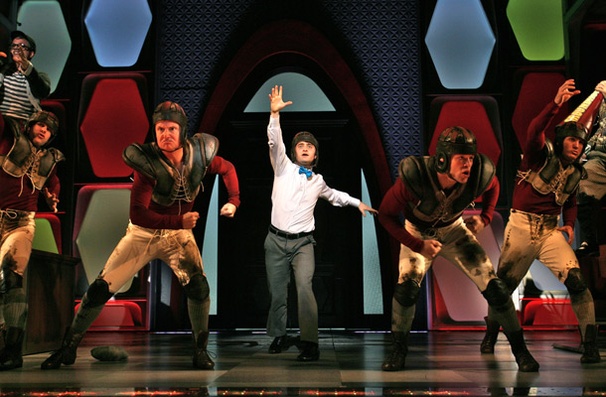
When stage lights dim at the Al Hirschfeld Theatre and the spotlight shines on Daniel Radcliffe beaming from ear to ear, he knows that he has cajoled an unsuspecting pawn to move him around the corporate chessboard and into a higher ranking position.  The audience claps and screams with laughter and the scene resumes as if Radcliffe had not broken the fourth wall just a second before.   As I continued to watch Radcliffe on stage, I began to realize that perhaps it was not just J. Pierrepont Finch that wanted to transform himself, maybe the man playing him desired to do so as well.  

Daniel Radcliffe’s face is just as synonymous with tween and teen pop culture as Miley Cyrus.  Like Cyrus’ Hannah Montana, Radcliffe has become the living embodiment of a multi-billion dollar enterprise.  His face is synonymous with the character of Harry Potter, the protagonist in a series of books penned by J.K. Rowling, which were subsequently turned into hit films.  The complication that can come from an actor’s success being intricately tied to a specific role is that those ties can begin to strangle the actor’s career.  The character becomes larger than the actor – fans, directors, casting agents, producers only want to see the actor play in roles similar to the one that catapulted them to success.  A frustrating obstacle for any artist – especially one that has the added burden of trying to transition from a child star to an adult actor, enter the role of Alan Strang and a nude scene in the revival of Equus.  Add to the mix the end of the Harry Potter series and Radcliffe’s performance as the overly cute but connivingly ambitious J. Pierrepont Finch in the latest revival of How to Succeed in Business Without Really Trying, and I would say Radcliffe has concocted a spell for a new career path as an actor.

Before there was The Office or The Devil Wears Prada, there was How to Succeed in Business Without Really Trying, a 1952 satirical best-selling book by Shepherd Mead that morphed into a hit Broadway musical in 1961 with the help of a book written by Abe Burrows, Jack Weinstock and Willie Gilbert, music and lyrics by Frank Loesser and choreography by Bob Fosse and Hugh Lambert.  How to Succeed in Business Without Really Trying centers on the goings on at the World Wide Wicket Company and deals with themes of ruthless ambition, nepotism, sexism and the deportment gap.  Anyone who has ever waded in the shark-infested waters of any corporation can relate to the characters and wild scenarios that happen at World Wide Wicket.  J. Pierrepont Finch, the lead character, is a window washer determined to ascend to the summit of the corporate ladder no matter what the cost. With the assistance of an omnipresent voice and a how-to book, Finch is armed with all the ammunition he needs to scheme, lie, manipulate and BS his way up the corporate ladder.  Rosemary, a secretary and Finch’s eventual love interest, is equally bent to being an urban steno pool legend by marrying a young executive.  Finch immediately becomes her target.  J.B. Biggley is the President of the World Wide Wicket Company.  He procures jobs for his voluptuous, dim witted mistress Hedy LaRue and Bud Frump, his lazy nephew through marriage whom he would love to fire but keeps on for fear of hearing his wife complain. 

In Finch’s meteoric rise to becoming Vice President of Advertising, he manages to swindle personnel manager Mr. Bratt into believing he knows Biggley, which lands him a job in the mailroom.  After a swift promotion to junior executive from Bratt, Finch convinces Biggley that he is also a fellow alum of Old Ivy by singing a duet of the fight song.  This garners him the curvaceous Ms. LaRue as a secretary and an office.  Suspecting that Hedy is Biggley’s mistress, he uses his boss’ weakness for women against him and is once again promoted to the head of Plans and Systems.  During a reception for Benjamin Burton Daniel Ovington, the new Vice President of Advertising, Finch innocently exposes that the new VP graduated from Old Ivy’s arch rival, he is fired and Finch becomes head of Advertising.  Through all the stunts Finch pulls, Rosemary is faithfully by his side until he realizes that he that she is the woman for him.  Also never far behind is Bud Frump, Finch’s and Biggley’s nemesis.  Once Frump uncovers the affair between his uncle and Hedy, he uses blackmail to obtain a promotion.  He also gives Finch the idea that leads to the young window washer’s downfall.  But Finch’s nine lives are not completely consumed, by sweet talking   Wally Womper, the CEO of the World Wide Wicket Company; he saves everyone’s jobs and finally rids himself of Frump.

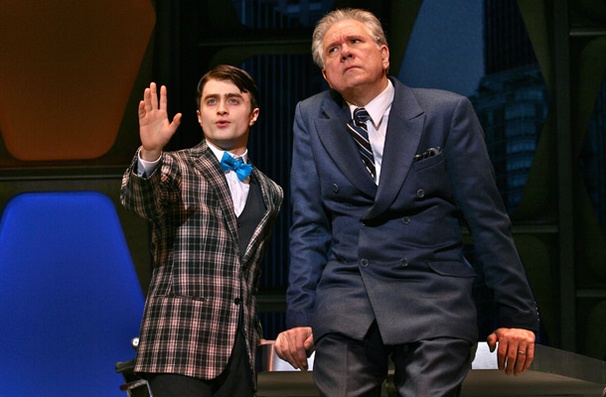
After its initial Broadway run, a film was made in 1967.  In 1995, a revival was staged at the Richard Rogers Theatre and starred Matthew Broderick and Megan Mullaly.  This revival marks How to Succeed in Business Without Really Trying’s golden anniversary and it is better than ever!  Daniel Radcliffe is not just trying to succeed, he is winning.  Who would have known that there was a song and dance man secretly hiding underneath all that muggle get up?  Radcliffe gives a valiant effort as J. Pierrepont Finch.  Instead of doing things “the company way” Finch does things his way and lands on the top of the heap, like Finch, Radcliffe does things his way and scores big.  John Larroquette makes his Broadway debut as Biggley.  To my generation Larroquette will always be known as the womanizing attorney Dan Fielding in the comedy series Night Court.  It was great to see Larroquette on stage reintroducing himself to a new generation; it was equally enjoyable to see that he has lost none of his superb comedic timing and wit.  Michael Park was song and dance man long before he was FBI agent turned Oakdale policeman Jack Snyder in As the World Turns, a CBS soap opera.  After the soap’s over 40-year run ended in 2010, Park returned to the stage.  He is a natural as Bert Bratt.  Rose Hemingway is as sweet as her namesake in the role of Rosemary.  Her voice inspires joy and the quirky chemistry between she and Radcliffe share on stage is perfect.  Christopher Hanke is a wicked bowl of laughs as Bud Frump and if not for Daniel Radcliffe, Tammy Blanchard would have stole the show as Hedy LaRue. 

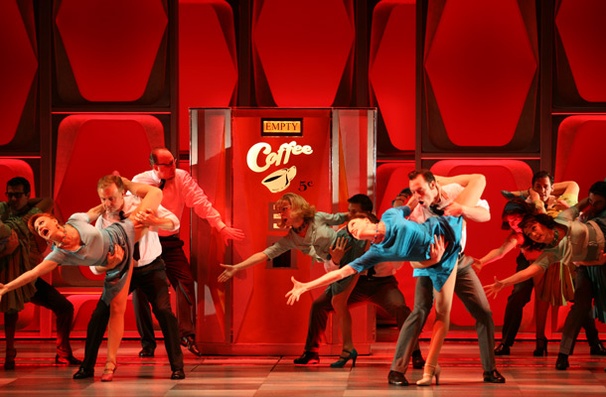
The true star of this revival is Rob Ashford.  He brings the same light-hearted effervescence to How to Succeed in Business Without Really Trying as he did to last year’s revival of Promises, Promises.  The sets are engaging and like the actors, transition very well.  The choreography is robust and physical, yet playful and really assist in elevating the music and lyrics.  Each musical number was better than the first and brought the best out of the actors.  My favorite number is “I Believe in You.”  As Finch and the other executives prepare for his big meeting, he looks into the mirror and earnestly sings himself a pep talk.  From what I witnessed, there is no more need for convincing – Ashford, Radcliffe, Larroquette and the rest of the cast made me a believer.

Photos:  Ari Mintz

And Justice for Winkie

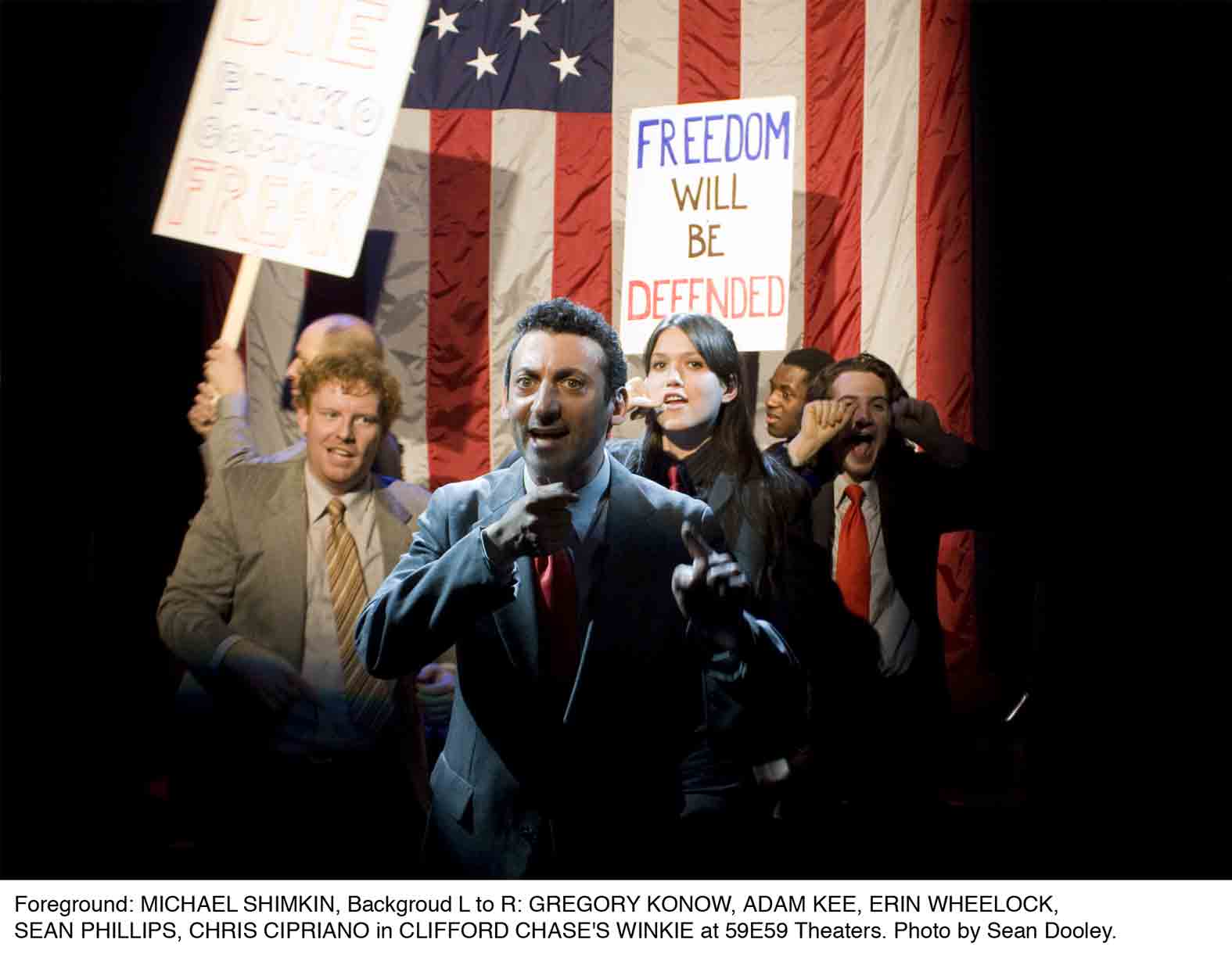
Pinocchio and The Velveteen Rabbit are enduring children’s fables about toys that experience the unconditional love of a child, desire to and eventually become living entities.  In both stories, the protagonists experience different trials before their wish is granted.  These tales have survived over the ages to become classics that are passed down to each generation like an heirloom toy.  And as the 10th anniversary of 9/11 looms over Manhattan, 59E59 Theaters stages a stuffed Molotov cocktail with a terrorist twist in the world premiere of Clifford Chase’s Winkie – sure to be a classic itself. 

Clifford Chase’s Winkie is a 2006 novel written by author Clifford Chase and chronicles the accounts of an 81-year-old teddy bear named Winkie.  Winkie has been a part of the Chase clan for as long as he could remember.  He first belonged to Ruth (Clifford’s mother) and then to her children until he finally became the toy of young Clifford, but as Clifford grows up, he leaves Winkie behind like everyone else before him.  Winkie sits for years on a shelf filled with the memories, until one day Winkie miraculously wills himself to life.  He throws a book out of the window and runs away determined to experience three simple wishes – freedom, eat and go “doo-doo.”  Winkie also experiences an immaculate conception as he gives birth to an off-spring, a fuzzy small teddy bear named Baby Winkie.  The innocence of Winkie’s new life comes to an abrupt halt when his child is kidnapped by a bomb-making lunatic, and he is beaten, shot, taken into FBI custody and charged with 9,678 charges including terrorism, sodomy, witchcraft, treason and vandalism (basically all the crimes of the man that stole his baby).  He is also accused of being the leader of a worldwide terrorist organization that were responsible for the 9/11 attacks and others.   Winkie is brought to trial and the world thrusts itself into “Winkie-mania” as battle lines are drawn and crackpots, liberals, conservatives and everything in between add their two cents to the saga about a teddy bear accused of the most heinous acts against mankind.

The Godlight Theatre Company scored a winner with Clifford Chase’s Winkie.   Playwright Matt Pelfrey cleverly constructs an irresistible, profound and inspirational adaptation that offers a stellar translation to Clifford Chase’s novel for members of the audience unfamiliar with the book.  Director Joe Tantalo wills this play into fruition, tactfully threading a production that weaves humor, hysteria, imagination and sentimentality and totally relies on the cast to sell it.  The theater is completely devoid of a set, but scruffy, little Winkie and the rest of the cast (which features Nick Paglino, Greg Konow, Adam Kee, Elliot Hill, Sean Phillips, Chris Cipriano, Michael Shimkin, Erin Wheelock and Geraldine Johns) absolutely compensate for the lack of scenery.  From the moment Winkie is place on the stool center stage, I was completely enthralled in the story.

Like a good allegory, Clifford Chase’s Winkie draws its audience in with a strong relatable character.  It is clear the teddy bear has a Christ-like aura.  He comes into this world (which is a miracle) knowing nothing but love, he creates a life in his image (another miracle) and he is persecuted by the very people he wanted love and share love with.  Winkie eloquently states during his trail, “So many times and worst of all when I lost my child, my eyes wanted to click shut forever – yet somehow I still had love to give, and always have.  Why, why, why?  Despite it all.  Why was I created, and why do I love?  What is it about me that survives?  Despite it all, despite it all:  It ‘s my heart: I can’t help it.”  And what makes this production so appealing is its heart.  It is a gutsy, unflinching portrait of what society has become in the wake of the age of terrorism.  At times I was howling with laughter and others I was holding back tears, but throughout the play I listened (as Winkie did) with an open mind.  The idea that a stuffed animal could be a terrorist is completely asinine, perhaps just as unintelligent as profiling certain groups of people or using the justice system and war to create one’s own personal witch-hunt.

The 2011 theatre season is still unfolding, but this production is the best show I have seen thus far.  Clifford Chase’s Winkie may not be the story you recite to your kids at bedtime, but it is the type of show you can take your children to in an effort to explain the absurdities of the world and take something away from it for yourself.  After watching terrorists create battlegrounds and casualties whenever and wherever they choose, the world may never be the same, but it does not mean that we have to succumb to fear, intolerance and meeting naked aggression with more aggression – there is always room for love and humanity.

 Photos:  Sean Dooley

What Happens In Jersey…

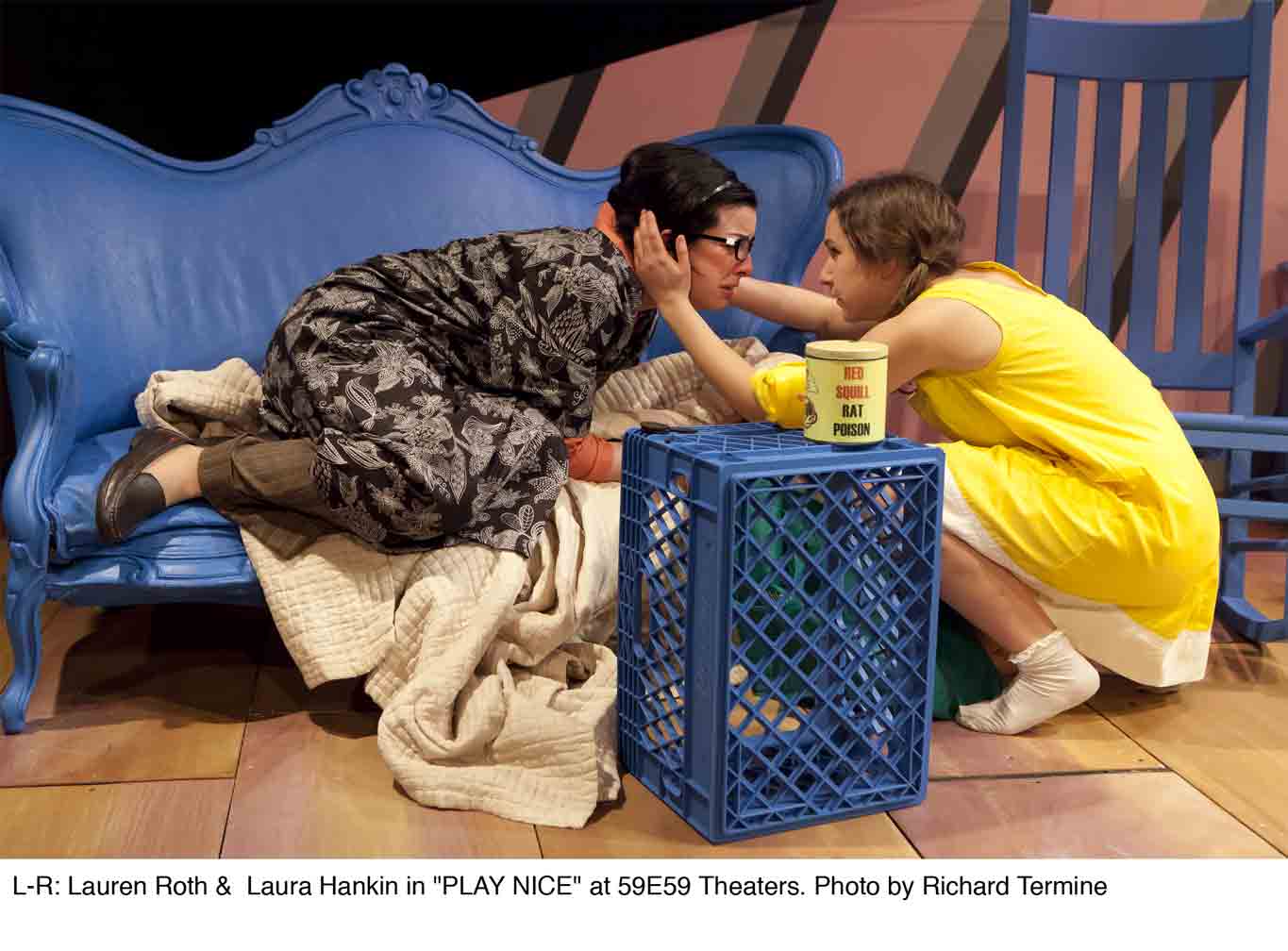
What is it about Jersey that gets such a bad rap?  Frank Sinatra, Bruce Springsteen, Jerry Lewis, Joe Pesci and Bon Jovi all came from the Garden State.  Before Sin City opened its first casino, Atlantic City was a gambler’s playground for years and with its beach and boardwalk, it played host to the Miss America Pageant for decades.  But despite these facts, New Jersey is constantly the butt of tri-state jokes and poorly depicted in the media, i.e. Jersey Shore.  Then came a fictional story set in an attic in Ridgewood, New Jersey, touted as a gothic fairytale, and my hopes that New Jersey would be seen in the public eye as more than a fist-pumping toxic dump was restored.    Unfortunately, Play Nice! did little to enhance New Jersey’s public image nor did it fully live up to its potential as a gothic fairytale.

Play Nice! focuses on Isabelle, Luce and Matilda.  On the surface, their lives seem ideal, but behind the doors of their home their reality is quite different. Each of the kids are forced endure their fare share of abuse from their mother, who is an obese alcoholic.  Determined to prove to her neighbors that she deserves to live in this affluent bedroom community 20 miles from New York City, the children’s mother demands perfection in and out of the home, which is only partially furnished to enhance her façade.  The bulk of Luce and Isabelle’s time is spent in the attic escaping into their world of make believe where there mother, the Dragon Queen, cannot reach them.  Matilda is relegated to be the maid and her mother’s verbal whipping girl.  The play’s dark plot primarily takes place in the attic – very V.C. Andrews’ gothic, but that is where the similarity stops.  On Thanksgiving Day the mother is poisoned after having her afternoon tea and the children must utilize their active imaginations to simulate the  events leading up to the poisoning.

Play Nice! is a journey in which pretend can uncover truth and stretches the idea of what a fairytale can be.   It also challenges one’s typical perception to the term gothic.  My issue with this dramatization was the venue in which it took place.  I believe the stage, especially an Off-Broadway one, might not do this story justice.  Ridgewood, New Jersey is a very well-to-do village, but with exception to the mother’s references to this idyllic town, the audience does not get to experience it.  The pretend sequences between Luce and Isabelle once he runs away from his mother are well acted, but the lack of background diminishes the somberness of their reality.  Play Nice! will end its limited run at 59E59 Theaters on March 27.  While it is not necessarily my cup of tea with regards to a play, I firmly believe this story would work well if not better as a film and would happily pay $8.50 to see if my theory is right, as well as to see a few scenes of New Jersey shown in a better light.

Photos:  Richard Termine

Love in Bloom

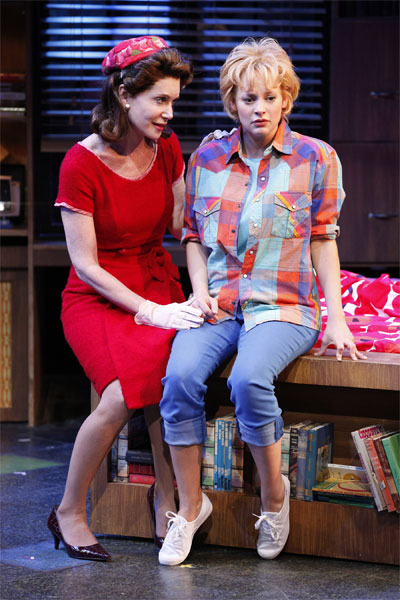
On a stage at the Westside Theatre, located at 407 West 43rd Street, the house lights dim and the stage lights brighten, a young girl with a shaggy blonde cut and pink nightie is sprawled unconscious across the bed, the oven door is open and “What the World Needs Now Is Love” is skipping on a record player.  If not for the intervention of a geeky Good Samaritan, the young girl would be a goner.  Sounds like a scene from Promises, Promises, right?  But it is actually the opening scene of the hilarious revival of Cactus FlowerCactus Flower debuted at the Royal Theatre on December 8, 1965 with Lauren Bacall, Barry Nelson, Brenda Vaccaro and Burt Brinckerhoff completing the original cast.  After a close to three year run, the show closed and in 1969, it was adapted into a film starring Ingrid Berman, Walter Matthau and Goldie Hawn.  There is no question of the show’s success as Vaccaro and Brinckerhoff were nominated for Tony Awards and Hawn won an Oscar, but the question that lingers for me is was this farce about love written by Abe Burrows or Puck?  Cleary Burrows took inspiration from those misguided lovers from Athens and like A Midsummer Night’s Dream this romantic comedy is just as zany and genius as the Shakespeare classic. 

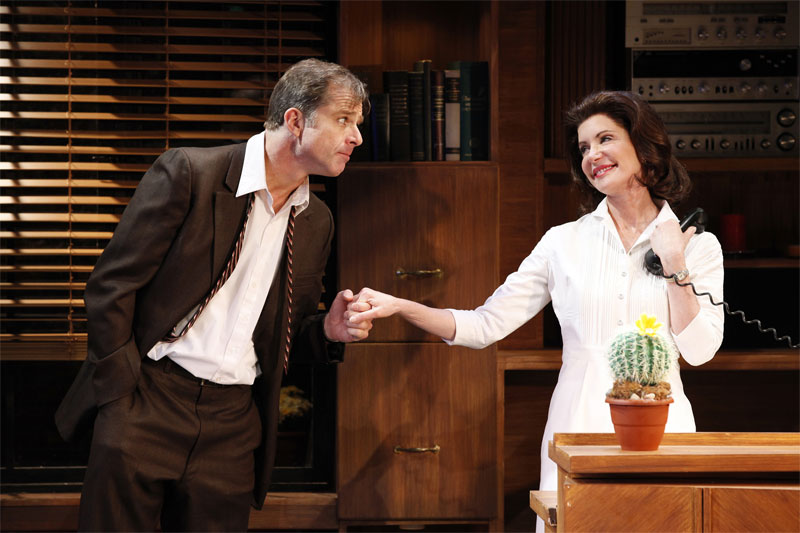
Cactus Flower grows around the love lives, and in a certain case lack thereof, of Dr. Julian Winston, Toni Simmons and Stephanie Dickinson.  Julian is a good looking, middle-aged Park Avenue dentist and one hell of a ladies’ man.  He claims to love Toni, a bright-eyed hopeless romantic that is in love with Julian despite the fact that he has told her that he is married with three kids.  What makes this idyllic young girl love the dentist is his honesty about his ball and chains, but what she doesn’t know is that his wife and kids are figments of his imagination – an embellished cover to protect his liaisons.  After Igor, the young, geeky writer next door, saves Toni from certain doom, Julian decides to marry her.  But there is a problem, his wife and kids.  Toni demands to meet his wife to ensure that she also consents to the divorce.  Enter Stephanie, Julian’s old maid secretary.  Last time she had a good time Eisenhower probably was in office.  Her thorny, abrasive demeanor and efficiency in taking care of Julian mask her love for the good denstist.  Julian, after much convincing, enlists Stephanie to help him in his web of lies, and the rollercoaster of laughs start from there.  While keeping up his façade, thus keeping Toni in the dark , Julian winds up falling for Stephanie and Toni realizes that Igor is the man for her. 

This revival of Cactus Flower tickles the funny bone and blossoms with stellar performances.   Maxwell Caulfield may be best known for being Sandy’s cousin in Grease 2 and for his stint on Dynasty and The Colby’s, but as the philandering Dr. Julian, Caulfield is both deceitfully charming and amusing.  Jenni Barber as Toni is probably the most delightful scatterbrain I have ever seen.   Throughout the play her dizziness can drive you to want to jump on stage and shake until she finally displays a modicum of sense, but her immature quest to find perfection in love is admirable.  Barber’s portrayl of the idealistic, young Toni is infectious.  The character of Stephanie is the true star of the story.  She is the cactus flower, prickly and barren that eventually bursts with femininity and sensuality.  Lois Robbins simply flourishes as Stephanie Dickinson.  She is witty, venerable at times and funny all the time.  Stephanie may be the personification of a cactus flower, but Robbins is no shrinking violet.  Her performance is as sweet as a rose.  Jeremy Bobb is droll is the Igor Sullivan, the writer from next door.  He knows his position and plays it well.  The definite scene stealers in this production are John Herrera, Anthony Reimer and Robin Skye.  Their portrayals as Señor Arturo Sanchez, Harvey Greenfield and Mrs. Durant are thigh-slapping, laugh-out-loud humorous.  Anna Louizos received a Tony nomination for her set designs for In the Heights and High Fidelity.   She creates another stunning visual setting to accompany a great cast of actors and direction from Michael Bush.  Although the changes throughout the scenes were not seamless, it in no way diminished the authenticity of the show nor pulled the audience out of the fantasy.  Cactus Flower’s new run will end at the Westside Theatre on May 29.  I assure you, a desert plant has never been so entertaining.  Cactus Flower provides a great 60s soundtrack, lively performances and smiles that will keep growing for days. 

Photos courtesy of O&M Co.