Nick Jonas Succeeds Harry Potter

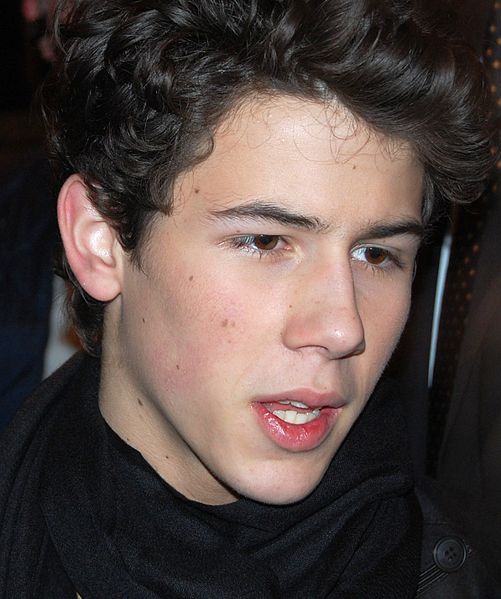
Nick Jonas is no stranger to the bright lights of Broadway.  He has appeared in productions such as Annie Get Your Gun, Beauty and the Beast and Les Miserables.  Next year the Jonas brother will make his fifth appearance on Broadway as he replaces Daniel Radcliffe in How to Succeed in Business without Really Trying.

Jonas will assume the role of J. Pierrepont Finch, beginning January 24 and will play the role until July 1.  Radcliffe’s final performance is set for January 1.  Darren Criss, best known for the role of Blaine Anderson on the hit Fox show Glee, will make his Broadway debut on January 3, taking on the role of Finch for three weeks until Jonas begins his latest stint in the theatre.

Broadway Sheds Its Prices for Fall

The sun-filled days, the crisp in the air at night, the Caribbean Day parade on Labor Day, the makeover of Lincoln Center for Fashion Week – all signs that fall is fast approaching.  With the impeding10th anniversary of 9/11 reminding New Yorkers of how resilient we are and how much we have overcome since that tragic day, Broadway brings discounts center stage. 

After the events of September 11, 2001, Broadway as well as other businesses in the theatre district suffered huge losses in sales.  In response, Seasons of Savings was created in January 2002 to entice theatergoers to go back to The Great White Way.  The special edition Playbill is published twice a year, and is called the unofficial “New York Theatergoer’s Guide to Times Square.”  

Seasons of Savings features discount coupons with savings codes for various Broadway and Off-Broadway shows as well as restaurants, hotels and other Big Apple attractions.  On August 29, Serino Coyne, Broadway’s largest advertising agency, hosted an event at Tony’s Dinapoli, located at 147 West 43rd Street, to introduce this year’s coupon booklet.  Tony’s Dinapoli is a family style restaurant located in the heart of the theatre district.  It is famous for its scrumptious Italian cuisine and great relationship with Broadway.  This year’s booklet offers discounts to Memphis, Mary Poppins, Godspell, Chinglish, The Adams Family, Catch Me If You Can, Circle Line and more.  Seasons of Savings makes Broadway more affordable and provides an opportunity for more people to fall in love with the theatre.  Tis the season to save, I encourage all FAMERS to take advantage. 

To learn more about Seasons of Savings and its discounts, click http://seasonofsavings.com/, and join their mailing list.


Judy Garland Comes To Broadway

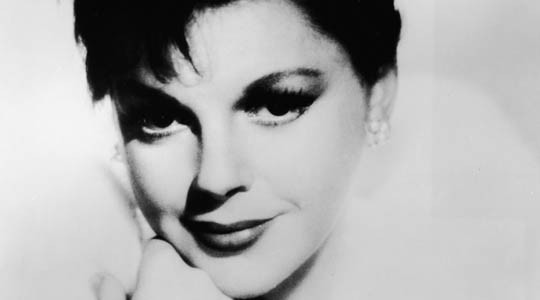
As the fall 2011 season begins on Broadway, there is buzz about a new musical coming in spring 2012.  Peter Quilter’s End of the Rainbow, a production about the last months of Judy Garland’s life, is poised to begin performances March 19 at a theater to be announced.  The show is set in London in 1968 and chronicles her problematic life on and offstage as Garland finishes her final performances in The Smoke. Two-time Oliver Award winner Tracie Bennett will reprise the role of Garland, which she originated in London, on Broadway.   End of the Rainbow features several of Garland’s signature songs including “Over the Rainbow” and will make its US debut in January in Minneapolis as it gears up for its Broadway run.

Born Frances Ethel Gumm in Grand Rapids, Minnesota, Judy Garland was the youngest child of Vaudevillian parents.   She started in show business at the tender age of two joining her older sisters on stage as The Gumm Sisters.   In 1935, she signed a contract with MGM and in 1937 appeared in the first of a string of successful “backyard musicals” co-starring Mickey Rooney.  In 1938, she began filming The Wizard of Oz playing the role of Dorothy, the character she is most known for.  Her years at MGM and following her departure from the studio were tumultuous at best.  Throughout her life she suffered mental and physical illnesses and battled alcohol and drug addiction.  She was married five times and had three children, Liza Minnelli, Lorna Luft and Joey Luft.  Judy Garland died at age 47 in London.  Her legacy remains as a performer, one of the greatest female stars of all time and a gay icon.

“External resource for help with drug addiction in Minnesota: http://www.detox.net/clinics/detox/minnesota/

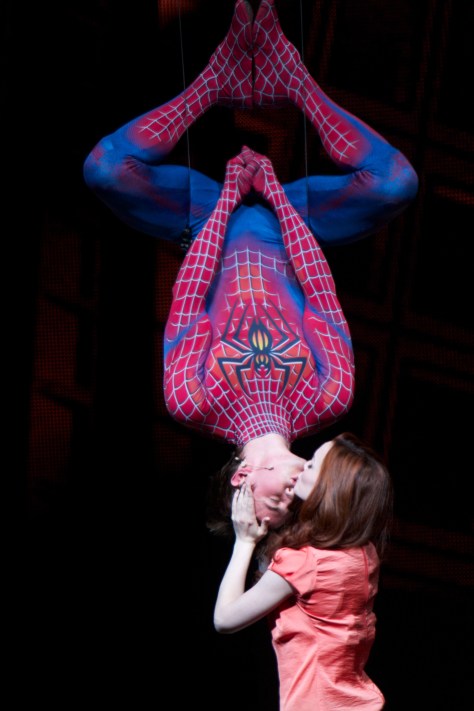
Spiderman 2.0 The Future of American Musical Theatre Personified

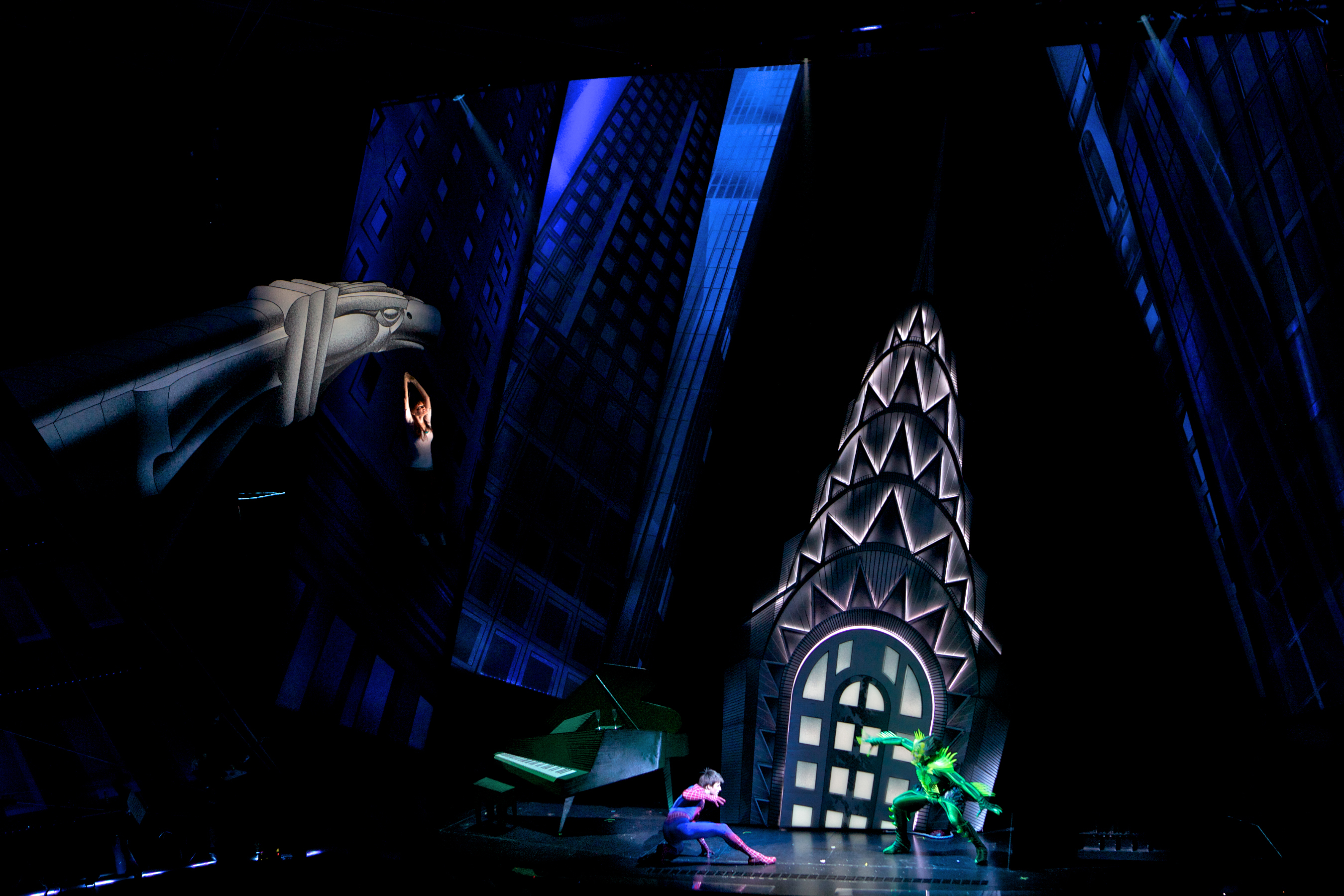
If I was presented with the task of summing up Spider-Man: Turn Off the Dark in two words, I would adamantly choose creative and ambitious.  If given a bonus word, I would throw in persistent.  Indeed it was persistence (perhaps plain stubbornness) creativity and ambition that has powered the engine of this production as it steamrolled its way onto Broadway.  More often than not, Peter Parker’s journey to the stage has been the equivalent of a run away train with several derailments.  In 2002, Marvel announced that film and theatre producer Toney Adams would produce a Spiderman musical.  Three years later he would suffer a stroke and die while the creative team, which included U2’s Bono and Edge and Julie Taymor, gathered to sign contracts.  An omen perhaps, but the production found a new lead producer in Adams’s partner David Garfinkle and carried on.  During its push to opening night, the musical has obtained a ballooned budget of over $70 million, received the honor of having the most previews of any Broadway production in history and endured cast injuries, multiple tongue-lashings by the critics as well as creative and cast changes.

Despite the rollercoaster ride during its prolonged preview period, Spider-Man: Turn Off the Dark has prevailed (at least over its former obstacles) and officially opened at The Foxwoods Theatre, located at 213 West 42nd Street, on June 14. The story of Peter Parker aka Spiderman is well-known. He is Marvel’s lead character and one of the most commercial superheroes.  His sagas have been depicted in comic books, newspaper comics, cartoons, televisions and on film with Tobey Maguire in the lead role.   Although the producers and creative team behind this production overcame epic hindrances that would have frozen most shows quicker than a gaze from Medusa, the real encumbrance was creating a musical about a character whose story is so popular.
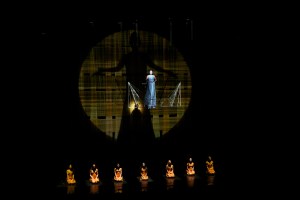
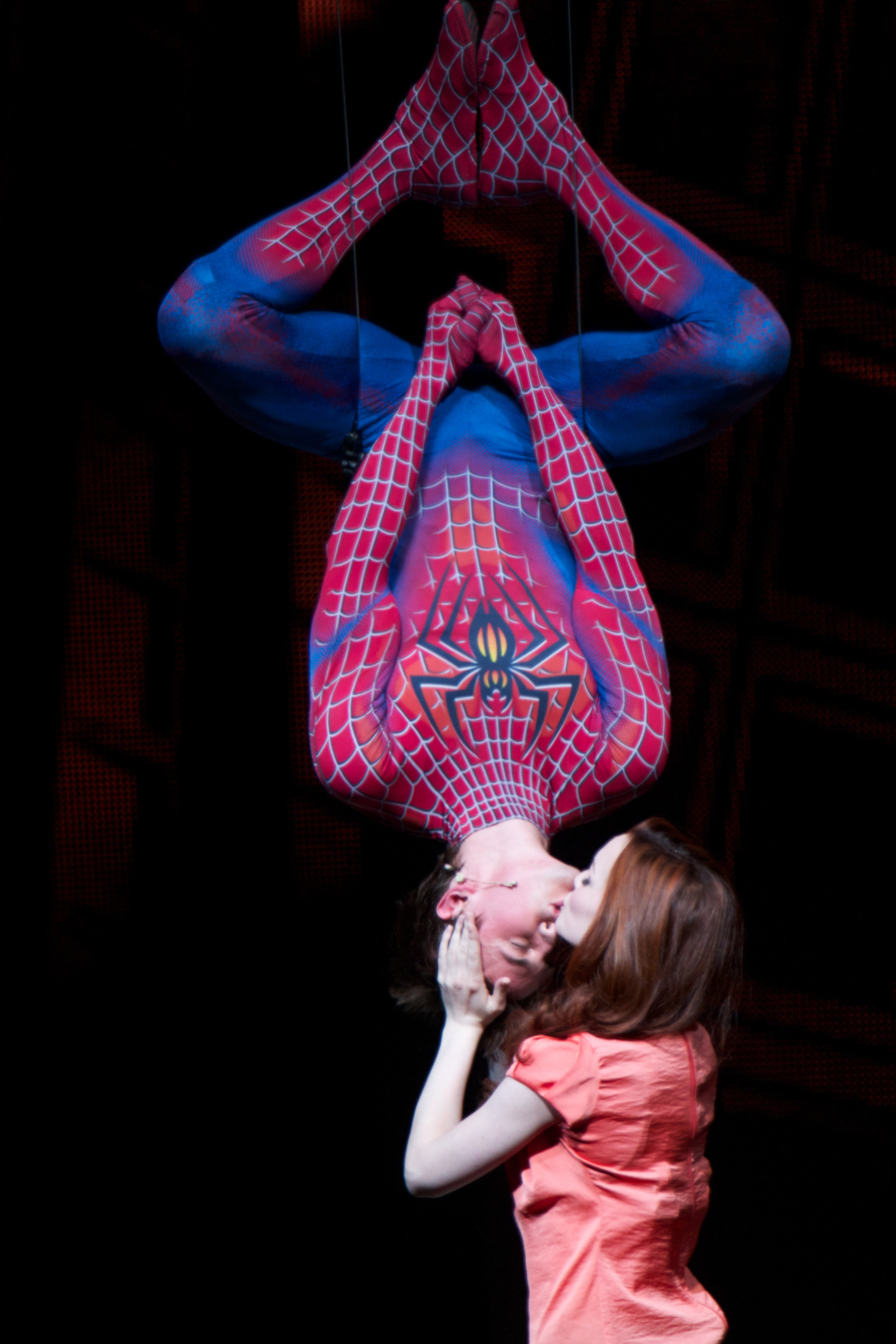
Spiderman 2.0 begins in school with the Peter Parker reciting his oral book report, the story of Arachne the world’s first with spider, to the class.  Suddenly, Arachne descends from the ceiling ala Cirque du Soleil complete a Greek chorus visually bringing the myth to life. It was then that I realized this adaptation of the Spiderman story was going to be different than any I had viewed or read before.  The introduction of the Arachne myth was a refreshing and integral component.  In the first incarnation of the stage production Arachne was Spiderman’s villain, but in Spiderman 2.0 she is transformed into an ethereal guiding force, appearing when Peter is most in doubt about his gifts and his purpose.  I found the intertwining of Greek mythology to the Spiderman legend to be a marvelous addition to the story.  

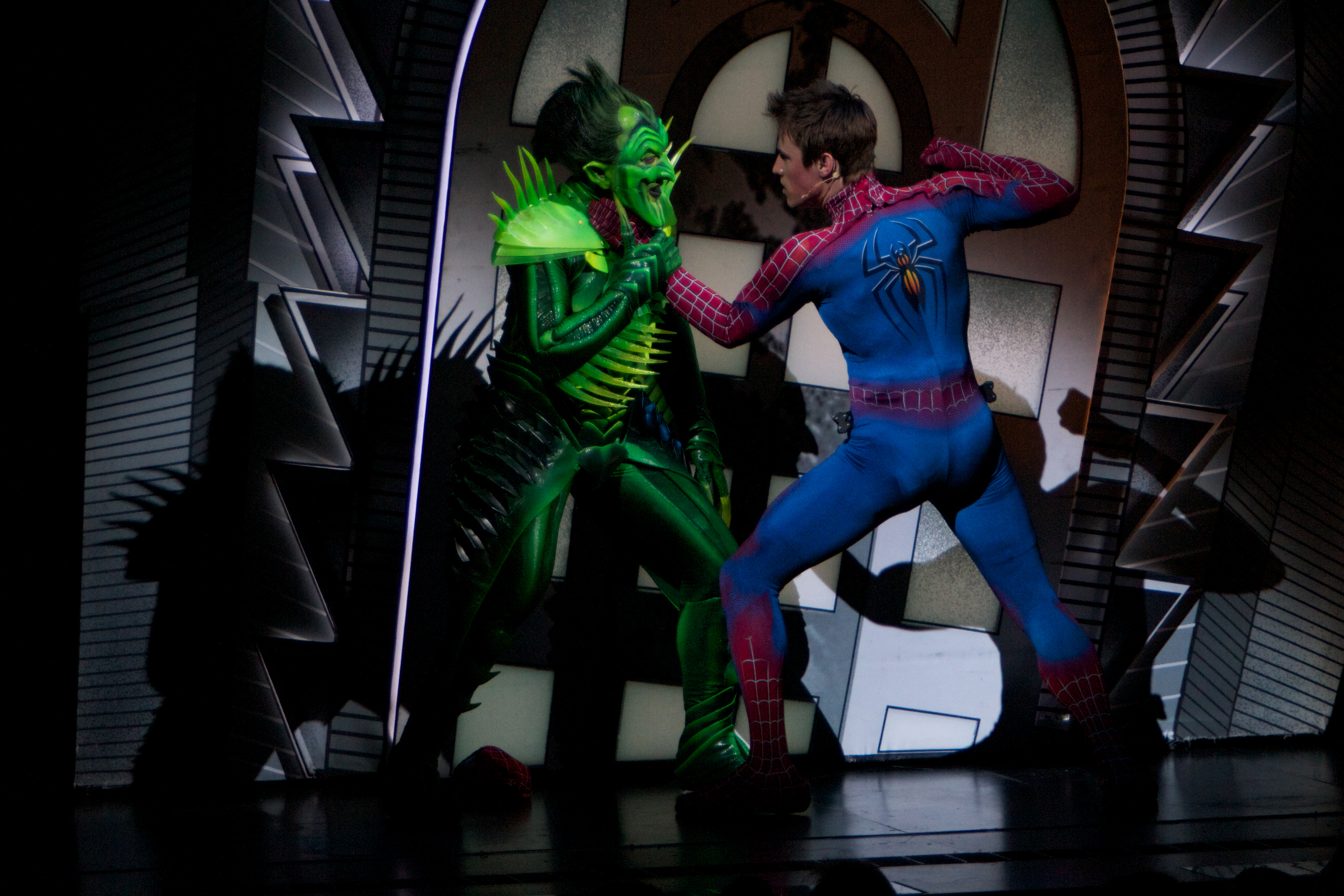
The book is a mélange of the comic and film series; besides the insertion of Arachne (characterized by T.V. Carpio), the book brings no surprises to Spiderman’s character, which should be a relief to die-hard Spiderman fans.  Peter Parker (played by Reeve Carney) is a highly intelligent student, with a keen interest in science.  He is tormented at school by Flash Thompson (portrayed by Matt Caplan) and his band of hooligans.  He is secretly in love with Mary Jane Watson (played by Jennifer Damiano) who harbors a desire to be an actress and get away from her home life.   Peter is an orphan and lives with his Aunt May and Uncle Ben (portrayed Isabel Keating and Ken Marks).  During a field trip to Norman Osborne’s genetics lab Peter is bitten by a genetically altered spider.  From the bite he develops a muscular frame, 20/20 vision and other spider-like abilities including releasing webs from his wrists.  At first, Peter seeks to capitalize from his new powers, but after his uncle is murdered by a thief he is persuaded by Arachne to use his powers to fight evil.  Donning a costume, he becomes his masked doppelganger Spiderman and begins taking down Manhattan’s criminals.  He also gets a job at The Daily Bugle as a freelance photographer catching exclusive photos of Spiderman for EIC J. Jonah Jameson (played by Michael Mulheren) who adamantly believes that the masked crusader is actually a criminal.   Meanwhile, Mary Jane pursues a career in the theatre as a romance with Peter heats up and Norman Osborne (played by Patrick Page) convinced that Spiderman pilfered his research decides to experiment on himself, kills his wife Emily (portrayed by Laura Beth Wells) in the process, goes insane and mutates into the Green Goblin.  As a Green Goblin Osborne manufactures a troupe of similar mutants that he labels the Sinister Six, together they unleash a terror-spree, the likes of which have never been seen, on Manhattan.  Spiderman, who contemplated retirement to protect his loved ones, must now live up to the phrase, “With great power comes great responsibility,” and has a showdown with the Sinister Six and the Green Goblin, who kidnap Mary Jane with purpose of drawing Spiderman out of hiding.  Spiderman defeats the Green Goblin, rescues Mary Jane and all is right in New York City for now.

After viewing Spiderman 2.0 I took some time to brood over what I saw.  I did not see Spiderman during its episodic ramp up period, so I researched articles from critics that had seen both versions.  Most critics did upgrade their marks from an F to a C+, but at best most of them saw the production as a boilerplate musical.  I must admit that I was ambivalent to the musical when first leaving Foxwoods Theatre.  My immediate thoughts summoned another musical that the critics impugned during its run, Taboo, the musical based on the life of Boy George.  It was edgy and ahead of its time.  There were components that worked extremely well and if not for the internal issues and the critic’s harsh reviews, it might have had a longer run.   Although there are parallels in Taboo’s Broadway story with that of Spider-Man: Turn Off the Dark, I firmly believe that a premature closure will not be its fate.  The diligence of everyone involved in this project will not let that happen.  Also, Spiderman is a character loved globally.  If New Yorkers do not want to pay the price of admission, there are plenty of tourists that will.  I propose that as long as our friendly neighborhood superhero is starring on Broadway, this musical will be a stop on any vacationer’s list, ranking just below The Statue of Liberty, Empire State Building and Times Square.
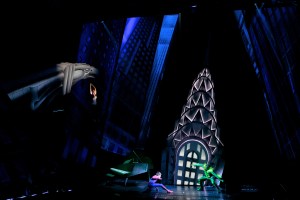
Like the weaver Arachne, Spiderman 2.0 weaves an intricate, innovative web; bottom line: Spider-Man: Turn Off the Dark turned Broadway out! Critics, including myself, are so used to the status quo musical paradigms, that it became laborious rating the production using the standard criteria.  There is a tendency to reject something that is new, but there is no doubt that a shift has happened in the theatre, a changing of the musical guard literally and figuratively.   It is trailblazing, pushing the envelope of musical theatre into the 21st century.  But like any pioneer there still bumps along this unforged path.  As a new production, Spider-Man: Turn Off the Dark is greater than the sum of its parts, but there is no denying that certain elements function effectively better than others.  Although the book sticks close to the Spiderman comic, it is mediocre. I am a huge fan of U2 and could not wait to see what Bono and Edge would do, needless to say, it is no Tommy.  Bono and Edge’s imprint is present throughout the music and lyrics, Edge’s guitar licks and Bono’s writing style are beyond reproach.  However, there are numbers that worked to perfection while others were just average.  “Behold and Wonder,” “Bouncing Off the Walls,” “Rise Above,” “If the World Should End,” “Turn Off the Dark” and “I Just Can’t Walk Away” were pleasers with myself and the audience.  When it comes to crafting a musical Bono and Edge are not as great as Andrew Lloyd Webber just yet, but give them time and they will be.  The choreography infused urban movements like krunking during “Bullying By Numbers” as well as hip-hop/African heel-toe dance steps.  The urban choreography was not executed as strongly as other musicals that I have seen that have used these dance styles. 

Overall, the cast triumphantly works with the material they are given, and are the real success story.  It is their execution of the material that is the raison d’être why the elements that do work operate brilliantly. The sets use screens and are stimulating and visually engaging  as a 3D pop-up comic book. But it is my sincere belief that the most outstanding part of the show is Spiderman, or should I say Spidermen and the death defying aerial stunts that he and Green Goblin engage in.  Although Carney plays Peter Parker and Spiderman, there are other stuntmen and dancers that portray Spiderman throughout the show.  The martial arts inspired choreography the dancers perform is enlivening.  As much as your eyes are on stage, your pupils will be fixed on the ceiling, the balcony and all over the theatre as Spiderman uses the entire theatre to fight crime and combat the Green Goblin.     

Spider-Man: Turn Off the Dark is a boundless ride that rivals any rollercoaster at Six Flags Great Adventure – a spectacle P.T. Barnum would be proud of.  At best, Spiderman 2.-0 is an exhibition of what American musicals could be – a shining glimmer of the future.  At worst, it is a science experiment that works but still needs some fine tuning.  Personally, I reside comfortably on the fence neither loving it nor hating it completely.  Spider-Man: Turn Off the Dark is unlike any musical that has come before it, in my opinion it is not a musical at all, it is art on a Broadway stage –pure inspiration and that is the most paramount reason to go and see it.

Photos courtesy of O&M Co.
Don’t Ask, I’m Gonna Tell Anyway

When most people think about war, their imaginations tend to lead them to the traditional sense – old and middle-aged men and women in Brooks Brother’s suits sitting in the House chamber making proclamations of war, the president reciting a skillfully prepared address to the American people describing why we must plunge into a conflict, young men and women in fatigues flying off to foreign lands, carrying the fears, pride and sometimes anger of a nation square across their shoulders all while preparing to face death daily.  But what if the war is not being waged in humid jungles or blistering deserts, what if the battleground lies within? 

A soldier’s job is not to ask why, theirs but to do and die.  But what if you cannot relegate yourself to be a weapon of destruction killing on the government’s command?  What if the word “why “echoes in your head until the sound replaces a soldier’s instinct to act without question?

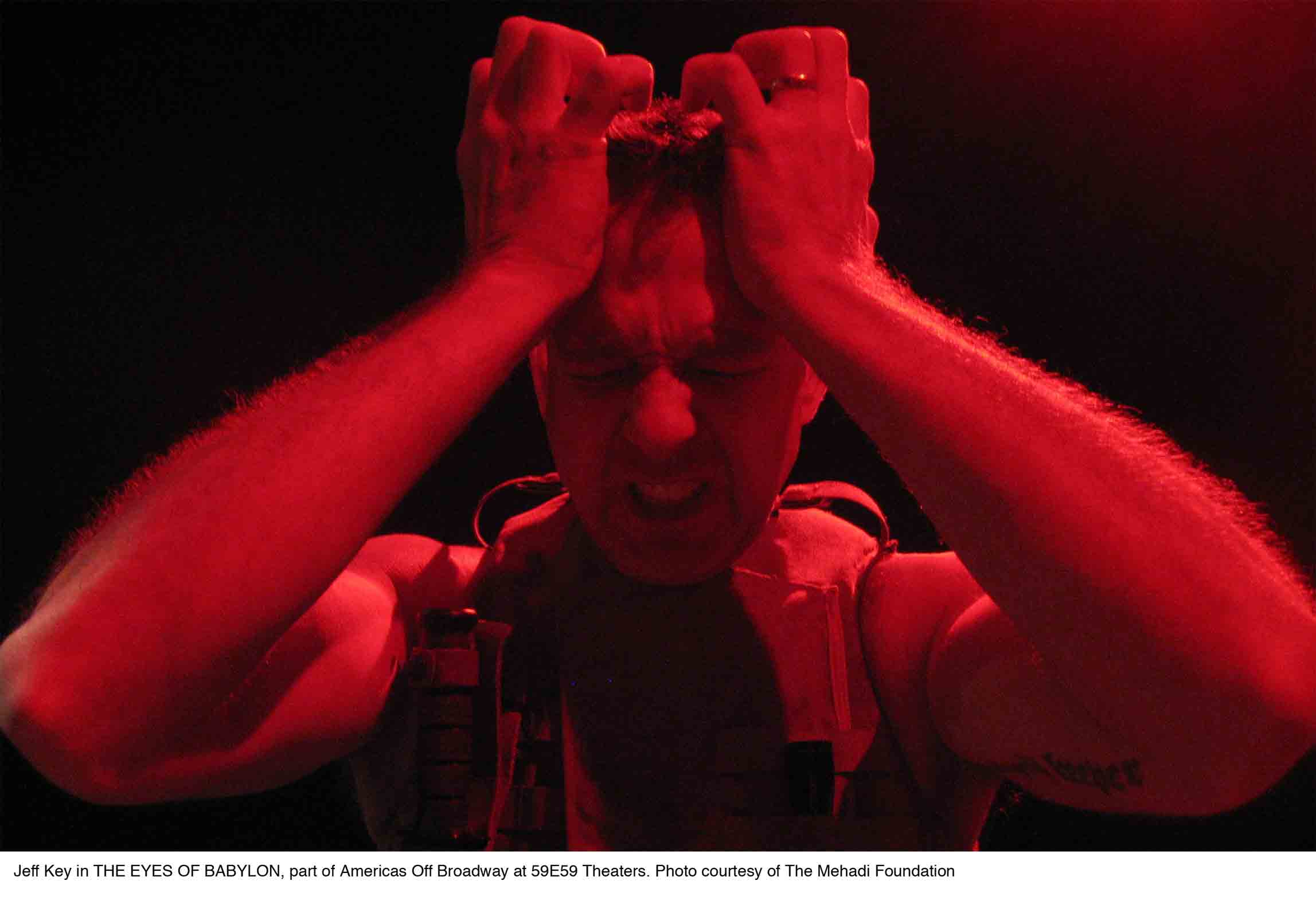
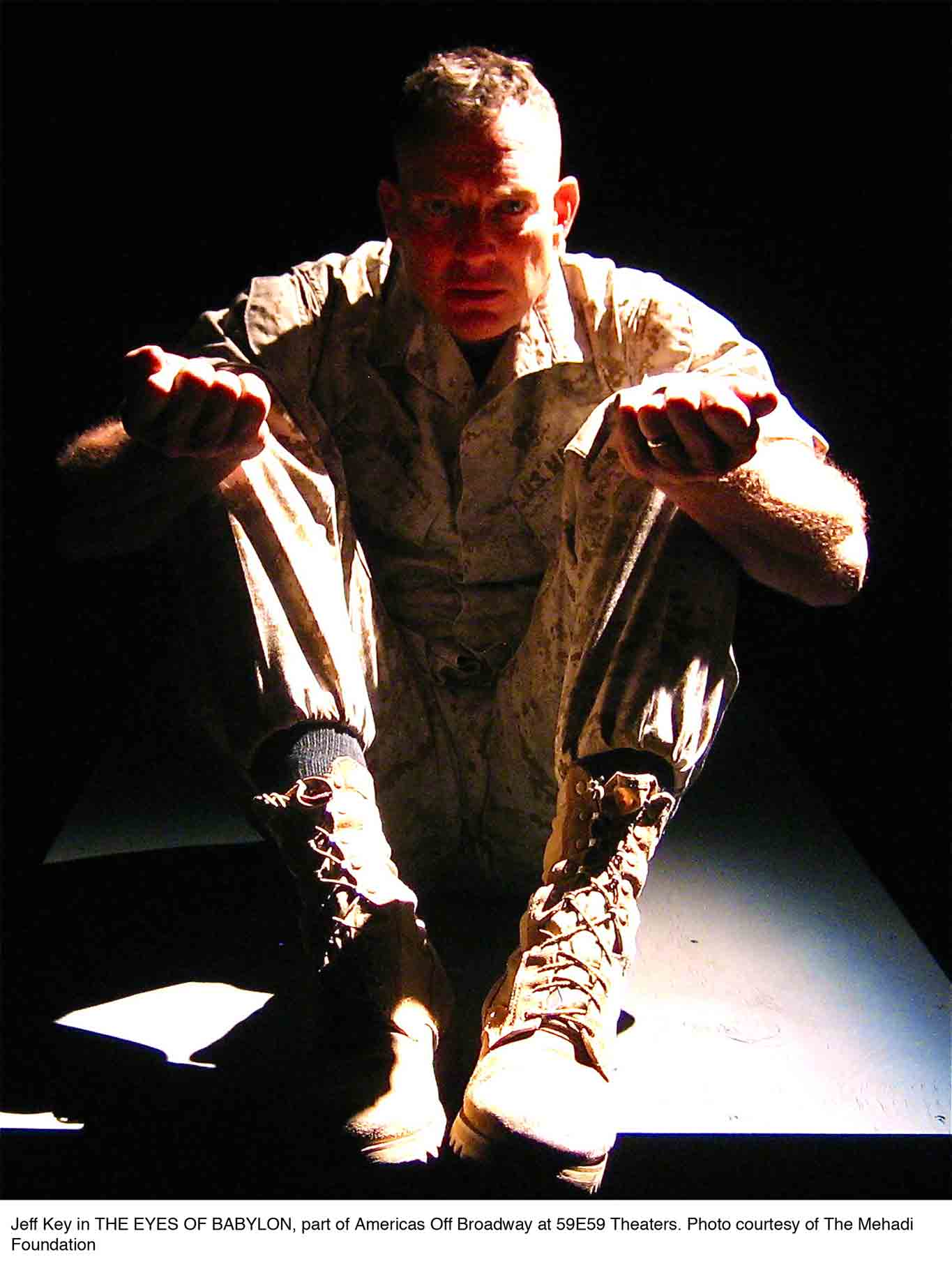
Opposing fractions gripping and ripping at one’s soul can be just as deleterious and exhausting as watching for landmines or dodging bullets.  Former Lance Corporal Jeff Key was already at war when he was flying off to Iraq to strike as our sword of vengeance for the attacks of 9/11 and liberate our country and indeed the world from terror-mongers like Saddam Hussein.  The Don’t Ask, Don’t Tell policy instituted under President Clinton forced a soldier to betray his existence.  The propaganda President Bush used to invade Iraq forced a soldier to betray his oath. What to do?  Keep a descriptive journal and transform it into a robust, introspective one-man stage production.

There is no doubt that the American public was inundated with images, video streams and commentary from the Iraq War.  It was like a soap opera “As the War Turns” or a Sony Playstation videogame, only this version had real casualties.  Using photos he took and the illumination of his rhythmical verse, Key’s narrative transports the audience into the Iraq War in a more intimate way than CNN and other network’s daily updates ever did.  The Eyes of Babylon is a spellbinding 90-minute monologue that is real soldier’s story instead of a manufactured segment of media.  Told with humor and conviction, Key relates a story with his Alabama/Forrest Gump accent that displays pure emotion.  He takes the audience on a journey that begins with 9/11 and ends with him coming out as a gay man on CNN.  Along this journey Key communicates the feeling of connecting with the universe’s most insignificant creatures, the eroticism of a subtle shared moment with a gay Iraqi man, the joy for simple pleasures such as the soundtrack from Rent that allowed him to mentally venture off from the state he was currently in, the realities of how soldiers shower and move their bowels in combat situations, the brutality of soldiers with a hard on to get their gun off and his growing abhorrence for the war he was sent to.

The words of this warrior poet are as powerful as a M16 with a full clip and no less haunting than a wolf howling at the full moon.  I was beyond transfixed; I hung on to every word that flowed from his lips like a recruit swinging on an immense set of monkey bars.  Key was my sergeant and it was up to me to follow his guidance and make the links until I had finished the task, feeling better for going through the exercise with him. Key is truthful and is the personification of the Marine term “Semper Fi”.  Always faithful, Key demonstrates what it means to be a true patriot all while changing conventional paradigms of the expression.  This production is a significant piece of theatre – it is Off-Broadway’s To Hell and Back. Exchanging a rifle and assault vehicle for a pen and stage Key is more formidable.  Using his weapon to the fullest, The Eyes of Babylon challenges the status quo, flips them the bird and gives them a salute at the same time.  Key is mercenary for those who have known little mercy, for those who are used by this government and forgotten about like cracked egg shells after the omelets has been cooked and you best believe he will go down with his boots on.

The Eyes of Babylon is not just a gay man’s account of his stint in the military during wartime.  It is a story every military person can relate to.  A person joins the military for different reasons.  When he spoke I felt the presence of my friend that gave the ultimate sacrifice in a gun battle in Iraq, a man that joined the military to provide a better life for his two sons, a man whose beautiful face I will never see again.  On a personal note, this production was closure for me.  I want thank Key for sharing his story.  I was so angry upon hearing of my friend’s death, knowing that he lost his life without any of his friends or family around as he made his transition plagued my heart.  But after viewing The Eyes of Babylon I realized that he was surrounded with love from his fellow brethren and if he passed serving with anyone like Key, he was never alone.  I salute you Jeff Key for a job well done.

Photos courtesy of The Mehadi Foundation

The Book of Tony

The American Theatre Wing’s Tony Awards’ long association with Broadway has created 64 chapters filled with red carpet glamour, humor, special surprises, musical numbers and acceptance speeches.   Last night, the 65th chapter was recorded, and this year’s show was filled with a Mormon takeover, puppet stallions, Spiderman jokes and a whole lot of heart. 

Host Neil Patrick Harris is eons away from his teen surgeon days and his second round at playing master of ceremonies was even better than the first.  Held at the iconic and grand Beacon Theatre, this year’s events started with an irreverent number that pokes fun at the relationship between the theatre and the homosexual community.  Harris informed one and all that the theatre is “not just for gays anymore.”  The number would have come off without a hitch if not for a cue card flub from Brooke Shields after Harris jumped off the stage for a little audience participation.  Cue card-gate aside, the 65th Tony Awards production team must have learned from the Oscars mistakes.  This year’s show was as electric as the marquees on 42nd Street.  Presenters included Alec Baldwin, Robin Williams, Viola Davis, Catherine Zeta-Jones, Harry Connick Jr. and Samuel L. Jackson (both Connick and Jackson will be coming to Broadway later this year).  Ghetto jester and actor John Leguizamo and others shared their Broadway moments.   But showcasing to the world the dedication and pizzazz of Broadway is truly what the Tony Awards are all about. Revivals like Anything Goes and How to Succeed in Business Without Really Trying showed the greatness past American musicals; new productions such as The Book of Mormon, Sister Act, Catch Me If You Can and The Scottsboro Boys presented the inventiveness of future American musicals. 

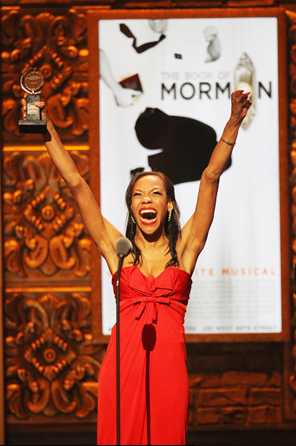
Although this season presented singing nuns on Broadway, it was South Park fans that were rejoicing.  The Book of Mormon came, performed and conquered, sweeping this year’s awards.  The cheeky musical about religion walked away with nine Tonys including Best Musical, Best Book of a Musical, Best Book of a Musical, Best Original Score, Best Orchestrations, Best Direction of a Musical, Best Scenic Design of a Musical, Best Sound Design of a Musical and Best Performance by an Actress in a Featured Role in a Musical for Nikki M. James who gave an emotional acceptance speech.  The spirit of Cole Porter is alive and the three Tonys Anything Goes won proves why his music is timeless.  The revamped Porter production won Best Choreography, Best Revival of a Musical and Best Performance by an Actress in a Featured Role in a Musical for Sutton Foster.  It appears that Broadway was too busy creating new chapters to revisit its past.  How to Succeed in Business Without Really Trying was the only other musical that was up for best revival, and although they did not win, they did not walk away empty handed.  John Larroquette won for Best Performance by an Actor in a Featured Role in a Musical.  The story of Frank Abagnale, Jr. has now added music, lyrics and choreography.  Catch Me If You Can has also provided Norbert Leo Butz with his second Tony for Best Performance by an Actor in a Leading Role in a Musical. 

War was also ubiquitous theme for Broadway’s big winners.  War Horse took the lead and never gave up the reins.  The poignant production about a boy who loves his horse so much, that he enlists in the military and risks his life to bring him home won every category it was nominated for including Best Sound Design of a Play, Best Lighting Design of a Play, Best Scenic Design of a Play, Best Direction of a Play and Best Play.  The woods of South West England was setting for a standoff in Jerusalem, which garnered the award for Best Performance by an Actor in a Leading Role in a Play for Mark Rylance  who offered jocular commentary about walking through walls.  Frances McDormand delivered a passionate speech upon accepting her Tony for Best Performance by an Actress in a Leading Role in a Play.  Larry Kramer’s The Normal Heart is the personification of the phrase, “The pen is mightier than the sword.”  His compelling examination of the early years of the AIDS epidemic in New York was a call for action in the fight against AIDS and gave voice to a mute sector of our society.  The production won Best Revival of a Play, Best Performance by an Actor in a Featured Role in a Play for John Benjamin Hickey and Best Performance by an Actress in a Featured Role in a Play for Ellen Barkin. 

After parties are over, websites have been updated and reviews of Sunday’s award show are in.   As Broadway gets back to penning new chapters of the modern theatre experience, I believe the Tony Awards proved why The Great White Way is still profitable during The Great Recession.  There were plenty of memorable moments, but for me the most impressive aspect of the show was Neil Patrick Harris. From his blithe exchange with Hugh Jackman to his final riveting recap of the show, Harris was the Motherf*cker with the Mic and he was wicked!

Photos: Kevin Kane/Wireimage.com

The Earp Women Revisit History

One of the most retold stories of the old west is the account of the events that occurred at the O.K. Corral.  It has been the subject of dozens of films, books and documentaries – some historically accurate, while others are unadulterated romantic fantasy.  Generally this story is told from the Earp brothers’ perspective, but a new musical gives audiences a glimpse of the harshness of the west from a feminine point of view. I Married Wyatt Earp is based on a book of the same name penned by Glenn G. Boyer and tells the story of Josie Earp (Wyatt’s third wife and widow), Allie Earp (Virgil’s widow), Bess Earp (James’ wife), Mattie Blaylock (Wyatt’s ill-fated second spouse) as well as the events that led up to the famous gunfight.

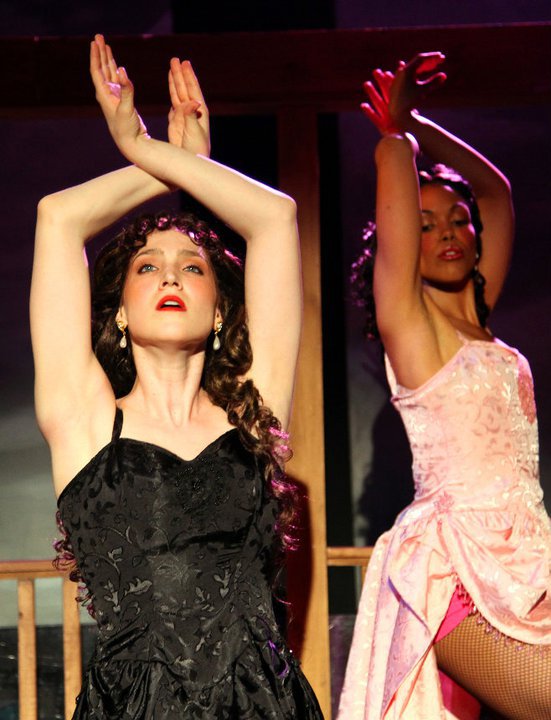
Life in the west was hard and love was even harder.  Josie Marcus is weary of her restrictive life in San Francisco.  Refusing to live the existence of an upper-class Jewish woman, the naive young girl finagles her way into becoming a member of a traveling troupe of actors in search of adventure.  The troupe travels to Tombstone, where Josie meets a whole horde of personalities and falls in love with Wyatt Earp.   Her affair with the married lawman comes off the heels of her break up with Sheriff John Behan and also adds fuel to a rivalry between Behan and Earp.  The feud also enlists Wyatt’s brothers and Doc Holiday on Wyatt’s side and the Clanton-McLaury gang on Behan’s.  The bad blood felt between these men would spill over in a 30-second gunfight on October 26, 1881.  Subsequently, Wyatt and Josie’s affair also rippled into the discentagration of Doc Holliday’s relationship with Kate, his traveling companion, and the ruination of Mattie and Wyatt’s relationship, which also led to Mattie’s descent into addiction and her death from an overdose of laudanum. The production deals with these themes as well as Josie’s guilt over her decisions as an older Josie and Allie recall the past and how that fateful day affected their lives.

I Married Wyatt Earp is being touted as a “creative nonfiction” musical.  To retell a story that has been told countless times is a definitely a daunting endeavor.  The narration of this famous legend from the wives and girlfriend’s viewpoint is definitely creative, but the creators of I Married Wyatt Earp relied too much on this concept to try to sell the production.  It appears the rest of the production had not been fleshed out, so its innovative concept became reduced to a ploy to pull in the audience.  While the musical does have some southern fried charm, it lacks the grit that is associated with the old west.  It is sort of like Gunfight at the O.K. Corral light, similar to a decaf cup of coffee it has flavor but is deficient of a kick.   The cast delivers with the material, but the material could have been more polished.  The choreography is mediocre; however the music and lyrics are memorable.  “Don’t Blame Me For That,” “Pins and Needles,” “Did Ya Hear” and “Stand Our Ground” are songs that will remain in your head long after the show closes at 59 East 59 Theatres on June 12.   

While I do believe this story may have to go back to the proverbial “drawing board” if it wants to take the O.K. Corral to Broadway, I also feel there is enough there to keep an audience with a proclivity for American folklore interested.


Photos: Gerry Goodstein

Made it Ma…Top of the World

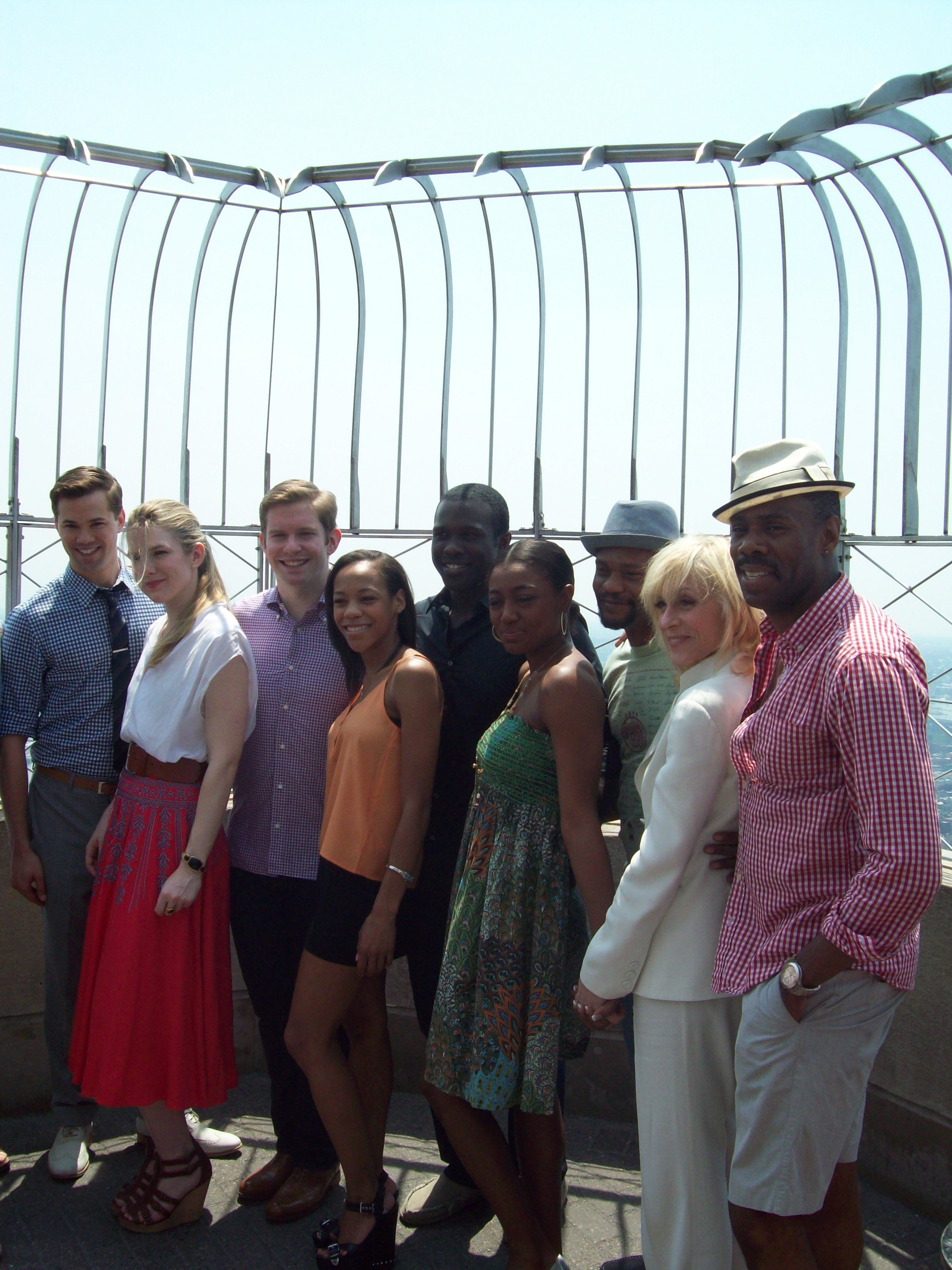
I am sure when the nominees for the 65th Tony Awards heard they were in the running to receive Broadway’s most prestigious honor, they felt on top of world.  Yesterday they were on top of the world, literally.  Tony nominees Patina Miller (Sister Act), Judith Light (Lombardi), Coleman Domingo (The Scottsboro Boys), Joshua Henry (The Scottsboro Boys), Forrest McClendon (The Scottsboro Boys), Lily Rabe (Merchant of Venice), Andrew Rannells (The Book of Mormon), Rory O’Malley (The Book of Mormon), Nikki M. James (The Book of Mormon) and Arian Moayed (Bengal Tiger at the Bagdad Zoo) braved Manhattan’s sweltering humidity fiesta to pose for photos at the Empire State Building’s observatory, located on the 86th floor.  This Sunday the Tony Awards will air on CBS and will be broadcasted live from the Beacon Theatre.  Check out the video below to view the nominees sans the costumes, doing summer casual.

Photo and Slideshow:  F.A.M.E NYC Editor

The Best of Cy Coleman on Display on Off-Broadway

The word legend is almost too small of a term to describe Cy Coleman and his epic talent.  By the time he turned six, the Bronx native, born Seymour Kaufman, was considered a prodigy and had graced the stages of Town Hall, Carnegie Hall and Steinway Hall.  The Cy Coleman Trio was an extremely popular club attraction and completed numerous recordings.  Cy could have become a maestro in either the classical or jazz scenes, but it was popular music and Broadway that reaped the benefits of his genius.  Never one to be put in box, Cy collaborated with some of the best lyricists in the history of American music to create classics that were featured in Hollywood, The Great White Way and the small screen and garnered Tony, Emmy and Grammy Awards.   Cy was a vital creative force in the theatre world and was not one to let grass grow under his feet.  When Cy passed away at age 75 in 2004 from cardiac arrest, he was preparing for an engagement at a Manhattan club.

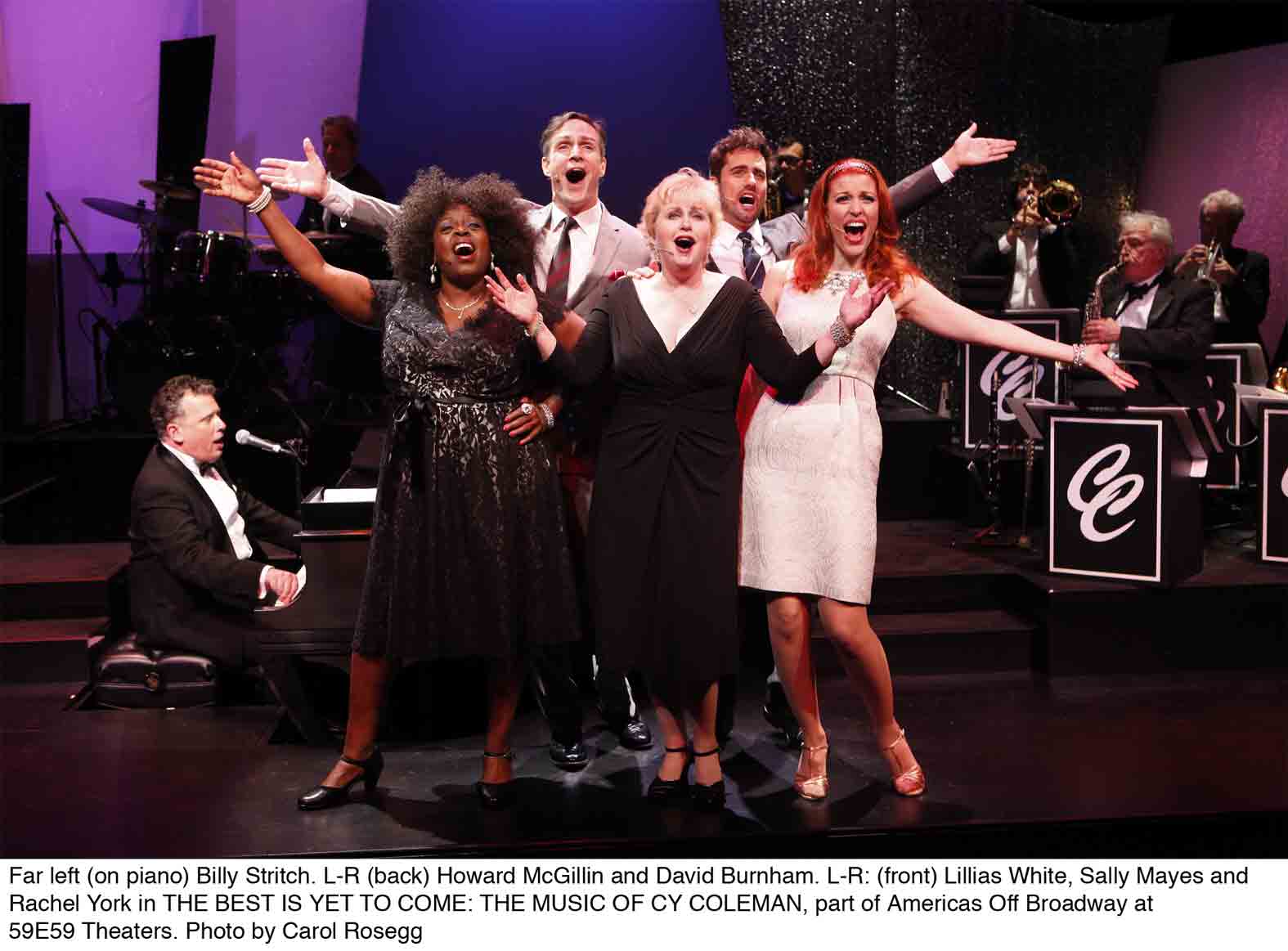
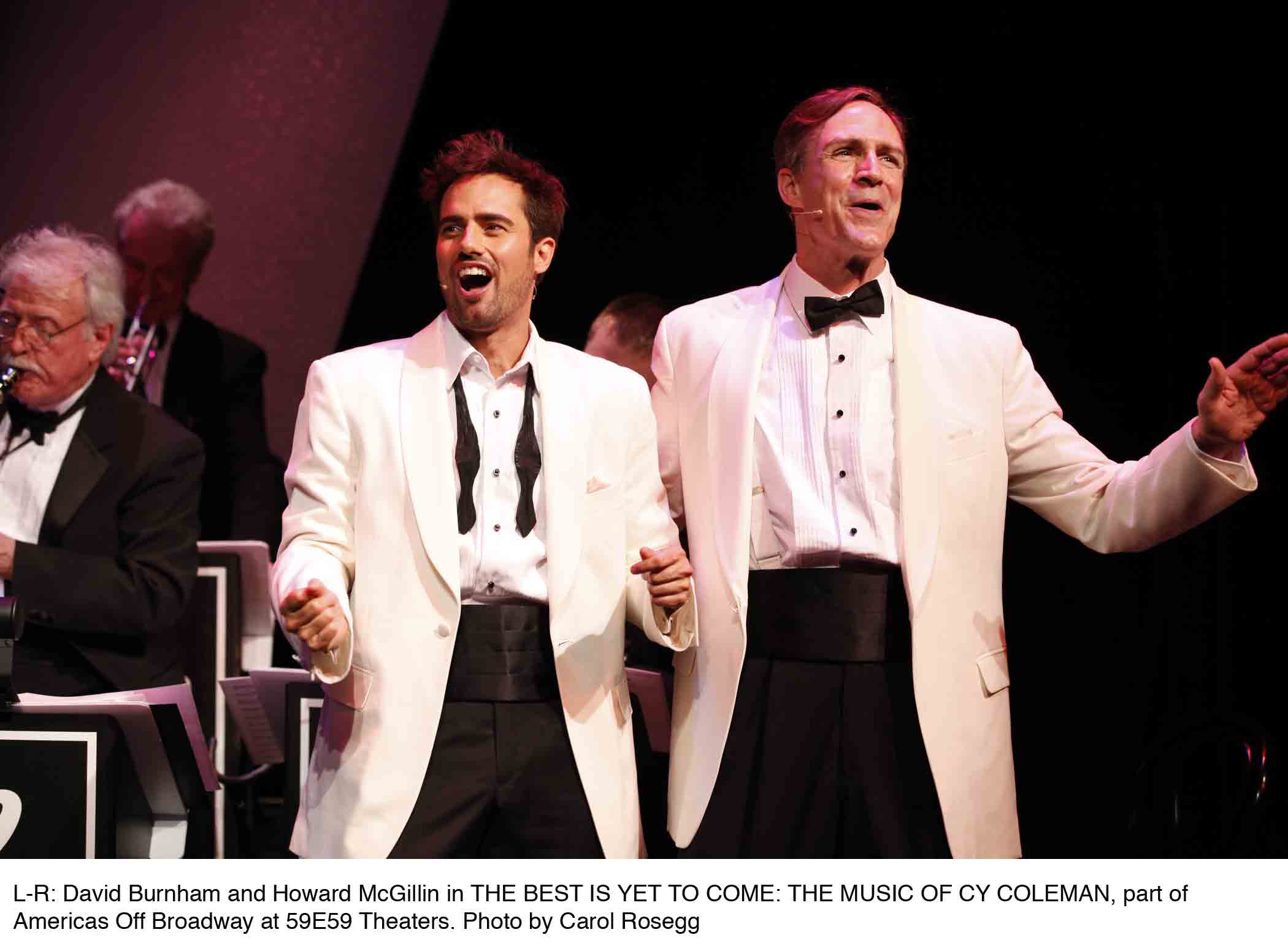
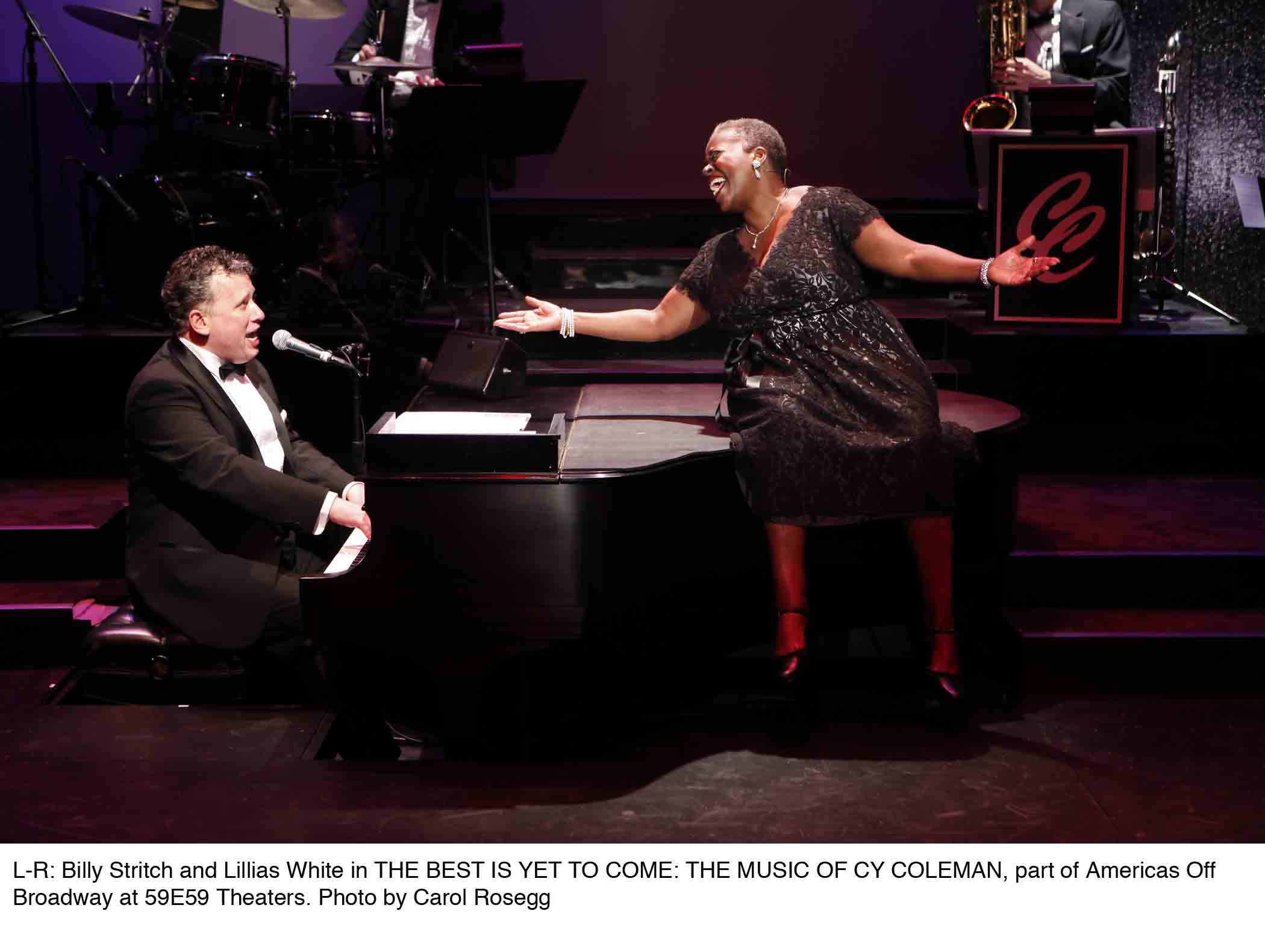
Six years after his death, the eastside welcomes a phenomenal piece of musical theatre that pays homage to a phenomenal man.  The Best Is Yet to Come: the Music of CY Coleman is currently playing at 59E59 Theatres and consists of standards, musical numbers and previously unreleased material from this extraordinary musician.  One the best elements of a musical is the music and lyrics; The Best Is Yet To Come showcases great music without the potential of boiler plate dialogue and trite choreography.  The show features well known songs like “Witchcraft,” “Big Spender” and “If My Friends Could See Me Now” as well as music that the audience may not have known was part of Cy’s catalog. 

The cast is comprised of David Burnham, Sally Mayes, Howard McGillin, Billy Stritch (who is also the musical director and pianist), Lillias White and Rachel York, all of whom are Broadway veterans.  The band encompasses a brass, woodwind and percussion section along with a bass and piano.  The set is reminiscent of Saturday night at The Copa in its heyday – all that is missing are the huge clouds of cigarette smoke and drinks.  I have always loved a cabaret; this production superbly exceeded all of my expectations.  Although there was no dialogue or set changes, The Best Is Yet To Come followed the blueprint of a jukebox musical.  The numbers blend one into the other very well and tell the story of love, loss, desire and hope. The vocal arrangements are exquisite.  Together the performers form a jazz super group, sort of like Manhattan Transfer on steroids.  Separately the vocalists illuminate the stage.  Ladies will not just be swooning from David Burnham’s good looks, but from his golden voice.   “The Doodling Song” is one of my favorite Cy Coleman songs and York delivers it with oodles of pizzazz.  I could listen to her doodle anytime. Howard McGillin will always be the Phantom to me.  His voice is classic Broadway – rich, velvety with a wonderful timbre.  Sally Mayes is the perfect personification of a cabaret singer – sassy, sultry and full of energy.  Lillias White is a New York City treasure.  Every solo she sang became my new instant favorite.  White has a way of contorting chords until they become new notes on the musical scale.  Her voice is a true instrument.

When you are not singing along to the tunes you know, you will be toe-tapping and hip twisting to the rest.   For a man who was as versatile as he was gifted, I believe Coleman would be pleased with The Best Is Yet To Come.  Out of the tree of musical theatre it is a ripe, juicy plum.   The Best Is Yet To Come: The Music of Cy Coleman ends it limited engagement on July 3.  Before it closes get down to the eastside, buy a ticket and fasten your seatbelts; you are in for a swinging good time, man!

Photos:  Carol Rosegg

WTC View Rocks the Eastside

There is no New Yorker, indeed no American that has not been affected by the tragic events of September 11, 2001.  The images of that day have been indelibly seared into our minds and the emotions branded into our hearts.  But the days and weeks following that catastrophic day can sometimes be as blurry as a Monet and other times it is as vivid as a Matisse.  This year marks the 10th anniversary of that infamous day.  Playwright Brian Sloan explores the surreal time after the 9/11 attacks in WTC View.

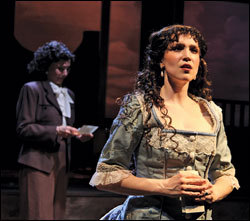
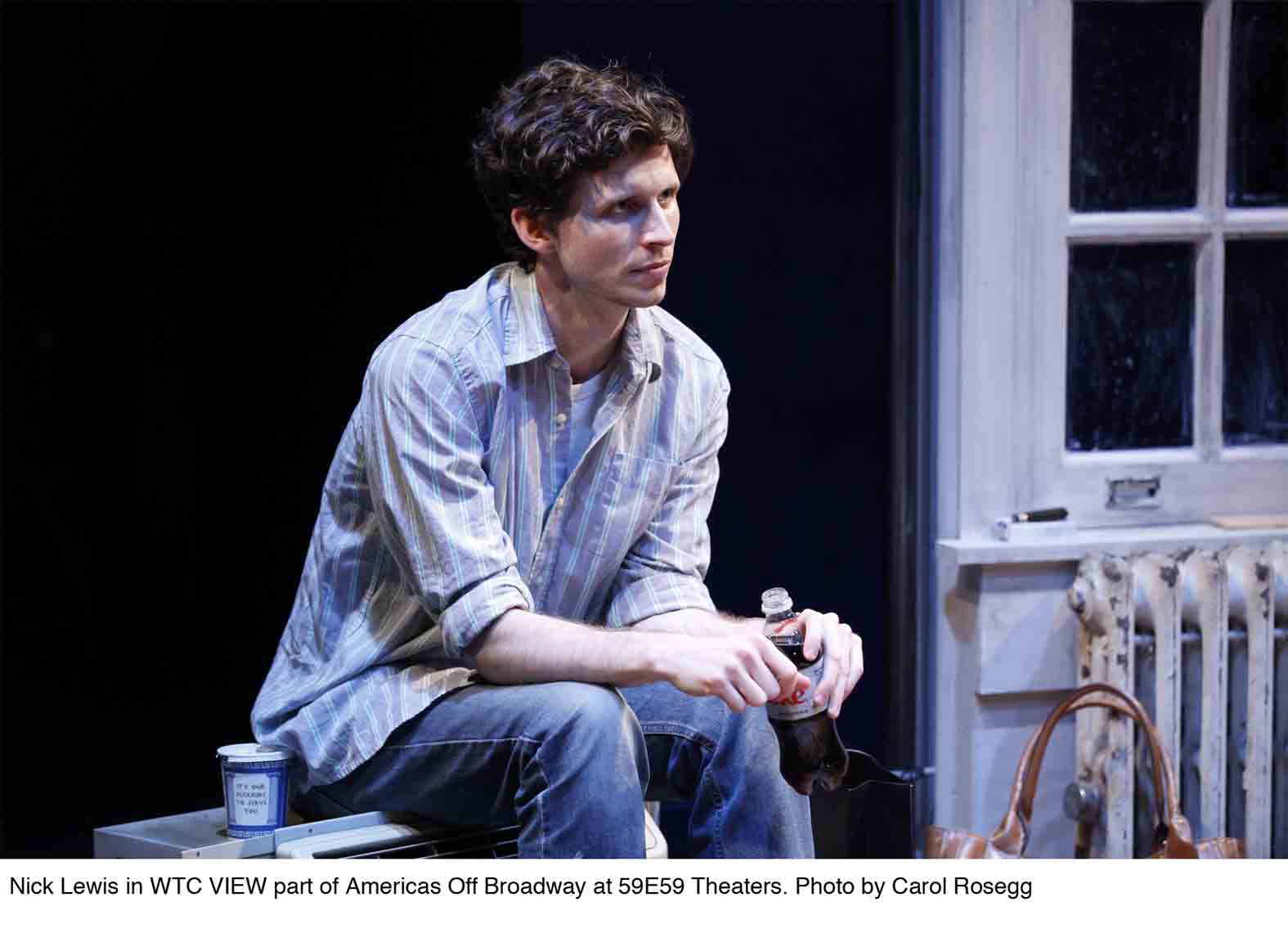
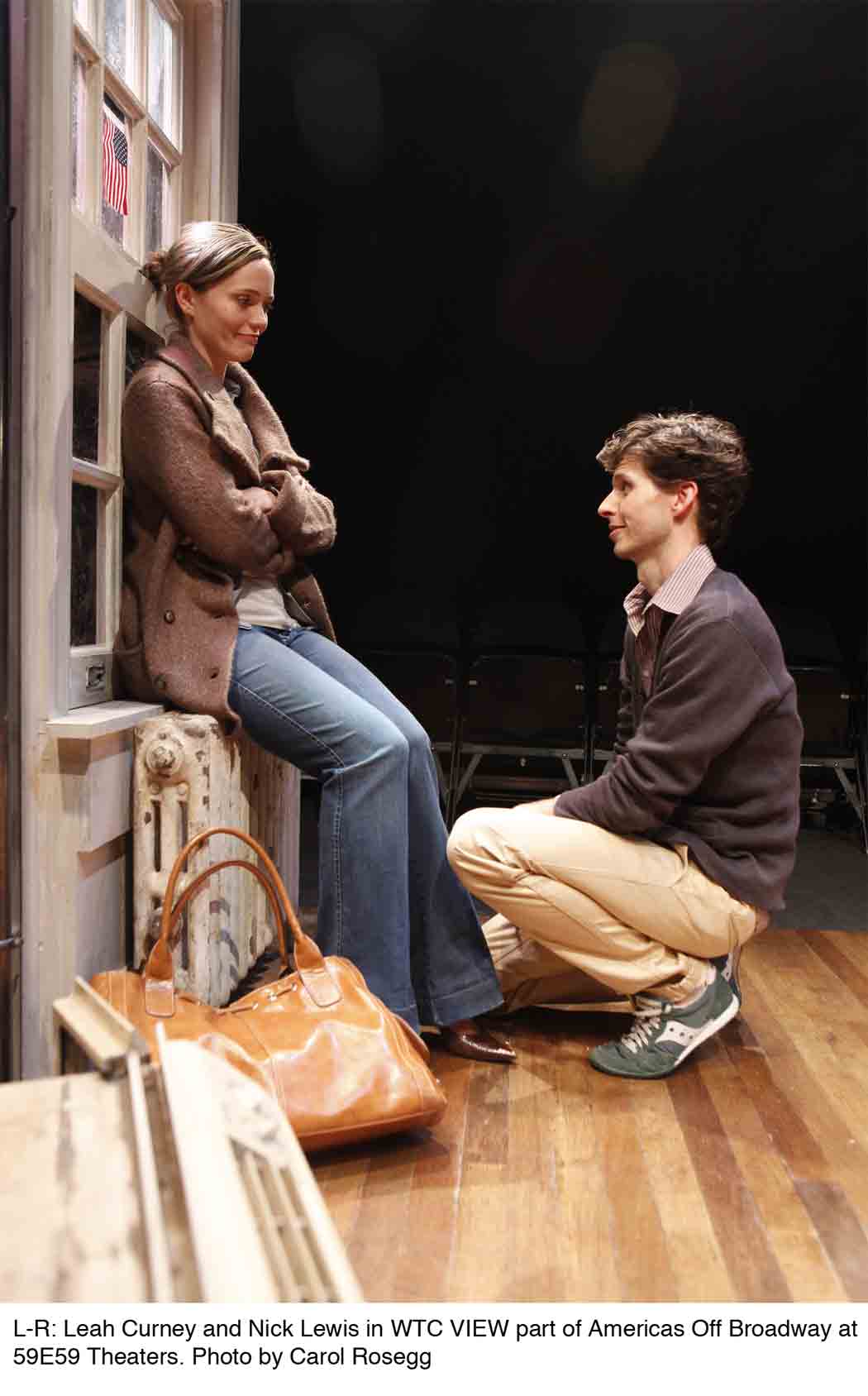
WTC View examines the psychological effects on a group of New Yorkers after the World Trade Center attacks.  It centers on a photographer named Eric and his quest to find a roommate to assist in paying the rent in his two bedroom SoHo apartment.  Eric, portrayed by Nick Lewis, was in his apartment when the attacks began, which has a bird’s eye view of the Twin Towers; he witnessed the cataclysmic episode unfold outside a bedroom window.  He meets an array of interested applicants, each with their own perspective on 9/11.  Jeremy, played by Bob Braswell, is the British St. Regis employee who loses his job because of the lack of tourists and returns home to England.  Kevin, played by Michael Carlsen, was unable to go back to his Battery Park apartment after the attacks and was stuck in New Jersey with a one night stand for three days.  Jeff, depicted by Torsten Hillhouse, is a democratic campaign worker who was born in NYC and decided to return because he felt New York City needed him.  Alex, played by Patrick Edward O’Brien, worked at the World Trade Center and was present during the time of the attacks.  His story is one of the carnage left in the wake such a vicious act of terrorism as well as one of hope.  Max, played by Martin Edward Cohen, is a young NYU student that mixes his feelings of guilt and activism into one huge twenty-something M80 that is just ready to burst.  All these young men, along with Eric’s friend Josie, played by Leah Curney, and Eric’s ex-boyfriend (who is only heard via Eric’s answering machine) assist Eric in coming to terms with the loss he felt as a result of 9/11 as well as the hysteria that subsequently followed in the days and weeks that followed.

With September marking the 10th anniversary of the 9/11 attacks, this review is the first time I have written anything about what happened on that Tuesday morning in September 2001.  Somehow I could not locate the words that I felt adequately expressed my pain.   Almost ten years later, and it was not until I witnessed WTC View that I realized why I never did.  All humans react differently during times of distress and earth-shattering events.  I was like Eric.  I wanted desperately to pretend that watching those towers fall did not affect me.  I wanted to believe that the weeks of watching funerals on television or passing by dozens of missing person bulletins had no impact on my psyche, but the glaring truth for me and the protagonist of the play is that it did.  Eric finally came to grips with his pain after several breakdowns.  I buried it as deep as I could and as a result it paralyzed my fingers and mind.  I thought I had covered the wounds inflicted on us as a society that day with the finest emotional band-aids, but as I watched each actor recount how 9/11 changed their life as they knew it and observed Eric slowly succumb to his grief and fear, I could feel the bandage being ripped from my heart.  What I found was that I had not healed at all, but thanks to the crafty storytelling of Brian Sloan, I recognized that I was ready to go back to the pain and try to heal.

Watching WTC View is similar to having the deepest deep tissue massage you will ever have.  The right hand grabs your heart, the left clutches your soul, sometimes you will wince in pain, but you will leave feeling more healed than when you came in.  WTC View is a must see for all New Yorkers, it is a riveting piece of theater, powerfully acted by an impressive cast.  Currently playing at 59E59 Theaters until June 5 as part of the America’s Off-Broadway series, WTC View is a production that embodies the true spirit of New York and its unrelenting resiliency.   

Photos:  Carol Rosegg