Three Dimensions, One Mind

Jason Bryant is a man with a subtle disposition and an exquisitely beautiful soul.  During his openings you can find him with a glass of wine in his hand, humbly chatting in the corner or in a circle of guests; traces of his southern roots are hardly recognizable in his accent.    It is almost as if he has forgotten that the night is about him, instead he allows his work to speak volumes.  Devoid of eyes, Bryant’s work challenges the viewer to see the world through his point of view.  The realistic quality of the closely cropped images unearth an alluring elegance and symmetry that otherwise might not be seen if the entire inspiration of the work had been simply replicated on canvas.  In this way, his artistry gives direct insight into Jason Bryant the man.

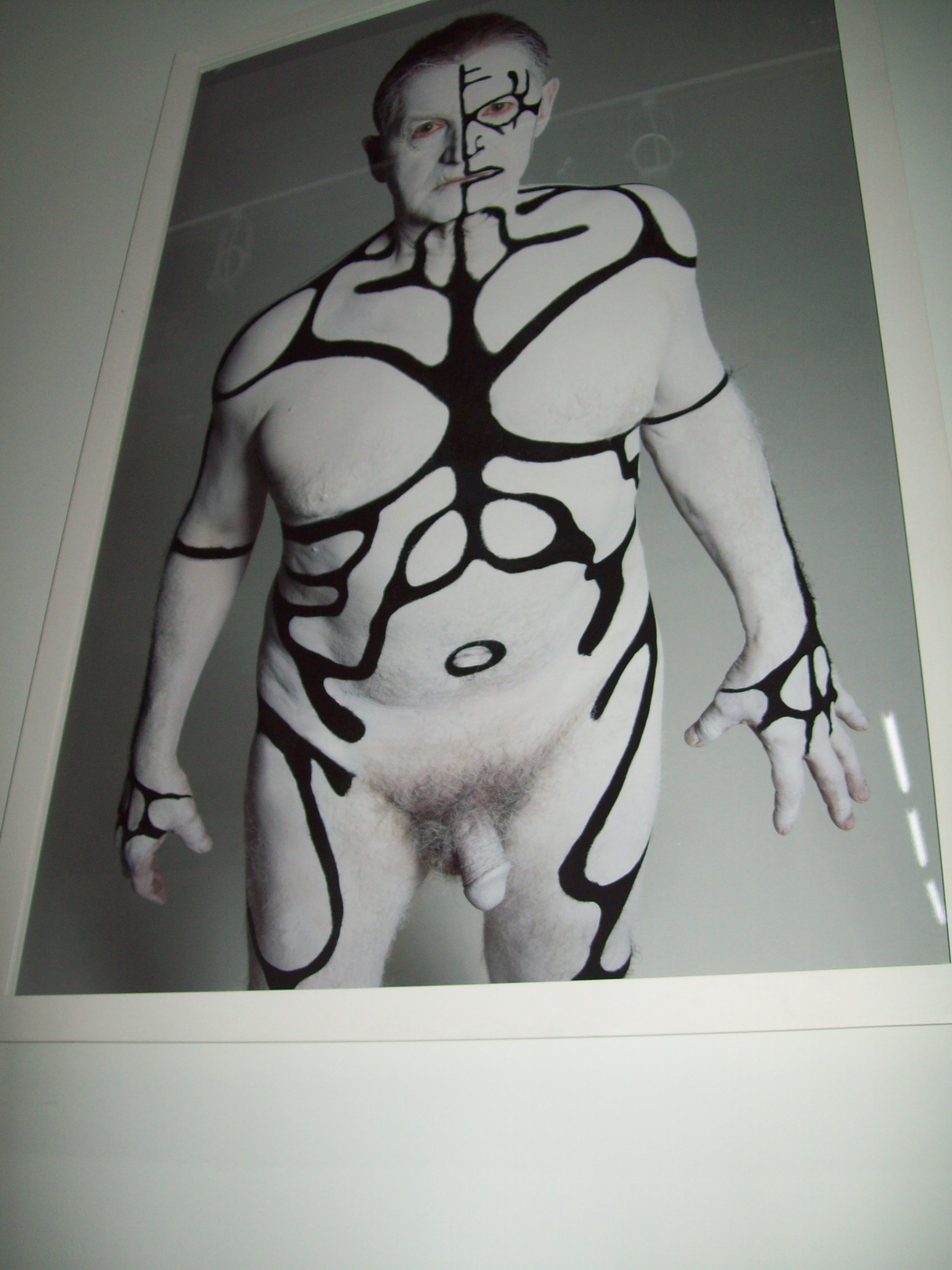
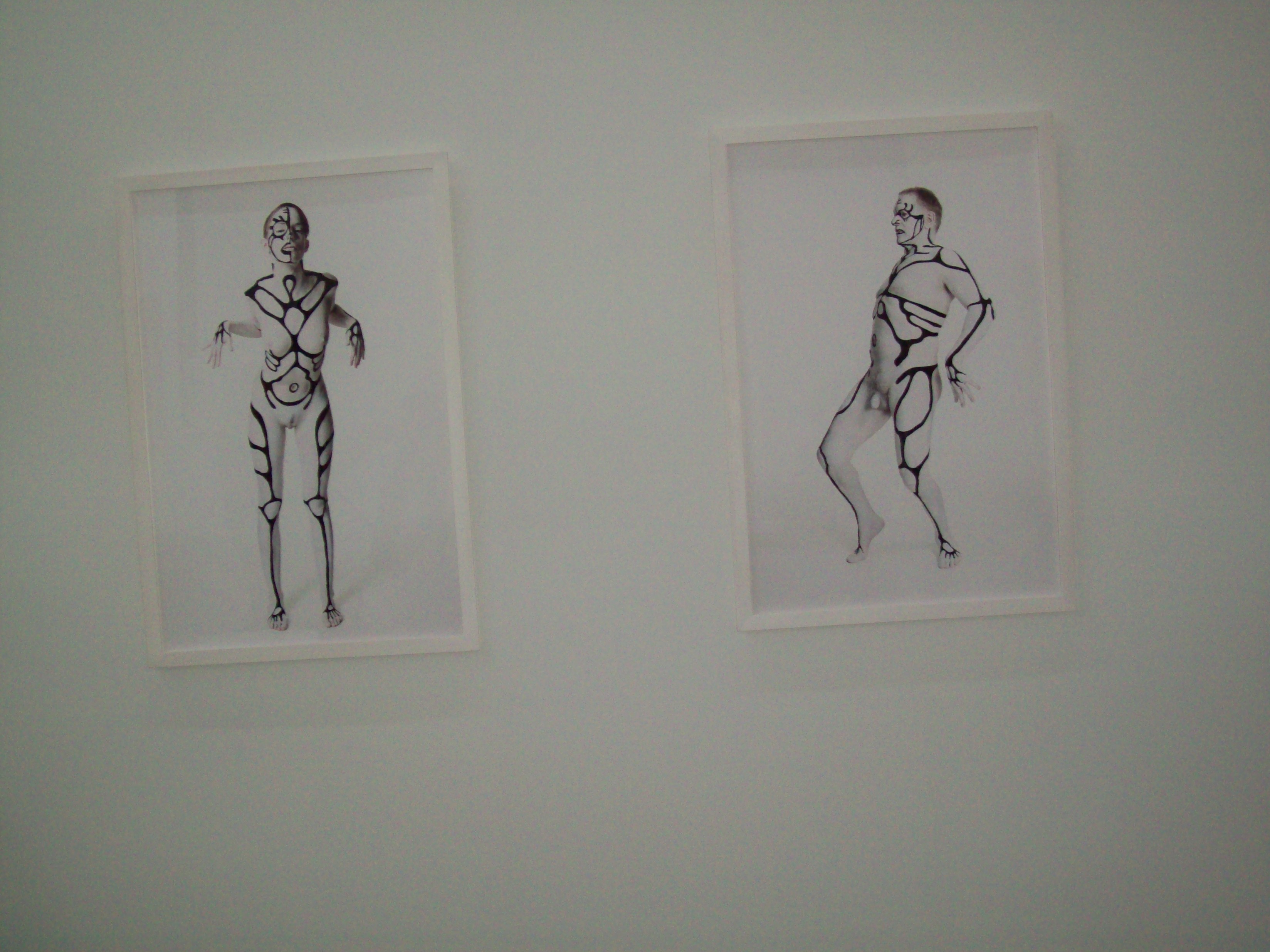
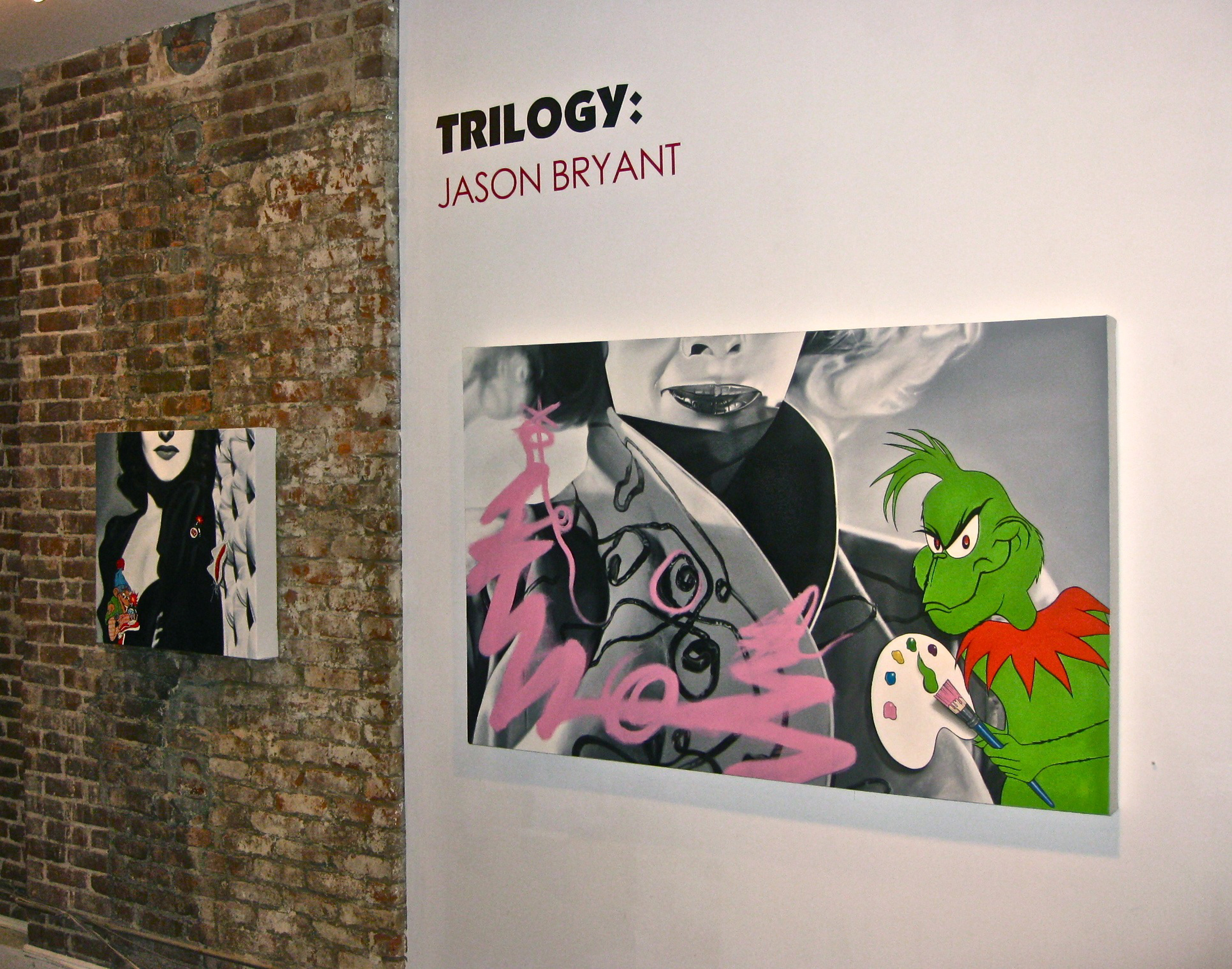
Trilogy, Bryant’s latest solo exhibit at Raandesk Gallery, provides further entrée into the mind of this talented artist.  Using three diverse concepts, Rubric, Merging Iconography and Symbolic Portraiture, Jason Bryant offers an intimate view of classic Hollywood, skateboard culture and the exhibition of the human form.
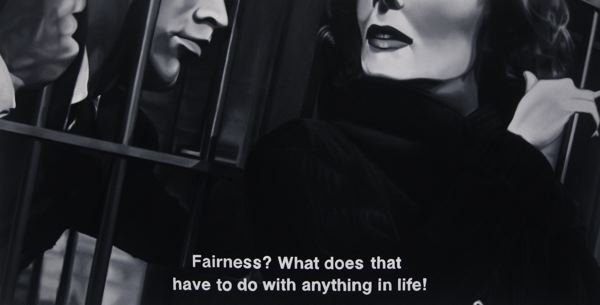
Rubric is a series of four paintings whose source images are derived from vintage Hollywood movies such as Wild One with Marlon Brando.  Although the eyes are edited out, one can clearly see from the lifelike quality of the paintings that faces belong to Brando, Cary Grant, Katherine Hepburn and others.  Instead of becoming just a painting from a movie scene, Bryant transforms the images into something else entirely through thought-provoking copy.  The paintings like the films that inspired them are black and white and are no less as crisp and captivating as Bryant’s works in color.   Evoking nostalgia and social commentary, Rubric is a luscious addition to Jason Bryant’s body of work.

Merging Iconography are two paintings that successfully blend the realms of skateboarding and film stills.  Bursting out of the frame are bold, colorful graphics.  Both chic and cheeky the pieces grab you and shake your ideas of pop culture to the core.  Equally beguiling as Rubric, Merging Iconography create an elevated, symbiotic union.

Music is as important to who we are as the foods we consume.  Symbolic Portraiture cleverly offers viewers a human profile without a face.  Instead, the audience sees the back of two women, one dressed in a hoodie, the other in a t-shirt.  Album covers on the back of the clothing replace features and expressions.  Although, the faces are hidden, viewers see a deeper perspective of the women in the painting.  By revealing the album cover that best represents their personality, you get a more profound understanding of who they really are. 


Not even torrential rainfall could keep me from attending the opening of Trilogy on September 16.  I found myself doing laps around the gallery space constantly changing my mind as to which piece was my favorite.  Time after time I find myself entranced by the meticulous, flawless art of Jason Bryant.   Trilogy will be on exhibit at Raandesk Gallery, located at 16 W. 23rd Street, until November 12 so you still have time to introduce yourself to the art of Jason Bryant. 

Photos:  Courtesy of Raandesk Gallery

Slideshow:  F.A.M.E NYC Editor

Time Is On Their Side

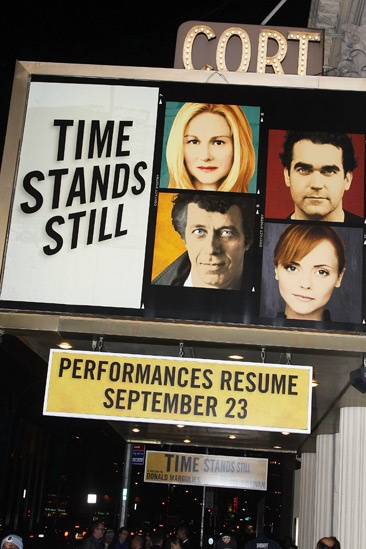
In some ways a trip to the theatre can be compared to a photograph – it is a moment that encapsulates a specific period of time and emotions.   The only difference is one image is recorded in your mind, the other recorded on a glossy sheet of paper.  After the moment is over, life goes on and like other memories that fade or become altered with age, the image one captures from a theatre experience will not change, nor will a photo.  Inside the Cort Theatre awaits an unforgettable experience that will leave an indelible impression on the consciousness.  Time Stands Still is a timeless piece of art that will leave viewers captivated and questioning the world around them.  Written by Donald Margulies, the play premiered in February 2009 at the Geffen Playhouse in Los Angeles with Anna Gunn, David Harbour, Robin Thomas and Alicia Silverstone performing the play’s four characters.  In January 2010, it began its initial run on Broadway with Laura Linney, Brian d’ Arcy James, Eric Bogosian and Alicia Silverstone as the only cast member to reprise her role.

When I first heard about Time Stands Still it was creating quite a stir and receiving rave reviews.  Tickets were as hard to find as the Willie Wonka golden chocolate bar wrapper.  By the time its first Broadway incarnation at the Manhattan Theatre Club’s Samuel J. Friedman Theater ended on March 27, the play had garnered two Tony Award nominations for Best Play and Best Performance by a Leading Actress in a Play for Laura Linney.  I had thought I might have been jipped out of one the best shows of 2010 and was ecstatic to read that the show would resume in September after a brief hiatus to allow Ms. Linney to fulfill scheduling commitments for The Big C, a new series on Showtime.  Now playing at the Cort Theatre, the original Broadway cast has reprised their roles with the exception of Alicia Silverstone; Christina Ricci was cast in her stead.

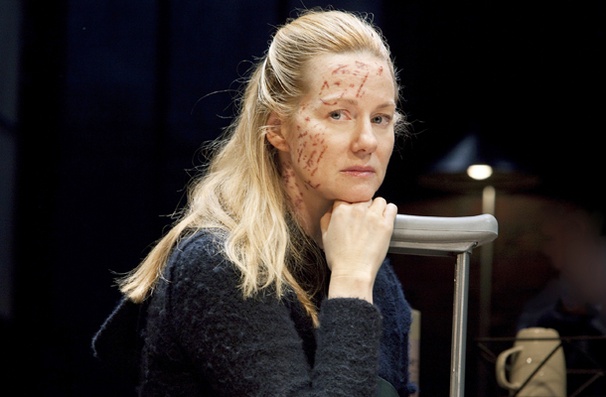
With Time Stands Still, Donald Margulies has crafted a modern masterpiece; it is a sociology exposition done right.  He scrupulously places the elements of new millennium relationships, beliefs and society under a microscope, dissecting each aspect until its essence is exposed and theories are challenged.  The play involves two couples Sarah (Laura Linney) and James (Brian D’Arcy) and Richard (Eric Bogosian) and Mandy (Christina Ricci), but centers on the relationship between Sarah and James.  Sarah and James are war correspondents; she is a photographer and he is a reporter.  For nine years they have been shacking up together and documenting the most gruesome aspect of the human condition.  As the play opens, Sarah had just been severely injured in a car bomb explosion in Iraq and has returned to their Brooklyn apartment to convalesce.  James recently survived a jarring experience which led him to leave Sarah in the Middle East and is now wracked with guilt.  Shortly upon their arrival back from a hospital overseas, they are visited by Richard, a photo editor and friend, and his newest love interest Mandy.  Richard suggests that since Sarah is recuperating, her and James should collaborate and create a coffee table book of their experiences in Iraq with her photos and his commentary.  But as Sarah and James begin working on the book, infidelities are revealed and life as they know it also questioned.  James is ready to try a more conventional life and Sarah is addicted to the adrenaline rush and is reluctant to change.

The cast brings this stellar story to life with compelling conviction.  Sarah finds solace in the square of the lens.  The moment she clicks the chaos of her surroundings, the world is silent (hence the title Time Stands Still).  She finds excitement and a sense of duty by showing the world the atrocities of war.  Most of all she is unabashedly unconventional.  Laura Linney is one of the most inspiring actresses of this century.  Her talent enriches the complex relationship Sarah and James share.  She is able to penetrate the core of Sarah’s personality and bring across all her fearlessness, flaws and vulnerabilities in a poetically human performance.  Laura Linney’s Tony nomination was well deserved; her depiction of Sarah is one of the most riveting displays of acting prowess that was offered this year. 

Brian D’Arcy’s acting chops have been well-honed on stage and his portrayl of James is another magnificent testament to a skillful Broadway veteran.  James is a man who has hit a wall going 100 mph and is on the precipice of change; in fact, he needs it in order to move forward.  The subtle desperateness D’Arcy exudes as he struggles to hold on and fix a relationship that is slowly disintegrating is genius and vividly sets up the tug-of-war aspect as the future of Sarah and James’ relationship is explored.

Eric Bogosian is probably best known from the 1988 film Talk Radio and his role on Law &Order: Criminal Intent as Captain Danny Ross, but he is also an accomplished novelist and playwright. His understanding of character development has served him well with an engaging portrayal of Richard.  In the wrong hands Richard could easily become a less memorable character, but Bogosian brings him alive with wittiness and grace.


Charm and exuberance are two traits Christina Ricci has in ample supply; she is one of the most interesting young actresses in Hollywood.  She could not have made a better Broadway debut than the role of Mandy.  Mandy’s youthful, naïve way of seeing the world and her devotion to Richard is the catalyst that inspires the questions and sparks the conflict in Sarah and James’ relationship.  Ricci turns a character that could be perceived as a bubblehead into a sweet, profound young lady.  She and Eric Brogosian’s performances are the perfect compliment to acting superiority of D’Arcy and Linney.

This play lacks nothing.  By the final curtain close I was rushing to my feet to give this show and its cast an enthusiastic standing ovation.  Time Stands Still has all the elements of 007 martini – all the best ingredients shaken to perfection.  Mature and momentous, to miss this show is to deprive yourself from a truly enthralling and entertaining theatre experience. 

Photos:  Joan Marcus

First and Triumph

Baseball is America’s pastime, but football is America’s obsession.  The National Football League amalgamates the combat of Roman gladiatorial games with the dramaturgy of a Greek tragedy, all played out in front of hordes of screaming fans in a huge amphitheater.  From September to February, Sunday belongs to the pigskin and its disciples. Vittles that are served at a Superbowl or tailgate party can easily eclipse a Thanksgiving turkey dinner.  Nothing unites families around a television like football, and fantasy football can create virtual warfare at the jobsite. 

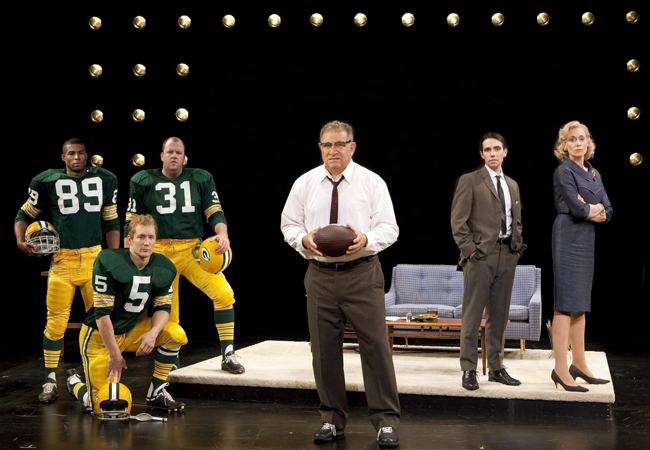
The NFL, originally named the American Professional Football Association, has spawned many titans and gods since its inception in 1920, but of all the immortal figures that have been a part of the NFL’s history, none is as legendary as Vince Lombardi.  And finally all the theatrics of football’s greatest coach have been brought to Broadway in Lombardi.  Vince Lombardi was Brooklyn born, Bronx made and had the attitude of a winner wired in his DNA.  Raised in the Sheepshead Bay area in Brooklyn, Lombardi began his lifelong journey with football at Fordham University after accepting a scholarship and becoming part of the famous Seven Blocks of Granite, the nickname given to team’s offensive line.  He is most well known for being the head coach of the Green Bay Packers, but he was also the assistant coach and head coach for St. Cecilia High School in Englewood New Jersey, assistant coach for West Point and the New York Giants and head coach for the Washington Redskins.

Based on the book When Pride Still Mattered: A Life of Vince Lombardi by Pulitzer Prize-winning author David Maraniss, Lombardi mainly takes place during a one week period in December 1965 as Vince Lombardi and his Packers pursue another championship (Lombardi had lead the Packers to a championship in 1961 and 1962 but had not been to the big show in two years).  Look Magazine reporter Michael McCormick goes to cheese-head country and stays with the Vince and his wife Marie observing Vince at home and on the field with his family, which includes his wife and his players, in the hopes of returning to Manhattan and writing a breakout article that will finally showcase his abilities.    

Playwright Eric Simonson crafts a beautifully poignant script and an excellent testimonial to a great man.   Vincent Lombardi’s love and passion for winning, football and his family are well represented.  Most football novices know the legend of Vince Lombardi and his single-minded drive to succeed, but the play also provides the audience with a sense of what Lombardi was like at home.  Yes, he was a monolithic figure that ruled with a steel fist and iron shooting from his larynx, but through his harsh language the audience sees and feels the love and passion that made him equally flawed and brilliant. Vince Lombardi not only wanted those he loved to be the best, he desired to be the best for them. 

The audience bears witness, watching him interact with his players –pushing and praising all from the same heartfelt place.  But I believe Lombardi’s “push and praise” attitude is best represented in the relationship he develops with the young reporter.  During the play the audience discovers that Vince knew McCormick’s father, who was an editor for a paper in New Jersey.  Absent from the production are Vince’s children.  As the week progresses, Michael has trouble following Lombardi’s rules as well as authoring an uncompromising story that will surely land him in peril with his editor and Lombardi.  The tension, love and acceptance that a father and son experience as the son struggles to find his voice in the world is impressively explored through the bond between Vince and Michael.  For one week they provided each other with the stand-in each needed to heal past hostilities each may have had for their family member, and gives audience members a possible peek into the mind of Vince Lombardi the father.  The fallible side Lombardi is displayed when the play briefly goes back in time to New Jersey. Vince contemplates the idea of leaving football for a bank job, and shows even an individual whose destiny is clearly mapped out can sometime wrestle with doubt.  More obvious, is the stomach pain that pops up and rears its head during the production – a tell-tale sign of shadows to come.

Lombardi is as fascinating to watch as Brett Favre bomb to Randy Moss in the end zone during a Monday Night game, only this show is played with no time outs.  There is definitely a certain mana permeating in the Circle in the Square Theatre that the cast absorbed and used to perform masterful portrayals of their characters.  Dan Lauria, best known as the dad from The Wonder Years, is truly exceptional as Vince Lombardi. The devotion he gives to his performance is evident through each growl and command.  I could wax poetic for another paragraph about the authenticity of his depiction, but NFL legend Floyd Little, who was in the audience the night I attended, provided the confirmation that Lauria scored a touchdown.  During the brief Q&A after the show, Little stated he thought he was watching Vince, a compliment sure to be uttered several times over as other members of the NFL see the show.  Judith Light is simply a joy to watch.  As Marie Lombardi she has all the great one-liners and she delivers each time.  She and Lauria are the heart and soul of this show, their banter is energizing and intruiging to watch.  One of the most hilarious points in the show is when Marie breaks out an atlas to try to find out where Green Bay is.   Keith Nobbs portrayl of eager reporter Michael McCormick is a refreshing departure from the sell your soul for the exclusive approach in which journalists is sometimes depicted.  His exchanges with Lauria are some of the best in the show.  Bill Dawes, Robert Christopher Riley and Chris Sullivan round out the cast as the devil-may-care Paul Hornung, hardworking Dave Robinson and non-talkative Jim Taylor, with each of these Packers, the audience views another side of Vincent Lombardi the coach, slightly adapting his no-nonsense methodology to deal with each of the players. 

Like Vincent Lombardi’s Packers, this cast works like a well-oiled machine and like the championships Green Bay garnered for their efforts I am sure there will be nominations and awards in Lombardi’s destiny.  Another reason why this show will be successful is due to the support of the other star of this production, the NFL.  During the Q&A the actors expressed how the league and the players have assisted with this production.  In fact, the audience walks into a shrine with Lombardi memorabilia and photos littering every inch of the lobby.  Adding to the experience is The Circle in the Square Theatre itself.  The open stage of the auditorium is similar to a football field and provides a 4-D theatre experience.  You do not have to know what a nickel defense or west coast offense is to see this play.  The love of football is not necessary.  This play crosses over gender, chronological and ethnic lines because at its heart it is a great story.  This production is filled with raw emotion and hits harder than a 250 pound blitzing linebacker.  Well worthy of the man who exemplified the will to win, Lombardi succeeds in glorious fashion.


Bilal’s Essentials

For any serious music collector there are certain albums that are necessary to have.  During my interview with Bilal I asked him what albums should be considered essentials, below are his top four.

The Low End Theory

A Tribe Called Quest

1991, Jive Records


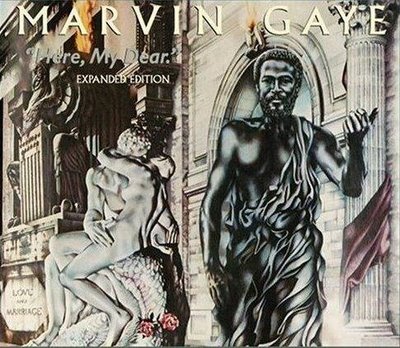
Here My Dear

Marvin Gaye

1978, Tamla Records


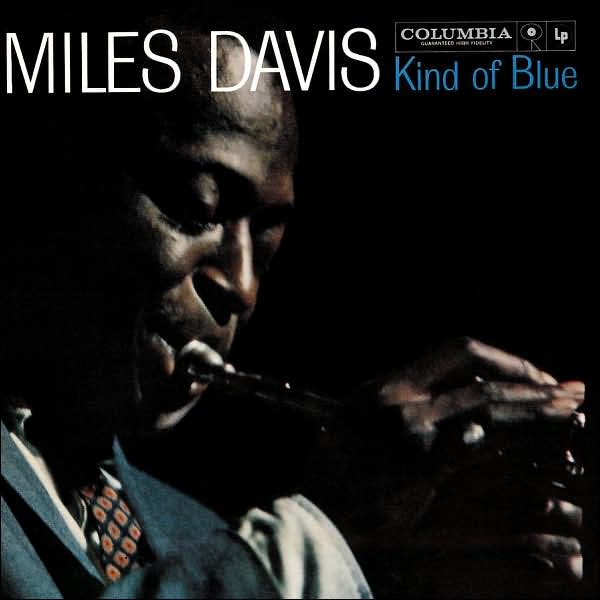
Kind of Blue

Miles Davis

1959, Columbia Records


The Clones of Dr. Funkenstien

Parliament

1976, Casablanca Records

Airtight and Out of Sight: Bilal’s Music, Bilal’s Way

On September 14, vocal virtuoso Bilal released Airtight’s Revenge cementing his return to the mainstream musical radar after a nine year absence.  But don’t call it a comeback, Bilal has been here for years.   He captivated the music scene in 2001 with his debut album 1st Born Second, which spawned singles “Love It” and “Soul Sista” and instantly placed him in neo-soul box.  The album received limited production, but was touted as a critical hit.  Although his debut did not garnish crossover success, Bilal acquired a vast following and high attendance of his live shows.  Like Ella Fitzgerald, Bilal has the ability to use his voice as like an instrument (a trick he probably learned performing in jazz clubs in Philly) which elevates him to a pantheon of entertainers few artists ever reach.  His lyrics convey the emotion and struggles of black people with pinpoint accuracy – women feel as if he is speaking directly to them, men believe he is speaking for them.  Well respected amongst his peers, many of whom were categorized in the neo-soul box with him, Bilal has consistently contributed and been featured on numerous projects, remaining a fixture on the modern musical landscape despite only having one album of his own.

A hard lesson learned in the music business is that the business eclipses the music – the dollar is the bottom line, literally.  Like most artists whose talent exceeds the box or genre record industry execs have labeled them under, Bilal has struggled to have his music heard.  The neo-soul moniker that so conveniently classified the singers and groups that brought a resurgence of soul music in late ‘90s seemed more like a prison, trapping artists to fit a certain criteria as the music scene transitioned to the “Bling, Bling” more flash less substance era.  Artists that fell under the genre appeared to get winnowed out or went deeper underground.  The digitization of the music industry through downloads and ringtones only presented another conundrum.  Bilal’s would be sophomore attempt, Love for Sale, was ultimately shelved by Interscope Records after being leaked online. But true talent can not be silenced, Bilal is constantly touring and in 2009 he signed with Plug Research.

 On the surface the album’s title serves as a middle finger to the industry for the suppression of Love for Sale, Airtight is nickname Bilal received long ago, but Airtight’s Revenge also serves as a resurrection – a continuance of his musical journey.  “My music has taken legs as far as the different hybrids that are coming out now,” he says while packing a suitcase, “I started out [and] a lot of my music was hip-hop and soul influenced, but now there are a whole lot of other influences such as electronic and punk rock.  You could say it’s a rebirth, but I look at it like it’s evolved.”  The cover art for Airtight’s Revenge is a dramatic representation of Bilal’s evolution since 1st Born Second.  A recreation of the famous 1964 Ebony photo of Malcolm X standing at a window with rifle, Bilal, locks removed, exhibits the same take no prisoners approach with his musical career.  “The message I’m sending with this cover is that I’m defending my art,” he says. “I’m really about doing what I do as pure as possible. Just like [Malcolm X] was defending his family, I’m defending my music.” 

In a time where it seems like music is a mediocre regurgitation of someone that has come before, Airtight’s Revenge has come right on time.  It is a tour de force collective of pensive, sophisticated lyricism and awe-inspiring musicianship.  Defying, bending and shattering genres Airtight’s Revenge should be held as a beacon for artists to aspire to – good music that will last through the annals of time.  You can listen to this audible collage in doses or take it in all at once, each time you discover something new.  Airtight’s Revenge is sure to be a future classic, period and Bilal has exceeded his fans expectations and has probably picked up some new ones.   As with Bilal’s first album, Airtight’s Revenge has received several successful reviews.  Fans from YouTube, Facebook and Twitter have also expressed their love.  Along with the adoration, have come comparisons to Prince, another genre-breaking artist.  Bilal takes the talk of similarity in stride.  “I don’t have a problem with being compared to Prince,” he responds Years ago I probably would have taken offense to that, like dang I’m trying to do my own thing.  I do use my falsetto a lot and I’m a short dude, light-skinned, and I mix a lot of music like Prince does,” Bilal adds as we break into laughter.  “I think he is legend and awesome voice to music in general.”


Because Airtight’s Revenge does not follow the formula artists generally use to garner success, there is a chance that this project will not receive the airplay it deserves.   Categorizing music has worked for record labels and a radio station for decades, rocking the boat seems to be an asinine, non-profitable notion.  But labels do not exist for a person who “lives life as freely as he can,” and those who will most benefit from Airtight’s Revenge are those who approach music with the same attitude.  “I’ve been arguing about name calling since I first came out.  When I first came out, cats were calling what I did neo-soul and I was like I this has been going since we as black people have been doing music,” Bilal says. “What I think is going on is there is a lot of monopolizing.  Black music isn’t really looked at as art anymore,” he continues, “it’s kinda looked at as a vehicle to make money. Everybody in America right now is kinda geared towards making money.  It’s terrible to put names on art, market it and profit from it.  For what I do, I don’t put names on it.  I mix so many different concepts and styles that it really is genre-less.”

After we finished speaking Bilal headed to the airport for a performance in Paris.  On September 15 he embarked on his 2010 North American tour.  He played two dates in New York, a show at B.B. Kings on the 18th and an acoustic set in Brooklyn on the 20th.    The rest of the tour he will be on the west coast playing venues in Portland, Seattle, Sacramento, Oakland, Fullerton, and Los Angeles.  When I first sat down to talk with Bilal I thought of the famous quote from Fela Kuti, “Music is the weapon.”  But the more I listen to Airtight’s Revenge the more I am reminded of a line from “My Way” (written by Paul Anka and made famous by Frank Sinatra) that says, “The record shows I took the blows and did it my way.”  Bilal is an artist that has taken the licks and continues to move forward and captain his musical destiny.  Airtight’s Revenge serves as irrefutable proof of the beauty that can be generated when creativity is undefined.

Photos: Topshelf Jr./Danny Williams

CARNIVORA

The Time of Men: The Forest Glen | pigment print | 45" x 60"

While walking to the opening of Jason Covert’s CARNIVORA at 540 W 28th St, thunder bellowed through the atmosphere and lightening flashed the sky.  The charcoal clouds moved ferociously.  Suddenly rain fell from all directions, too much for my mini-umbrella to shield.  I had no choice but to submit to the elements as I trudged forward.  It was almost fitting that such a primitive rainstorm would usher me to this exhibit.  I felt as if I had been sucked into the universe and thrown onto an alternative plane.   I entered Jason Covert’s world drenched and amazed with works on display.

CARNIVORA is a multi-media extravaganza that fuses mysticism, ancient entities and primordial cultures.  Through intricate ink and pencil sketches, eye-popping photography, crafted jewelry, a vibrant chandelier, aboriginal garments resting in ancient soil and headsets to provide the soundtrack, Jason produces a labyrinth of powerful, agathokakological beings and the children they spawned.

The potency of the entire exhibit was undeniable.  The raw beauty of the works made me desire a time when nature was not just a program on the Discovery Channel and fire was a treasured commodity. CARNIVORA captivated my vision and absorbed my thoughts.  It is a cosmos worth visiting.

Later I had the opportunity to ask Jason a few questions regarding the exhibit and the inspiration behind it.


 1.   What was the initial inspiration for CARNIVORA?

The imagery that is present throughout much of CARNIVORA, namely the

dueling faces, came about in the early part of 1994, almost 16 years

ago. I was doodling while sitting in a political science class –

working on sketches for a project whose purpose was to show you one

image when you looked at it from the left, and another when you looked

at it from the right, much like the fancy baseball cards from when we

were kids. In those original sketches the male and

female sides were separate, but over time the imagery evolved to

embrace both images as one. Even back then, however, the color schemes

were fairly consistent, with the female portion favoring warm tones,

while the male image contained cooler colors.


2.   How did the discovery of “The Sacred Texts of Carnivora”

guide you in shaping the exhibition?

The discovery of “The Sacred Texts of Carnivora” was pivotal in the

genesis of CARNIVORA as it has become today. Quite simply, without it,

the exhibition would not be. As the translations were gradually

offered to me in real time, by the head of the discovering agency, I

was able to let my imagination run wild, pulling out details and

offering them a greater sense of meaning, or alternately suppressing

elements that didn’t appeal to my aesthetic and story-telling

sensibilities. I had long been intrigued by creation myths in general,

and to have access to something that no one else (or very few) had

seen before was almost too much: as though it were fated to be. The

myths informed the imagery by fleshing out the back-story to ideas I

wished to convey graphically, and gave me a general sense of the

overall “story” I was struggling to tell. Shockingly, it fit in

remarkably well with the themes I had already been exploring – the fit

was a near perfect one.


3.   Why did you decide to fuse so many mediums in this exhibition?

In creating the world of CARNIVORA I longed to transport the viewer to

a place of elsewhere: I wanted to remove them from the here and now.

Though my intent first and foremost is of an artistic and aesthetic

nature, I also aimed to create a museum-esque atmosphere to help

celebrate this long forgotten world. As the best writers will tell

you, the Devil is in the details, and as such I wanted to offer as

complete a tapestry, woven of as many plausible elements from the

world of CARNIVORA as I could. It was my belief that by showcasing

these various elements that represented the World of CARNIVORA I could

more completely bring it to life for those that cared to view it.


4.   Are you a believer in ancient myths?  If so, which ones

inspire your art?

I’m a believer in the power that a myth wields regardless of the

religion or belief system it bookends. As to whether I believe in

certain myths, I would beg out of the question by stating that the

truth of a myth is less important than the actions it inspires in

those that do believe it.


As to which myths have inspired me through the years, I can easily

point to the myths of the Greeks and Romans, as well as those of the

Norse, the Egyptians, various African cultures, those of the Indian

subcontinent as well as from the Christian faith, the Native American

peoples, and the South and Central American tribes, and of course, the

first peoples of the far North Americas. I know it sounds as though

I’m pulling from all corners of history and the world, but that is

exactly what I’ve done in bringing CARNIVORA to life. More directly: I

am first and foremost intrigued by creation myths, or those that

explain how the world came to be. Those hold the most power for me

personally.


5.   Art like beauty is in the eye of the beholder.  But if you

had the power to program the viewers of your art with certain ideas,

how would you like the viewer to perceive this exhibition?

An open mind and a childlike sense of awe for those things that have

come before. It is a pleasure to think of a viewer strolling through

the exhibition and nodding sagely at the work and craftsmanship that

went into creating so many different pieces of art, but if there were

even only one viewer who could remove themselves so completely from

the hustle and bustle of everyday life and view the objects contained

in the exhibition with a sense of historical reverence it would make

the show complete for me. Above all else I seek to create a

transporting experience for my audience. 

Photos and slideshow: F.A.M.E NYC Editor

What Lies Underneath

In 1965 a teenage girl and her polio riddled sister entered the Indianapolis home of Gertrude Baniszewski.  As the landscape of America radically shifts with the Vietnam War, civil rights movement and the Beatles, the reality of this 16-year-old girl also dramatically changes, she is systematically tortured for three months by the woman who was suppose to take care of her and her sister.  Baniszewski also enlists neighborhood kids and her own children to assist in the torture.  On October 26, the young girl died of a brain hemorrhage, shock and malnutrition; her name was Sylvia Likens.

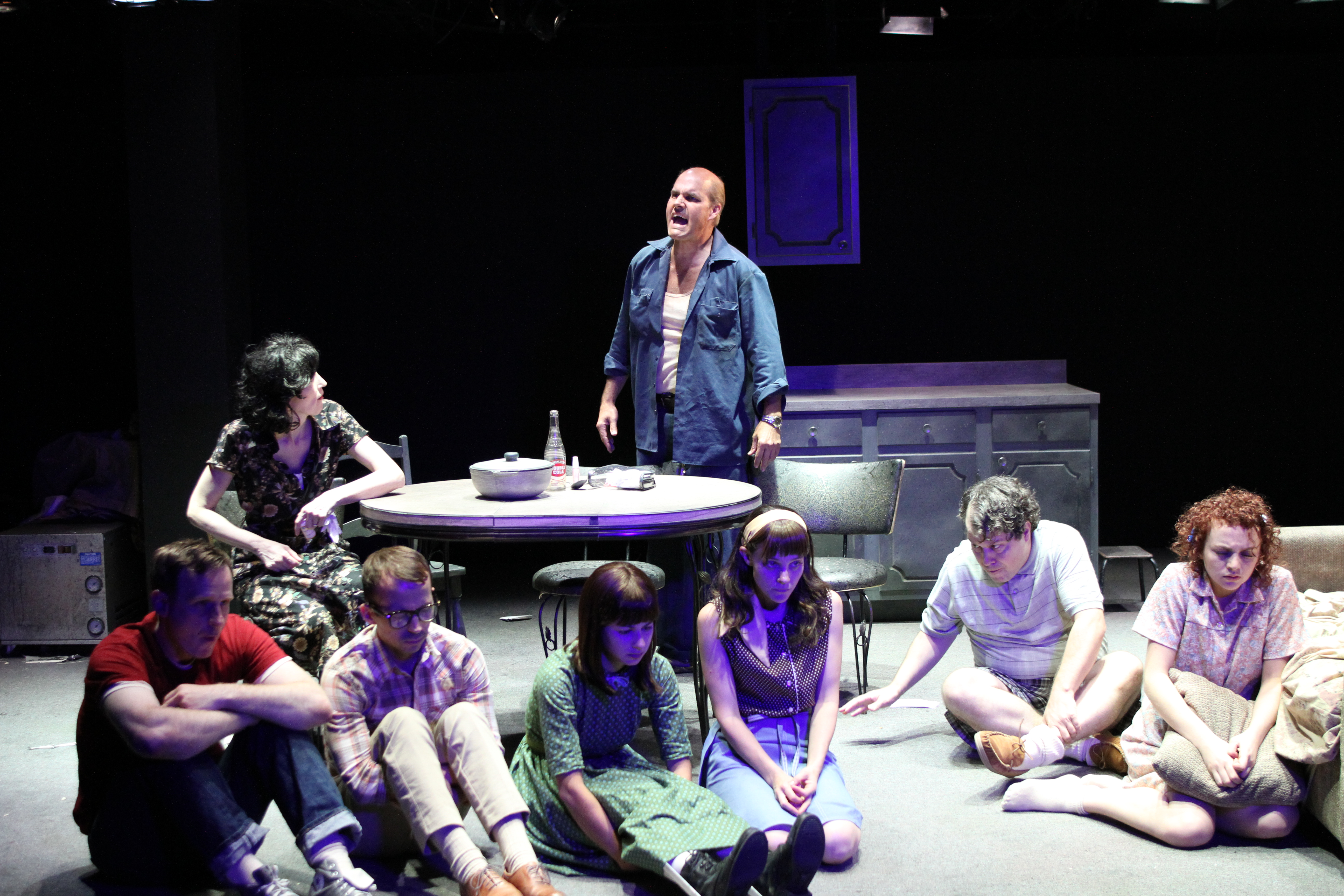
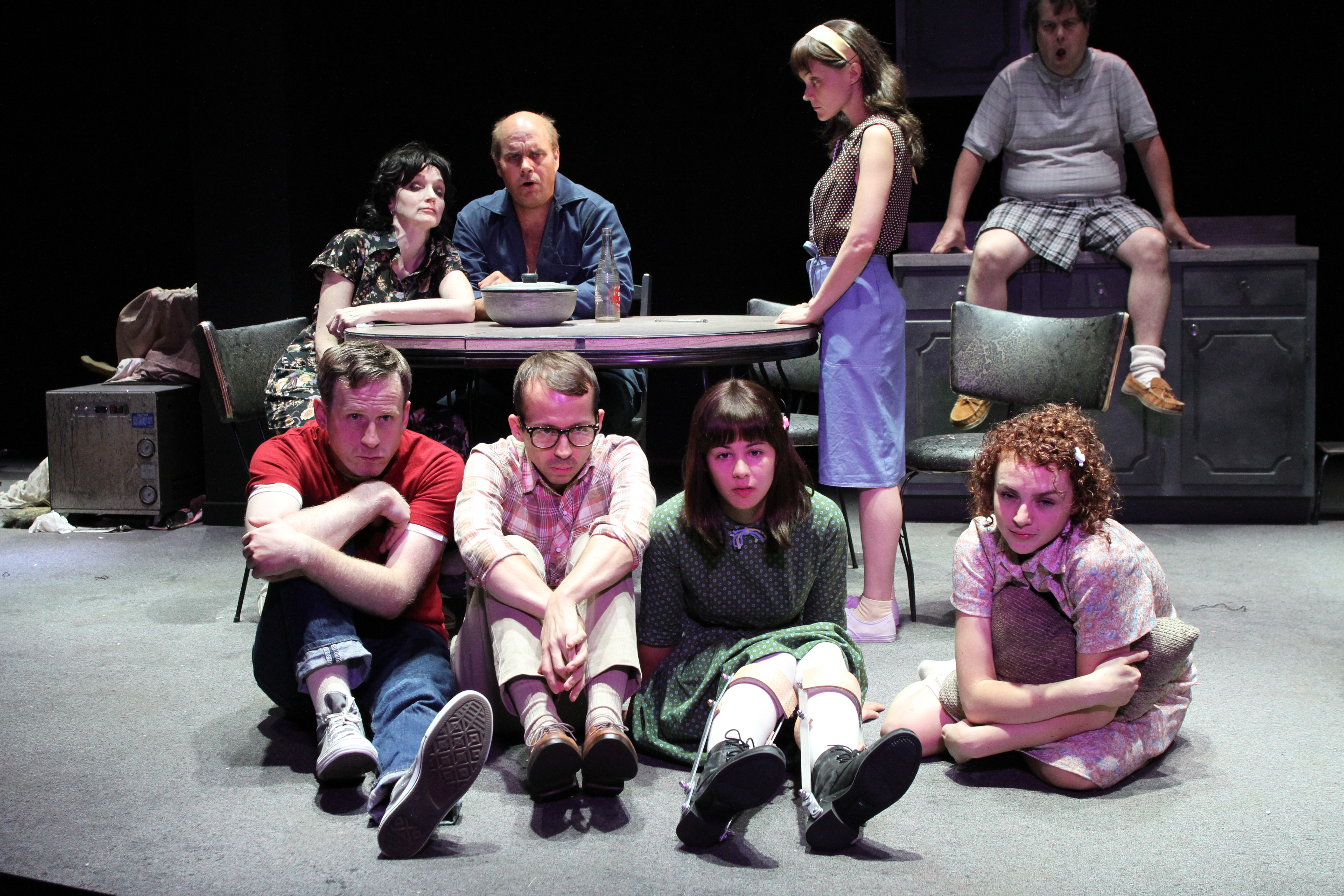
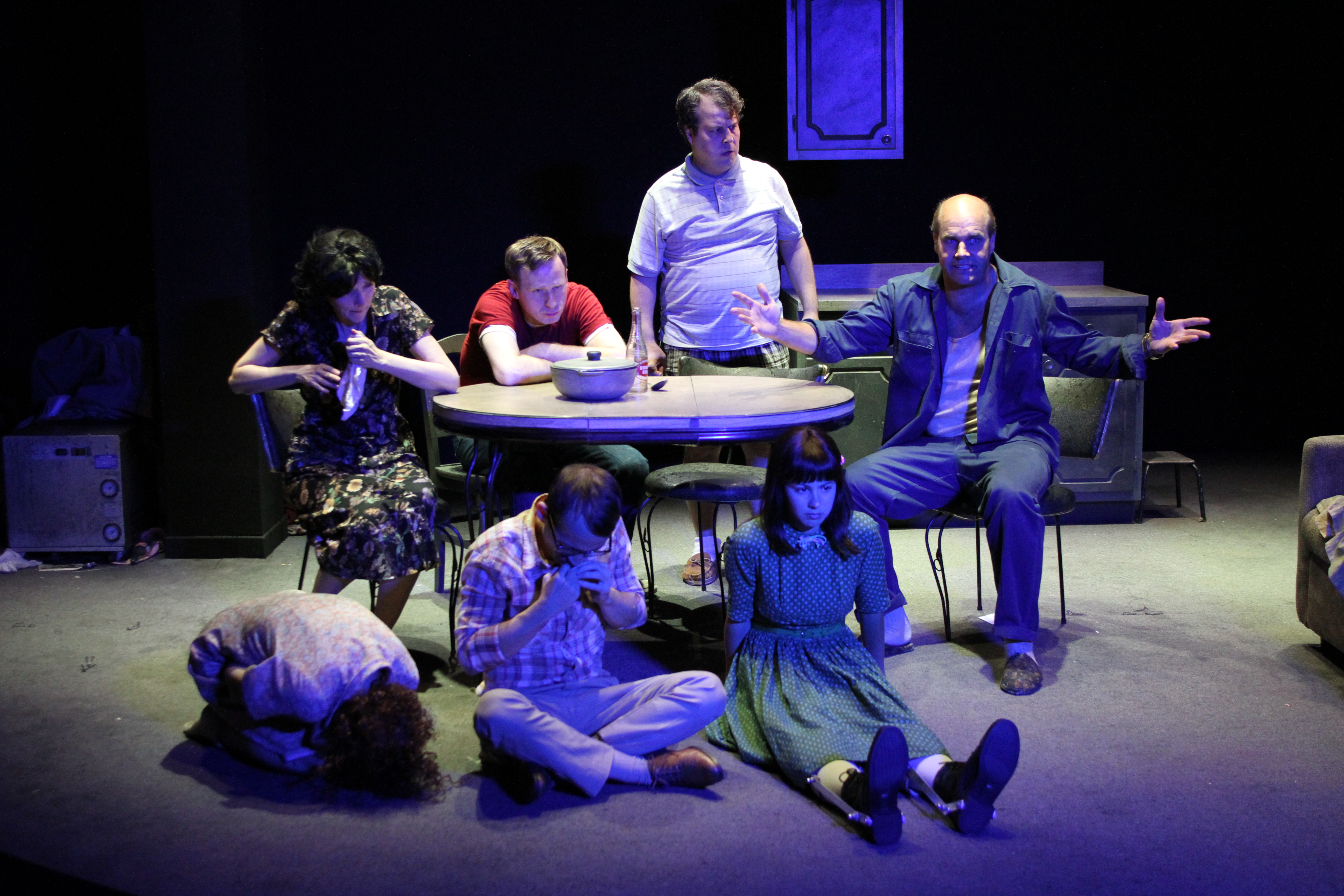
Just in time for Halloween, Axis Company resurrects the spirit of Sylvia Likens and the events surrounding her death in Down There.  From the moment you receive the program (a blank white sheet with the words “down there” written in lowercase and outlined in red crayon) the awareness that the production will not be a regular night at the theatre becomes heightened. Down There is playwright Randy Sharp’s chilling, dark multimedia showcase of an individual’s spiraling descent into madness and violence.  Although the play is based on the torture and murder of Sylvia Likens, the plot mainly centers on Pat Menckl (Gertrude Baniszewski).   A sickly, unhappy woman, Pat Menckl and her boyfriend Frank appear to be on the edge of destruction and the hint of abuse is apparent in the opening scene.  Her kids Jim and Paula and Rickie and John (the other teenagers entrusted to her care) are the poster children for dysfunction.  This thrown-together family unit appears to be experts on the trickle down theory – Frank humiliates Pat who demeans Paula who degrades John.  The only time the audience is presented with some modicum of family harmony is when forced smiles are presented as Casey Kindens (Sylvia Likens) and her sister Joyce are dropped off and later when Casey becomes the object of their abuse.

Pat is woman who has clearly grown up and lived “the hard way.”  Her frail figure, red lipstick and vacant eyes look more macabre under the naked spotlight and she wears her dysphoria like a church frock.  Casey’s bubbly, talkative personality not only clashes with Pat’s “misery loves company” approach, but seems to set Pat on her path of terrorism.   She seems hell-bent on breaking Casey’s spirit and showing her the harsh reality of life.  The violence Casey endures in the basement of the Menckl home is not graphic, but the suggestions of torture coupled with visions of Casey’s innocent smile on the monitor and her voice as she recites a note she is forced to write her parents explaining her bruises, haunt the audience with the reality of Casey’s demise.
The cast is comprised of Axis Company members; they deliver fright better than any modern horror flick.  Laurie Kilmartin portrayal of Pat combines all the elements of a villainess – she is Mrs. Bates, Mrs. Voorhees and Cruella De Vil rolled into one.  Lynn Mancinelli gives a convincing depiction of the Casey, her naivety and her eagerness to make the best of her situation is as compelling as her smile.  David Crabb and Brian give the scariest performance in this production as Rickie and John.  The willingness to participate in Casey’s torture and the fiendish pleasure they take in doing so tingles the skin with itches that cannot be stratched.  Britt Genelin and Jim Sterling are equally as troubling as Paula and Frank.  They give stark portraits of unbalanced people.  The set displays a dreary home and the mute Joyce, played by Regina Betancourt, becomes part of the bleak backdrop.  Her somber disposition and unwillingness to speak adds another layer of torture to this production.

Morbid and uncomfortable to witness Down There leaves the audience without a cathartic experience or sense of understanding as they rise from their seats.  Other than the fact of pure lunacy, the reason for their heinous acts remains a mystery.  But what is clear is that sometimes what lurks below a smile and display of normalcy can be a beehive festering with evil – a thought more disturbing than the boogeyman under the bed but necessary to know.  Down There will be playing at Axis Company, located at 1 Sheridan Square, until October 30.

 Photos courtesy of Axis Company

Kim Fields Lends Expertise to Lens on Talent

Kim Fields comes from an acting/directing /producing dynasty that rivals any in Hollywood.  After receiving the acting bug from her mom, seven-year-old Kim and Chip (her mother) ignited a path from their native Harlem to LA determined to find success in show business during a time when black faces on the big and small screen were a virtual paradox.  Kim’s luminous smile and personality secured her roles in commercials and eventually landed her the role of Tootie Ramsey on The Facts of Life.  Chip built a solid career as an director, consultant and dialogue coach and has appeared in numerous films, TV shows and theatre.  After 30 years in the entertainment industry, the course Kim and Chip paved allowed for countless black actors and actresses, including baby sister Alexis, to shadow their footprints.  Members of Gen X grew up with Kim, watching her on The Facts of Life.  As twenty-something’s, we watched her play bougie Regine Hunter on Living Single.  She became a part of our extended family and thanks to syndication, she is becoming known to Gen Y and future generations.  As Blondielocks, she has added another notch in her career as a poet and spoken word artist.   For the past year and a half, Kim has been the lead director for Tyler Perry’s Meet the Browns and House of Payne.  This winter she will embark on the role of supervising producer and director for an upcoming Tyler Perry comedy.  Along with juggling a work schedule that must have her calendar bleeding with ink, she also balances the duties of being a wife and mother.

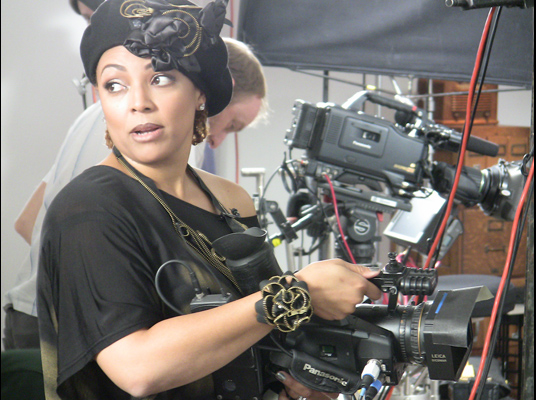
The elevator doors opened to Gary’s Loft, located on 28-30 West 36th Street, to expose a space almost deaf with silence –only the faint voices of Kim and young female documentary filmmaker could be heard from around the corner while the crew meticulously worked to get the interview completed in one take. The footage would be used in an upcoming episode of Lens on Talent:  A Johnson & Johnson Filmmaker’s Challenge, BET’s ground-breaking show featuring the best emerging black filmmakers and short films.  Besides making sure my platform sandals do not clunk against the wood, I became aware of the love permeating throughout the room.  As the crew watched the footage on monitors, whispered and tip-toed about and members of the media quietly waited to meet Kim, the emotion seeped into my pores and left me agog.  There were no divas on the set; everyone was devoted to the success of this project.  Just as quickly as I noticed the temper of the room, I also realized that Kim was the source behind the affection that had swept the penthouse.   She stood in a black blazer and skirt and camouflage heels, a tiny force of nature in a blonde natural updo.  She walked over to me and the other members of the press, introduced herself and shook our hands, her 10,000 watt smile beaming even brighter in person.  I chuckled inside saying, “Girl, I know who you are.”  Or maybe I did not.  Suddenly it struck me, Kim Fields is no ordinary mortal –she is a superwoman.  Not the facade illustrated in comics, but the kind women aspire to be, a woman in harmony with her feminine, spiritual and professional self.

Most people are familiar with the phrase, “Those who can – do. Those who can’tteach.”  I believe a perfect host straddles that famous sentiment, so when BET went shopping for a new host for its second season of Lens on Talent, television legend Kim Fields was a logical, insightful choice.  “I actually was approached over the summer to do some social media hosting and my big brother Blair (Underwood) was supposed to be the host for season two,” Kim reveals, “and we did a panel discussion at NYU that Johnson and Johnson sponsored.  And Blair, as you know, is now the face of the president on The Event and wasn’t able to do both schedule wise, and they said, ‘Hey, what about you.’”  Kim was familiar with the show’s concept and admired Johnson & Johnson’s eagerness to shine a spotlight on urban talent and realizing that she had time in her schedule before she goes back to work at Tyler Perry Studios, she accepted. 

The first season of Lens on Talent was hosted by actress Sanaa Lathan and was a rousing success.  Two episodes from this season have aired and featured Precious executive producer Lisa Cortés and filmmaker Nelson George, and is already showing signs that it will be just as popular as its inaugural season.  Kim is no novice at hosting.  While attending Pepperdine University she co-created, produced and hosted the award-winning Campus Spotlight: Live with Kim Fields and when she agreed to host the BET filmmaker’s showcase, she approached the project with an open mind.  “I wasn’t really sure what to expect, so I don’t think I went into it with any expectations,” she admits.  “You know you go into something… and I thought I’m going to host.  I’m going to have a few conversations and introduce some films.  But I should’ve known I that was going to be inspired because I was inspired at the panel discussion at NYU this summer.  With each guest I’m speaking to, each filmmaker’s bio that I’m reading, I’m getting reinvigorated as a filmmaker. “

After decades of acting, Kim made the decision to start directing.  Kim always had an interest for the behind-the-scenes processes of filmmaking and describes herself as a “crew baby.”   Although she admitted that being an actor assisted in her transition, she was determined to become a well-rounded director, able to attend to the needs of the actors and the crew. Therefore, learning the technical and visual aspects of directing was equally important.  For the young filmmakers selected to be a part of Lens on Talent, the opportunity to meet and chat with an industry veteran who knows what it is like to be in front of and behind the camera must be thrilling experience.  But for the aspiring directors that will be watching the show, Kim has some advice, “You gotta learn the craft, whether you learn it in a film school, read about it online, get a book, intern at some production company or on film sets,” she says, “and then surround yourself with people who know what they are doing.  I’m a huge sports fan, and I liken what I do sports.  You don’t just have a great star player here or there, you’ve got great coaches and a coaching staff and then you’ve got the front office.  It’s really a team effort.”  Although Kim has been taking on more projects behind the camera, her love of acting has not diminished.  “I’ve not retired by any means as an actor just because I’ve been directing more,” she says.  The projects she chooses are determined by scheduling and the figures on the contract.

As the afternoon continued, Kim shared her thoughts about being a black actor in Hollywood and starring in a reality TV show – quick answer no.  Still convinced that her golden lasso and bracelets were tucked safely in loft somewhere, I inquired about how she became a flesh and blood superwoman.  Superman jumps skyscrapers with a single leap and catches bullets with his teeth, but Kim Fields acts, directs, produces, hosts, writes and performs poetry and publishes short stories all while maintaining the commitments of a family.  Kim dispensed a jewel for anyone looking to achieve an order of balance.  “Balance does not always mean fifty-fifty,” she quickly points out, “balance is a constant teeter-tottering of the scales.  So sometimes it’s a matter of if I know I’m work…work…work…work…work, then there’s time that Sebastian and I specifically have that’s mommy and Sebastian time.  Same thing with Chris, you can’t pour so much into your child that you forget you’re still a spouse and a partner and a helpmate. And sometimes you’re gonna get out of rhythm, but what you do about that I think is what’s equally as important.”   As our media round table wrapped, Kim thanked all the journalists, gave us one last peek of that effervescent smile and then it was off to do another set of interviews.  I may never know if she holds any special powers outside of the gifts she possessed and honed from birth, but after smelling the scent of soul food wafting through the loft, I know Kim does one thing that every mortal does – she eats. 

Photos courtesy of bet.com and D. Austin

Joanna Mastroianni Spring 2011

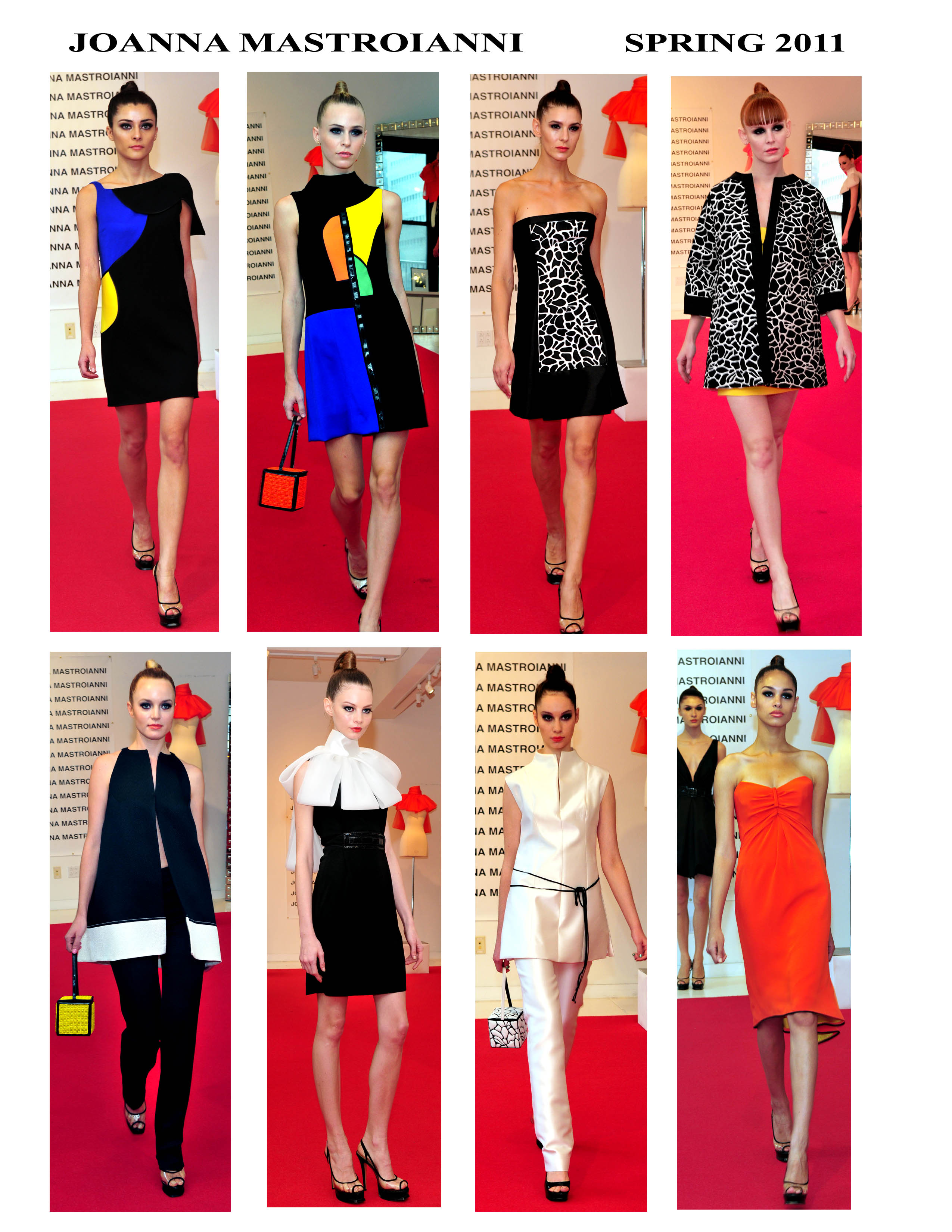
No one serves sex and the city looks like Joanna Mastroianni; perhaps that is why three of her dresses were featured in Sex and the City 2.  For spring 2011 Mastroianni builds on her legacy of creating chic, elegant cocktail dresses and gowns.  Using English potter Clarice Cliff as inspiration, Mastroianni constructs a collection rich in colorful geometric patterns and prints.   Black wool shift dresses with color blocking not only provided a modern twist to a classic shape, but are looks that can be easily transformed from day to evening.  The little black dress is an essential to have in a woman’s closet; the black silk twill décolleté cocktail dress is a perfect choice.  My personal favorite is the asymmetrical black matelassé evening gown with draped giraffe print silk overlay.  Instead of showing on a runway, Mastroianni had an intimate showroom viewing allowing visitors to get personal with the garments.  Seeing the collection up close gave the viewer a greater appreciation of Mastroianni’s superior craftsmanship.  Not only does Mastroianni’s collection present sexy looks for the city, she also offers wearable art.

 Photos courtesy of Cece Feinberg Public Relations

Jordin Sparks Reignites In the Heights

Or at least that was the title I envisioned in my head as I strolled in the misty rain to catch the Sunday matinee at the Richard Rodgers Theatre.  So imagine my surprise when I was told Ms. Sparks would not be playing the role of Nina as I had greatly anticipated.  Disappointed, I pouted to my seat, sat down and waited for the curtain to rise.

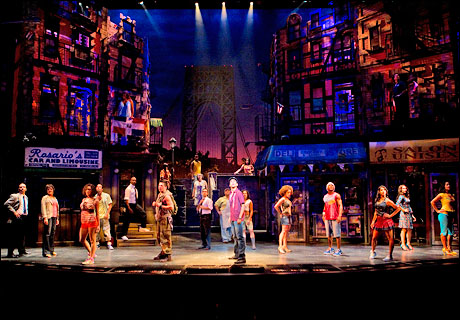
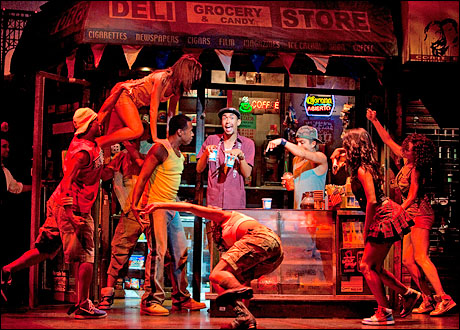
In the Heights blew onto Broadway in 2008 like a breath of fresh air tempered with a hint of Sazón.  Lin-Manuel Miranda, the show’s creator and the first incarnation of Usnavi, shined a spotlight on the Manhattan neighborhood of Washington Heights and struck gold.  The mix of salsa and hip-hop set to an orchestra was a concoction critics ingested well.  The show won four Tony Awards, including Best Musical, Original Score, Choreography and Orchestration.   The cast recording won a Grammy Award for Best Musical Show Album.   In November 2008, Universal Pictures announced plans to make a film adaptation of In the Heights with Kenny Ortega slated to be the director.  By January 2009, the musical had recouped its $10 million investment and began a national tour in October.  On August 2, 2010, the production marked its 1000th performance.  The whirlwind of success of Lin-Manuel Miranda’s ground-breaking homage to his childhood community ushered in a new era on Broadway and paved the way for musicals that fused more vibrant genres of music and choreography such as Fela! and Rock of Ages.

Since its debut, several members of the original cast have left the show.  Miranda’s last performance on Broadway was in February 2009.   Lin-Manuel is the heart and soul of this musical and with the replacement of several cast members I wondered had the show lost its mojo.  Jordin Sparks would undoubtedly make a great addition.  The “American Idol” winner has great vocal range and is guaranteed to fill seats just from her fan base alone.  But with the musical’s newest cast member sitting out this performance, would the show just be a ghost town filled with espiritus of what used to be?

Once the curtain rose, I was pleased to discover that the spirit of In the Heights is still bursting with energy and is as entertaining as the original incarnation that debuted on Broadway over two years ago.  The torch was well handed from Lin-Manuel Miranda to Kyle Beltran who now plays Usnavi, the narrator who owns neighborhood bodega.  His portrayal of the character is sensitive, funny with a sick flow and cadence that does justice to Miranda’s lyrics and is sure to keep the audience heads’ bopping.  Gabrielle Ruiz was an impressive Nina.  She was so convincing that I almost forgot that she was the understudy.  Clifton Oliver is irresistible as Benny; one can not help but root for him to win Nina’s heart.  Olga Merediz is sensational as Abuela Claudia, the neighborhood matriarch.  Her performance is both endearing and captivating.  And although Merediz is a scene stealer, Andrea Burns commits highway robbery on stage as the vivacious salon owner and barrio gossip Daniela.  With a beautiful voice and hilarious one-liners, Burns transforms a busybody into one of the most engaging characters in the show. Rick Negron and Priscilla Lopez shine as Kevin and Camila Rosario, Nina’s parents.  Their portrayals exude pride and integrity and are relatable to anyone in the audience that has known hard times or experienced parenthood. 

The book by Quiara Alegria Hudes was slightly slammed when In the Heights first debuted.  Critics have called the book “overstuffed and oversimplified” and “sentimental and untruthful.”  I find these critiques to be inaccurate.  In fact, I thought the book to be an authentic portrait of life in an inner-city neighborhood.  I know cast In the Heights well.  I am familiar with people who dream of scoring a big hit playing the lottery, desire to move somewhere different, gossip at the neighborhood beauty parlor, struggle through hard times while trying to hold a family together and watch their neighborhood change as decades, generations and traditions change.  Where I am from there are a mixture of salsa, hip-hop, house, reagge and R&B blasting from the windows of cars rolling down the street, the bodega on the corner services the needs of the residents of the block and around the corner I can get my touch-up, manicure and laundry done.  If there is anything to criticize, it would be that book was not a big enough leap for those that may have grown up in a similar environment.  People go to Broadway to escape their everyday lives; it is hard break away when your reality is onstage staring back at you.

Essentially it is the music and choreography that draws an audience to a musical; the reality that is woven into the story only adds to a stellar production.    At times I wanted to jump on stage, roll my hips and heel, toe right along with them.  The songs are memorable; I find myself humming them sporadically.  “No Me Diga” and “Carnaval del Barrio” are audience pleasers and “Paciencia y Fe” (Patience and Faith) is a showstopper. I wish I could provide 96,000 reasons to go see this musical, but I can only offer three – great music and lyrics, likable characters and high-powered dance moves.  After two years and counting, In the Heights is still a winner.

Photos:  Joan Marcus