Tell-Alls, Patricia Field and Empanadas…Oh My
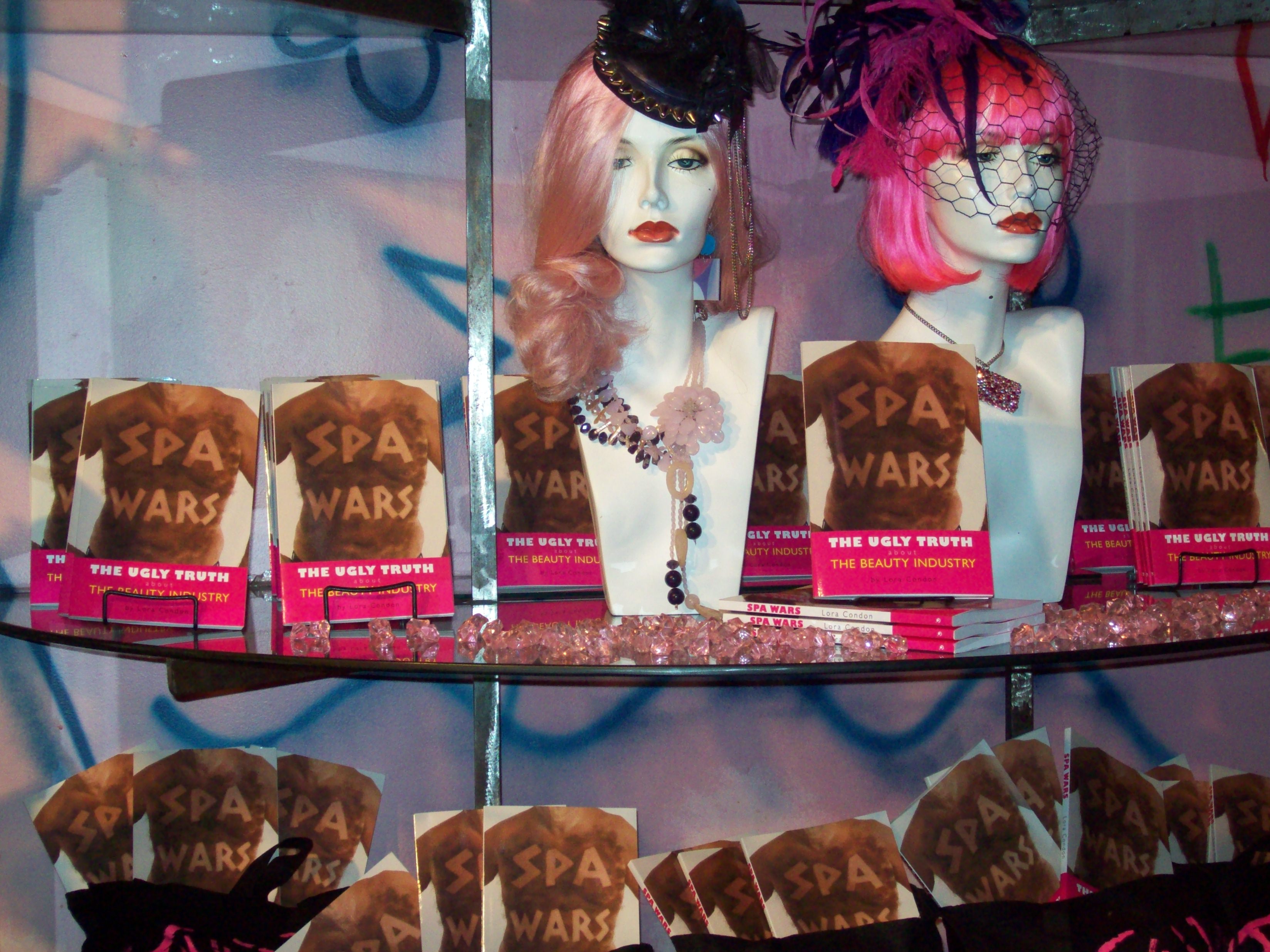
Fashion and beauty are two industries that often intersect, and on May 6 two heavy hitters from each of these industries converged to create one super chic event. Lora Condon most common pseudonyms are the “Beauty Buster” or the “Lash Doctor.” A celebrity makeup artist and esthetician and expert, she is recognized for being an expert in the spa and cosmetic businesses. Now Lora can add author to resume with SPA WARS: The Ugly Truth About The Beauty Industry. SPA WARS is jocular memoir about the spa and beauty industries – it is part narrative, part cautionary tale.

Lora Condon
One of NYC’s most iconic boutiques was the setting for SPA WARS coming out party. Legendary stylist and fashion maven Patricia Field hosted a book signing at the House of Field and Salon, located on 302 Bowery Street, which also benefitted GLAAD, Gay & Lesbian Alliance Against Defamation. Guests enjoyed Chambord and Fris Vodka cocktails, ate empanadas to die for courtesy of Empanada Mama and listened the electro-rock sounds of DJ Sharri Model. And what is an in-store event without the shopping, guests also had the opportunity to shop with a member of the Patricia Field Styling Team and received a 20% discount on clothes. Good food, good drinks, a little shopping and gossip – sounds like the perfect Friday in the city to me.
Photo and Slideshow: F.A.M.E NYC Editor
Off-Broadway Gets Lucky

Deep in the heart of the Theatre District sits a production that shines just as bright as the stars in the Texas sky, is as funny as a Hee Haw episode, with music that would rank on the top 10 of any WSM AM radio show countdown. Country is getting its turn at bat once again, and it is swinging for the fences with Lucky Guy, a production that is all about the most important rule in music – rule 4080 – people in record industry are shady.
 Nashville is the Mecca of country music and it breeds recording stars the way Kentucky breeds champions. This is why Billy Ray Jackson, played by Kyle Dean Massey, has come to Music City. Billy Ray won a matchbook songwriting contest, sponsored by Wright Records, and has come to Nashville to record his song and become famous. G.C. Wright, the owner of Wright Records, has also eagerly awaited the arrival of Billy Ray. He believes “Lucky Guy” – Billy Ray’s winning song – will save his struggling record label. This possibility does not sit very well with G. C.’s cousin, Big Al Wright. He is the proprietor of the most famous used car dealer franchise in Nashville and wants the property Wright Records resides on to expand his car empire. Big Al contrives to hustle Billy Ray and G. C. out of the song and enlists the help of Miss Jeannie Jeannine, the queen of country music, to assist him with his plan. She has not had a hit since before Johnny Cash started wearing black and “Lucky Guy” is just the tune she needs to reclaim her spot at the top. Jeannie begins to employ all her womanly wilds, which are plenty, and star power to try to seduce naive Billy Ray, but he only has eyes for Wanda, the secretary at Wright Records.
 The bamboozle is all set take place during Big Al’s Grand Ole Opry show. But Jeannie has a change of heart after realizing that Billy Ray is an earnest country guy that is devoted to another woman. Even after Big Al puts the pressure on, Jeannie transforms herself from conniving villainess to heroine, saving Wright Records by allowing Billy Ray to sing his song on stage. G.C. and Big Al come to an agreement about the property. G.C. finally makes an honest woman out of his girlfriend, the gossiping hairdresser/wanna be country singer Chicky Lay, and Billy Ray and Wanda are ready to make it a double wedding. Jeannie maintains her status as the queen of country music and all is right in Nashville.
Lucky Guy is being advertised as, “A big new musical at The Little Shubert Theatre,”and they ain’t telling no lies. Playwright and director Willard Beckham has got himself a winner. The laughs that will come from your gut will be as enormous as the wigs glued to Miss Jeannie Jeannine’s head. The score is a great representation of country music, the melodies are earthy and the lyrics are relatable and impressive. Before you know what hit you your head will be swaying and your toes will be tapping in your shoe. The eye-popping sets are colorful and homey and the choreography is electrifying. The cast is the sugar in the sweet tea of this musical, and oh how sweet it is. The Buckaroos, played by Callan Bergmann, Xavier Cano, Wes Hart and Joshua Woodie are the buffed minstrels and dancers that give the show a healthy dose of eye candy. Not to be outdone is Kyle Dean Massey, FAMERS can you say sexy? Massey is a dreamboat that can sing and act. What else do you need? Savannah Wise as Wanda Clark is as sugary as a ripe Georgia peach and could give Taylor Swift a run for her money. Jean Colella is hysterical as Chicky Lay and Jim Newman is equally as comical as G.C. Wright, but the best lines and stomach crunching cackling came courtesy of Varla Jean Merman and Leslie Jordan. As a legendary drag queen, Merman is already entertainment royalty. The role of Miss Jeannie Jeannine was tailor made for her talents. She is vivacious; the audience could not get enough of the blue jean queen of country antics. Leslie Jordan is J.R. Ewing in bespangled cowboy boots. His omnipresent presence and sarcasm is so outrageous it is sublime.
 I view this production as the little musical that could – since its 2009 premiere in Connecticut, it has been picking up steam. I firmly believe it will not stop until it has reached Broadway. Lucky Guy is playing a 12-week limited engagement; promenade on down to The Little Shubert Theatre and get yourself a good ole heaping of some country-fried fun.
Photos: Joan Marcus
Channel 7 Eyewitness News Anchor Diana Williams Hosts Luncheon

April 28, The Crohn’s & Colitis Foundation of America held their 18th Annual Women of Distinction Luncheon, yesterday at the Waldorf Astoria. Jeweler Lorraine Schwartz was presented an award by Tina Knowles. CCFA Board Member Michele Sweetwood and Lizzy Noble were honored as well. This year’s luncheon also featured a fashion show presented by Bergdorf Goodman and featuring the Evening Collections of Alexandra Vidal, Andrew GN, CD Greene, J. Mendel, Kaufman Franco, Naeem Khan, Oscar de la Renta and Zuhair Murad. The affair raised a total of $1.9 million for the foundation.
Photo: Amber De Vos
Slideshow Photos: Rob Rich
Sister Act Anoints Audiences with the Gospel of Laughter

Before 2006, Sister Act was a boilerplate comedy, with motley reviews, that depended on the star power of Whoopi Goldberg, Maggie Smith and Harvey Keitel to fill box office seats. In 2006, Sister Act was reincarnated into a musical with a book by Cheri and Bill Steinkellner, music by Alan Menken and lyrics by Glenn Slater. The production premiered on October 24, 2006 at the Pasadena Playhouse, closed December 2006 and became the highest grossing show at that venue. In 2009, the show went international; Stage Entertainment and Whoopi Goldberg produced Sister Act at the London Palladium.
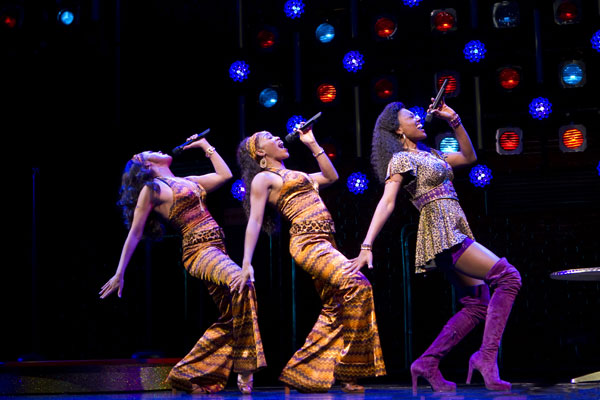 Currently back in the states, Whoopi Goldberg is also back in the habit and on Broadway as one of the show’s producers. Sister Act was a money maker for Whoopi back in 1992 and it is a Tony Award nominated smash hit for her now, but this reinvented musical of it comedic predecessor is its own hilarious entity. Like the movie, Sister Act chronicles the story of Deloris Van Cartier – a ne’er do well lounge singer wasting her days in a Philadelphia nightclub owned by her married, thug boyfriend Curtis Jackson, played by Kingsley Leggs. When returning a recycled gift – a coat previously owned by Jackson’s wife – Deloris stumbles upon Jackson and goons murdering a member of his crew believed to be an informant. Deloris goes on the run, literally, and runs to a police precinct where she is reunited with Eddie Souther, an old school chum that used to have a crush on her. Souther, a cop now, arranges for her to hide in a convent, and the holy hijinks are kicked into high gear.
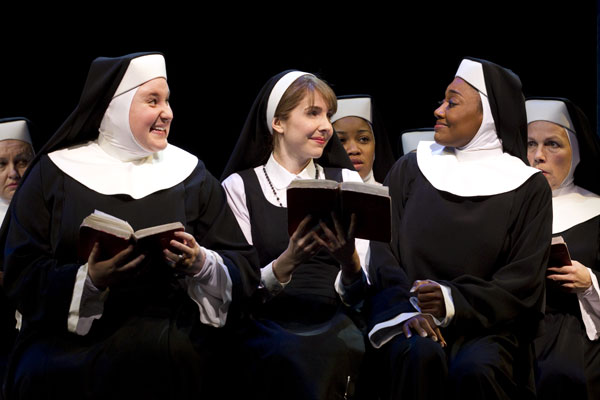 Even in a nun’s habit, Deloris – now dubbed Sister Mary Clarence for her own protection – is as noticeable as the follicles protruding from Don King’s head and driving the convent’s Mother Superior, played by Victoria Clark, round the bend. Mother Superior decides to put Deloris’ singing talent to good use and puts her in charge of the cacophonous choir. Deloris manages to raise the voices of the dissonant nuns and adds a little touch of disco for show. Despite the objections and prayers of Mother Superior, Deloris is a savior. The choir’s funky sound attracts parishioners, donations and helps to save the church. Even the pope wants to see them. A news report about the pope’s visit gets Deloris spotted on television and must she relocate again to avoid Curtis and his lackeys. But Deloris is determined to stand by her new found sisters and they stand by her, even with the knowledge that she is not who she claimed she was. Mother Superior has a change of heart about Deloris as well. The nuns and Eddie foil Curtis’ plans for payback and Deloris and the sisters perform for the pope.
 I have never laughed so hard in a theatre before. Sister Act may have taken a long route to get to Broadway, but there is no doubt that its future is just as bright as the Great White Way itself. It is a crowd pleaser from beginning to end. I tried to find holes in this show, but there are none – my mirth cup runneth over. Cheri Steinkellner, Bill Steinkellner and Douglas Carter Beane received a Tony Award nomination for Best Book of a Musical, and the music of Alan Menken and the lyrics Glenn Slater received a Tony nomination for Best Original Score. Set designer Klara Zieglernova’s vision for each scene was right on point, by the end of the production the audience did view a marriage of disco and divinity. Costume designer Lez Brotherston sparkly, glitzy fashions made me want to pick up a habit. Although their efforts did not receive Tony nominations, all the members of the creative team, including director Jerry Zaks, provided a heavenly pitch. Only thing the actors had to do was knock it out the park, and that is exactly what they did.
Patina Miller reprises her role as Deloris Van Cartier; she was first cast in the role during the London version. She shines brighter than the Swarovski crystals used in the costumes. Miller has attitude for days with the vocal chops to back it up – her Tony Award nomination is a no-brainer. Tony Award winner Victoria Clark is angelic as Mother Superior. The comedic tension between she and Miller is wonderful to watch. Sarah Bolt as Sister Mary Patrick is a breath of ethereal air. Her presence is so bubbly and infectious; I wish I could bottle her and sell her. Giving contrast to Bolt’s perky personality, is Audrie Neenan as Sister Mary Lazarus – she completely prickly but no less a hoot. Her snarky lines are well received by New Yorkers – citizens not known for being very peppy.
 Although this production is a real sisterhood, the men in the cast manage to hold their own. Kingsley Leggs is a villain you will love to despise; he is Nino Brown with an afro and a great singing voice. Chester Gregory may be known as “Sweaty” Eddie, but it doesn’t detract from his talent. As my aunt would say, “That boy can sang!” Desmond Green is a scream as TJ, Curtis Jackson’s dimwitted relative and subordinate. Fred Applegate, John Treacy and Caesar Samayoa also provide plenty of moments for the audience to chuckle heartily.
 To speak of the gospel is to tell the truth – to spread good news. This is not the type of show one goes to if they are looking to impress others with their knowledge of culture and the arts at a future dinner party. This production is for someone that likes a little amusement with their theatre. Funny…flashy…with a musical score that is sure to remembered for the ages, this show is too fabulous baby!
Photos by Joan Marcus
65th Annual Tony Award Nominations Have Been Announced

Today Whoopi Goldberg and her sisters have plenty to celebrate, Harry Potter and Dan Lauria were snubbed and theatre legend Patti LuPone is on the verge of another victory. If you did not catch the hint, the nominations for the 2011 American Theatre Wing’s Tony Awards were announced this morning. Tony Award winners Matthew Broderick and Anika Noni Rose hosted the event, which were held at The New York Public Library for Performing Arts. There are 26 competitive categories that were announced. Below are the nominations for the major awards, but if you want to view the announcement in its entirety, go to http://www.tonyawards.com.
Best Play
Good People, Jerusalem, The Motherf**ker with the Hat, War Horse
Best Musical
The Book of Mormon, Catch Me If You Can, The Scottsboro Boys, Sister Act
Best Revival of a Play
Arcadia, The Importance of Being Earnest, The Merchant of Venice, The Normal Heart
Best Revival of a Musical
Anything Goes, How to Succeed in Business Without Really Trying
Best Performance by an Actor in a Leading Role in a Play
Brian Bedford, The Importance of Being Earnest
Bobby Cannavale, The Motherf**ker with the Hat
Joe Mantello, The Normal Heart
Al Pacino, The Merchant of Venice
Mark Rylance, Jerusalem
Best Performance by an Actress in a Leading Role in a Play
Nina Arianda, Born Yesterday
Frances McDormand, Good People
Lily Rabe, The Merchant of Venice
Vanessa Redgrave, Driving Miss Daisy
Hannah Yelland, Brief Encounter
Best Performance by an Actor in a Leading Role in a Musical
Norbert Leo Butz, Catch Me If You Can
Josh Gad, The Book of Mormon
Joshua Henry, The Scottsboro Boys
Andrew Rannells, The Book of Mormon
Tony Sheldon, Priscilla Queen of the Desert
Best Performance by an Actress in a Leading Role in a Musical
Sutton Foster, Anything Goes
Beth Leavel, Baby It’s You!
Patina Miller, Sister Act
Donna Murphy, The People in the Picture
Best Performance by an Actor in a Featured Role in a Play
Mackenzie Crook, Jerusalem
Billy Crudup, Arcadia
John Benjamin Hickey, The Normal Heart
Arian Moayed, Bengal Tiger at the Baghdad Zoo
Yul Vázquez, The Motherf**ker with the Hat
Best Performance by an Actress in a Featured Role in a Play
Ellen Barkin, The Normal Heart
Edie Falco, The House of Blue Leaves
Judith Light, Lombardi
Joanna Lumley, La Bête
Elizabeth Rodriguez, The Motherf**ker with the Hat
Best Performance by an Actor in a Featured Role in a Musical
Colman Domingo, The Scottsboro Boys
Adam Godley, Anything Goes
John Larroquette, How to Succeed in Business Without Really Trying
Forrest McClendon, The Scottsboro Boys
Rory O’Malley, The Book of Mormon
Best Performance by an Actress in a Featured Role in a Musical
Laura Benanti, Women on the Verge of a Nervous Breakdown
Tammy Blanchard, How to Succeed in Business Without Really Trying
Victoria Clark, Sister Act
Nikki M. James, The Book of Mormon
Patti LuPone, Women on the Verge of a Nervous Breakdown
Photo: J. Countess/WireImage.com
Trials of a One Picked Wonder
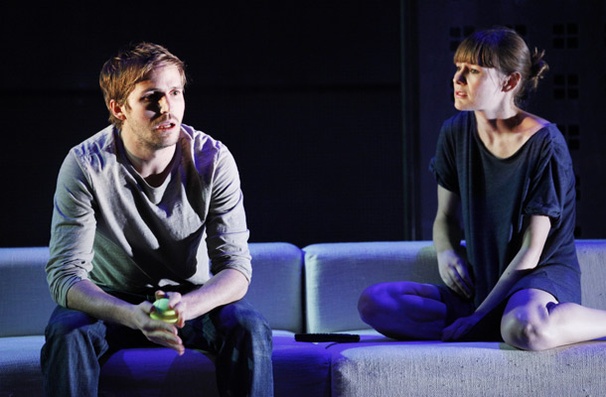
Every artist wants their 15 minutes of fame (after all, Andy Warhol did promise we all would have our moment), but the trick for an artist is to extend that 15 minutes into a career. Artists languish in a basement of doubts, menial employment and lingering questions until the elevator doors open and the ride to the penthouse begins. Then it happens…the big break comes, but just as quick it fades like smoke in the atmosphere. What must it be like to be a one hit wonder – to reach the glass ceiling of success, crack it, but not burst through to superstardom? It is a question plenty in the entertainment industry know the answer to, and thanks to clever storytelling of Christopher Shinn, audiences at the Vineyard Theatre now know what it is like as well.
Picked is a story about Kevin, a young actor poised for success when a famous, eccentric director casts him as the lead in his next big-budget Hollywood movie. Known for making John Woo-esque big action flicks, John (the director) is looking for his next film to really connect with the audience on a deeper, expressive level, and for this he wants a virtual unknown actor to play the protagonist – enter Kevin an actor that has only had bit roles, but seems to project a sincere aura and is not concerned with fame. John proposes a sketchy synopsis of a sci-fi film that takes place in space with the lead character basically battling himself as the lead and the nemesis are the same person. Kevin agrees and then undergoes a battery of brain wave scans to uncover deep issues that he struggles with physiologically and emotionally. The script is then written based on John’s findings. As production of the film begins, John brings in Nick to play the part of the Kevin’s evil other half. Kevin and Nick appear to develop a bromance that is abruptly put to a halt by Nick once production of the film ends, leaving Kevin baffled. After the successful release of the film, Nick is working consistently, but Kevin cannot book a gig. The lack of work and the bewilderment that comes with it makes Kevin estranged from girlfriend Jen, himself and eventually with the entertainment business. At the end of the play Kevin had found that like the character he played, he had grappled with his own sense of self and was left with lingering questions, while forging into a new frontier.
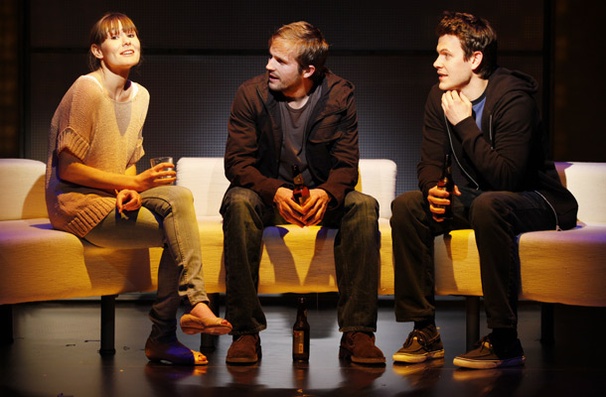 Playwright Christopher Shinn did put together a brainy script, but perhaps that is the problem lurking deep within Picked – it is too clever. As the production ended, the applause that came from the seats was slow and while walking out the Vineyard Theatre, the audience seemed more perplexed than entertained. Like the protagonist who underwent extreme research, it appears that audience members were a litmus test for the playwright and the director – the hypothesis: how would a group of people viewing a play react to numerous loose ends. There are multiple subplots of the Picked that were not fully developed, Kevin and Nick’s bromance, John’s issues with intimacy, Kevin’s emotional neediness with men, the lack of a deeper connection with Jen as well as Nick’s collapse.
 Perhaps Shinn outsmarted the audiences by forcing them to actually think, or perhaps he overestimated the need for heady, intellectual drama. Even with these holes in the story, the cast does a wonderful job pushing through these gaps to deliver introspective performances. I was able to identify with each of these characters – people struggling to balance their human, emotive instincts with their digital/progressive selves. And that is what makes Picked worth going to see, it is not about the questions Shinn does not answer, it is about the questions you will have for yourself after viewing it. Picked is definitely gets my vote – it is mature, conscious theatre.
Photos: Carol Rosegg
Jersey Girls

Broadway has always had an affinity for rock and roll’s golden era – it is almost like its secret golden goose. The music from that time in America’s history is everlasting, resonating good feelings from those who lived during the 50s and 60s and converting new fans within each generation that followed. In addition, Baby Boomers are mostly the faces that make up the audience, it only is logical to produce musicals that would cater to their ears and wallets. Jukebox musicals like Smokey Joes Café, Million Dollar Quartet and Jersey Boys are all successful testaments to the formula of infusing early rock and roll music with a book from that time period. Jersey Boys has been going strong on Broadway for five years – now it is the ladies turn. Baby It’s You debuted on April 27 at the Broadhurst Theatre adding another chapter to Broadway’s love story, or should I say stories, with rock and roll.
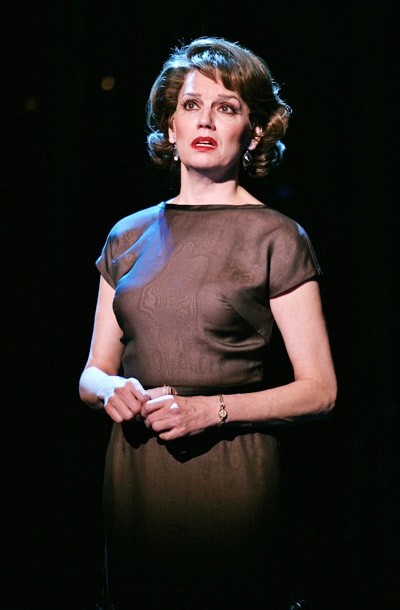 Baby It’s You is a loosely based on the life of Florence Greenberg – a real housewife from New Jersey, and mother of two who stepped out of her kitchen and into the music business. She was a trailblazer and integrator, helping to make the Shirelles the first major female vocal group of rock and roll with the a number one single on the Billboard Hot 100. She also founded Tiara, Scepter, Wand and Citation Records and along with songwriter and producer Luther Dixon, helped to launch the careers of Tammi Terrell, Chuck Jackson, The Isley Brothers, B.J. Thomas, The Kingsmen and Dionne Warwick. In 1976, she retired from the music industry, and sold all of her labels to Springboard International. In 1995, the 82-year-old visionary died of heart failure in Teaneck, New Jersey.
 The production strictly follows the paradigm of a jukebox musical. The music and lyrics are all derived from previous released songs. Theses songs are then used to craft the book and facilitate the plot through the play’s myriad musical numbers. Baby It’s You is set between 1958 through 1965 and takes place in Passaic, New Jersey and New York City. Harmonizing the show’s story along with the music and current events of that era is Jocko a spirited narrator/DJ that operates on payola – the system for “breaking records” in those days. When Florence is first introduced to young Shirley Owens, Doris Coley, Beverly Lee and Micki Harris by her daughter, they are students at Passaic High School practicing in the schoolyard. She immediately sees potential in them and changes their name from The Poquellos to The Shirelles. She becomes their manager, surrogate mom, producer and biggest fan. Once she teams up with Luther Dixon after forming Scepter Records, the Shirelles really begin to shine and their signature sound is created and duplicated. Along with the triumphs Florence had, Baby It’s You also chronicles her struggles getting started, the disintegration of her marriage as well as the effects her success had on her relationship with her children. The musical also briefly covers the decline of the Shirelles and the departure of Luther Dixon from Scepter Records due to the changing musical climate of the mid and late 60s.
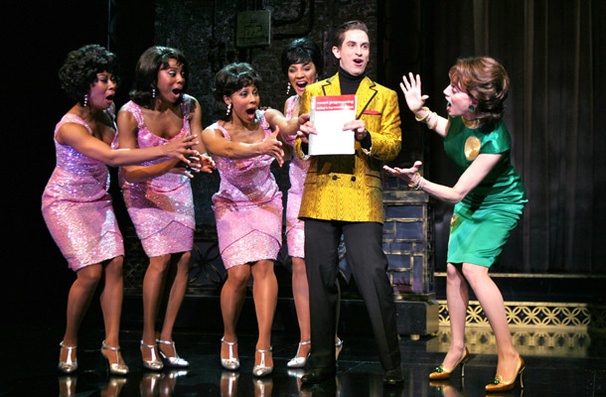 If anyone were to ask me my opinion about Baby It’s You, I would say, “Baby, it’s a hit!” It is a solid gold trip down memory lane in a 1959 fishtail Cadillac with an awesome soundtrack to compliment the journey. By today’s standards, if this musical was an album it would go platinum several times over. Anyone that loves to watch the oldies revues on PBS will be in poodle-skirt heaven watching this show. The weaving of the musical numbers with the story is nearly flawless. Floyd Mutrux and Colin Escott should be praised for the baby they conceived and created. Costume Designer Lizz Wolf and Scenic Designer set the mood visually – it is akin to viewing a rolling set of Happy Days or American Graffiti mixed with a little Showtime at the Apollo. Like Rock of Ages the band is on stage instead of the orchestra pit, sliding forward and back during the musical numbers. The choreography, courtesy of Birgitte Mutrux, captured the exuberant dancing of the 60’s along with the graceful and sometimes over-the-top moves performers used on stage. But as much as I enjoyed Baby It’s You, there was one minor disconnect for me. One pitfall a jukebox musical can fall into is the overuse of previously recorded music, which turns the production into an elaborate anthology instead of art. Mutrux and Colin Escott could have used a little restraint when choosing the music and how it correlated to the overall story. It almost appeared as if they wanted or did use every popular song in Scepter’s catalog. Had the music not been so endearing, this could have been a major problem. But trust me when I tell you FAMERS this issue is minute. Their accuracy to pair a song with a situation the cast is confronting is almost 100%. Using “Mama Said” to express Florence’s discontentment with being a housewife or “The Dark End of the Street” to illustrate the illicitness of Florence and Luther’s affair, provides the audience with an aural exclamation point that they could thoroughly enjoy. After all, it is the music that is the star of any jukebox musical, and the cast does a groovy job of making these classics relevant again.
 I am such a sucker for Beth Leavel, in my sound book, she can do no wrong. She was the perfect choice to play Florence Greenberg – funny, sensitive and boy can she belt a tune. She brought a star quality to the role and offered a wonderful homage to woman who knew what “girl power” really meant. Allan Louis gave a genuine performance as Luther Dixon. Besides Leavel and Louis, the rest of the cast played multiple roles. Geno Henderson is the MVP of the show playing Jocko, Chuck Jackson, Ronald Isley and Gene Chandler. If this was MSG instead of Broadway I could confidently say that the Knicks would make it to the finals. Erica Ash, Kyra Da Costa, Crystal Starr Knighton and Christina Sajous enrapture the audience as the Shirelles and other singers of that era. Their ability inspires delight and their energy is infectious.
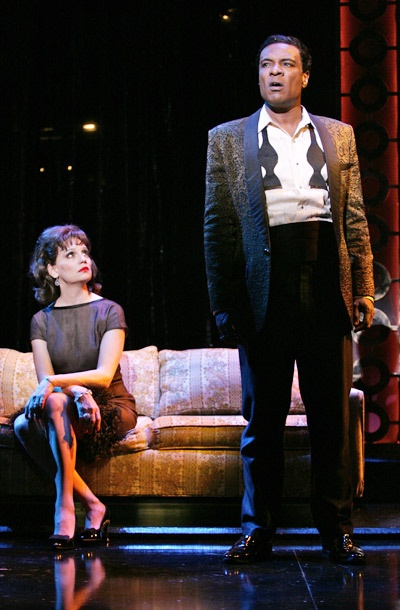 From the first song to the last the audience is sold on Baby It’s You. And I was right there with them singing along in my seat, moving my feet to the beat. In 2006, Jersey Boys took home the Tony for Best Musical. My prediction, there is no dark end of the street in sight for this musical, Baby It’s You will twist and shout its way to the podium to snag some awards in June.
Photos: Broadway.com
Introducing Mr. Bailey

One thing a recording artist must become used to is talking with the media about themselves. Press junkets are just as important to the process of getting an album to consumers as being in the booth. On April 21, R&B artist Antwon Bailey sat down with members of the media to talk about the upcoming release of his mixtape Mr. Bailey. When Antwon spoke with the press at Selfish Music Group Studios in Brooklyn, this 19-year-old Queens native was realizing a dream. A dream that was conceived when he was boy, entertaining family and participating in school talent shows. That dream began to come to fruition when Bailey was signed to famed Power 105.1 FM radio personality DJ Self’s Selfish Music Group. Now an internet sensation, Antwon’s videos received multiple hits on YouTube and has him being compared to young, sexy R&B crooner Trey Songz.
Antwon Bailey is ready for the world, literally, and got acclimated to speaking with the press by sharing with F.A.M.E NYC his thoughts about the media, being compared to Trey Songz and the new millennium way of breaking new artists into the mainstream.
April 21, 2011 was your media day. What did you enjoy most about talking to the press?
I liked the fact that most of the media/press was really down to earth and knew what my music was about and really express their appreciation for my music.
What is the craziest question you have received?
Someone asked if I would sleep with Lisa Raye.
In your bio it stated that as a child you were called upon to entertain your family. When did you realize that music was something you wanted to pursue as a career?
Once I started doing talent shows at school and performing for the All Stars, that’s when I knew that I wanted to pursue music as a career.
Describe your feelings when you were first signed to Selfish Music Group.
I was excited that I was starting a new venture with all those affiliated with the record label and waiting to see what the next step was. I was happy to be working with one of the hottest DJ’s in NYC.
How would you describe your sound?
I would describe my sound as unique, fun and geared towards the youth, but you can still feel the late 80s, early 90s sound. Overall, it’s definitely for the people. I like to incorporate punch lines that the ladies can relate to.
I have been viewing your videos on YouTube. Some viewers have compared you to Trey Songz. Do you feel that is a fair comparison? Also, how do you feel about artist comparisons in general?
I think it’s an ok comparison. I can see how they would see that being that I’m young and he was young when he started and had braids and I have braids now; I think I just have a little more of an angle geared toward the youth right now. It’s not all grown and sexy.
I don’t really think about being compared to other artists as I’m focusing on my own music currently, but people always compare new artists to known artist so I expect it.
Tell me about the process of recording, “Mr. Bailey.” How have you grown from the experience?
It was a fun experience. I felt like my career is actually growing and I got to see the results of my product, my voice, my music. I must say, that with me being my toughest critic, I was actually satisfied.
“Mr. Bailey” is a mixtape. While the mixtape game is widely known for being a launching pad for hip hop artists, do you think the mixtape game has also benefited the world of R&B?
I feel that the mixtape circuit is just a way to promote your music to those [who] haven’t necessarily heard your music whether it be hip hop or R&B. I think it allows people to see my creative side as I prepare for my album.
The music industry has changed drastically in the way new artists break to the public, do you believe that has served to help or hinder a new artist like yourself? Why or Why not?
I think that it helps new artists like me because the ways artists are brought to the public now are by way of the internet and online media. People from all over the world can see who you are and what you do. It allows artists to communicate with our fans in a way that we wouldn’t have been able to back in the days.
Which track on the mixtape is the most personal for you and why?
“Hotta Hotta” which is number two on the mixtape, is the most personal track on the mixtape for me because it explains my grind in the music industry. It is also a song [about] me explaining to other artists that although they’re hot now, I’m going to come out being even hotter. My quote for “Hotta Hotta” is, “You can stand out, but I’m outstanding.”
Photo courtesy of McQueen Media
Triangle Offers Homage to a Centennial NYC Tragedy
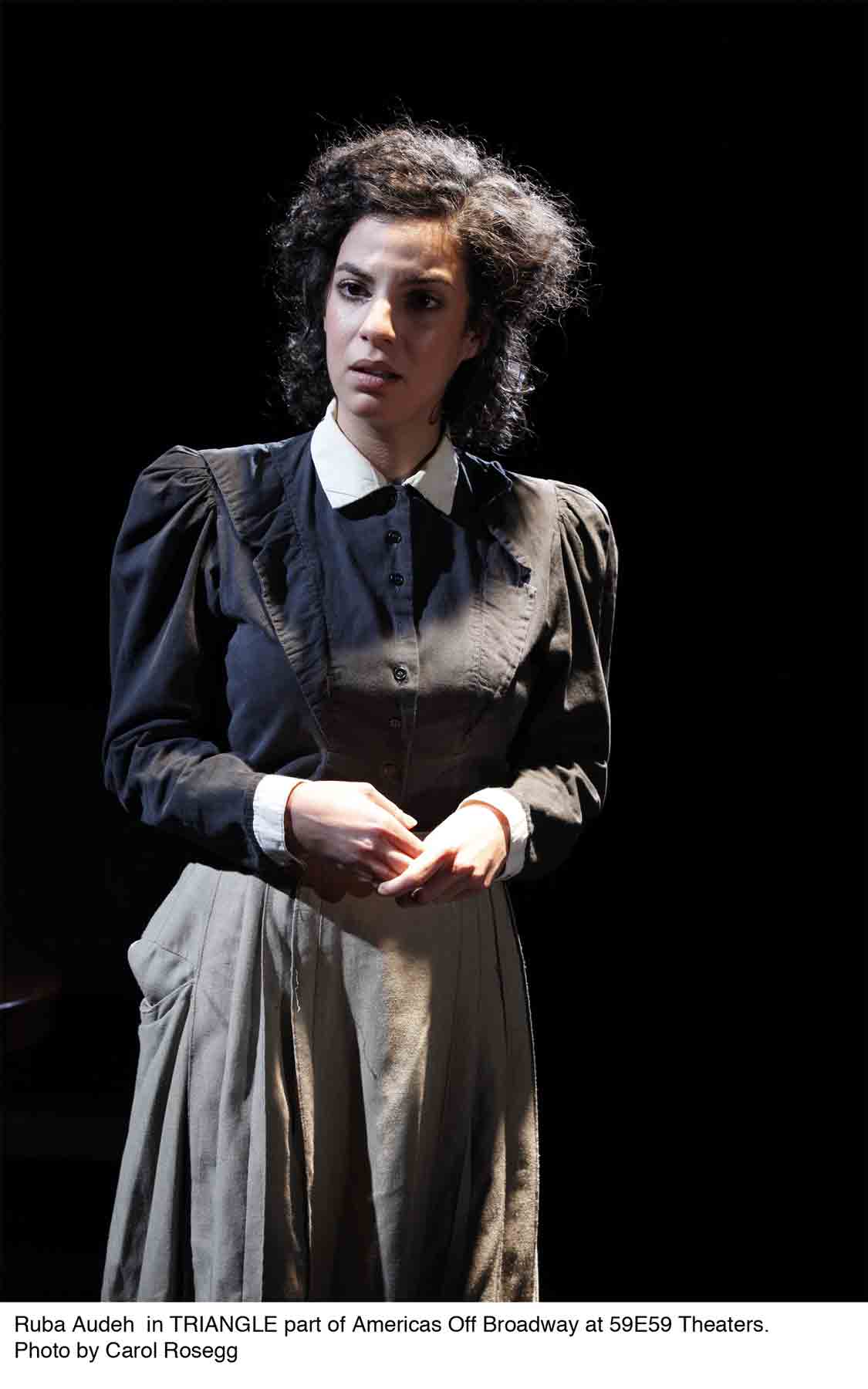 March 25, 2011 marked the 100th anniversary of the Triangle Shirtwaist Factory fire. The inferno was the most deleterious industrial catastrophe in NYC history and ranked the fourth highest in casualties from an industrial accident in US history. It was also the most mortiferous tragedy in Manhattan until 9/11. The sweatshop blaze, located in the Asch Building on 23-29 Washington Place, resulted in the deaths of 146 workers, most of whom were Jewish and Italian immigrants. Because of locked doors, people jumped to their deaths and created outrage with the community and politicians alike. But the fire’s lasting legacies were not just the deaths, it was the legislation passed to improve factory safety standards and the creation of the International Ladies’ Garment Workers’ Union.
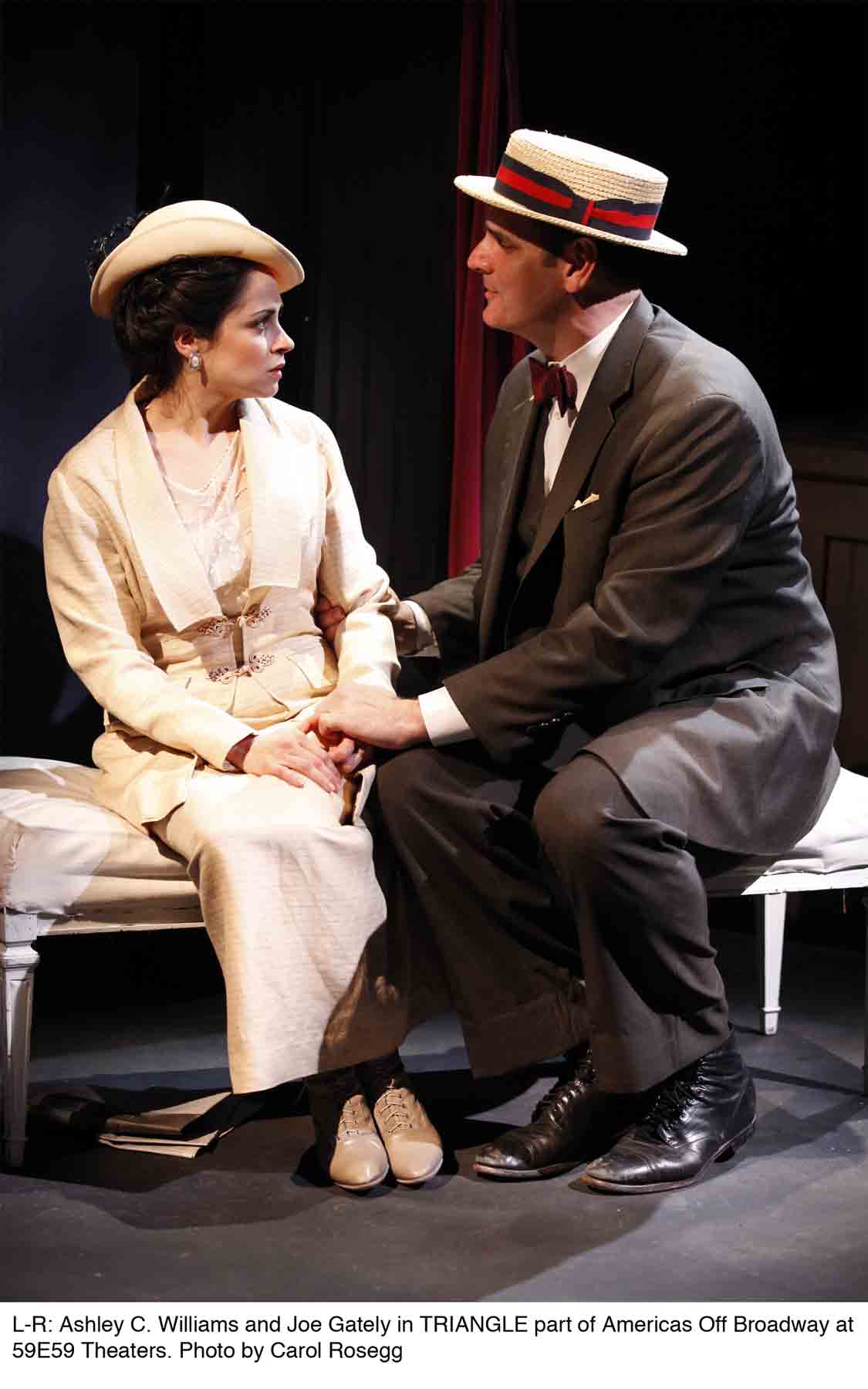 Currently, the Americas Off-Broadway series offers a production that exhumes the ghosts of that tragedy and the lives it affected with Triangle. Triangle is a 120 minute drama that recounts the adulterous liaison between “Big” Tim Sullivan and actress Margaret Holland against the backdrop of the Triangle Shirtwaist Factory fire and the events that followed. When young, beautiful Margaret goes to audition for Big Tim at his headquarters, he is already known as “The Boss of the Bowery.” Along with being a one of the prominent politicos of Tammany Hall, he was also the kingfish of various criminal enterprises which included prostitution, gambling and extortion. Margaret, a highbrow, progressive woman, becomes seduced by Tim’s immoral, yet captivating demeanor. Tim immediately recognizes Margaret’s beauty and casts her in his productions out of state. While Margaret continues to tour on the acting circuit, she and Tim fall in love and have an illegitimate daughter named Mary Catherine. But the Triangle Factory fire forever changes Margaret, Tim and Mary Catherine. Margaret tirelessly works as a reformist, causing a strain on her relationship with her growing daughter, and blames Tim for taking kickbacks. Guilt spurs Tim into using his political muscle to aide the reformers and sponsors legislation limiting the maximum number of hours women were forced to work despite his failing health from syphilis.
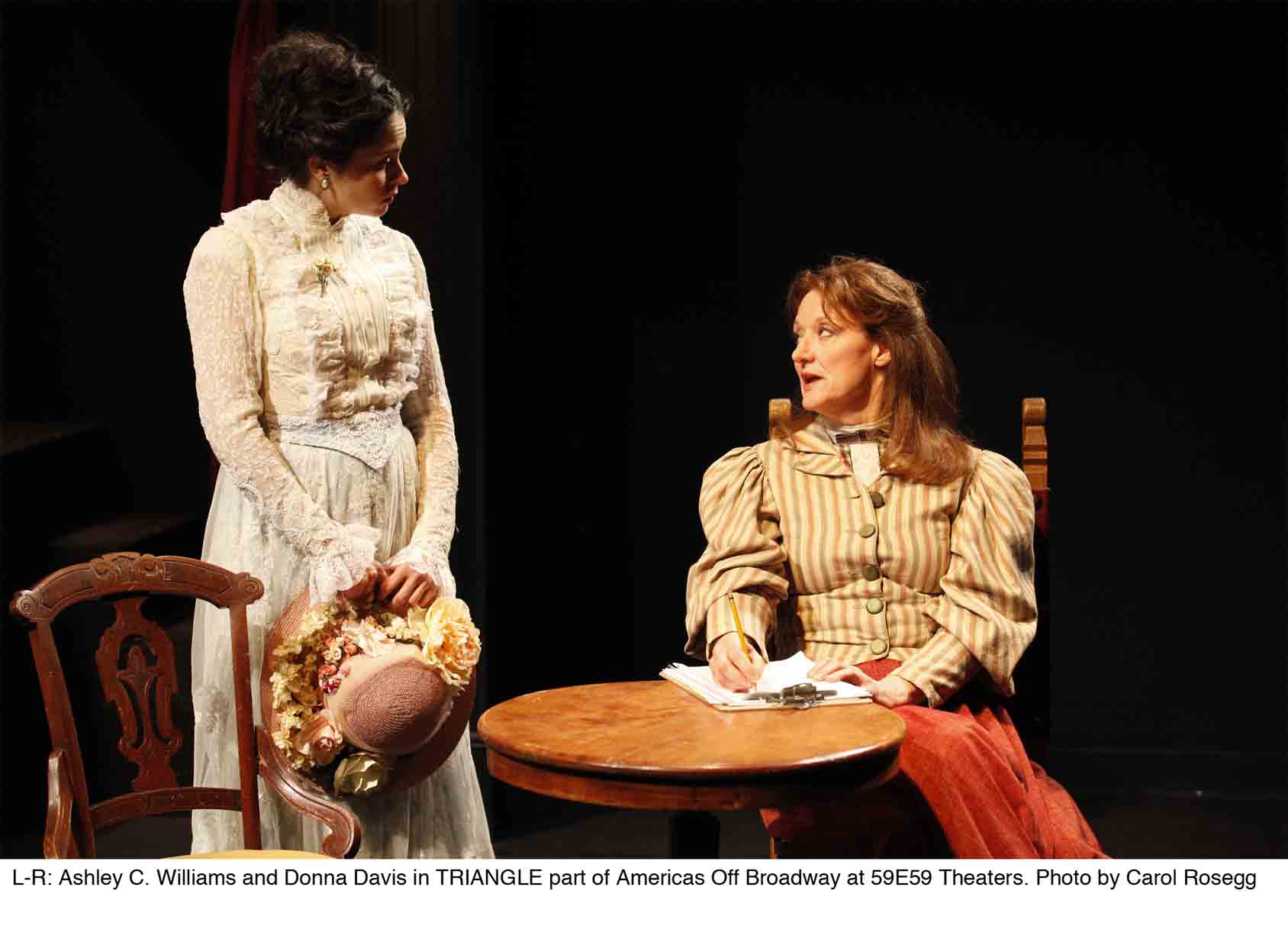 One aspect I find with Off-Broadway productions is that they are generally hit or miss. This production teeters somewhere in the middle. At best Triangle is a nondescript tribute to the legacies of the women and men who perished in Triangle Shirtwaist Factory fire, focusing more on the love affair between Tim and Margaret instead of the immigrant men and women who toiled and died in the fire. It reminded me of Spike Lee’s Summer of Sam, a think piece that provided a glimpse into the lives of people placed in a stressful situation. The acting in Triangle impressed me more than the story itself, and when the play did focus on the fire specifically, it showed flashes of brilliance. Ruba Audeh is superb, playing dual roles as a young Jewish girl and a former Triangle Shirtwaist worker turned hooker – her scenes are some of the most telling, emotional moments of the play and will painfully stick with you like burnt clothing on skin. Donna Davis and Dennis Wit are very engaging as Cathleen Murphy and Izzy Weissman, a common law couple on Big Tim’s payroll. Their banter and narration throughout the production not only offered comic relief, but prevented the show from dragging. They, along with Audeh, are without a doubt the most memorable characters and performances. Joe Gately, Ashley C. Williams and Michaela McPherson round out the cast giving fine performances as Tim Sullivan, Margaret Holland and Mary Catherine.
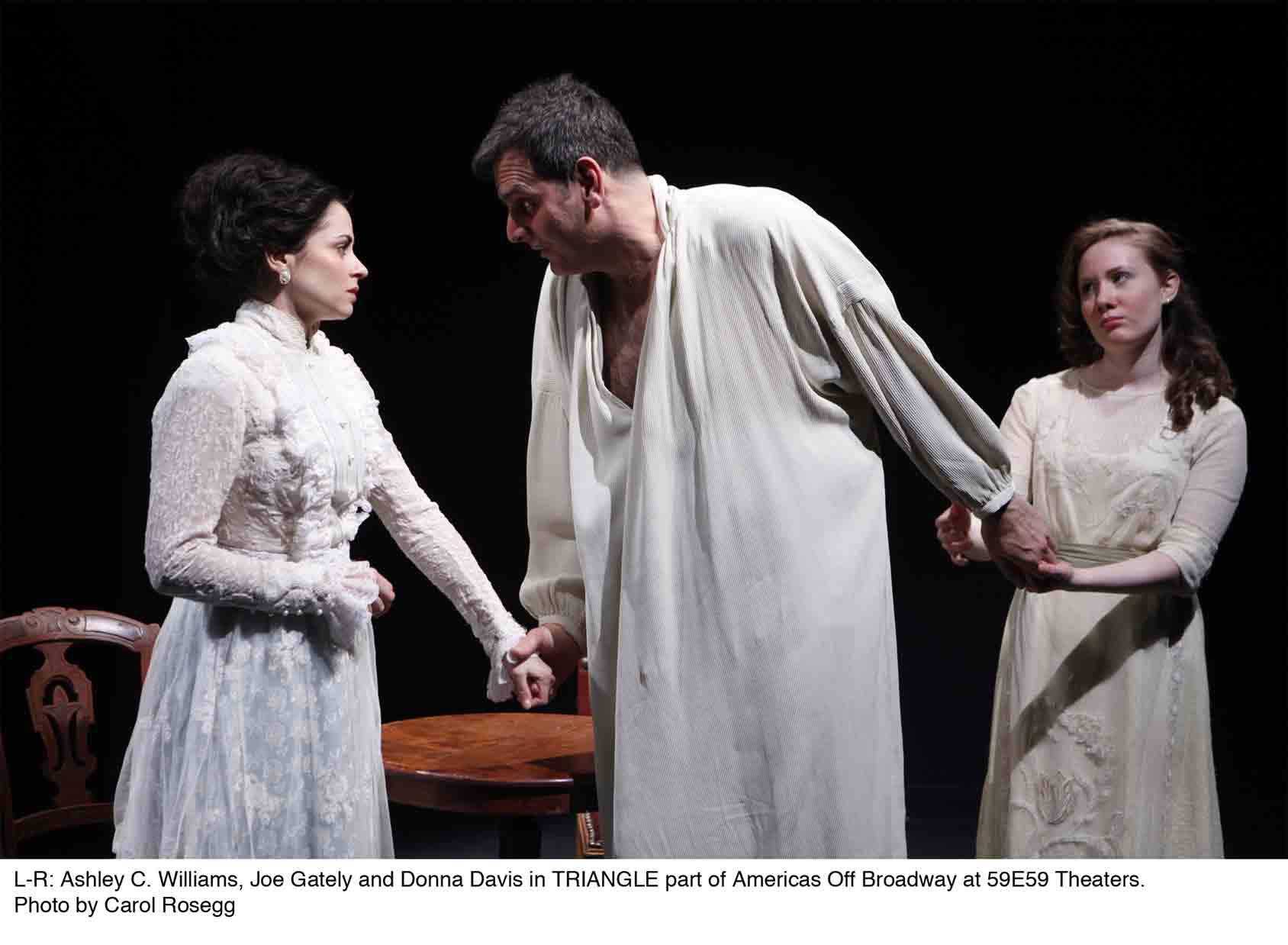 Triangle’s final performance at 59E59 Theatre is May 1. It is my conclusion that parts of this show were greater than its sum. Overall, Triangle is a satisfactory play that produced solid performances, but the jury is still out on whether this drama did or did not deliver on its commitment to honor the victims of the fire.
Photos: Carol Rosegg
Traces of Africa

As the start of the Tribeca Film Festival approaches, many New Yorkers are unaware that another film festival has already been underway. The African Film Festival is now in the third week of a two-month fete that celebrates and presents African arts and culture in all of its various hues. This year marks the festival’s 18th season, which not only showcases films, but also features a gallery exhibit, fashion show, Q&As with directors and actors and live performances. The festival kicked off on April 2 with a enlightening and inspiring panel discussion with screen legend and human rights activist Harry Belafonte, crochet artist and griot Xenobia Bailey and British-Nigerian filmmaker and former BBC journalist Zina Saro-Wiwa at the Museum of Art and Design, located on 2 Columbus Circle. The festival will travel to different locations throughout New York City before it concludes on May 31.
The United Nations has proclaimed 2011 to be the “International Year for the People of African Descent.” While I think it is wonderful that the achievements of Africans and people of African ancestry are celebrated for a month during the year or recognized by a global institution such as the UN, I would much rather applaud the efforts of African Film Festival, Inc. who have been assiduously pushing to make sure that the filmmakers of post-colonial Africa have a voice and a venue to display their talent as well as educate the public about the multiple faces of Africa. The African Film Festival ensures that continent of Africa remains a relevant topic for dialogue not only in the arts and culture scene, but within the global community as well.
To learn more about the African Film Festival, its mission, the films screening this year, the locations and ticket prices, click http://africanfilmny.org/.
Logo courtesy of African Film Festival.com
Videos
Galleries

This gallery contains 20 photos.
 F.A.M.E NYC Magazine