Intonations of Love

Love is an all-encompassing entity. It can be displayed through all five senses. You can hear the sounds of love coming from a bedroom or pining through a radio. You can see it dancing in someone’s eyes or in their gestures. There is a different aroma that follows a couple in love – even food taste different when the person preparing it is in love. In contrast, a person lacking love in their life is as anemic as a person living with diabetes. And this is where the audience finds Beane, the tragic, young protagonist of John Kolvenbach’s brilliant romantic comedy Love Song, when the play begins.
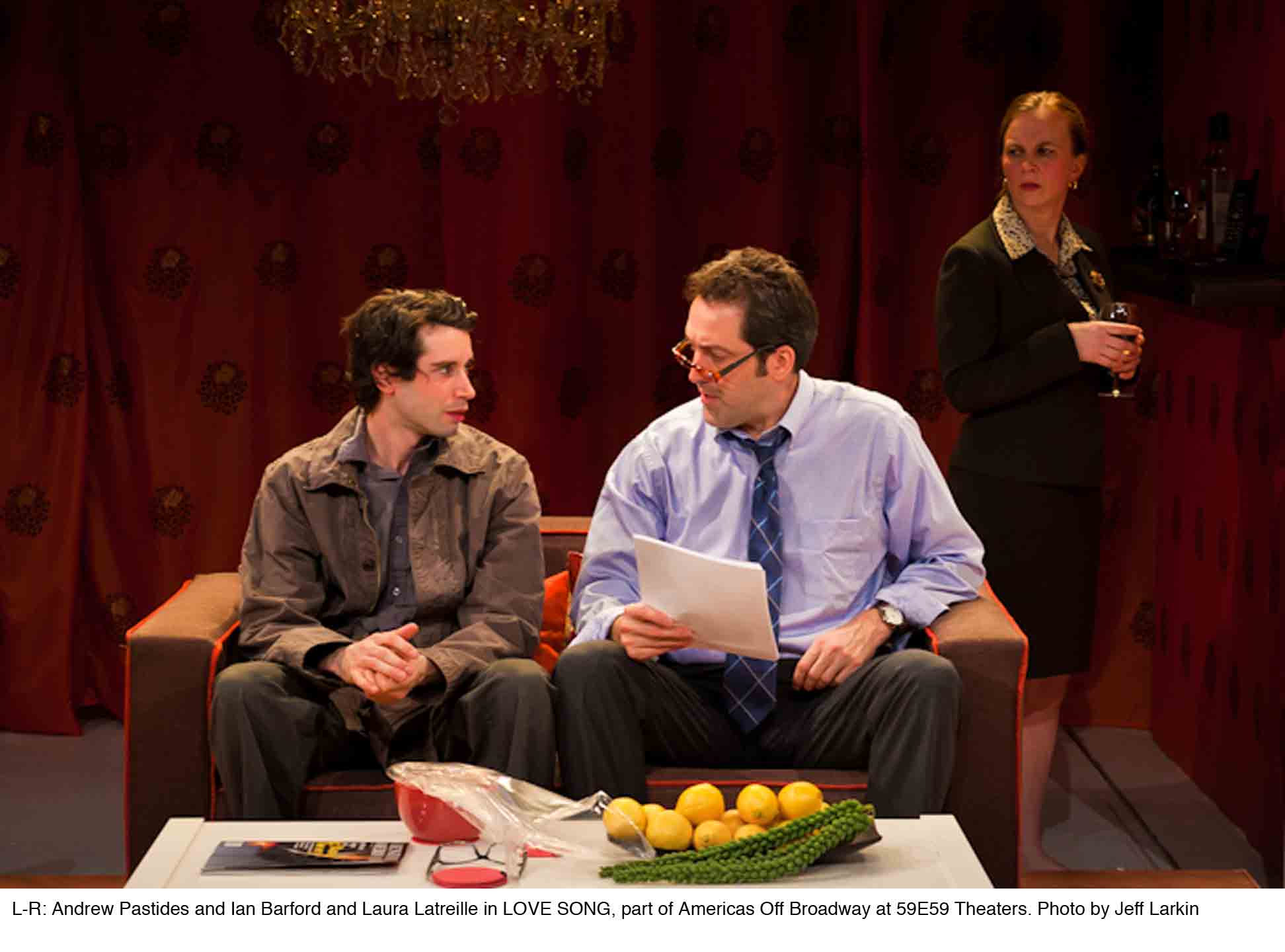 To say that Beane is an eccentric would be an understatement. He lives alone in an apartment void of furniture; his worldly possessions include a cup, a spoon, a couple of pairs of socks, two button down shirts and two slacks. Beane is a shadow and likes it that way. Like the boy in the bubble, he encloses himself in an orb to survive, but for Beane his oxygen is filled with misery. He desires no interactions with humans, if he desires at all. Outside of work, the only people Beane sees are his sister Joan and her husband Harry, an upwardly mobile couple too busy with work for Beane or even themselves for that matter. Then along comes Molly, a hellcat/burglar that robs Beane and incidentally develops a weird infatuation for him as does Beane for her. Suddenly, the light in Beane’s dreary world has been turned on. His whole outlook on life changes, which does not go unnoticed by Joan and Harry. In fact, Beane’s new attitude is contagious and assists in reigniting the romance in Joan and Harry’s life. Molly is like the Sazón that adds essential flavor to a dish of arroz con pollo – there is only one problem with her – she is as real as the Easter Bunny. Once Beane’s secret is out in the open, he must decide whether to move forward or shrink back into the existence he once had.
 Love Song is one of the best character studies I have ever witnessed. It is Punch Drunk Love on LSD – a wild, trippy ride into the dimensions of love, loneliness and lunacy – three paths that can sometimes run side by side or collide into each other like a messy intersection. Playwright and director John Kolvenbach aims for the heart and hits his target dead on the mark. I adore this comedy; it is great theatre plain and simple. The cast radiates even brighter than the light Beane has been trying to avoid all his life. Laura Latreille and Ian Barford are a scream as Joan and Harry. Their chemistry was extremely organic. Zoe Winters is the most convincing imaginary girlfriend I have seen and Andrew Pastides makes quite an impression as Beane. Love Song is playing a limited engagement at 59E59 Theatres until May 8 as part of their America’s Off Broadway series. There are many tales of love in the world, but this one that should not be missed.
Photos: Jeff Larkin
Dawning of a Superstar

What is the difference between a superhero and a superstar? Both have larger than life personas, are admired by legions of followers and equally despised by multitudes of haters. They posses a distinct sense of fashion and generally posses a divine gift that sets them apart from mere mortals. And like a superhero, superstars generally have an alter ego that allows them to futz around in public.
By day, Aurora Barnes is a music teacher, teaching children the violin in an elementary school in the Bronx. By night, she is a Botticellian tresseled beauty, belting out songs that are a testament to her personal story. A native New Yorker, she has taken the eclecticism of Manhattan, her childhood influences and used it to shine brighter than the top of the Empire State Building. By age 11, she had already performed with violin virtuoso Itzhak Perlman and as a teenager; she attended Fiorello H. LaGuardia High School for Performing Arts (the FAME high school). Aurora’s footprints are all over New York City, performing at the City Center, Central Park’s SummerStage, Madison Square Garden, Lincoln Center, Carnegie Hall, 92YTribeca, Knitting Factory, Bowery Poetry Club, Nuyorican Poet’s Café and The David Letterman Show. Recently, she has performed at The Bitter End and Bryant Park.
Aurora is also a budding actress, making her film debut in 2009 with bit parts in The Last Film Festival and Get Him To The Greek. After learning more about this young lady – a woman who is passionate about the arts, children and activism – there is one thing I am certain of, it will not be long before Aurora Barnes has Gotham eating out of the palm of her hand. The mayor may not use her insignia to gleam in sky like Batman, but promoters will use her name to headline marquees all over The Big Apple and the world. And just as Batman‘s name is synonymous with heroism, her name will be recognized the world over for her amazing sound.
Recently, F.A.M.E NYC spoke with Aurora after her performance at The Bitter End. She shared with us her influences, experiences and the superstars she would love to join forces with.
You were born in raised in NYC. What neighborhood did you grow up in?
Until I was 14, I lived on the Upper West Side and went to school in East Harlem, so I always say I grew up in those two neighborhoods. During high school, I went to the FAME School (Fiorello H. LaGuardia High School for Performing Arts) and lived in that neighborhood, by Lincoln Center. Since then, I’ve lived in Central Harlem.
How did living in NYC influence your musical style?
NYC is a cultural melting pot. I grew up in El Barrio, in the 80s, and fell in love with hip-hop, R&B and popular Latin music. My mother taught me all about Stephen Sondheim and musical theater (I joined TADA! Youth Theater at the age of 5). Every Sunday morning, I would awaken to my father playing Bob Dylan, The Beatles or The Four Tops on the record player. My grandfather loved jazz and Frank Sinatra. My grandmother loved Shirley Caeser and gospel music. A small part of my family is from Spain and Cuba, so I was even exposed to some Latin Jazz and Afro-Cuban rhythms. I used to say, as most kids did, that I loved every kind of music except Country. Country was never considered “cool.” But as I grew older, I learned that country was rooted in the blues and folk music. It’s shocking to me that music and art programs are always the first to get cut by government funding. There is so much history in art – so much to be educated about!
 You have played in many different venues and stages. Tell me about your first experience performing in front of an audience?
Oh, brother. As the story goes, my family took me to see a show at TADA! Youth Theater, when I was about 4-years-old (TADA! is a wonderful theater experience for kids). After the show was over, I am told I walked onto the stage and refused to get off. I suppose that can be considered a first time.
What has been your most memorable performance to date?
I had the honor of performing at SummerStage in Central Park, last summer, June 30th, 2010. It was the most thrilling experience of my life thus far. Being able to convey my thoughts and feelings, through my words and music, in front of thousands of people and have them love it? Nothing beats that. A very close second was when I was 10- years-old, I performed the Bach Double Concerto, on violin, standing on stage between Itzhak Perlman and Isaac Stern, in Carnegie Hall during a benefit performance for the violin program I grew up in called the Opus 118 East Harlem Violin Program. I honestly don’t think my mother will ever be more proud of me than she was at that moment. It was very special.
LaGuardia H.S. is one of the most famous performing arts high schools in the country. How did going to this high school prepare you for a career in entertainment industry?
The best thing about LaGuardia is the kids – so much talent. I learned a great deal about healthy competition; supporting my friends and fellow performers without “hating” on another artist. It is really important for your art, but also for your person, to be able to appreciate someone else’s light. It’s not necessary to be “the best,” whatever that means. We can all vibe off each other and gain tremendously from all the talent, intelligence and love. That’s what going to LaGuardia teaches you.
In college you studied Philosophy, Politics and Law. Has the study of these subjects influenced your writing style?
I love this question. Early on, I wanted to quit college. I thought it was impeding my performance career. My beloved acting coach, Harold Guskin explained to me how important life experience and education is to your art. He told me to read everything, go to museums, listen to all kinds of music. So, I went back to school. I decided to major in Philosophy, Politics and Law because it allowed me to study all sorts of human rights and social justice issues. My family has a deep history in activism so these subjects have always been a major part of my life. Studying these subjects hasn’t directly influenced my writing style, but it has contributed to the content. Exploring, in general, influences my writing style. I used to be afraid of change. Now, I’m thirsty for it.
 How does your personal story reflect in your music?
I am unable to write unless I can relate to it, personally. My songs reflect a time, a relationship, an incident that was/is real. I am moved, to write or sing, by emotion. I once read an article, by Roseanne Cash, where she said, “A song can be anything you want it to be.” You can create it from your imagination. This article changed the way I looked at songwriting. Now, I’m interested in painting a picture with words. You can create a brand new experience, still rooted in an honest idea or emotion, but much more layered. I love Seurat’s style of painting because he used so many different colors to create one color, viewed, at first sight, by the naked eye. But if you look closely, you can see the pointillism; you can see all the different colors. It creates an unspeakable depth. It’s so multi-thematic but ultimately makes for a simple, clear, relatable statement. The cool thing about art is I can use pieces of my personal story to create it, and if it connects, the audience, gathers from it, pieces of their personal story.
What prompted you to want to start acting?
I have always wanted to be a singer and an actress. I’ve always wanted to work in theater, film and music. In terms of acting, I fell in love with the work, when I met my coach, Harold Guskin.
How has studying acting help you in performing on stage?
Majorly. When I sing, I sing the words of a song. I convey what the lyrics mean to me. Just like in acting, I take the words off the page and see how the words play on me.
Besides being an artist, you are also an elementary school music teacher. What is do enjoy most about working with children?
I never thought I would love teaching, but I love teaching. I just love my students. I love all the crazy things about them and all the sweet things about them. My favorite thing about teaching violin is when the kids are just beginning to play Twinkle Twinkle Little Star and they recognize the song as they’re playing it. It’s the best moment. It is the first time they are playing an actual song and not just open strings. When they realize what they are doing, they fill with pride –their eyes light up and they smile – it’s so wonderful.
You have worked some very accomplished artists? If you could select three artists to work with this year, who would it be and why?
This is my favorite question. I am giddy just thinking about the possibilities.
A. It has always been a goal of mine, to sing with Bernadette Peters. She has been my favorite performer since I was 6-years-old. And she has been very supportive of me and my career. She gave me my singing coach, Adrienne Angel. Singing with her would be very special, in many ways.
B. I want to sing with Pete Seeger. I grew up listening to him. I watched this wonderful documentary, on PBS, about his life and I realized he is one of the few morally upstanding men who have ever existed. His devotion to human rights is boundless. This is a man who means what he says and says what he means. The honor would be tremendous, just to shake his hand.
C. I want to write with Bruce Springsteen and his team and I want them to produce my album. Bruce is one of the few artists who can sing anything. He does folk, Rock & Roll, gospel, blues, pop… I want to work with him. I believe he will understand my vision, my voice and me.
Sneak a peek of Aurora Barnes – Then Comes You
Want more of Aurora…check out, www.IAMAURORA.com. Photos courtesy of Aurora Barnes
F.A.M.E NYC Remembers Sidney Lumet
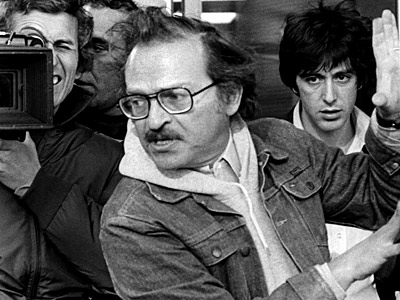
“While the goal of all movies is to entertain, the kind of film in which I believe goes one step further. It compels the spectator to examine one facet or another of his own conscience. It stimulates thought and sets the mental juices flowing.” – Sidney Lumet
Dog Day Afternoon…12 Angry Men…Prince of the City…Serpico…Night Falls on Manhattan…The Wiz, no other director offered as many complex stories about New York City as Sidney Lumet. I was initially introduced to his movies when I was a child. My mother was (and still is) a television czarina and a classic movies junkie. AMC was the channel of choice in our household, and while I wanted to see the latest and greatest on HBO, we always ended up watching a film with an epic musical score, cast of 1,000’s and actors who were megastars before I was even thought of.
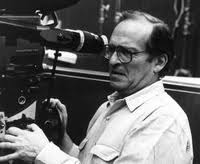 12 Angry Men was my first Sidney Lumet film. It was different from most of the other films I had seen. The score was incidental; almost all the scenes took place in a stuffy jury room, but the breadth of the actors masterful command of the dialogue and emotion of the story, filled each frame to its fullest capacity. This film left an indelible impression on me about the justice system – what the system could be when used correctly and to its maximum potential. From then on I was hooked. I devoured Sidney Lumet films like a kid pigging-out on penny candy. For me his films were like partaking in a free sociology class, even before I was required to take one. While watching a Sidney Lumet movie I learned lessons about human nature; lessons that I am still attempting to master today.
Sidney Lumet’s stories generally focused on the grittier side of the city – the side that is least attractive at the surface – but like the snip of sand that gets caught in a clam, he knew that it is from grit that a pearl is ultimately cultivated. His movies were like deep seas pearls, oddly shaped, unique works of art that should be coveted and displayed for their beauty and preciousness. I want to thank Sidney Lumet for all the magnificent shades he painted of the Big Apple on celluloid. In a time in which all the artisans I looked up to as a young girl seem to be crossing the great divide to the other side where spirit and body no longer coexist, his genius will surely be missed, but his movies will always serve as a reminder of what good filmmaking really is.
The Promise Delivers

To walk a mile in someone else’s shoes is a task most people can conceive, but rarely can be executed. Why, because it is more difficult to actually live another person’s experiences than one might believe. This is why empathy is such a virtuous emotion. Thanks to the exquisite delivery of Scottish actress Joanna Tope, the audiences watching The Promise embark on a 90-minute trek following in the footsteps of Maggie Brodie in an alluring monologue that holds the viewers captive from the first sentence.
The Promise, a drama inspired by true events, centers around one climatic day in the life of twice retired school teacher Maggie Brodie. She is an alcoholic struggling with the ghosts of her past – her father’s pride and demeanor (which she inadvertently inherited), her disdain for religion, the broken relationship with her little sister and vampish ways with men. But Ms. Brodie has one thing on her side, she has always been able to keep a promise. On this day she is called back to do a substitute teaching gig, her ability to keep a promise will be tested as a new student matriculates into the classroom – a young Somali girl named Rosie who refuses to speak. Maggie sees little Rosie as a mirror and instantly connects with her. When community leaders, who have arranged a deal with the school to have a ritual performed in class, attempt to free Rosie of her evil spirits, Maggie’s demons come full circle as she zealously defends Rosie and the promise she made to keep her safe and not disclose her secret.
 Playwright Douglas Maxwell has written a gripping story that reminds me of Ravel’s Bolero. Just like the classic composer, he excels in bringing drama to a frenzied crescendo. Both he and Joana Trope are Scottish imports that I would not mind having around for a while. Too bad countries cannot trade actors and playwrights they way the NBA trade players. Watching Joanna Tope sashay across the stage in fire engine red patent leather pumps like a weathered gunslinger aching for the opportunity to get her gun off is a rare treat – her commanding presence is sexy and spellbinding. She is a definitely a force to be reckoned with. The only problem I had with The Promise is its limited run at 59E59 Theaters. The final performance is April 17; FAMERS, make a promise to yourself and go see The Promise before it ends. It is a covenant of terrific theatre with a twist you will never forget.
Photos: Niall Walker
Gettin’ Muggle Wit It

Discovery Times Square is more like a time portal than an exhibition space. With its knack for presenting shows that flawlessly harmonize history, culture and spectacle, Discovery Times Square allows New Yorkers to walk through ancient worlds and alternate universes without ever having to step into an airport. On April 5 the world of muggles and wizards invaded the Big Apple as Harry Potter: The Exhibition opened at Discovery Times Square, marking its final North American Stop before the train to Hogwarts goes international.
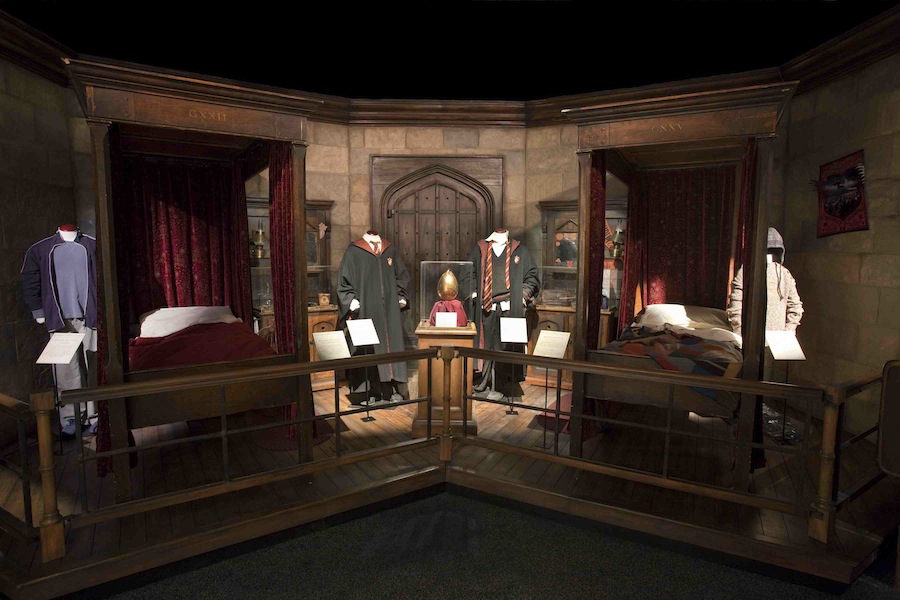 In June 1997, Harry Potter and the Philosopher’s Stone, the first in a series of seven novels written by British author J.K. Rowling, was released. Its tremendous popularity spurred the ultimate 20th century homage – a film adaptation. In 2001, Daniel Radcliffe, Emma Watson, Rupert Grint and the rest of the cast brought the characters to life onscreen and muggle-mania erupted. In the last decade, fans of the series have watched these child actors grow into young adults and contributed to a franchise that is worth billions. July 2011 signifies an end of an era as the last Harry Potter film will be released and the fates of the characters that have enraptured millions of devoted followers will be revealed. Harry Potter: The Exhibition is an homage in its own right – a walk down memory lane, literally.
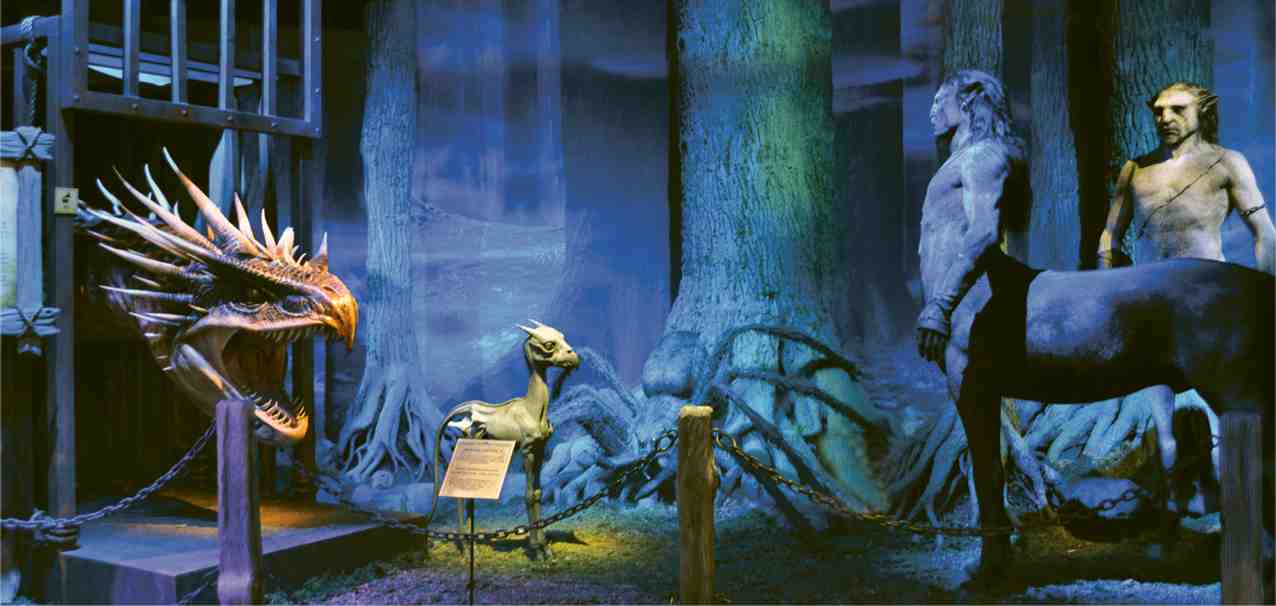 The exhibition is brought to fruition through the partnership of Global Experience Specialists (GES) and Warner Bros. Consumer Products. GES is a leading provider of event, exhibition and retail marketing services. Warner Bros. Consumer Products is a subsidiary of Warner Bros. Entertainment Company and is one of the foremost global merchandising and licensing organizations. In 2009, the exhibition made its world premiere in Chicago; following its debut, it travelled to Boston, Toronto and Seattle. The timing could not be more felicitous for Harry Potter: The Exhibition to be arriving in New York City; Daniel Radcliffe is blocks away at the Al Hirschfeld Theatre playing the lead character in the 50th anniversary revival of How To Succeed In Business Without Trying. Like the other exhibits that have passed through Discovery Times Square, Harry Potter: The Exhibition scoops the visitors up and drops them off in the magical world created by the producers, set decorators, costume, graphic, prosthetics, make-up and props designers of the Harry Potter films. Presented in nine connecting sections, the exhibit is an intricate, multifaceted exploration into the creative nuances of moviemaking.
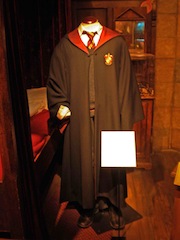 The show begins with the Sorting Hat, the famed headpiece that proclaims which house the new arrivals at Hogwarts will be placed into. Volunteers come forth, and like the movie the hat is placed on their heads, comes alive, assesses the individuals’ personality and assigns them to either Gryffindor, Hufflepuff, Ravenclaw or Slytherin. But the Sorting Hat does have a bit of assistance, before the dormant hat is placed on the volunteer’s head; the volunteer expresses which house they prefer. Cute and witty, it is an appropriate introduction into the universe of Harry Potter and Hogwarts. Next the group enters The Pre-Show, an eight screen montage of the Harry Potter films. The video mosaic culminates with the whistle to the Hogwarts Express being heard and the wall of the Pre-Show rising to reveal a replica of the train that takes the students to Hogwarts. A colossal vision to behold, the replica along with the mist that accompanies it gives the audience the sense that they are about to embark on a journey of sight, sound and emotions.
 After the Pre-Show, the exhibition truly begins. Guests are led past a gallery of portraits and the Fat Lady, the guardian of the Gryffindor area of the castle/school, into the third installment of the exhibition, the Gryffindor Common Room. Gryffindor is the house that Harry Potter, Hermione Granger and Ron Weasley, the series principle characters, belong to. In this area the audience views the house colors (scarlet and gold), Harry’s glasses and wand, Ron’s monogrammed sweater and the Marauder’s Map. Past the Gryffindor Common Room are the dormitories where the visitors can view more of the wardrobe and garner an understanding of the actors’ journey growing from children to young adults as the clothing shows their physical growth from the first film to the last. The fourth set are the classrooms – displays of the props and costumes of the Potions, Divinations, Defense Against the Dark Arts as well as a recreation of the Herbology greenhouse. This is one of three areas in which the touching of props is encouraged – visitors can pull a squealing Mandrake from its potted roots.
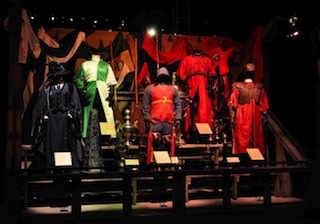
 Once out of the classroom area, the tour goes outside the grounds of Hogwarts into the Forbidden Forest – the audience can get up close and personal with the Hungarian Horntail Dragon, a Centaur and a Thestral. Also displayed are Buckbeak the Hippogriff and additional costuming from the film. The Forbidden Forest leads to Hagrid’s Hut, which is actually located on the outskirts of the forest in the book and film series. This oversize room contains Hagrid’s clothing, the Monster Book of Monsters as well as a mammoth chair that visitors can sit in. Quidditch is the sport of choice for wizards and is the next section of the exhibit complete with Quidditch equipment, a Nimbus 2000 broom, the Golden Snitch used in all the movies and uniforms from the different houses. If a guest is feeling athletic, they are invited to toss a Quaffle around and try to score a point or two. The exhibit takes a dark turn as the next segment is dedicated to the darker elements of the films. On display are the Angel of Death Statue, robes, costumes and masks of Lord Voldemort and his Death Eaters. The tour of the enchanting world of Hogwarts and its inhabitants ends in grand fashion with the Great Hall. The Great Hall is a setting that plays a major role in the film, visitors will view props and costumes from the Yule Ball, Professors McGonagall and Dumbledore’s costumes and wands as well as Dobby, the house elf, and Fawkes, Professor Dumbledore’s phoenix.
 The exhibitions build in excitement and education with each setting seemingly more fascinating and fabulous than the previous one. The price for admission for Harry Potter: The Exhibition is $25.00 for adults and $19.50 for children ages 4-12; an audio tour is available for $7.00. The items of the exhibit are labeled with numbers and information about the artifact, with the audio tour the visitor can learn more information about the prop by the people that actually manufactured it. Both the price for admission and the audio tour are worth every penny. This exhibit is a must see for anyone that is a fan of the Harry Potter series or anyone that is a true movie buff. I have never read J.K. Rowling’s books and I have not watched the Harry Potter film series in its entirety, but I found Harry Potter: The Exhibition to be a very enriching experience. The concern to make these fictional characters and settings believable and the attention to the minutest detail is amazing. When I arrived at Discovery Times Square, I was a muggle novice; I left feeling as if I had known and grown with the cast (human and non-human) as well as any Harry Potter fan and will be eagerly anticipating seeing how it all ends when the last film is released in July. Harry Potter: The Exhibition, leaves New York City September5, go and indulge the wizard in you.
Photos courtesy of Discoverytsx.com
How to Win Fans and Change Your Persona
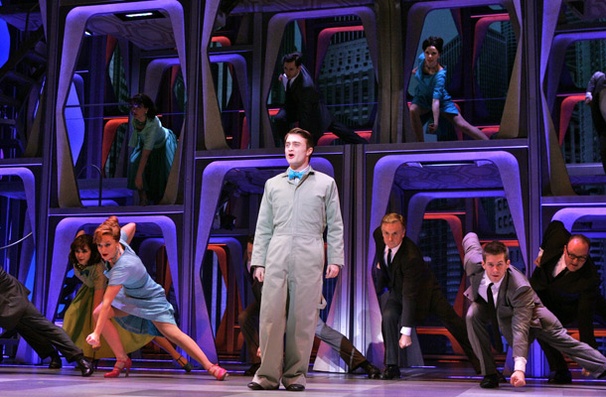
When stage lights dim at the Al Hirschfeld Theatre and the spotlight shines on Daniel Radcliffe beaming from ear to ear, he knows that he has cajoled an unsuspecting pawn to move him around the corporate chessboard and into a higher ranking position. The audience claps and screams with laughter and the scene resumes as if Radcliffe had not broken the fourth wall just a second before. As I continued to watch Radcliffe on stage, I began to realize that perhaps it was not just J. Pierrepont Finch that wanted to transform himself, maybe the man playing him desired to do so as well.
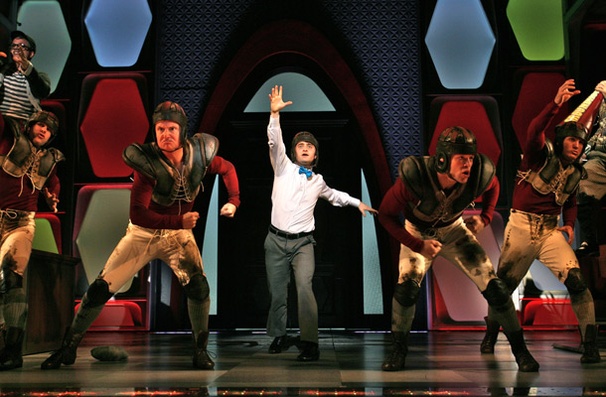 Daniel Radcliffe’s face is just as synonymous with tween and teen pop culture as Miley Cyrus. Like Cyrus’ Hannah Montana, Radcliffe has become the living embodiment of a multi-billion dollar enterprise. His face is synonymous with the character of Harry Potter, the protagonist in a series of books penned by J.K. Rowling, which were subsequently turned into hit films. The complication that can come from an actor’s success being intricately tied to a specific role is that those ties can begin to strangle the actor’s career. The character becomes larger than the actor – fans, directors, casting agents, producers only want to see the actor play in roles similar to the one that catapulted them to success. A frustrating obstacle for any artist – especially one that has the added burden of trying to transition from a child star to an adult actor, enter the role of Alan Strang and a nude scene in the revival of Equus. Add to the mix the end of the Harry Potter series and Radcliffe’s performance as the overly cute but connivingly ambitious J. Pierrepont Finch in the latest revival of How to Succeed in Business Without Really Trying, and I would say Radcliffe has concocted a spell for a new career path as an actor.
 Before there was The Office or The Devil Wears Prada, there was How to Succeed in Business Without Really Trying, a 1952 satirical best-selling book by Shepherd Mead that morphed into a hit Broadway musical in 1961 with the help of a book written by Abe Burrows, Jack Weinstock and Willie Gilbert, music and lyrics by Frank Loesser and choreography by Bob Fosse and Hugh Lambert. How to Succeed in Business Without Really Trying centers on the goings on at the World Wide Wicket Company and deals with themes of ruthless ambition, nepotism, sexism and the deportment gap. Anyone who has ever waded in the shark-infested waters of any corporation can relate to the characters and wild scenarios that happen at World Wide Wicket. J. Pierrepont Finch, the lead character, is a window washer determined to ascend to the summit of the corporate ladder no matter what the cost. With the assistance of an omnipresent voice and a how-to book, Finch is armed with all the ammunition he needs to scheme, lie, manipulate and BS his way up the corporate ladder. Rosemary, a secretary and Finch’s eventual love interest, is equally bent to being an urban steno pool legend by marrying a young executive. Finch immediately becomes her target. J.B. Biggley is the President of the World Wide Wicket Company. He procures jobs for his voluptuous, dim witted mistress Hedy LaRue and Bud Frump, his lazy nephew through marriage whom he would love to fire but keeps on for fear of hearing his wife complain.
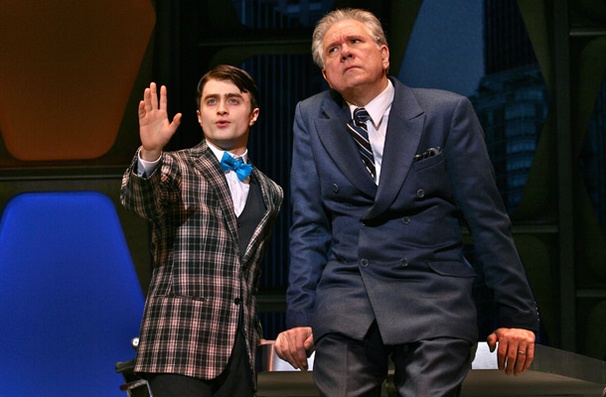 In Finch’s meteoric rise to becoming Vice President of Advertising, he manages to swindle personnel manager Mr. Bratt into believing he knows Biggley, which lands him a job in the mailroom. After a swift promotion to junior executive from Bratt, Finch convinces Biggley that he is also a fellow alum of Old Ivy by singing a duet of the fight song. This garners him the curvaceous Ms. LaRue as a secretary and an office. Suspecting that Hedy is Biggley’s mistress, he uses his boss’ weakness for women against him and is once again promoted to the head of Plans and Systems. During a reception for Benjamin Burton Daniel Ovington, the new Vice President of Advertising, Finch innocently exposes that the new VP graduated from Old Ivy’s arch rival, he is fired and Finch becomes head of Advertising. Through all the stunts Finch pulls, Rosemary is faithfully by his side until he realizes that he that she is the woman for him. Also never far behind is Bud Frump, Finch’s and Biggley’s nemesis. Once Frump uncovers the affair between his uncle and Hedy, he uses blackmail to obtain a promotion. He also gives Finch the idea that leads to the young window washer’s downfall. But Finch’s nine lives are not completely consumed, by sweet talking Wally Womper, the CEO of the World Wide Wicket Company; he saves everyone’s jobs and finally rids himself of Frump.
 After its initial Broadway run, a film was made in 1967. In 1995, a revival was staged at the Richard Rogers Theatre and starred Matthew Broderick and Megan Mullaly. This revival marks How to Succeed in Business Without Really Trying’s golden anniversary and it is better than ever! Daniel Radcliffe is not just trying to succeed, he is winning. Who would have known that there was a song and dance man secretly hiding underneath all that muggle get up? Radcliffe gives a valiant effort as J. Pierrepont Finch. Instead of doing things “the company way” Finch does things his way and lands on the top of the heap, like Finch, Radcliffe does things his way and scores big. John Larroquette makes his Broadway debut as Biggley. To my generation Larroquette will always be known as the womanizing attorney Dan Fielding in the comedy series Night Court. It was great to see Larroquette on stage reintroducing himself to a new generation; it was equally enjoyable to see that he has lost none of his superb comedic timing and wit. Michael Park was song and dance man long before he was FBI agent turned Oakdale policeman Jack Snyder in As the World Turns, a CBS soap opera. After the soap’s over 40-year run ended in 2010, Park returned to the stage. He is a natural as Bert Bratt. Rose Hemingway is as sweet as her namesake in the role of Rosemary. Her voice inspires joy and the quirky chemistry between she and Radcliffe share on stage is perfect. Christopher Hanke is a wicked bowl of laughs as Bud Frump and if not for Daniel Radcliffe, Tammy Blanchard would have stole the show as Hedy LaRue.
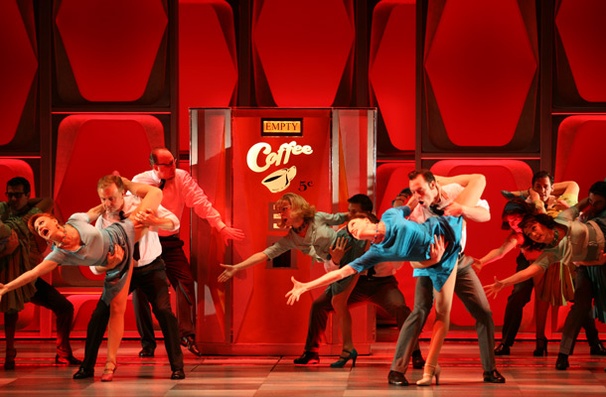 The true star of this revival is Rob Ashford. He brings the same light-hearted effervescence to How to Succeed in Business Without Really Trying as he did to last year’s revival of Promises, Promises. The sets are engaging and like the actors, transition very well. The choreography is robust and physical, yet playful and really assist in elevating the music and lyrics. Each musical number was better than the first and brought the best out of the actors. My favorite number is “I Believe in You.” As Finch and the other executives prepare for his big meeting, he looks into the mirror and earnestly sings himself a pep talk. From what I witnessed, there is no more need for convincing – Ashford, Radcliffe, Larroquette and the rest of the cast made me a believer.
Photos: Ari Mintz
And Justice for Winkie

Pinocchio and The Velveteen Rabbit are enduring children’s fables about toys that experience the unconditional love of a child, desire to and eventually become living entities. In both stories, the protagonists experience different trials before their wish is granted. These tales have survived over the ages to become classics that are passed down to each generation like an heirloom toy. And as the 10th anniversary of 9/11 looms over Manhattan, 59E59 Theaters stages a stuffed Molotov cocktail with a terrorist twist in the world premiere of Clifford Chase’s Winkie – sure to be a classic itself.
 Clifford Chase’s Winkie is a 2006 novel written by author Clifford Chase and chronicles the accounts of an 81-year-old teddy bear named Winkie. Winkie has been a part of the Chase clan for as long as he could remember. He first belonged to Ruth (Clifford’s mother) and then to her children until he finally became the toy of young Clifford, but as Clifford grows up, he leaves Winkie behind like everyone else before him. Winkie sits for years on a shelf filled with the memories, until one day Winkie miraculously wills himself to life. He throws a book out of the window and runs away determined to experience three simple wishes – freedom, eat and go “doo-doo.” Winkie also experiences an immaculate conception as he gives birth to an off-spring, a fuzzy small teddy bear named Baby Winkie. The innocence of Winkie’s new life comes to an abrupt halt when his child is kidnapped by a bomb-making lunatic, and he is beaten, shot, taken into FBI custody and charged with 9,678 charges including terrorism, sodomy, witchcraft, treason and vandalism (basically all the crimes of the man that stole his baby). He is also accused of being the leader of a worldwide terrorist organization that were responsible for the 9/11 attacks and others. Winkie is brought to trial and the world thrusts itself into “Winkie-mania” as battle lines are drawn and crackpots, liberals, conservatives and everything in between add their two cents to the saga about a teddy bear accused of the most heinous acts against mankind.
 The Godlight Theatre Company scored a winner with Clifford Chase’s Winkie. Playwright Matt Pelfrey cleverly constructs an irresistible, profound and inspirational adaptation that offers a stellar translation to Clifford Chase’s novel for members of the audience unfamiliar with the book. Director Joe Tantalo wills this play into fruition, tactfully threading a production that weaves humor, hysteria, imagination and sentimentality and totally relies on the cast to sell it. The theater is completely devoid of a set, but scruffy, little Winkie and the rest of the cast (which features Nick Paglino, Greg Konow, Adam Kee, Elliot Hill, Sean Phillips, Chris Cipriano, Michael Shimkin, Erin Wheelock and Geraldine Johns) absolutely compensate for the lack of scenery. From the moment Winkie is place on the stool center stage, I was completely enthralled in the story.
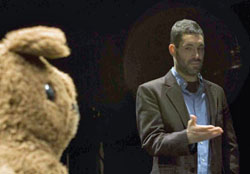 Like a good allegory, Clifford Chase’s Winkie draws its audience in with a strong relatable character. It is clear the teddy bear has a Christ-like aura. He comes into this world (which is a miracle) knowing nothing but love, he creates a life in his image (another miracle) and he is persecuted by the very people he wanted love and share love with. Winkie eloquently states during his trail, “So many times and worst of all when I lost my child, my eyes wanted to click shut forever – yet somehow I still had love to give, and always have. Why, why, why? Despite it all. Why was I created, and why do I love? What is it about me that survives? Despite it all, despite it all: It ‘s my heart: I can’t help it.” And what makes this production so appealing is its heart. It is a gutsy, unflinching portrait of what society has become in the wake of the age of terrorism. At times I was howling with laughter and others I was holding back tears, but throughout the play I listened (as Winkie did) with an open mind. The idea that a stuffed animal could be a terrorist is completely asinine, perhaps just as unintelligent as profiling certain groups of people or using the justice system and war to create one’s own personal witch-hunt.
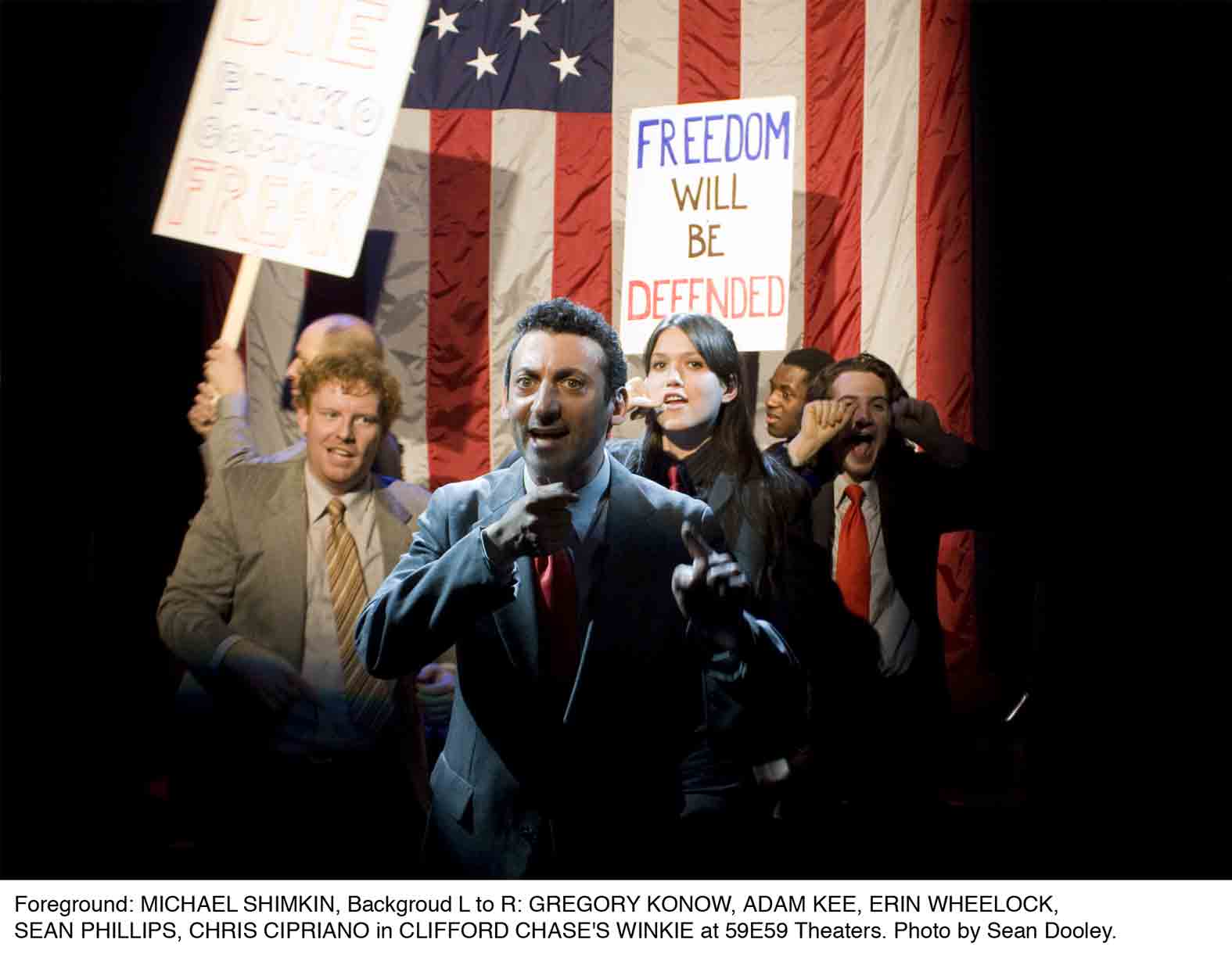 The 2011 theatre season is still unfolding, but this production is the best show I have seen thus far. Clifford Chase’s Winkie may not be the story you recite to your kids at bedtime, but it is the type of show you can take your children to in an effort to explain the absurdities of the world and take something away from it for yourself. After watching terrorists create battlegrounds and casualties whenever and wherever they choose, the world may never be the same, but it does not mean that we have to succumb to fear, intolerance and meeting naked aggression with more aggression – there is always room for love and humanity.
Photos: Sean Dooley
The War Is On

Have you ever been inspired to unleash your creative vision on the streets of NYC but were scared to do so because of fear of the NYPD? Well, now there is an app for that. Graffiti Wars, by Stink and Muse, version 1.0.2 is now available for the iPhone 4 and iPhone 3GS. This GPS based game allows you to create graffiti with your own personal aesthetic. The player earns extra points by tagging over rival graffiti spots; the points can be used to protect your graffiti. Although there has been a previous version of this app available, this version boasts an improved performance, bug fixes and other game play tweaks.
I am not sure about you FAMERS, but this app sounds like it is quite addicting and supplies another reason for people to walk with their heads down, not watching where they are going. This game gives new meaning to the saying, “Tag, you’re it.” Sign me up!
To learn more about this app or to see more apps from Stink and Muse, visit http://itunes.apple.com/us/app/graffiti-wars/.
A Night Fit for the King
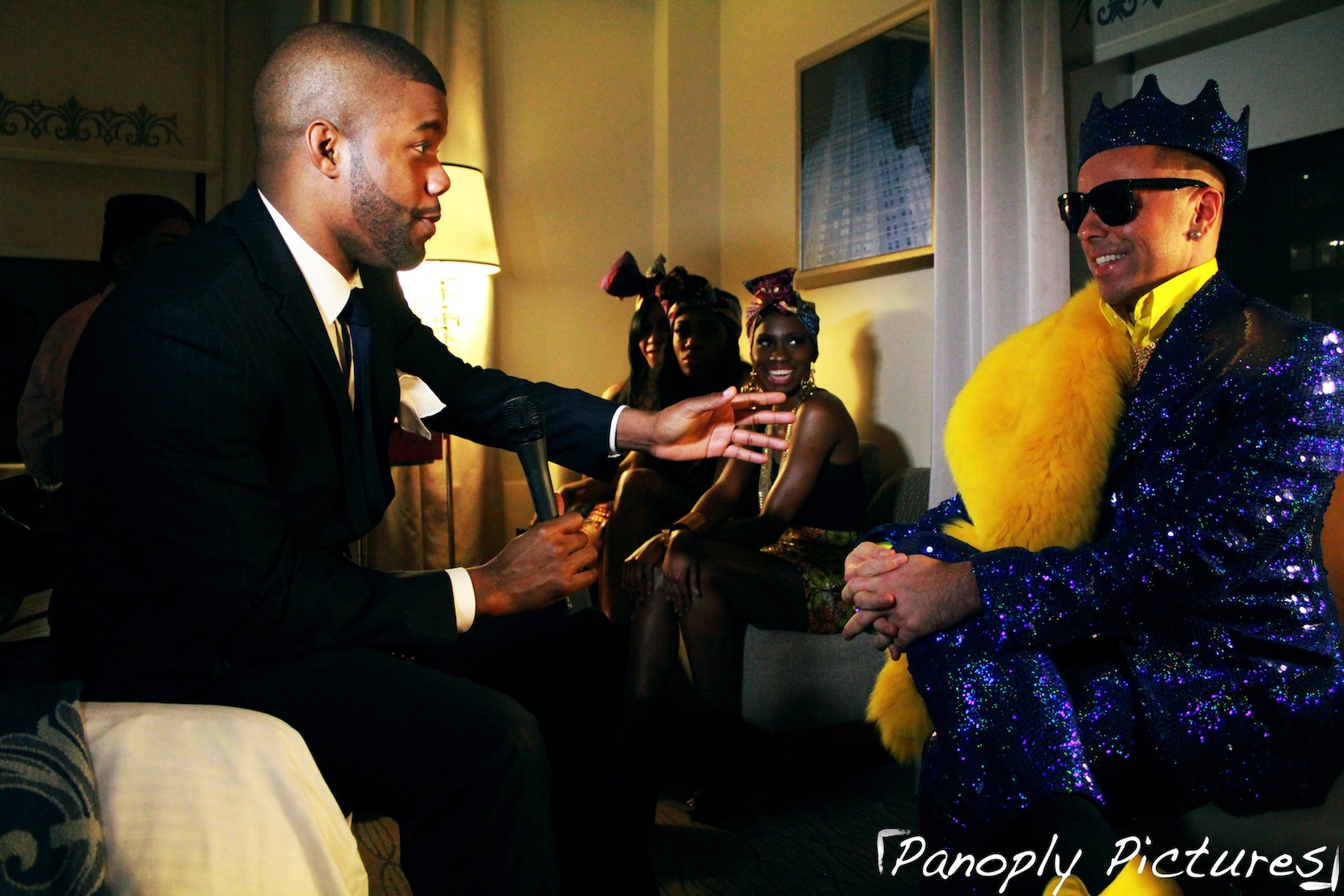
March in New York City is known for two things, gusty winds whipping around skyscrapers and the St. Patrick’s Day Parade. But on the evening of March 12th, a zephyr blew the trendy and fashionable to Millesime, located on 92 Madison Avenue, for The Luxxx Ball presented by Legendary Damon, American Apothecary and Remy Martin. Just in case you have not heard, The Luxxx Ball is Legendary Damon’s annual birthday celebration. And for all you FAMERS in bed by the stroke of midnight, Legendary Damon is a stylist, a high priest in the religion of fashion and the king of NYC nightlife.
 Using the Studio 54 blueprint (a well mixed masala of average Joes with celebrities du jour) Damon has had the NYC party scene on lockdown for over a decade. His parties are as renowned as his name and this year’s The Luxxx Ball can certainly be added to the pantheon of great events. Wall to wall there were people trying to do their best to adhere to the invitation’s request “dress to impress the king.” The VIP was spilling over when the nightlife czar made his grand entrance complete with Kente cloth, head wrapped rose bearers sashaying to the “King’s Motorcade” from Coming to America. Legendary Damon glittered in royal blue and canary yellow and sported a blue crown. And who entertained the King, the Queen Bee. Lil Kim brought the crowd to a frenzy performing her greatest hits as well as a track off her new Black Friday mixtape. Rapper Unique and Mic Murphy from The System also serenaded sultan of style. After observing the events of this momentous evening, I have only one comment: It is good to be the king.
Photos: Jason Rodriguez
What Happens In Jersey…
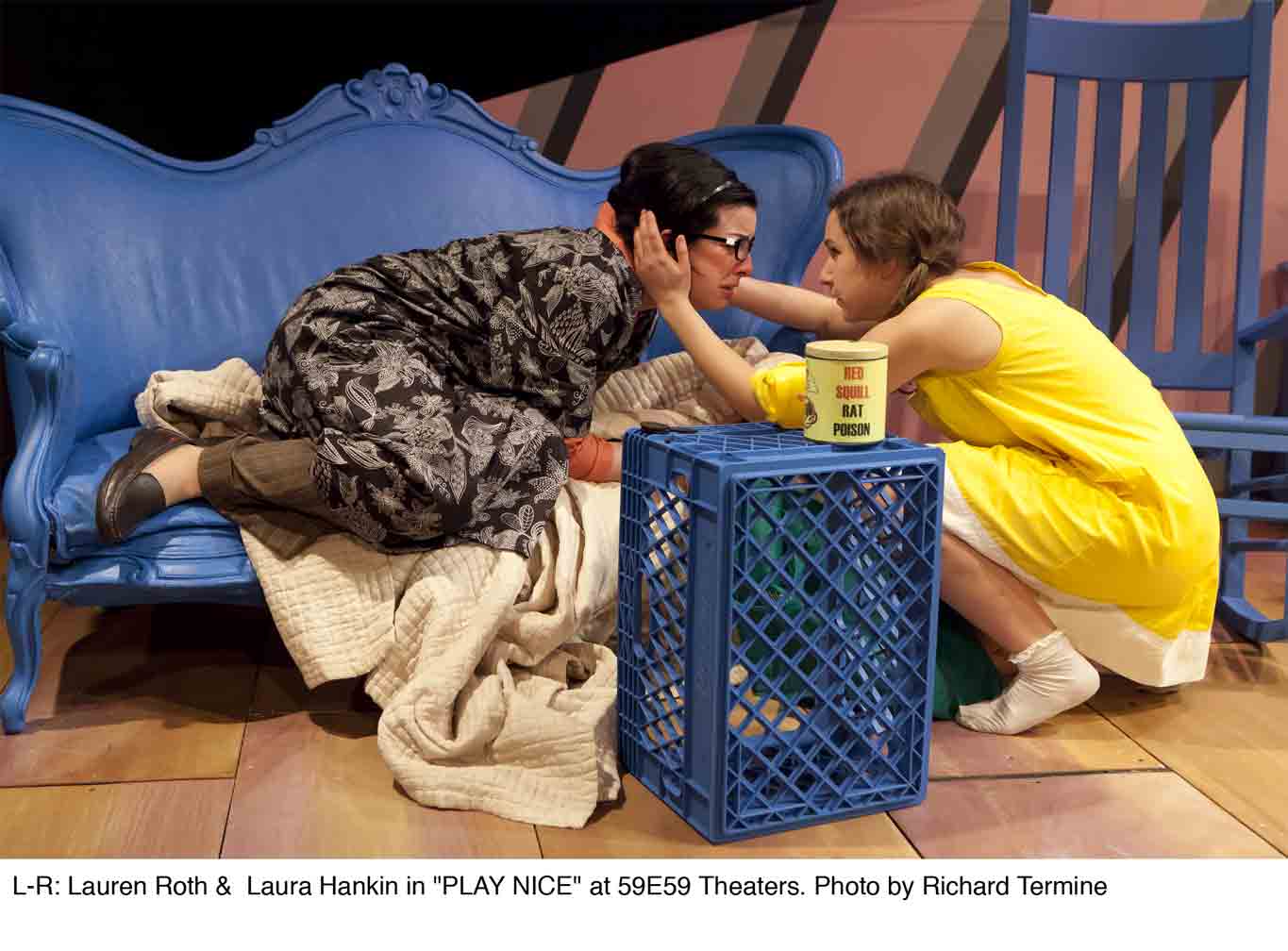
What is it about Jersey that gets such a bad rap? Frank Sinatra, Bruce Springsteen, Jerry Lewis, Joe Pesci and Bon Jovi all came from the Garden State. Before Sin City opened its first casino, Atlantic City was a gambler’s playground for years and with its beach and boardwalk, it played host to the Miss America Pageant for decades. But despite these facts, New Jersey is constantly the butt of tri-state jokes and poorly depicted in the media, i.e. Jersey Shore. Then came a fictional story set in an attic in Ridgewood, New Jersey, touted as a gothic fairytale, and my hopes that New Jersey would be seen in the public eye as more than a fist-pumping toxic dump was restored. Unfortunately, Play Nice! did little to enhance New Jersey’s public image nor did it fully live up to its potential as a gothic fairytale.
 Play Nice! focuses on Isabelle, Luce and Matilda. On the surface, their lives seem ideal, but behind the doors of their home their reality is quite different. Each of the kids are forced endure their fare share of abuse from their mother, who is an obese alcoholic. Determined to prove to her neighbors that she deserves to live in this affluent bedroom community 20 miles from New York City, the children’s mother demands perfection in and out of the home, which is only partially furnished to enhance her façade. The bulk of Luce and Isabelle’s time is spent in the attic escaping into their world of make believe where there mother, the Dragon Queen, cannot reach them. Matilda is relegated to be the maid and her mother’s verbal whipping girl. The play’s dark plot primarily takes place in the attic – very V.C. Andrews’ gothic, but that is where the similarity stops. On Thanksgiving Day the mother is poisoned after having her afternoon tea and the children must utilize their active imaginations to simulate the events leading up to the poisoning.
 Play Nice! is a journey in which pretend can uncover truth and stretches the idea of what a fairytale can be. It also challenges one’s typical perception to the term gothic. My issue with this dramatization was the venue in which it took place. I believe the stage, especially an Off-Broadway one, might not do this story justice. Ridgewood, New Jersey is a very well-to-do village, but with exception to the mother’s references to this idyllic town, the audience does not get to experience it. The pretend sequences between Luce and Isabelle once he runs away from his mother are well acted, but the lack of background diminishes the somberness of their reality. Play Nice! will end its limited run at 59E59 Theaters on March 27. While it is not necessarily my cup of tea with regards to a play, I firmly believe this story would work well if not better as a film and would happily pay $8.50 to see if my theory is right, as well as to see a few scenes of New Jersey shown in a better light.
Photos: Richard Termine
Videos
Galleries

This gallery contains 20 photos.

