Jordin Sparks Reignites In the Heights

Or at least that was the title I envisioned in my head as I strolled in the misty rain to catch the Sunday matinee at the Richard Rodgers Theatre.  So imagine my surprise when I was told Ms. Sparks would not be playing the role of Nina as I had greatly anticipated.  Disappointed, I pouted to my seat, sat down and waited for the curtain to rise.

In the Heights blew onto Broadway in 2008 like a breath of fresh air tempered with a hint of Sazón.  Lin-Manuel Miranda, the show’s creator and the first incarnation of Usnavi, shined a spotlight on the Manhattan neighborhood of Washington Heights and struck gold.  The mix of salsa and hip-hop set to an orchestra was a concoction critics ingested well.  The show won four Tony Awards, including Best Musical, Original Score, Choreography and Orchestration.   The cast recording won a Grammy Award for Best Musical Show Album.   In November 2008, Universal Pictures announced plans to make a film adaptation of In the Heights with Kenny Ortega slated to be the director.  By January 2009, the musical had recouped its $10 million investment and began a national tour in October.  On August 2, 2010, the production marked its 1000th performance.  The whirlwind of success of Lin-Manuel Miranda’s ground-breaking homage to his childhood community ushered in a new era on Broadway and paved the way for musicals that fused more vibrant genres of music and choreography such as Fela! and Rock of Ages.
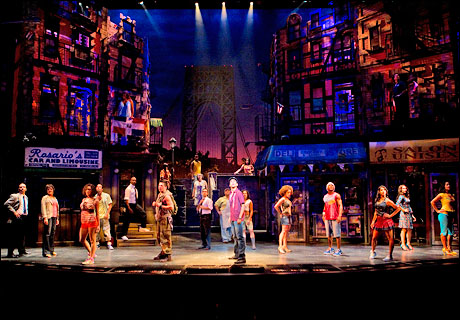
Since its debut, several members of the original cast have left the show.  Miranda’s last performance on Broadway was in February 2009.   Lin-Manuel is the heart and soul of this musical and with the replacement of several cast members I wondered had the show lost its mojo.  Jordin Sparks would undoubtedly make a great addition.  The “American Idol” winner has great vocal range and is guaranteed to fill seats just from her fan base alone.  But with the musical’s newest cast member sitting out this performance, would the show just be a ghost town filled with espiritus of what used to be?

Once the curtain rose, I was pleased to discover that the spirit of In the Heights is still bursting with energy and is as entertaining as the original incarnation that debuted on Broadway over two years ago.  The torch was well handed from Lin-Manuel Miranda to Kyle Beltran who now plays Usnavi, the narrator who owns neighborhood bodega.  His portrayal of the character is sensitive, funny with a sick flow and cadence that does justice to Miranda’s lyrics and is sure to keep the audience heads’ bopping.  Gabrielle Ruiz was an impressive Nina.  She was so convincing that I almost forgot that she was the understudy.  Clifton Oliver is irresistible as Benny; one can not help but root for him to win Nina’s heart.  Olga Merediz is sensational as Abuela Claudia, the neighborhood matriarch.  Her performance is both endearing and captivating.  And although Merediz is a scene stealer, Andrea Burns commits highway robbery on stage as the vivacious salon owner and barrio gossip Daniela.  With a beautiful voice and hilarious one-liners, Burns transforms a busybody into one of the most engaging characters in the show. Rick Negron and Priscilla Lopez shine as Kevin and Camila Rosario, Nina’s parents.  Their portrayals exude pride and integrity and are relatable to anyone in the audience that has known hard times or experienced parenthood. 

The book by Quiara Alegria Hudes was slightly slammed when In the Heights first debuted.  Critics have called the book “overstuffed and oversimplified” and “sentimental and untruthful.”  I find these critiques to be inaccurate.  In fact, I thought the book to be an authentic portrait of life in an inner-city neighborhood.  I know cast In the Heights well.  I am familiar with people who dream of scoring a big hit playing the lottery, desire to move somewhere different, gossip at the neighborhood beauty parlor, struggle through hard times while trying to hold a family together and watch their neighborhood change as decades, generations and traditions change.  Where I am from there are a mixture of salsa, hip-hop, house, reagge and R&B blasting from the windows of cars rolling down the street, the bodega on the corner services the needs of the residents of the block and around the corner I can get my touch-up, manicure and laundry done.  If there is anything to criticize, it would be that book was not a big enough leap for those that may have grown up in a similar environment.  People go to Broadway to escape their everyday lives; it is hard break away when your reality is onstage staring back at you.
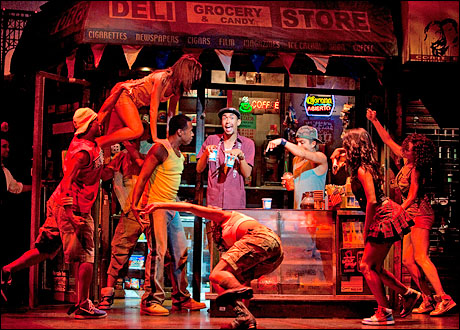
Essentially it is the music and choreography that draws an audience to a musical; the reality that is woven into the story only adds to a stellar production.    At times I wanted to jump on stage, roll my hips and heel, toe right along with them.  The songs are memorable; I find myself humming them sporadically.  “No Me Diga” and “Carnaval del Barrio” are audience pleasers and “Paciencia y Fe” (Patience and Faith) is a showstopper. I wish I could provide 96,000 reasons to go see this musical, but I can only offer three – great music and lyrics, likable characters and high-powered dance moves.  After two years and counting, In the Heights is still a winner.

Photos:  Joan Marcus

Duel on the Couch: Freud’s Last Session

When attending the theatre, the audience expects to be entertained and enlightened.  Whether it is a musical, comedy or drama, patrons want to see a fresh, live perspective of the human experience.  Freud’s Last Session is the epitome of entertainment and enlightenment keeping the audience firmly glued to the edge of their seats.   It is sophisticated fiction at its finest, a production worthy to be seen again and again.

Based on a suggestion proposed by Harvard’s Dr. Armand M. Nicholi, Jr. in The Question of God, Freud’s Last Session turns a simple query into an engaging theatrical sensation.    Playwright Mark St. Germain probes one of the greatest “what if” questions of the 20th century and tackles some of the most debated questions in human history with immense insight and savoir vivre.  The “what if” is whether or not Dr. Sigmund Freud or C.S. Lewis ever met.  Dr. Nicholi points out in The Question of God that a young Oxford professor visited Dr. Freud after he arrived in England, although it was unclear if the professor was C.S. Lewis.  But the speculation of such an event is of no consequence, Freud’s Last Session will satisfy any curiosity one might have when wondering how an epic encounter of two of the most intelligent minds to ever set footprints on this earth would go. 

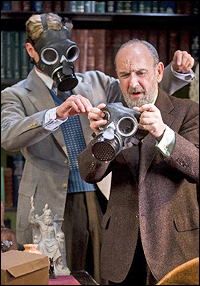
The play is set in Dr. Freud’s home office in London on September 3, 1939, the day England enters World War II.  C.S. Lewis arrives at Freud’s home believing their meeting is to be a chiding by Freud about Lewis’ depiction of him in a book, but what really intrigues Freud is C.S. Lewis’ transformation from an atheist to a Christian.  Their meeting evolves into an awesome intellectual standoff that would have Clint Eastwood and Lee Van Cleef shaking in their boots.  As the threat of annihilation looms like plumes of smoke from a newly shot cannon, these men go back and forth on the subjects of sex, love, and most importantly, does God truly exist.   As Freud and Lewis introspectively grapple, both revealing details about their childhood and experiences, they gain greater insight about one another and develop a profound bond.  Evidence of the intimacy of their new and brief relationship is displayed when Lewis is allowed the sacred task of removing Freud’s prosthetic jaw as he begins to choke, a duty that is only performed by Freud’s daughter Anna.   

Everything about this production is limited – limited characters, limited set and limited theatre seating, but the constraints serve as advantages in this production.  The Marjorie S. Deane Little Theater adds another intimate layer to this meeting of the minds.  Instead of feeling like an audience member viewing a conversation, one feels more like a fly on the wall privy to an exclusive event.  The set is a beautifully decorated replica of Freud’s office in Austria complete with an assortment of books, couch, and various deities, which could reveal some contradictions in Freud’s belief structure as Lewis cleverly points out.  The set inserts a material richness that compliments the dialogue and compelling portrayals of C.S Lewis and Dr. Freud by Mark H. Dold and Martin Rayner.  Portraying a historic figure can be a difficult endeavor for an actor; especially individuals that are considered demigods, Dold and Rayner are so believable that I left the theatre feeling as if I had personally met Dr. Freud and C.S. Lewis.  These two men played off of each other extremely well; together they gave a performance so concentrated an addition of another character would have weakened the harmony of the show.  In a nutshell, the components of this play have all the classic quality of a Channel suit and exemplify the theory that less is more.

What I enjoyed most about the production was that Freud’s Last Session left my mind swirling with all the right questions, but none of the answers.  It challenged me to seek them out and discover my own conclusions.  In the wake the 9th anniversary of September 11 and the controversy surrounding the ground zeromosque, I realized the questions Freud and Lewis toil over during the play are more relevant than ever.  We may never find the answers, just as Freud’s and Lewis’ deliberation ends in a stalemate, but the fact that we still seek the answers means that as a society we are still able to grow past our current understanding of the world, a notion that I believe would please both Dr. Freud and C.S. Lewis very much.

Photos: Kevin Sprague

Tut Takes Manhattan

In June, the annual Tony Awards celebrated Broadway royalty, but the hottest ticket on the Great White Way actually belongs to one of the oldest royal figures to ever sit on a throne.  Tut-mania descended on Manhattan this spring when Tutankhamun and the Golden Age of the Pharaohs made its debut at the Discovery Times Square Exposition, located on 266 West 44th Street.  New York City is the final stop on a world-wind tour that marks the last time the relics of King Tutankhamun will ever leave Egypt. 

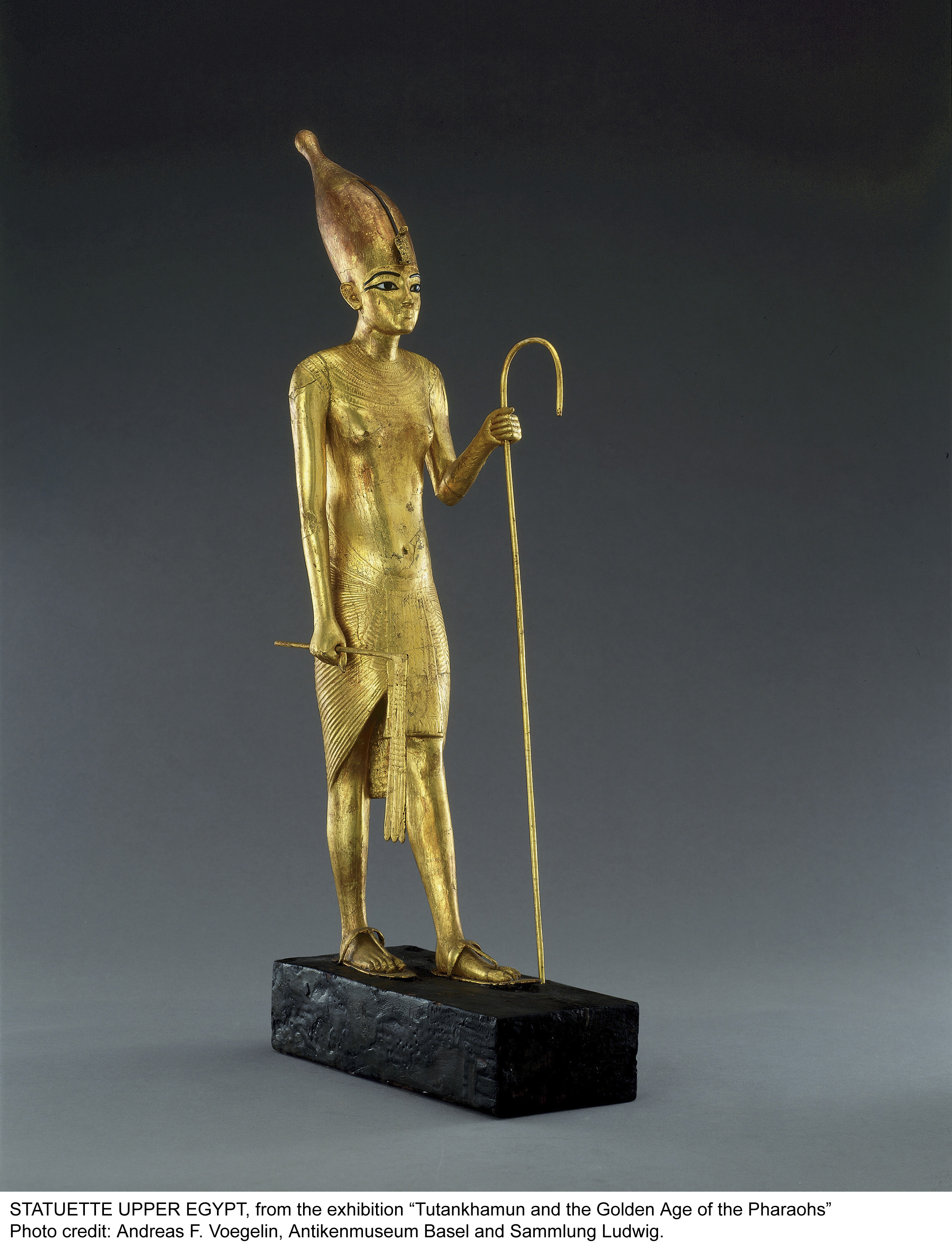
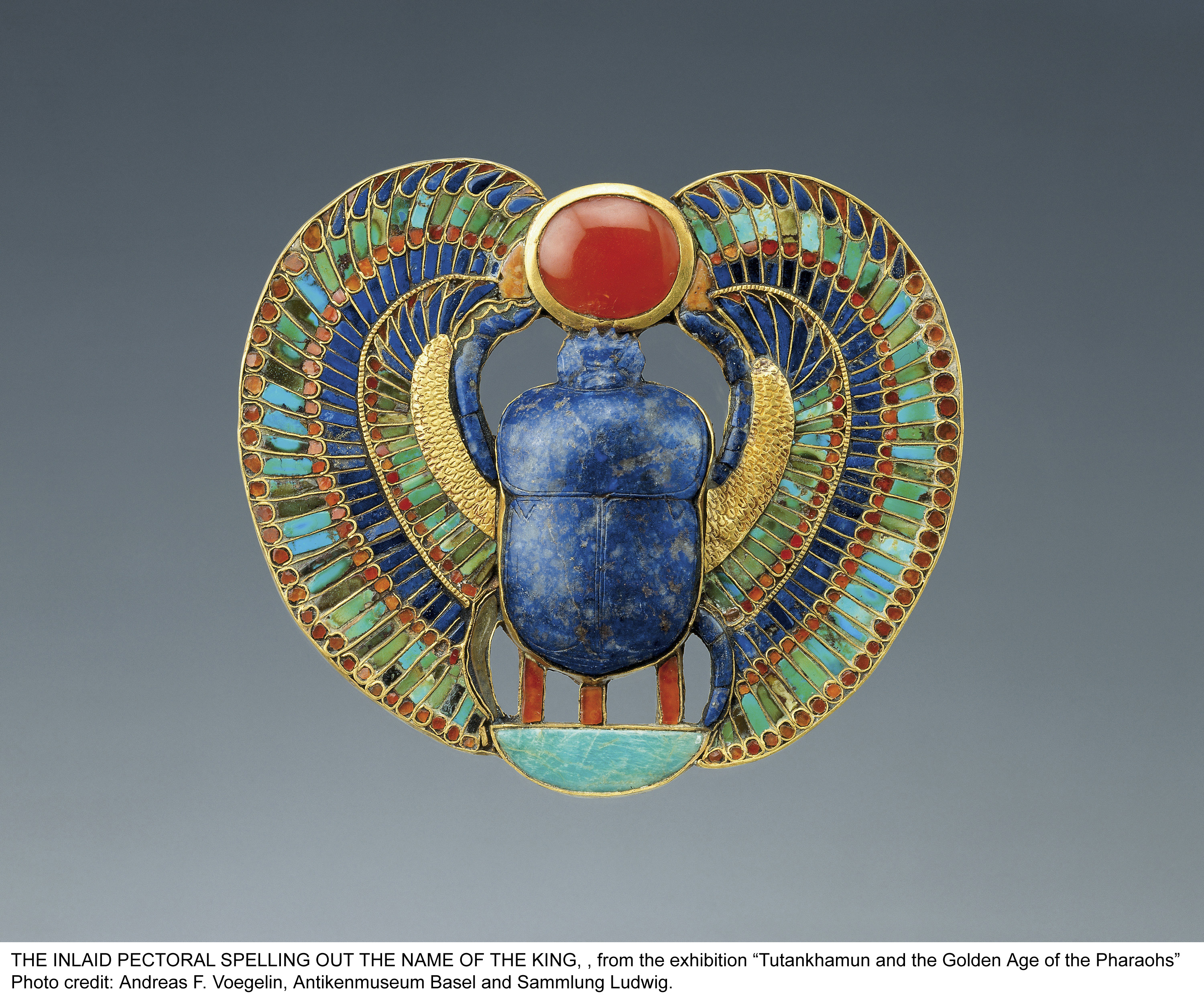
This is not the first time that the boy king has captivated the Big Apple. In 1979, The Treasures of Tutankhamun (King Tut) exhibition was displayed at the Metropolitan Museum of Art.  Tutankhamun and the Golden Age of the Pharaohs has 50 artifacts from King Tut’s tomb, only a portion were shown during 1979 exhibit, as well as 80 additional artifacts from the tombs of his ancestors and other high-ranking notables.


Ever since the tomb of the ancient pharaoh was unearthed in November 1922 by Howard Carter, he has been shrouded in mystery.  Who was King Tutankamun?  How did he die?  Was he murdered?  Who were his parents?  Tutankhamun was one of the last kings of Egypt’s 18th Dynasty.  Although, much of his life is still unknown due to the eradication his records and those of his ancestors by ancient Egyptian officials, the world knows more about Egypt’s most popular ruler than it ever has before.


 Tutankhamun was the son of pharaoh Akhenaten and Kiya, one of Akhenaten’s minor wives.  His birth was believed to be around 1343 B.C.  His father created upheaval during his reign by moving the country’s capital from Memphis to Akhetan, now known as Amarna, and banning polytheistic worship in favor for the new, monotheistic religion of Aten.  In 1333 B.C., Tutankhamun ascended to the throne at age 9 or 10.  At 12, Tutankhamun married his half-sister, Ankhesenamun, Akhenaten’s third daughter by his wife Nefertiti.  During his reign, King Tut moved the country’s capital back to the city of Memphis and reinstated polytheistic worship.  The boy king also changed his name from his original moniker of Tutankhaten, to Tutankhamun (meaning “the living image of the god Amun”) in recognition of the state’s rejection of Aten.  Tutankhamun died from unknown causes in 1323 B.C. while in the ninth year of his reign.  He left no successors; the mummified fetuses of two stillborn daughters were found in his tomb. 


An X-ray taken in 1968 exposed damage to his skull, which could have been caused by a fall, blow to the head, or during mummification and caused Egyptologists to contemplate the theory of foul play as a cause of death.  Recently, the boy king’s mummy underwent a CT-scan as part of a landmark, five-year Egyptian research and conservation project, partially funded by National Geographic, in an effort to inventory and scan all of the known mummies in Egypt. This study debunked theories of assassination as the damage to Tutankhamun’s skull occurred after his death. DNA studies conducted in Egypt further showed that he suffered from malaria and may have died from complications from a broken leg.  Although King Tut’s remains lie in a climate-controlled vitrine in his burial chamber in the Valley of the Kings, the Tutankhamun and the Golden Age of the Pharaohs exhibition includes some of these scans as well as the first 3-D replica of the ancient pharaoh created by sculptor Gary Staab. 


Along with the amazing, life-like replica of King Tut’s mummified cadaver,   the exhibition displays the most splendid collection of ancient Egyptian artifacts anywhere outside of Egypt. Breathtaking…awe-inspiring… jaw-dropping…eye-popping…overwhelming, adjectives that fail to justify the majesty of what is to be discovered after stepping through the doors of the Discovery Times Square ExpositionThe antiques along with the narration of legendary actor Omar Sharif via headset intimately transport the patrons into the daily life of the boy king and those in his court.  Last month an additional item joined the exhibit, a chariot, which has been permitted to leave Egypt for the first time.  Of the six chariots that Howard Carter discovered in King Tut’s tomb, this antique from the Antechamber is exceptional because it is the only one that appeared to be used. The construction of the chariot was lighter and simpler than the other five.   There is speculation that it may have been used as a traveling chariot, on the battlefield, or on hunting expeditions. There is also a theory that King Tut may have died after a fall from this chariot.


The ancient Egyptian phrase “forever and for eternity” never felt as palpable to me as it did when I visited Tutankhamun and the Golden Age of the Pharaohs. Perhaps it was the golden sarcophagus or the replica of Tut’s mummy that spurred the feeling, but as I walked through the exhibit I could feel the presence of King Tut.  Finally his story was being told like it never has before.  I also felt the spirit of Howard Carter, the archeologist that first revealed the pharaoh to us, and suddenly the exposition became otherworldly.  It was if a Stargate had been opened and we were all visiting an undisturbed dimension that has no concept of time.  A feeling of immense humility overcame me as I viewed the spectacle and glory of a culture that has influenced almost every civilization that has come after it.  I realized that with all our modern know how, we can never duplicate the wonder of these relics, which is raison d’être for our continued fascination. 


Considering the locale of the Discovery Times Square Exposition, the ticket price for Tutankhamun and the Golden Age of the Pharaohs is quite affordable ($29.50 for adults, $26.50 for seniors and $19.50 for children) and part of the ticket sales is helping to fund a new Grand Museum in Cairo.  Broadway has played birthed and played host to countless stars, but none is as incandescent as Tutankhamun. This exhibit will remain in the Big Apple until January 2, 2011 when the boy king and his gilded chariot return to Egypt to rest for good.  FAMERS do not miss this exhibit.  It is an experience that you will take with your forever and beyond.

Photos:  Andreas F. Voegelin and Sammlung Ludwig

Slideshow:  F.A.M.E NYC Editor

Sita on the Roof with Cocktails

Every Thursday, SPEAKEASY NYC hosts an “invitation-only” cocktail party at the Sky Terrace, located on the 15th floor of the Hudson Hotel.  The awe-inspiring view of Manhattan and the Hudson River coupled with the neatly manicured shrubs, open lounge spaces and hammocks, makes the summer in the city even more enjoyable.

Last Thursday, the exclusive party featured a guest appearance by cartoonist and animator Nina Paley, the writer, director and animator of the 2009, soon to be cult-classic, Sita Sings the Blues.  Sita Sings the Blues is an ingenious animated movie that explores the theme of breaking up.  Cleverly woven are two stories, the first is the Sanskrit epic the Ramayana, which tells the story of Rama and his wife Sita.  The second is Nina’s personal story which starts with her happily married in San Francisco and ends with her in Brooklyn recovering from an email from her husband stating her marriage is over.  

 I was first introduced to this short animated film last year, watching Channel 13 on a lazy Saturday night.  I was enchanted with the idea of turning a classic like the Ramayana into a cartoon and pairing it with 1920’s jazz music (Sita’s musical numbers are tracks by Annette Hanshaw).  I am pleased to say that curiosity did not kill the cat.   Sita Sings the Blues is the most entertaining animated short I have seen.    It is naughty, thought-provoking and fun and reincarnates the wonderful music of the “Jazz Age” in a way that is accessible to a modern audience.  Another aspect of the film I appreciated was parallel journeys of Nina and Sita, two women from different eras and cultures struggling to stay devoted to men that did not appreciate their worth.

After the event I watched the Sita Sings the Blues again.  FAMERS if you have not seen this animated short, I encourage you to download it.  It is definitely one to keep in your archives.

To watch or download Sita Sings the Blues click www.sitasingstheblues.com.

A Little Night Liaison with Sondheim

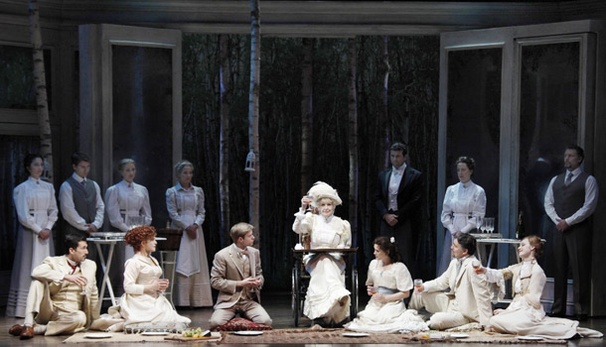
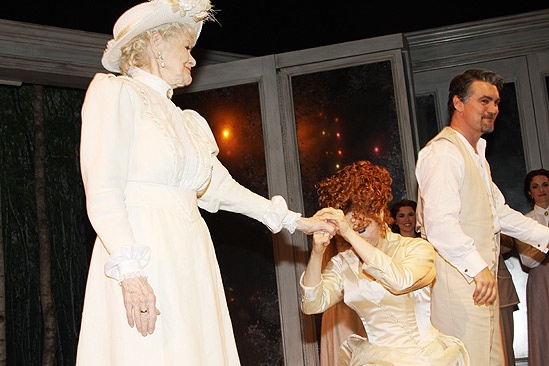
It is safe to say that 2009-2010 has been the season for Stephen Sondheim on Broadway.  His newest production, Sondheim on Sondheim served to be a musical walk down memory lane.  West Side Story was a successful revival that brought new and experienced theatergoers to the Great White Way.  When the revival of A Little Night Music opened in December 2009, the likelihood of its success was undebatable – Catherine Zeta-Jones starring as Desiree Armfeldt, Angela Lansbury as Madame Armfeldt and the music and lyrics of Stephen Sondheim, total no-brainer.   Catherine Zeta-Jones, who revealed her singing and dancing chops in the film adaptation of Chicago, won Best Actress in a Musical at this year’s Tony awards.  The production was also nominated for Best Revival of a Musical, Best Sound Design and Best Featured Actress in a Musical for Angela Lansbury.  The show took a brief hiatus in June after Catherine Zeta-Jones’ and Angela Lansbury’s contracts ended.  On July 13 the production resumed with Bernadette Peters and Elaine Stritch portraying Desiree and Madame Armfeldt. With new cast members in place, A Little Night Music turned a page in this revival’s story without losing any of its potency. 

Set in Sweden at the turn of the 20th century, A Little Night Music brings the elegance and sexual repression of the Victorian era to life with the same cultivation as a waltz.  With the sparse furniture and rotating sets, director Trevor Nunn shines a spotlight on the undercurrent of love rather than the romanticism that accompanies this emotion.  The loss of love…longing…the sport of love…wasted times are all themes that reveal themselves like lit streetlamps at dusk.   The sets seamlessly transition from one act to the next and offer a balance as “the young” and “the fools” stumble over self created roadblocks on their trek to true love.

 The cast carries the melancholy tone that accompanies the story just as beautifully as they deliver the dialogue and musical numbers.  Alexander Hanson is enjoyable as Fredrik Egerman, the middle-aged lawyer that had a love affair with Desiree and is now in a sexless marriage with Anne.  So clever, he appears to know everything but really knows nothing.  Ramona Mallory is delightful as Anne Egerman; the 18-year-old virgin married to Fredrik.  She holds her chastity with the same constriction as she holds her secret love for Henrik, Fredrik’s son.  As Henrik, Hunter Ryan Herdlicka gives a convincing performance of a young man tortured by desire and morality. The breakout performance is given by Erin Davie.  As the Countess Charlotte Malcolm she is jocular and tragic, and comes close to stealing the spotlight from Bernadette Peters and Elaine Stritch.  But the combination of Peters and Stritch is hard to eclipse, both are absolutely radiant and can bring all the luminosity of the moon on stage.

The real question I had as I waited for the curtain to rise at the Walter Kerr Theatre was if the addition of Bernadette Peters and Elaine Stritch would go over well with Generation X and Y.  Both accomplished actresses are Broadway veterans, but box-office superstar Catherine Zeta-Jones and Angela Lansbury (who introduced herself to these age groups while playing Jessica Fletcher in the long-running CBS series Murder She Wrote) are far more recognizable faces.  It was Sondheim that suggested Bernadette Peters take over the role of Desiree; his foresight would pay off tremendously for this revival.  


The role of Desiree Armfeldt was tailor made for Bernadette Peters.  She is a Broadway baby literally that can translate the bohemian life Desiree has lead as famous stage actress extremely well.   Her presence on stage can only be compared to a breath of fresh H2O.  She brings an effervescent charm to Desiree without losing any of the maturity and complexity of the character.  Her performance is like sipping a glass of Veuve Clicquot’s La Grande Dame champagne – delectable from beginning to end.  She is beyond familiar with Sondheim’s work starring in productions of Sunday in the Park with George, Into the Woods and Gypsy.  His music and lyrics and her voice fit like the famous Versace dress Jennifer Lopez wore to the Grammy’s – exposing all the best emotions and features of the other.  This pairing comes to a crescendo when Bernadette sings “Send in the Clowns.”   The emotion Bernadette delivers exposes the lament in this song so exquisitely that by the last bar my eyes were swelling with tears. 

Elaine Stritch is uproarious as Madame Armfeldt; her comedic timing is as infinite as her talent.  During the performance Elaine had to have a few lines read to her; her savvy as a comedic actress placed a lovely veil over her forgetfulness.  In fact, it added another layer to Madame Armfeldt, a sharp-tongued woman that seems to be stuck in the past.  Watching Bernadette Peters and Elaine Stritch on stage together was like unearthing rare gems.  My question had been answered; no member of the audience, regardless of their age, could feel cheated if they missed the performances of Catherine Zeta-Jones and Angela Lansbury.  Bernadette Peters, Elaine Stritch and the rest of the cast are worth the price of admission and then some, but despite the celebrities on stage, the eternal star of A Little Night Music is the music and lyrics of Stephen Sondheim.  Like the moon, his compositions smile upon us all; it is an essential component in making this revival and any future productions a triumph.

Photos:  Joan Marcus for Broadway.com

Under the Sea

There is something about a puppet show that seems to resonate with the child in all of us.  Regardless if you are seven or 70, live in a penthouse or a one bedroom walk up or are mother and father of 10 or singles looking to relive your childhood for just a brief moment, a puppet show equalizes all playing fields with smiles and laughter.  And pure joy is what awaits anyone that spends 50 minutes in the undersea world that John Tartaglia creates.

John Tartaglia’s Imaginocean! is a delightful sub-aquatic excursion that brings the three dimensional world of the deep to life with a musical that is treat for children and adults.  The main characters in this romp of currents and discovery are a fish named Dorsel, his sister Bubbles and their friend Tank.  Through their quest for treasure these friends find more than money, they meet new friends and learn lifelong lessons.

The freshness of John Tartaglia’s Imaginocean! comes in the form of black-light, which makes the color puppets pop and become animated.  The audience feels as if they are below the depths of the sea with the fishy friends and experience every laugh, song and dance in a much livelier way than other puppet productions.  Filled with good music and good times, John Tartaglia’s Imaginocean!  is one of off-Broadway’s best productions for a family.  This show is smart, innovative and cool, I have no doubt it will continue to swim in a wave of success.

Stomping Through the Decades

Thumping, bumping, jumping, banging, crashing, ripping, prancing, dancing and running literally, Stomp has been entertaining audiences at the Orpheum Theatre since 1994 and is one of the theatre world’s longest running productions.  It is also one of the world’s most recognizable productions.

Stomp is an anomalous theatrical sensation that unifies its cast and the audience through rhythm, energy and movement.  This non-traditional dance collective was created in the U.K. by Steve McNicholas and Luke Cresswell after first working together in 1981.  In the summer of 1991, a decade after their initial union, Stomp premiered at Edinburgh’s Assembly Rooms.   From 1991 through 1994 the original cast, which had been expanded to 30 members, brought this unique multi-dimensional experience to audiences in Sydney, Hong Kong, Barcelona and Dublin, and also began its run in New York.  Currently, Stomp is still running in the U.K. and Manhattan and has tours in the U.S., Europe and Japan. 

After 19 years abroad and 16 in New York City in particular, Stomp continues to wow audiences with its dynamic brand of performance theatre.  Last weekend I decided to start of my July 4th celebration by finally seeing this production for myself.  Sure, after all the buzz Stomp has created over the years I have seen excerpts of performances on television, but nothing is like seeing the real thing live.  I was not prepared for the stunts I saw.   Talk about spectacle …Macy’s 4th of July fireworks looked like a Lite-Brite exhibition compared to the electrifying commotion displayed on stage.

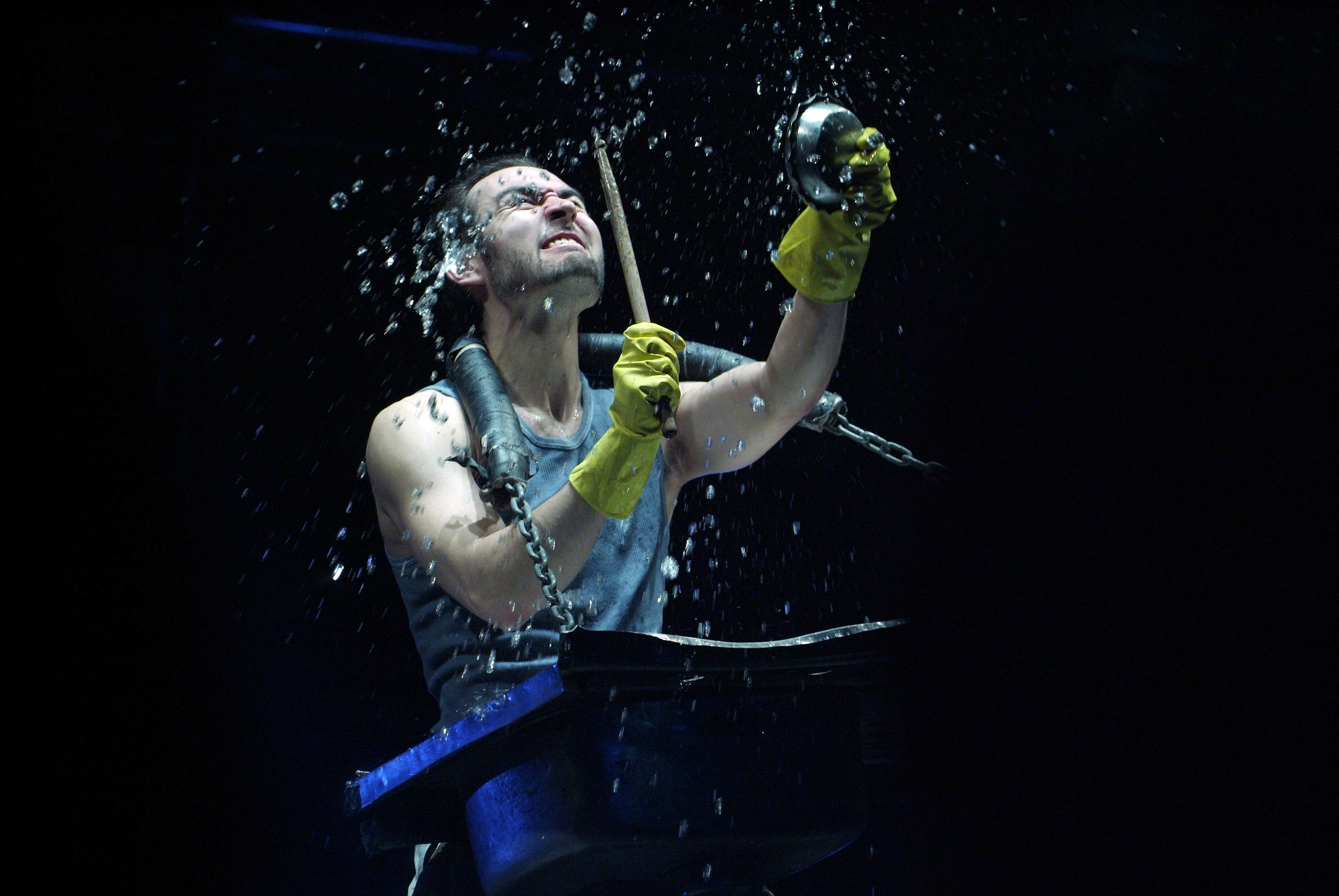
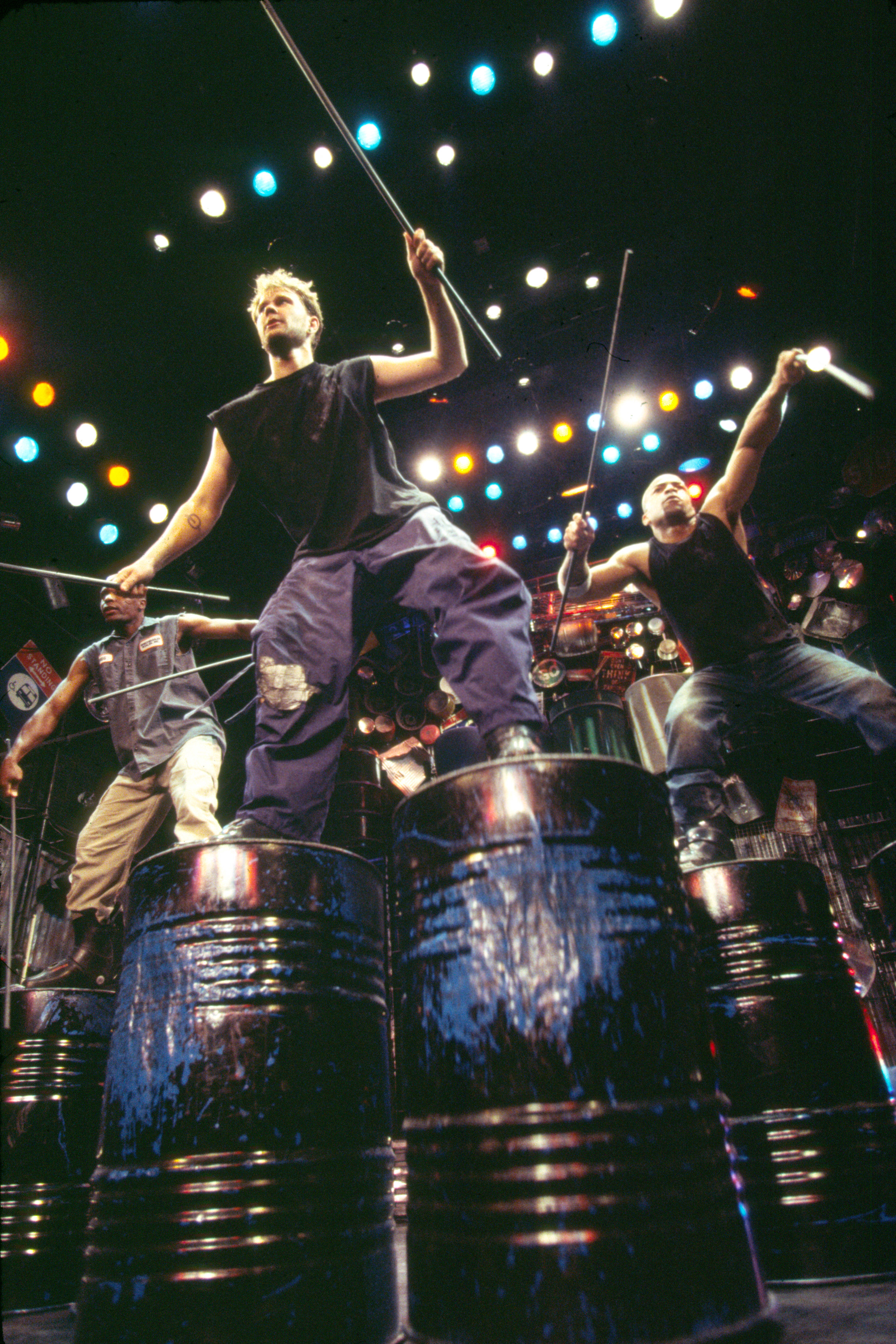
The walls of the Orpheum Theatre were littered with a hodgepodge of discarded items included traffic, subway and street signs,  huge plastic garbage cans, fans, pipes, mannequin tops and bottoms, fans, hub caps, ski boots, car grills and computer keyboards.  The components, dilapidated and carefully hung on the walls, appear to regain their value and look more like a collage about movement and the way humans interact with inanimate objects than a bunch of junk.  The show runs without an intermission and is a mind-bending ride of pure adrenaline.  There is no dialogue, recognizable musical score or traditional choreography.  But there is plenty of synchronized velocity.  The show has a rotating cast and unlike some productions the sum of the cast’s vivacious exchange on stage is greater than its parts.  Using their feet, hands, pipes, sinks, plastic bags aluminum trash cans and lids, newspapers, matchboxes, brooms and Zippo lighters, the cast turn random objects into a symphony of beats even getting the audience involved.  Through clapping and snapping of fingers and hands, the swapping of energy comes full circle and the cast and audience becomes one.

At its core, Stomp is about fusing diversity and commonality. The dancing and music that is created possesses a very tribal feel and through the rhythmic and comedic elements in the show the audience realizes that no matter where we come from, we are all from the human tribe.  A revolution then and a revolution now, Stomp is still one of the most unique theatre experiences on off-Broadway.   Entertaining on multiple levels, great for families as well as couples and singles, Stomp is a shot of fun made for everyone.  After experiencing it for myself, I completely understand why this pulsating production has had such longevity.  If all these sci-fi films are correct and space is the final frontier, I predict Stomp and its many incarnations will still be around clanging on hulls of old spacecrafts and bouncing on crevices of the moon.

Photos:  Junichi Takahashi and Steve McNicholas courtesy of Stomponline.com

The Shadow behind Fences

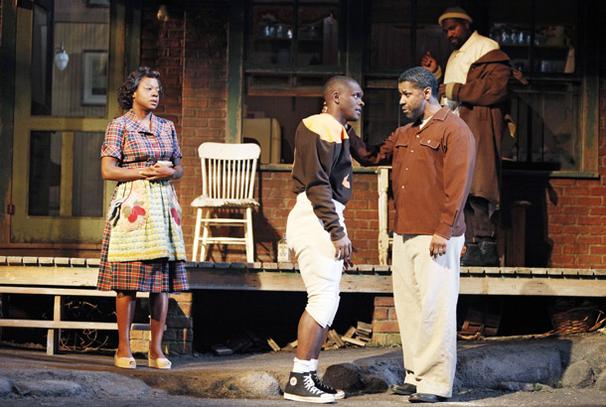
Jim Bono, a character in the play Fences, reminds the audience that fences are built to keep people out, but they can also be used to keep folks in. Within all us resides a shadow, an entity that houses our fears, doubts, anger, resentment, etc. It is our nature not to want to face the darkest part of ourselves. By not acknowledging our shadows we build a fence around it which only allows the shadow to remain and fester. Pulitzer Prize winning playwright August Wilson once stated, “Confront the dark parts of yourself, and work to banish them with illumination and forgiveness. Your willingness to wrestle with your demons will cause your angels to sing. Use the pain as fuel, as a reminder of your strength.”

Fences is an intricate, dynamic story about baseball, marriage, family, infidelity and redemption, but mostly it is about the shadow that walks with us. Troy Maxson is a man that walks in his shadow, even if he does not know it. He is a man that is resentful about the hand he is forced to play in life. As a sanitation worker he provides a life for his family, but if the prejudices of the day had not prevailed Troy would have been a star baseball player in the major leagues. He has a wife, Rose, that willing to stick by him through the mundane disappointments life has hurled at them, but he desires more. He owns a home courtesy of the money his brother receives from the military after a brain injury suffered during the war. He harbors contempt for his father for the way he was treated, but does not realize how he imitates his father’s behavior. He has two sons. Lyons, the elder son who was not raised with him, has a strained connection with Troy. His youngest son, by Rose, only wants his father’s love and approval, but for Troy young, willful Corey may be his greatest test and he keeps striking out as he threatens to transfuse his bitterness to his son.

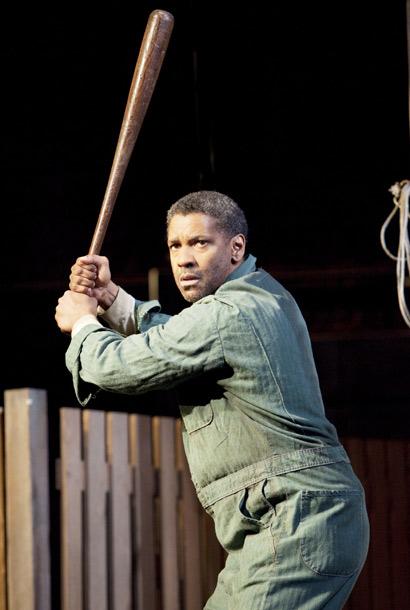
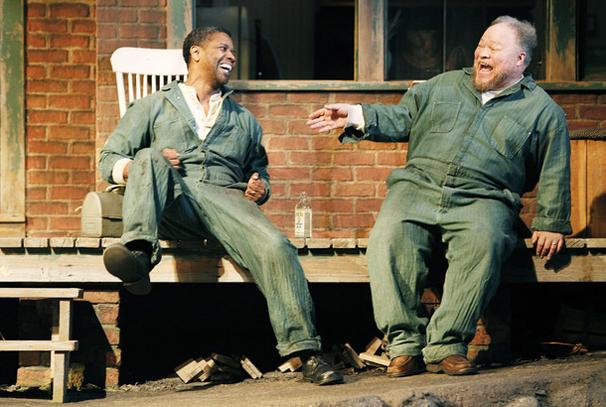
Denzel Washington is beyond brilliant in the role of Troy. Until one has witnessed Denzel Washington on stage, one can not truly fathom the talent that is inherent in this actor. Troy has all the characteristics of a certified, Grade A bastard, but Denzel Washington’s portrayal of this complex individual still compels the audience to like him and feel empathy for him. Viola Davis is sensational as Rose. Her performance turns a housewife into a heroine. Hollywood has yet to tap into the depth that this actress has to offer, whether on stage or screen her talent shines as bright as the morning sun and is as rare as a blue moon. Mykelti Williamson’s portrayal of Gabriel, Troy’s brother, is Bubba Gump on steroids – he is compelling and comical. Chris Chalk plays the rebellious Corey, Russell Hornsby plays Lyons and Stephen McKinley Henderson plays Jim Bono, Troy’s lifelong friend, all deliver pinch hits and bunts in their commanding performances.

The star power and expertise of this cast can only be compared to skill walking around in the New York Yankees’ locker room. Even Steinbrenner could not buy a better cast. Kenny Leon’s direction and the cast’s performances combine to be a Josh Gibson, cracked-bat home run out of the venue with the hardware to prove it. This revival of Fences garnered three Tony awards including Best Revival of a Play, Best Performance by a Leading Actor in a Play for Denzel Washington and Best Performance by a Leading Actress in a Play for Viola Davis.


 The Cort Theatre could barely contain the energy on stage. I viewed the play from the last row of the balcony and I was on the edge of my seat leering at the stage through the entire production. When Gabriel blows his horn in the final scene signifying that a deceased Troy had made it to heaven, it felt that the audience had been redeemed along with him. This revival of Fences is the second trip of play to Broadway since its first Tony award-winning incarnation in 1987. Surely August Wilson’s presence must shadow all the actors on stage while they bring his material to back to life. There may not be any crying in baseball, but there is room to run the gamut of emotion in this production. No fence is big enough to hold this play.

Photos:  Joan Marcus, http://fencesonbroadway.com.

2010 Tony Awards

Segregation and rock ‘n’ roll triumphed over corrupt government regimes and Afrobeat, men wearing wigs toppled Sondheim, Denzel Washington and Viola Davis swung and hit a homerun past the fences and Red is the new color of the Great White Way.  If you are confused about what I was just referring to, then you missed the live broadcast of the 2010 Tony Awards on CBS.

Photo: Kevin Mazur/WireImage.com

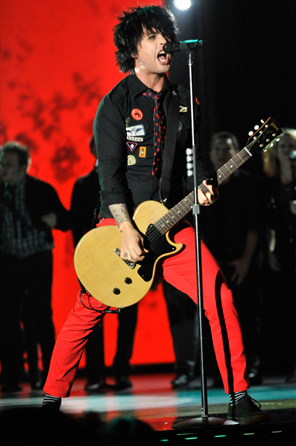
The stars of Broadway and Hollywood filled Radio City Music Hall while fans in Manhattan braved a downpour to watch a live simulcast of the event in Times Square.  Sean Hayes did not disappoint, the Promises, Promises star and Tony nominee was just as enjoyable as the host of the Tony’s as he is on stage at the Broadway Theatre.  The show opened with Sean Hayes tickling the ivories singing “Blue Suede Shoes” with Levi Kreis (Tony Award winner for Best Performance by a Featured Actor) and the cast of Million Dollar Quartet; he also accompanied fellow cast mate Kristen Chenoweth as she sang “I Say a Little Prayer.”  The casts of Come Fly With Me, Fela!, La Cage Aux Folles and Everyday Rapture provided audiences at Radio City and at home with a small glimpse of why they were nominated and the opening number closed with the Green Day and the cast of American Idiot having stars like Michael Douglas, Antonio Banderas and Will and Jada Smith clapping to their punk rock masterpiece. 


Photo: J. Countess/WireImage.com

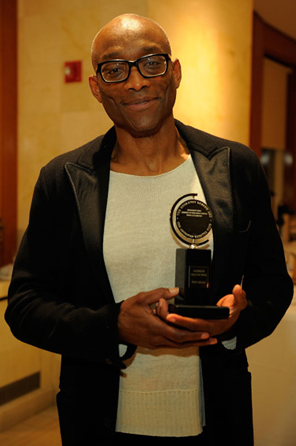
Although Fela! and La Cage Aux Folles accumulated 11 nominations, each only walked away with three awards.  Bill T. Jones won for Best Choreography for Fela! and the musical centering on the Afrobeat pioneer/activist also won Best Sound Design of a Musical and Best Costume Design of a Musical.   La Cage Aux Folles won Best Direction of a Musical, Best Revival of a Musical and Best Performance by a Leading Actor in a Musical for Douglas Hodge.  Catherine Zeta-Jones won Best Performance by a Leading Actress in a Musical for A Little Night Music and Katie Finneran won Best Performance by a Featured Actress in a Musical for her portrayal of the hysterical Marge MacDougall in Promises, PromisesAmerican Idiot won for Best Scenic Design of a Musical and Best Lighting Design of a Musical, but it was Memphis that took home the Tony for Best Musical as well as Best Book of a Musical, Best Direction of a Musical and Best Original Score (Music and/or Lyrics) Written for the Theatre.


Photo: J. Countess/WireImage.com

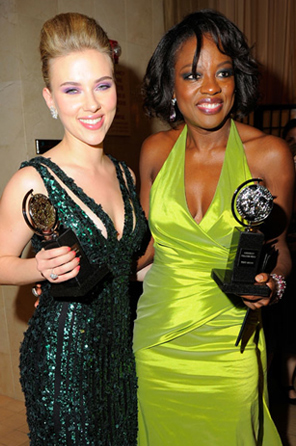
The Tony Awards were seeing Red literally; the play won the most awards of the evening including Best Play, Best Performance by a Featured Actor in a Play for Eddie Redmayne, Best Direction of a Play, Best Scenic Design of a Play, Best Lighting Design of a Play and Best Sound Design of a Play.  The revival of August Wilson’s Fences won the Tony for Best Revival of a Play, Best Performance by a Leading Actor in a Play for Denzel Washington and Best Performance by a Leading Actress in a Play for Viola Davis.  The beauty and talent of Scarlett Johansson lent itself well to the stage and garnered her Best Performance by a Featured Actress in a Play Tony for her performance in A View from the Bridge


Photo: J. Countess/WireImage.com

The main feature of any award show is the performances and the Tony Awards provide the best of any award show.  Audiences were wowed by performances casts of Memphis, Million Dollar Quartet, American Idiot and Fela!  Catherine Zeta-Jones delivered a powerful performance of the Sondheim standard “Send in the Clowns” and brought her husband, Michael Douglas, to tears.  This year marked the 64th anniversary of the Tony Awards and with it being a year away from the age of retirement I can confidently say that I see no departure any time soon.  Exciting and provocative shows like Next Fall, American Idiot and Fela! are breathing new life into Broadway and changing the ideas of what a production can do, and revivals like Fences, La Cage Aux Folles and A View from the Bridge show why a classic stage production has staying power.  Although Manhattan is battling through one of the worst global economic periods on record, Broadway proves why humans will always crave drama and a little night (or matinee) music. 

Top Photo:  Dimitrios Kambouris/WireImage.com

View the Tony Awards in the Heart of Manhattan

If the five boroughs are the veins of New York City, than Times Square is the heart.  It moves at a pace of 200 bpm and carries the electricity of a bolt of lightning.  For the first time the Tony Awards will allow viewers to be able to watch the stars of Broadway on Broadway.  The 64th Annual Tony Awards will be simulcast live to Times Square on Sunday, June 13th.  This event is a collaboration between the Tony Awards, iXP Corporation and Times Square Alliance.  The simulcast will air on a Clear Channel Spectacolor HD Screen.  In addition to the live simulcast of NY1’s pre-show On STAGE’s Red Carpet to the TONY’s, the Times Square simulcast will feature special guests throughout the evening, including a special appearance by Michelle Williams of Destiny’s Child.  The simulcast starts at 5:30 p.m. in Duffy Square and seats 1,000.  FAMERS go to Times Square and be a part of Tony history.