Seminar – A Gold Star Production at the Golden Theatre

Words…Words…Words, the foundation plays are built on.  Playwrights use them to create characters, discourse and plots that become microcosms for life.  Actors absorb words and give them a voice, emotion and the breath of life.  Words are the foundation of the Broadway community, and no words have been as deliciously scripted as those coming to life eight times a week at the Golden Theatre – Seminar is a seductive, sagacious comedy that is at the head of Broadway’s fall 2011 class.

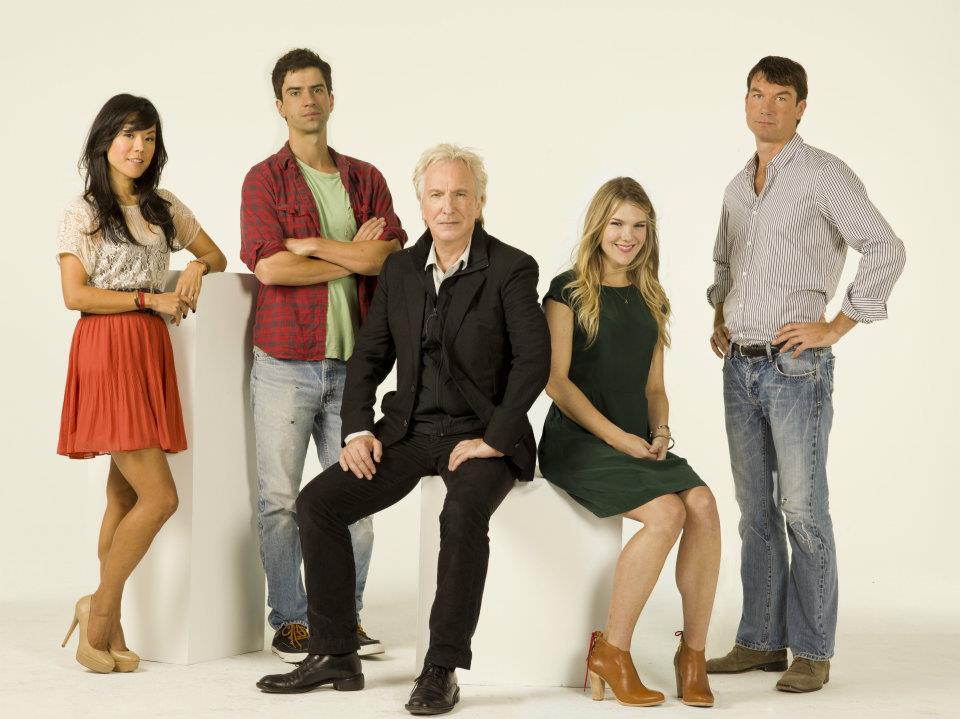
Kate, Martin, Douglas and Izzy are four aspiring writers that gather together in Kate’s rent stabilized palace for a workshop with Leonard, a world-renowned literary genius who happens to be a venom-spewing, unconscionable scapegrace.  Each session with Leonard has the potential to end disastrously, but throughout the course of Leonard’s brutal verbal boot camp, the foursome learns about their art, each other and about Leonard.  If I had to sum up this production with a grade, I would be compelled to give an A with as many pluses as I could fit on the page.
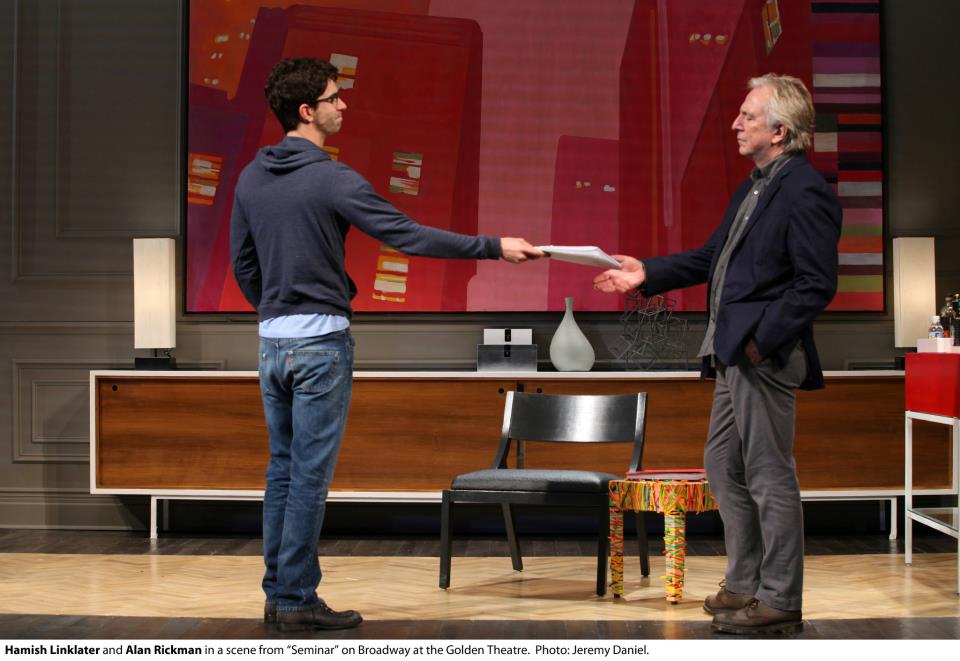
How ingenious for a playwright to pen a play about four fledging writers taking a writing seminar with the hopes of elevating their style and becoming the next darlings of the literary world; only to be orally gunned down like the McLaury brothers at the O.K. Corral by the very person they admire and seek to impress.  Every writer, including myself, has a story like that, which is why Seminar is a play that will be close to the soul of every writer who views it.  But this production is not just for writers, it is for anyone in any creative field.  Seminar is sophisticated; there is no doubt about it.  Although, Rebeck’s luscious script may require some audience members to bring a thesaurus with them when attending a performance, the word play is a critical component to its allure.   Her attention to detail and phrasing creates a world of its own – a linguistic oasis that I thoroughly enjoyed basking in.  
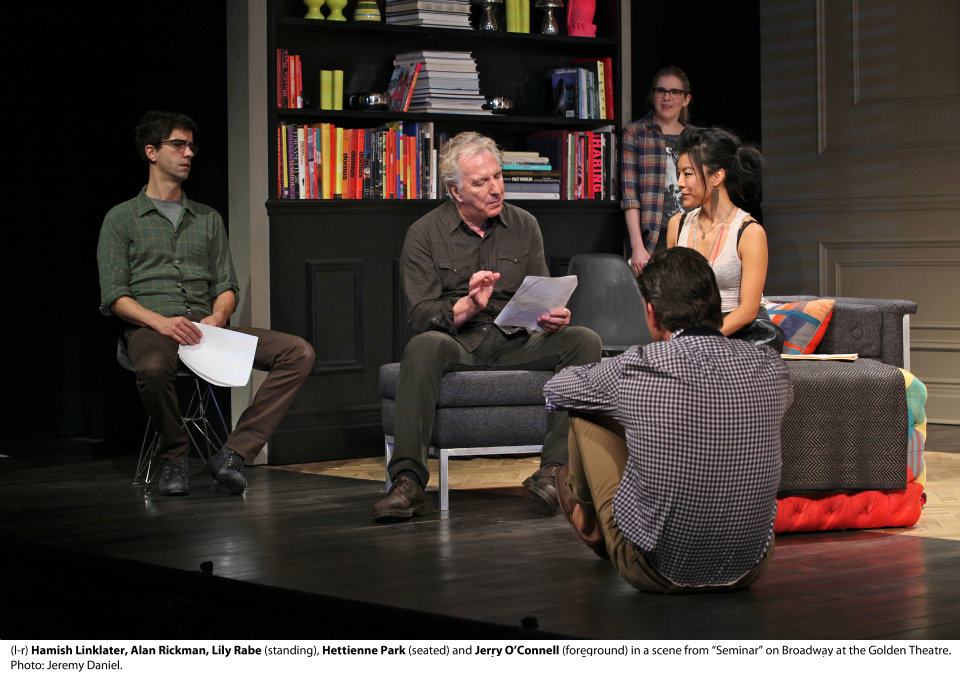
In fact, every detail of this play is sublime.  The foundation Theresa Rebeck supplies is impeccable.  David Zinn’s costume and set designs are descriptive and complimentary to the characters.   The direction of Obie Award winner Sam Gold provides the subtle nuances the really allows the actors to shine in their characters.  This may be his Broadway debut, but this veteran needed no introduction to the Great White Way, this will be the first of many Broadway shows that will benefit from his skill.  Additional members of this production who are making their Broadway debuts are television and film star Jerry O’Connell, Hettienne Park and Hamish Linklater.  O’Connell’s portrayl of the name dropping, pseudo intellectual Douglas is extremely entertaining.  From the first blistering monologue, he proves he deserves to be on the stage and should be welcomed into the theater community with open arms.   Hettienne Park is excellent as Izzy.  She makes using sex as a means to achieving success extremely comical.  Hamish Linklater is totally convincing as Martin, the tragic genius.  O’Connell, Park and Linklater did not make a Broadway debut, they made a Broadway coup!  Lily Rabe puts the feminine in feminist/poor little rich girl Kate.  She is always a pleasure to watch.

Perhaps the greatest detail of the show is the return of Alan Rickman to Broadway.  Whether he is Hans Gruber, the Metatron or the Sheriff of Nottingham, Rickman is nothing less than stupendous.  No one can play a frosty, cheeky snob like he does.  Watching Rickman exhibit his talent live is worth the price of admission and is a memory that is priceless.   There is so much right with this show I doubt anyone could find a reason not to pass this play with flying colors.  Words have never been wittier. 


Photos:   Jeremy Daniel


Love, Loss and Gay Marriage

Marriage is an institution that heterosexuals constantly question – Is it antiquated?  Why did I get married?  Is there truly a happily ever after?  When it comes to homosexuals, I believe only one question comes to mind when the subject of marriage is brought up – Why can I only marry in six states?  Besides Washington D.C., Oregon’s Coquille and Washington State’s Suquamish Indian tribes, New York, Connecticut, Iowa, Massachusetts, New Hampshire, Vermont and Iowa are the only states in which same-sex marriage is legal.  The movement to achieve marriage rights and benefits for homosexual couples in the US began in the early 70s and is still a hotbed political issue.   Very often art uses real life situations as a muse to create a powerful piece of work that will provoke people to become inspired, think and be motivated enough to act.  Such is the case with Standing on Ceremony the Gay Marriage Plays.

Standing on Ceremony is a compilation of nine plays that courageously, poignantly and hilariously attack the issue of gay marriage in America.  The plays are written by Wendy MacLeod, Paul Rudnick, Jordan Harrison, Neil LaBute, Jose Rivera, Mo Gaffney and Doug Wright and are as unique as they are brilliant.  Stage and screen veterans Beth Leavel, Richard Thomas, Mark Consuelos, Polly Draper, Craig Bierko and Harriet Harris passionately and exquisitely perform the material, taking the audience on a journey that spans the range of human emotion. 

For me, what resonated more than the universal theme throughout the plays was the universal experiences that are the same for everyone whether heterosexual or homosexual.  We all experience death, fear, head over heels affection, preconceived beliefs, bliss and outrage.  Standing on Ceremony is by far one of the most relevant productions to hit the stage this millennium.  It is The Normal Heart for this century.  No one can view this production and not be moved.

A portion of ticket sales from each performance will go to Freedom to Marry and other organizations promoting marriage equality. Standing on Ceremony is playing at the Minetta Lane Theatre, located at 18 Minetta Lane east of 6th Avenue between 3rd Street and Bleecker.  Buy a ticket and say, “You do too.”

Join Standing on Ceremony on Facebook and find out how to win a party for your party of 20, http://www.facebook.com/standingonceremony?sk=app_112053162216760.

Photos:  Joan Marcus


Navigating Broadway Through 3D Waters

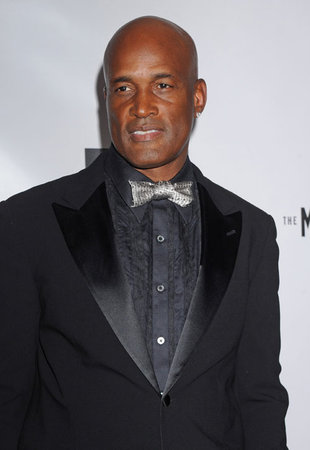
According to popular legend, Spanish explorer Ponce de Leon discovered the state of Florida while searching for the Fountain of Youth – the mythical spring said to promise longevity to anyone who drinks its waters.  Tony Award-nominated director Kenny Leon appears to have found the secret for endurance on Broadway – choose to work with impeccable playwrights and extraordinary actors.  When asked about his selection processes on choosing which plays he will work with, Leon states, “When I choose a project to spend time with, I first have to make sure that it will make a contribution to the world.  At one time, in my career I had to say yes to anything and now I ask myself, ‘Is me doing this project going to make a difference?  Is it going to touch people’s lives?’ I pray on it and wait for the answer to come back.  Then I usually move forward with it knowing that it’s not what the critics say about it, it’s what the people say about it.”

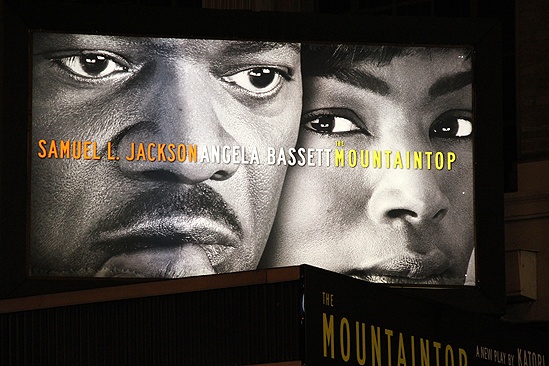
Leon definitely has the ear of the people and the critics.  Early this fall Leon’s brilliance was seen on Broadway when playwright Katori Hall’s The Mountaintop brought new meaning to the term British Invasion.  After having a successful run on London’s West End, the play that provides a fictional account of the night before Dr. King’s assassination is now playing at the Bernard B. Jacobs Theatre with Samuel L. Jackson and Angela Bassett in the lead roles and Kenny Leon as director.  The play has been a hit with critics and audiences alike.  One might have found the notion of tackling Dr. Martin Luther King Jr. as subject matter for a stage production an insurmountable task, but Katori, Leon, Jackson and Bassett wove a new stitch in the tapestry of Dr. King’s legacy with out blemishing the fabric of the man or his dream.  “Originally when I received the offer to do [The Mountaintop] my first thought was I didn’t want to do anything that was destructive of the iconic nature of Dr. King.  My agent said it’s about Dr. King and a sexy maid, and it’s like wait a minute,” he says.  “Then I said to myself, if it’s a fictitious account it might work, but if it’s trying to be realistic then that may not work.  Then when I read the script, what really convinced me was how I felt at the end.  At the end of the script I knew Dr. King was a man who loved his family, who loved his wife, who loved his country and who loved God and those were the things that brought me to it because those were the things that uplifted Dr. King.   And Katori had a way of making this man be human but at the same time showing those values that made him great.”

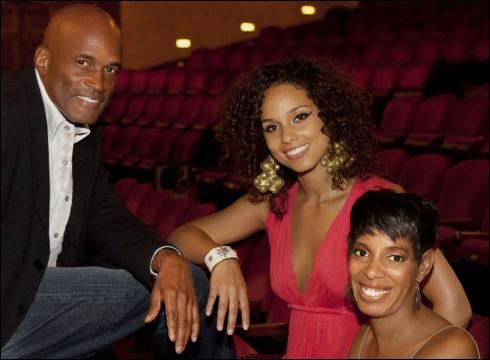
This Thanksgiving, Leon will have two plays on the Great White Way.  Stick Fly began previews November 18, and has a scheduled opening date for December 8.  Written by Lydia R. Diamond and produced by Alycia Keys, the play stars Ruben Santiago-Hudson, Tracie Thoms, Mekhi Phifer, Dule Hill, Rosie Benton and Condola Rashad and is about a family that comes to terms with themselves one weekend on Martha’s Vineyard.  Right after The Mountaintop debuted on Broadway, Leon was hard at work at the Cort Theatre helping to bring this script to life.  “Stick Fly is such a great project because Lydia Diamond is such a great writer,” he says.  She is an intelligent writer and she’s very funny.” 

Leon is widely known as one of the foremost African American directors, with the majority of his acclaim coming from the projects he has done on stage.  And it seems to me that Leon has charted a course that keeps him loyal to the theater, despite the more lucrative mediums of television and film.  “I have a T-shirt that says, ‘Film is art, theatre is life, television is furniture.’ That sort of summarizes it for me,” he affirms.  “I love television and I love film; they all have there ups and downs and pros and cons.  I’m getting ready to do a Lifetime movie for cable and I’m very excited about it.  We’re going to be able to reach a millions of people with that story.  In the theater you’re only able to reach a thousand people per night.  It is the ultimate 3D experience.  You don’t have to put on any funny looking glasses, you can just sit there and you can see Samuel L. Jackson and Angela Bassett or Denzel Washington.  It’s the closest thing to life that we have.”

With all the successes and accolades that Leon has achieved, one thing has eluded him – a Tony win for Best Direction in a Play.  I wondered if not bringing home a Tony still mattered to him.  “It does, but you keep going you know,” he says.  In certain ways, a director is similar to an explorer.  A director is given a map – the script and is told to take it, get a crew together, go off and make a great discovery.  Kenny Leon has allowed his innate sense of understanding the beauty and frailty of human nature to guide him in participating in productions that are great discoveries to theatergoers each night.  In 2012, Leon promises to keep the tradition of surprising himself and his fans going by continuing to work with meaningful projects.  I am sure any project he works with will feature Kenny Leon’s ability to bring the soul out of the work and rejuvenate the soul of the audience in the process.

Photos:  Wire Image and  stickflybroadway.com

Brits Off-Broadway Off To a Smashing Start


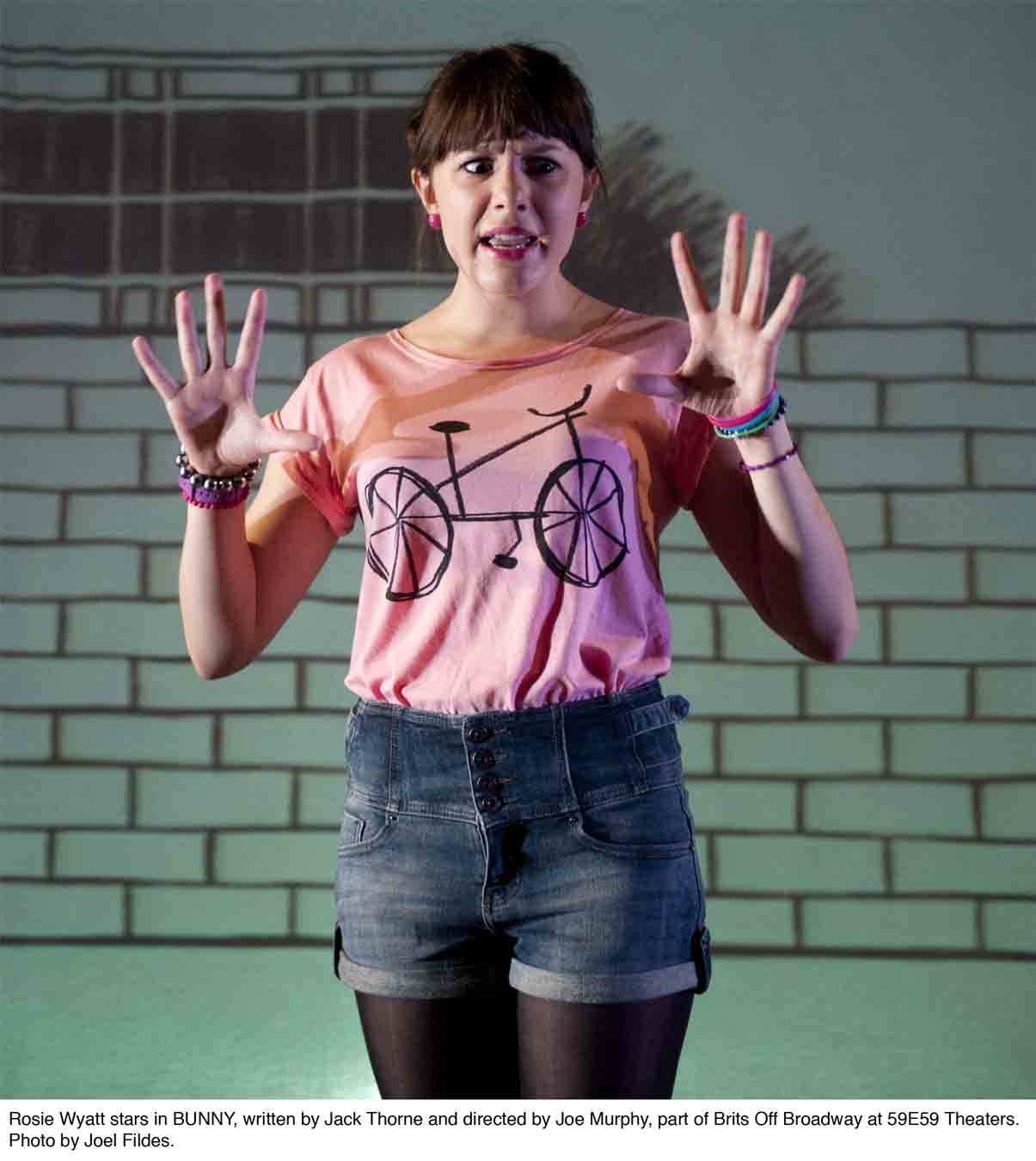
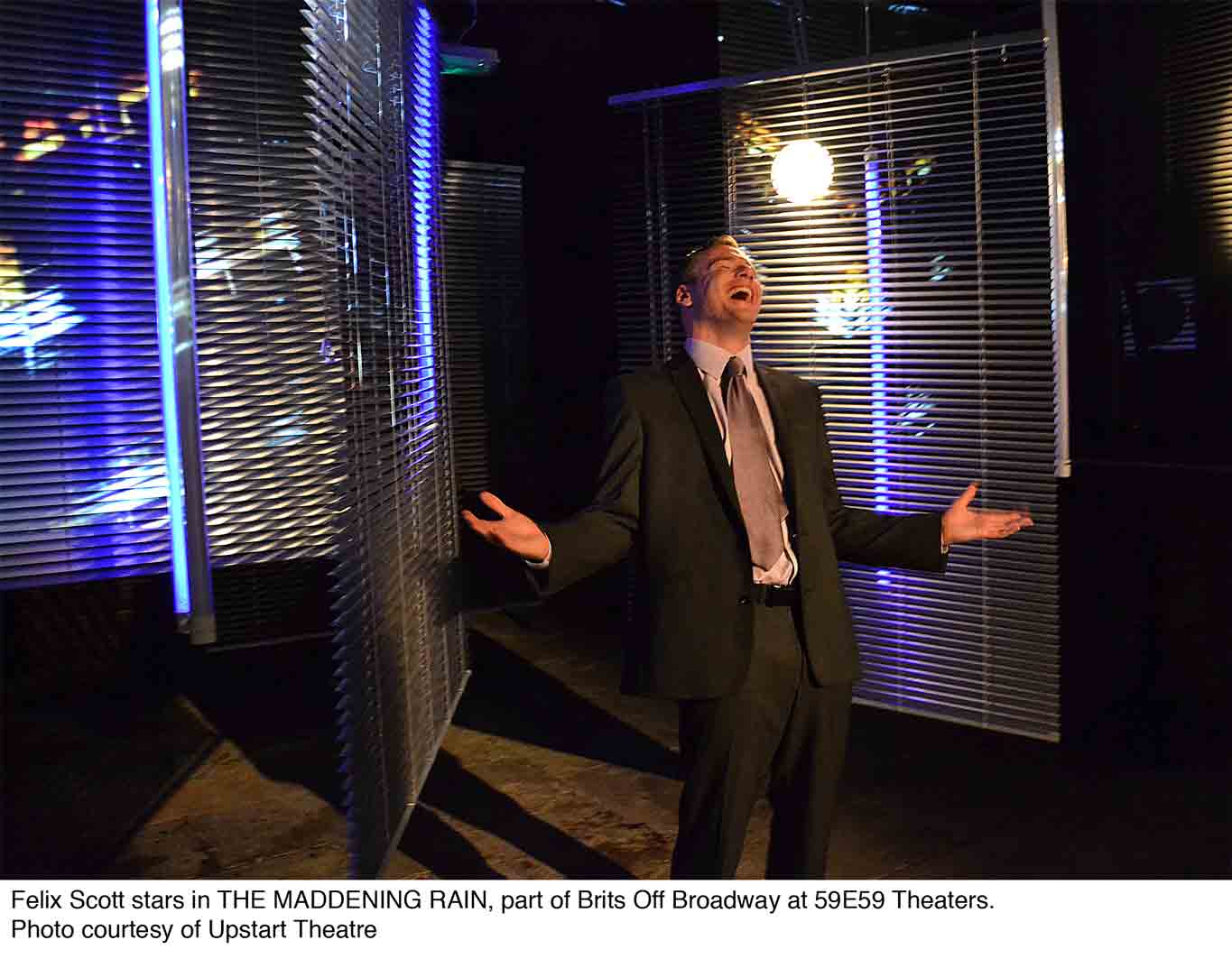
The British are here…the British are here!  And they are residing Off-Broadway.  November kicks off the unofficial beginning of the holiday season, but at the 59E59 Theatres, November is the start of the 2011 Brits Off-Broadway Festival.  From November 1 to January 1, 59E59 Theatres will feature the most innovative productions the UK has to offer.  The festival begins with three titillating solos: Bunny by Jack Thorne and featuring Rosie Wyatt, The Maddening Rain by Nicholas Pierpan and featuring Felix Scott and Shadow Boxing by James Gaddas and featuring Jonny Collis-Scurll.  Each of these expressive narratives can be seen alone or in succession.

Bunny tells the coming of age story of an 18-year-old girl named Katie.  During a blistering afternoon, Katie witnesses her boyfriend get into a fight and comes face to face with racism, the future of her relationship and the truth about her pseudo contumacious way of life.  Bunny is a superbly wicked fusion of The Breakfast Club and Rebel Without a Cause and includes all the oversized angst of being a teen in the 21st century.  And it is only natural that it would considering Jack Thorne, the writer behind the BBC series Skins, was the mastermind behind this potent monologue.  Rosie Wyatt lends a commanding voice to Gen Y that can be understood no matter which continent you reside from.  She has Natalie Wood looks and Jimmy Dean swagger.  Although there are some areas where Katie tends to ramble, the dissonance works with the theme of disaffected youth.   

 There is a line in The Talking Heads classic “Once In a Lifetime” that says, “You may find yourself in a beautiful house, with a beautiful wife.  You may ask yourself, “Well, how did I get here?”  It is almost guaranteed that most adults ask will ask that question once in a lifetime.  It is similar to going to bed and waking up on a foreign shore.  The life you dreamed of, or even sometimes did not dream of, never materializes and you are living an existence that you did not sign up for, yet are mechanically doing anyway.  The Maddening Rain explores the journey of a man without a plan that ends questioning the life he carved out for himself.  The protagonist, simply called “The Man,” takes the audience on a diatribe about love and finance and the consequences of losing both during the height of the global economic crisis.   Poignant, zany and very well written, The Maddening Rain is a must see for any thirtysomething individual going through an existential crisis. 

James Gaddas’ Shadow Boxing has been billed as, “An emotionally intense and highly physical performance.”  This 60-minute pulsating, pounding drama has received rave reviews from Backstage and www.womanaroundtown.com.

If these three solos are just a sample of what is to come, then I cannot wait to view the rest of the festival.  The east side should be in for some bloody good theater.

To view the current and upcoming schedule for 59E59 Theatres, click http://59e59.org/.

Photos:  Joel Fildes and Upstart Theatre

A Celebration of Chinglish

Life is filled with episodes of hilarious miscommunication, none of which are more comical than those that occur in the boardroom and bedroom.  Unfortunately when these real life scenarios transpire, the people involved do not have the brilliance of playwright David Henry Hwang to create side-splitting prose and provide subtitles for what is actually going on.  Fortunately for theatergoers, Hwang did exactly that with Chinglish – the best comedy to hit Broadway in an extremely long time. 

Chinglish explores the idea of being lost in translation through the eyes of businessman Daniel Cavanaugh, a ne’er do well entrepreneur running his family’s flailing signage company (and did I mentioned he worked for Enron).  He travels to a modest province in China with the hopes of acquiring a few contracts that would significantly revive his business and life.  But he soon learns that it is not only the language of Chinglish that is convoluted.  Chinglish commonly refers to mash-up of spoken and written English language that is interpreted from Chinese, often times very badly.  It is best exemplified in signs that grossly misconstrue Chinese symbols with English transcription.  During the course of his stay, Daniel realizes that like Chinglish, one thing often times means something else when it comes to navigating business and love in China.  But alls well that ends well, through a series of missteps Daniel learns about himself as well as how to maintain relationships, both professionally and personally.
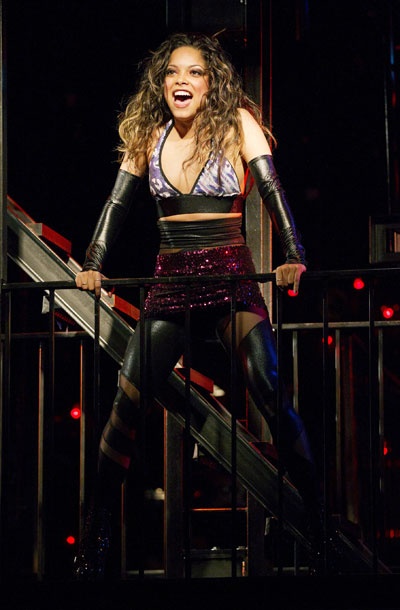
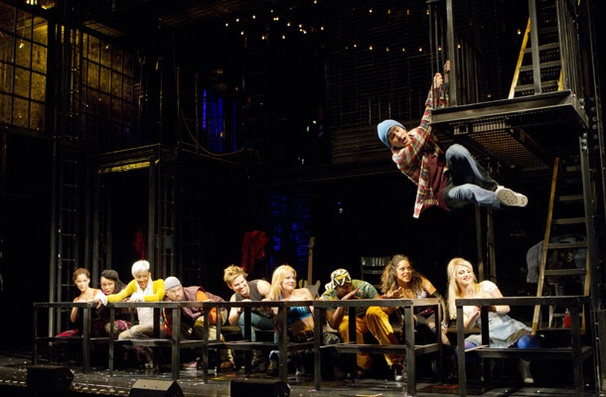
Daniel’s initial journey in China is a comedy of errors, but this play is a comedy of triumphs!  Chinglish is spectacular – it is innovative, proactive, sophisticated and extremely entertaining.  The set design is as titillating as the play itself.  Reminiscent of a Rubik’s Cube, the set is an ever-changing moving background, constantly folding out of itself, creating awesome synchronicity with the events happening on stage.  The actors, the majority of whom are making their debut on the Great White Way, have the serendipitous fortune of using the wonderful script of David Hwang as a vehicle to introduce themselves to a Broadway stage.   Gary Wilmes, who plays Daniel Cavanaugh, excels at displaying American arrogance and naiveté when dealing with individuals from different cultures.  Jennifer Lim, who plays Xi Yan, is captivating; even when she is speaking in Chinese the audience will have a hard time looking away.  The most riotous lines are delivered by Stephen Pucci and Larry Lei Zhang who portray Peter Timms, the British teacher trying to pass as a consultant, and Minister Cai Guoliang, the quirky politician who is in charge of approving Cavanaugh’s proposal.

Although Chinglish is about miscommunication, it is right on time.   This play is primed for this millennium.  It transcends the themes explored on stage and becomes a microcosm for the current state of affairs between the US and China – two entities desperately trying to figure the other out, each step toward each other taken with great trepidation.  When discussing her initial reaction to the concept of Chinglish, director Leigh Silverman states, “It sounded like the most relevant, important play.”  David Henry Hwang describes the system of Chinglish to be a phenomenon; well I say Chinglish the play is a phenomenon also.  During a recent blogger meet and greet with Silverman and Hwang courtesy of Broadway’s Best Shows, Hwang admits, “The first time we had it read it was a lot of laughter and I realized that I written a comedy.”  And through laughter, the audience discovers that human nature is the same, no matter which continent one hails from.   Do not “Slip down and fall carefully,” do not gamble on missing this show, run to the Longacre Theatre and get tickets for this play.  Chinglish is a winner.  I smell another Tony win on the horizon for David Hwang.


Photos: Michael McCabe

Video courtesy of Broadway’s Best Shows

Downtown Theatre Goes Uptown With MANGELLA

Facebook profile updates…Twitter wars…LinkedIn networking…Skype avatars; all evidence of how the virtual world has integrated itself into the so-called “real world” to a degree that it is practically impossible to disconnect from it.  Such is the case for Ned, the protagonist for MANGELLA, a hilarious, touching multimedia production presented by Project:   Theater.

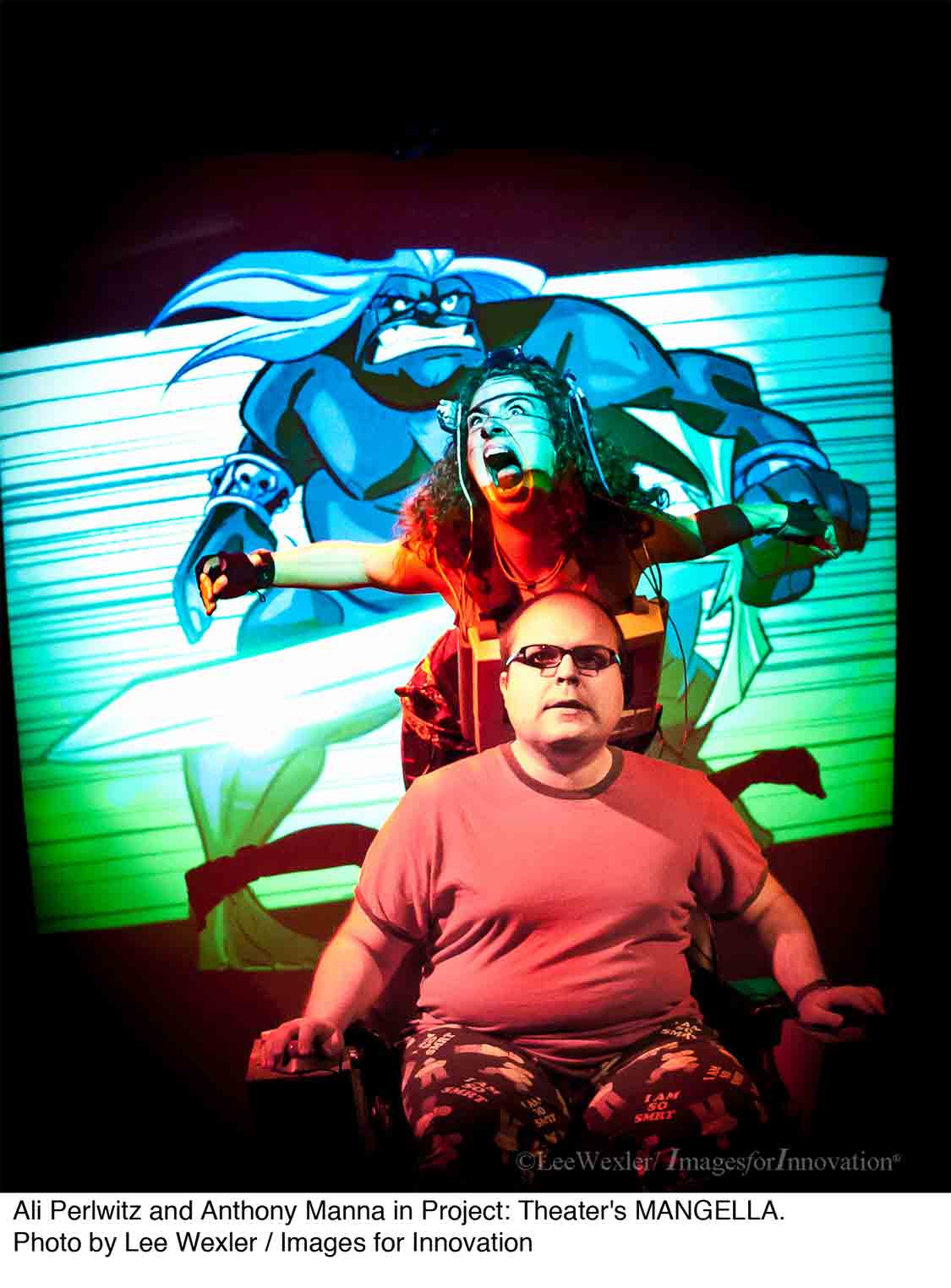
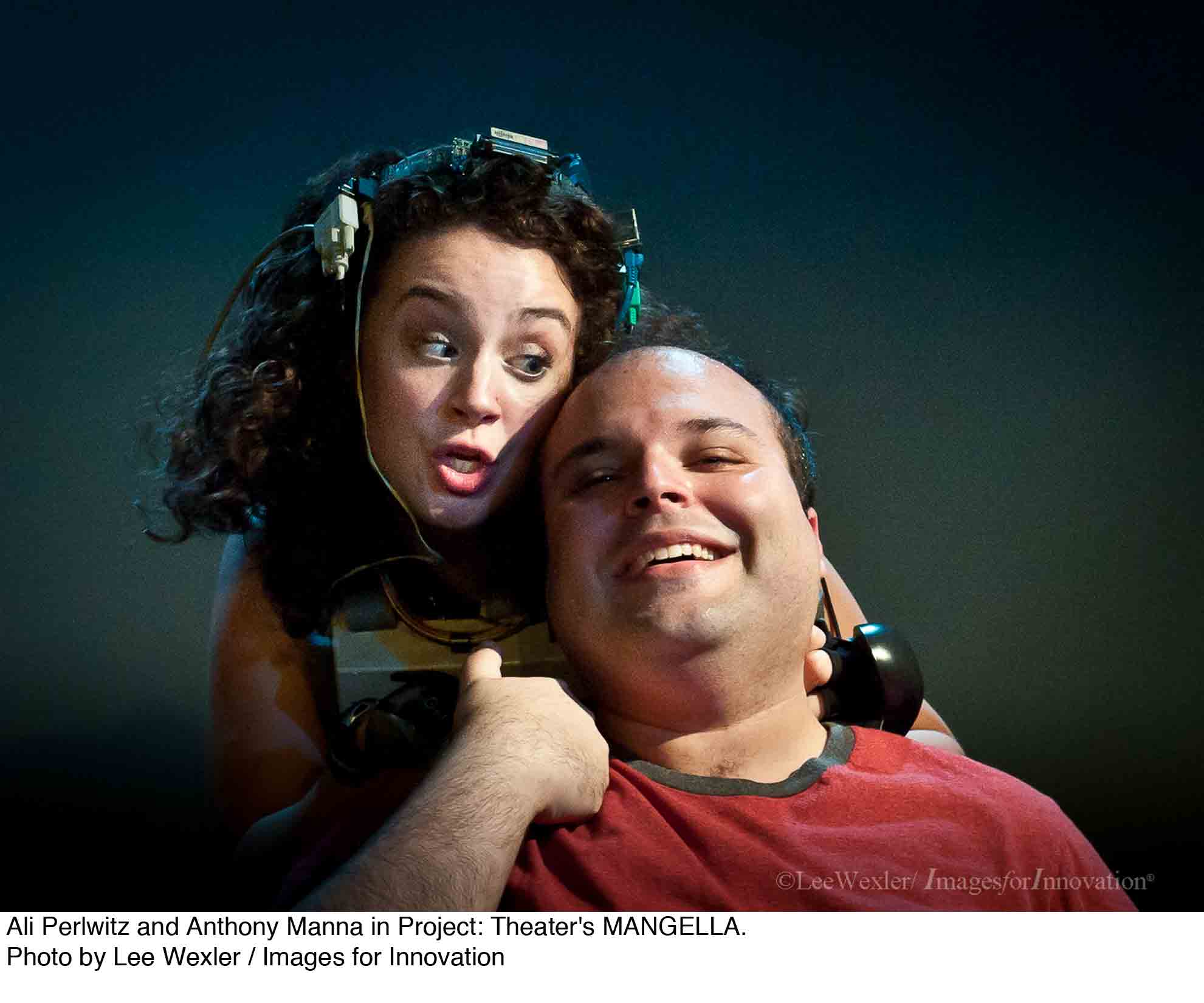
Ned is the scourge of the cyber world – a hacker terrorizing Asian gambling sites.  He and the love of his life Gabriella, his computer that acts more like a possessive girlfriend than a mainframe, spend their day extorting money through solicited network attacks, social networking, watching porn and playing an antiquated PC game.  Ned’s hacking pays for his isolated lifestyle as well as the drugs he uses on his father in an unorthodox treatment to try to evoke memories from his dementia-riddled brain, which is the result of multiple strokes.  But Ned’s father refuses to believe that his is anyone other than Mangella St. James a fictional black blues legend.  Ned’s cruel to be kind treatment of his father borders on insane – his father is the only living link left to his deceased mother whom he adored.  He straps his father down to a wheelchair with duct tape and forces him to watch old movies.   But one Flag Day, Ned has a surprise for his father and she is much more than either of them bargained for.

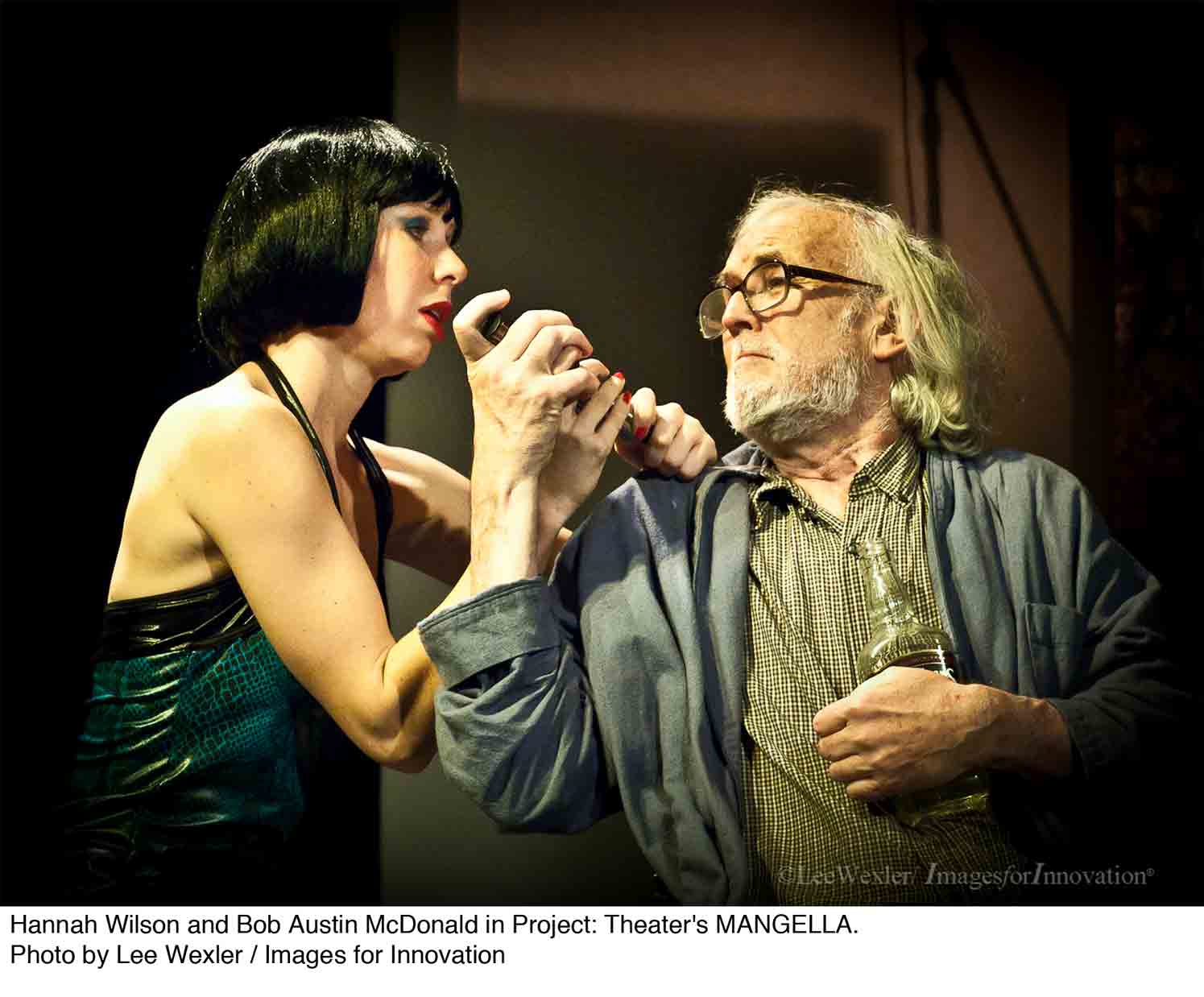
Lily, the hooker that shows up at Ned’s door to service his father, brings with her an air of mystery  that turns Ned’s whole world upside down. Like a glitch in the Matrix, she reveals to him that not everything is what it seems.  She allows him the opportunity for change – to start anew, but her tactics destroys Ned’s virtual existence, which yields tragic results for everyone.

Cheeky…thought-provoking…stylish, Ken Ferrigni penned a script that is ripe for the madness that is pop culture in the 21st century.  Director Joe Jung and scenic designers J.J. Bernard and did a masterful job bringing Ned’s reality to life.  The cast is equally entertaining.  Anthony Manna, who plays the role of Ned, is the epitome of a cyber geek, yet in his coldness, his yearning for love is palpable and heartbreaking.  Bob Austin McDonald portrayl of blues great Mangella is a real humdinger.  Ali Perlwitz is amazing as Gabriella and like Lily, Hannah Wilson stings. In fact, stole my interest from the very start. 

MANGELLA  is playing at the Drilling Company, located at 236 West 78th Street, for a limited engagement which has been extended to October 29.  I am used to going downtown to witness theatre such as MANGELLA, but I would gladly ride the one train uptown to see awesome experimental theatre like this.  If you’re looking for something deliciously macabre to watch this Halloween, I recommend MANGELLA.  It is Stephen King and Quentin Tarantino rolled into one.  You will not leave disappointed.

Photos:  Lee Wexler/ Images for Innovation

The Mountaintop, MLK Comes To Broadway

“And then I got to Memphis. And some began to say the threats, or talk about the threats that were out. What would happen to me from some of our sick white brothers? Well, I don’t know what will happen now. We’ve got some difficult days ahead. But it doesn’t really matter with me now. Because I’ve been to the mountaintop. I don’t mind. Like anybody, I would like to live a long life; longevity has its place. But I’m not concerned about that now. I just want to do God’s will. And He’s allowed me to go up to the mountain. And I’ve looked over. And I’ve seen the Promised Land. I may not get there with you. But I want you to know tonight, that we, as a people, will get to the Promised Land. So I’m happy, tonight. I’m not worried about anything. I’m not fearing any man. Mine eyes have seen the glory of the coming of the Lord.” – The fatidic final words of Martin Luther King’s “I’ve Been to the Mountaintop” speech given April 3, 1968, at the Mason Temple, headquarters of the Church of God in Christ, in Memphis, Tennessee.   After his riveting oration, Dr. King went back to the Lorraine Motel where he remained through the night.  The next day the Nobel Peace Prize-winning civil rights leader was assassinated as he stood on the balcony of the motel.  These are the facts, but the events that transpired in room 306, often referred to as “the King-Abernathy Suite,” following King’s last speech has been the subject of debate.   Forty-three years after the assassination of Dr. Martin Luther King and on the eve of the official dedication of The Martin Luther King Jr. Memorial in Washington D.C., Broadway revisits King’s assassination in The Mountaintop.

The Mountaintop is the opus of playwright Katori Hall and takes a poetic look at crowning hours of King’s life before he made the transition from civil rights leader to martyr.  The production premiered in London in 2009, first playing at Theatre503 then transferring to Trafalgar Studios and featured British actors David Harewood and Lorraine Burroughs in the lead roles.  The play received positive reviews, won the Olivier Best New Play Award and was nominated for Whatsonstage Awards and Most Promising Playwright in the Evening Standard Awards.  The Mountaintop has crossed overseas.  It made its official Broadway debut at the Bernard B. Jacobs Theatre, located at 242 West 45th Street, on October 13 and stars Hollywood luminaries Samuel L. Jackson and Angela Bassett.

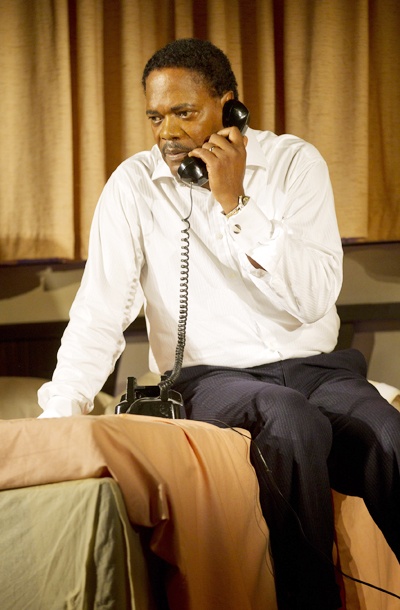
With an emotional score composed by Grammy Award-winning jazz maestro Branford Marsalis, The Mountaintop is set entirely in room 306 of the Lorraine Motel on the evening of April 3, 1968 and opens with Dr. King (Samuel L. Jackson) returning to his room, escaping from a serious storm howling outside.  As he settles in, waiting for Reverend Ralph Abernathy to return with a pack of Pall Mall cigarettes, he calls his wife, whom he calls Corrie, toils over a speech he intends to recite and orders a cup of coffee.  At his door arrives Camae (Bassett), a seemingly star-struck motel maid with his java.  What follows is a blistering, vivid, tender tête-à-tête that reveals Dr. King’s insecurities, mortality and his desires for the world.

Playwright Katori Hall manufactured a gem of a script, in my opinion is it is nearly flawless. She chips away at the mammoth, mythic figure that Dr. King was in life and in death and exposes him as a man with myriad emotions and frailties.  So many times we place figures like the late Dr. King on a pedestal and transform, without their consent, into demigods.  We dismiss humanistic qualities and dare anyone to paint a picture that is less than perfect. Really, who would have the audacity to depict Martin Luther King Jr. as a man that takes whiskey in his coffee, chain smokes Pall Malls, uses the N-word, engages in pillow fights, is riddled with fear and has smelly feet to boot.  Katori Hall had the balls to do it and did so in exquisite fashion by adding the necessary tints that changed the portrait of Dr. King from a supernatural civil rights hero into a man with the extraordinary ability to rise above his foibles to fulfill his destiny.  Impresario Kenny Leon hot streak on Broadway continues.  His ability to sniff out projects that are rich with complex characters coupled with the touches of genius he brings to an already beautifully crafted story should garner him another Tony nomination.  He is steadily showing himself to be one of the best directors on Broadway.

The two person cast of Samuel L. Jackson and Angela Bassett is sublime.  In fact, Jackson could not have picked a better role in which to make his Broadway debut.  There is no doubt that Samuel Jackson is one of the best character actors in the business.  He possesses the knack to morph himself into a government agent, Jedi knight and crackhead and do so with the ability to bring forth the humanity in the character, uncovering their hidden truths and making them relatable to the audience.  There was no man better suited to show Martin Luther King the man than Samuel L. Jackson.  He utilized all of his ability in his portrayl of MLK and his depiction is no less than glorious.  Angela Bassett does not need house lights; her star power can illuminate the Bernard B. Jacobs Theatre all on its own.  Her portrayl of the drinking, cussing, fascinating Camae scorches the stage – she is The Mountaintop.  Bassett is a force whose presence can only truly be experienced watching her on stage.  If you thought she was something in a movie theater, wait until you see her live.  Together she and Jackson conjure magnetic energy that surges through the audience, captivating them from the rise of the curtain to its fall. 

The Mountaintop is a phenomenal addition to the late Dr. Martin Luther King’s legacy.  It has tremendous heart and the heart and soul of each person involved in the play is evident in this production.  Perhaps, the best testament to The Mountaintop’s ability to capture the spirit of Dr. King was evident in the audience filled with people of different hues and age groups.  I attend Broadway shows very often and by far this was most diverse audience I have witnessed this season.  Looking at the audience made me recognize that although we still have a ways to go before Dr. King’s dream is truly realized, we are closer to the Promised Land than we have ever been and if each of us absorbs the production’s true message, we will not have far to go.

Photos: Joan Marcus and Bruce Glikas

Mary Poppins 2.0, Practically Perfect

Besides the cavalcade of characters that sprang from the world of Disney, Walt Disney was a virtuoso at adapting popular children’s stories into theatrical extravaganzas that were amalgamations of color, sound and joy.  Mary Poppins was no exception.  Based on the book series created by P.L. Travers, the 1964 film was written by Bill Walsh and Don DaGradi, with songs courtesy of the Sherman Brothers.  Shot on a set in California, Disney’s Mary Poppins was based primarily on the first book, starred Julie Andrews and Dick Van Dyke, combined animation and live action, churned out some of Disney’s most popular tunes and won five Oscars.  Although under the strict supervision of Travers, Disney also managed to transform the character of Mary Poppins from a no-nonsense, frigid au pair into a beautiful, cheery governess, as well as delete two of the four Banks children, change the setting from the 30s to the Edwardian era and cajole suggestions that Bert and Mary could have been more than friends. 

Along with creating indelible imprints on American and pop culture, Disney has also found tremendous success adapting their films into stage productions.  Once again, Mary Poppins was no exception and like its box office predecessor, the musical also received an overhaul.  Although Disney wanted to procure the stage rights, they were unsuccessful.  In 1993, theater producer Cameron Macintosh acquired the stage rights and in 2001, he and Thomas Schumacher, the head of Walt Disney Theatrical, began talks on a possible collaboration, which ensured songs from the Disney film could be used. With both sides in accord, a preliminary outline of the show was written in 2002. The stage production of Mary Poppins included aspects of the film and the book series with the book written by Julian Fellowes.   The music and lyrics of the Sherman Brothers received an additional boost from composer George Stiles and lyricist Anthony Drewe, giving the musical a more modern feel with the music helping to move the narrative along.  Also the lively, magical caregiver was brought back to her London roots.  The West End production premiered in December 2004 and garnered two Olivier Awards before floating overseas, opening at the New Amsterdam Theatre on Broadway in November 2006.  Almost five years later, and the carpetbag totting supernanny and the music she inspired are still enchanting men, women and children on Broadway and all over the world with various tours.

I had not seen the film version of Mary Poppins since I was a teenager, but as with most Disney movies, the Supercalifragilisticexpialidocious classic left a huge impression, becoming part of my adolescent experience as well as turning me into a life-long fan of Julie Andrews and Dick Van Dyke.  Although it had been decades since I saw the film, I remembered it enough to realize that the stage version of Mary Poppins had received an upgrade.  It was not a complete skin-pulling facelift; instead the musical had more like a treatment of Botox – a few subtle injections that change the aesthetic of the musical for the better.  By integrating additional books from the series, the plot had a plenteous storyline making it more engaging than its film predecessor.  Staple numbers like “Jolly Holiday,” “Chim Chim Cher-ee,” “A Spoonful of Sugar,” Let’s Go Fly a Kite,” “Feed the Birds,” “Step in Time” and “Supercalifragilisticexpialidocious” are performed in the musical and are cleverly interwoven throughout the course of the upgraded production.  For instance, “Spoonful of Sugar” is performed after the children create a disaster in the kitchen right before their mother is to receive guests for a luncheon, and “Supercalifragilisticexpialidocious” integrates a lesson about the importance of words.  Songs like “Brimstone and Treacle,” “Playing the Game” and “Anything Can Happen” were wonderful complements to the existing Sherman Brothers tunes, even better suited than the original compositions of the film that were removed.

But of course the ultimate test of whether or not Mary Poppins could stand up to the film was the casting of Bert and Mary.  One of the roles Julie Andrews is most famous for is the role of Mary Poppins and Dick Van Dyke made being a lowly chimneysweep seem as cool as a barrister.  The actors attempting to fill these roles on stage had a tremendous shadow following them knowing their faces would replace the image set by these two iconic television, film and stage legends.  Laura Michelle Kelly and Gavin Lee originated the roles of Mary and Bert on the West End, and subsequently played the roles on Broadway, both leaving and returning back to the show.  Mary and Bert are the heart and soul of the show; I believe the show’s long running success, surpassing Pippin to become the 30th longest running show in Broadway history, is a testament to the awesome performances of these actors.  They carry the heaviest burden and they do so with the ease of Atlas.  Gavin Lee is marvelous as Bert.  He almost made we want to say, “Dick Van Who?”  Actress Catherine Walker played the role of Mary during the evening in which I attended.  Walker’s voice is utterly ravishing.  Indeed the entire cast is a pleasure to watch.  Similar to the film, the choreography is traditional with touches of technology fused in allowing Bert to walk on the ceiling and Mary to glide above the audience.  Although not as dare-devilish or as splashy as some of the choreography on Broadway, Poppins is done with air of class, which is always en vogue and can be enjoyed by young and old alike.   Numbers like “Step in Time” and “Supercalifragilisticexpialidocious” are awesome crowd pleasers that would have anyone rise to their feet to give a standing ovation, and “Feed the Birds” is still my favorite song, bringing water to my eyes each time I hear it.  While I would not recommend any parent bring a little one under the age of six to see this musical (there are a few scenes in the show that may be too scary for them) Mary Poppins and the lessons she shares through song would bring the kid out of anyone.  Cameron Macintosh and Walt Disney Theatrical have most definitely succeeded in adding another winning chapter in the story of Pamela Travers most famous character; even a hard taskmaster like Travers would be pleased. The stage version of Mary Poppins surpasses the film and still draws a full house on Broadway.  It is a heaping tablespoonful of fun – deliciously delightful in everyway.

Photos:  Broadway.com

(Posted photos are of Laura Michelle Kelly in the role of Mary Poppins.)

O’Neil Play Goes Back Down Memory Lane

When reading the manuscript of a play, the reader can discover a world that does not necessarily appear on stage.  Dialogue and most importantly stage directions reveal more about the playwright’s true purpose for writing the play other than applause and a stint on Broadway.  Similar to a poem cleverly hidden within a poem, stage directions add texture and inject supplementary life to the work.

No playwright was as detailed with their stage direction as Eugene O’Neil.  The legendary dramatist made his first mark on Broadway with Beyond the Horizon, but before O’Neil became a Nobel and Pulitzer Prize winning playwright, he was an experimental writer in the downtown theatre district. 

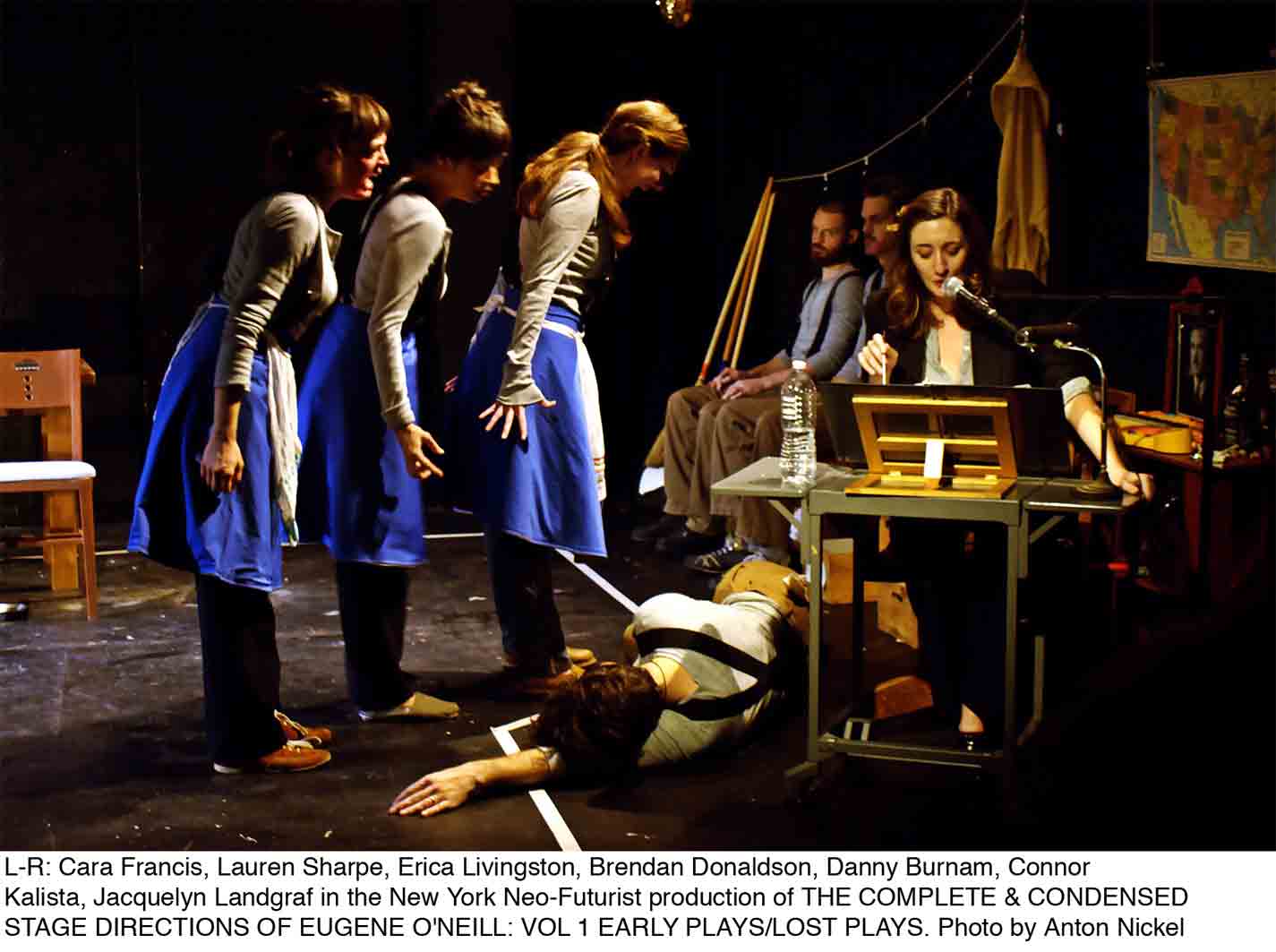
Christopher Loar describes O’Neil as “a failed poet who became a Nobel Prize winning playwright.”  Loar is an ensemble member for New York Neo-Futurists  Known for Too Much Light Makes the Baby Go Blind, a production billed as “an ever-changing attempt to perform 30 Plays in 60 Minutes,” New York Neo-Futurists interject vivacious physicality into live theatre – they are not a theatre group, they are a revolution.  As the director of The Complete and Condensed Stage Directions of Eugene O’Neil: Vol. 1, Early/Lost Plays, Christopher Loar accepted the mission of adapting O’Neil’s punctilious stage directions into a production that could stand on its own, separate from the dialogue, scenery and transformation of the actors into the characters.  The result is an uproarious free-for-all.

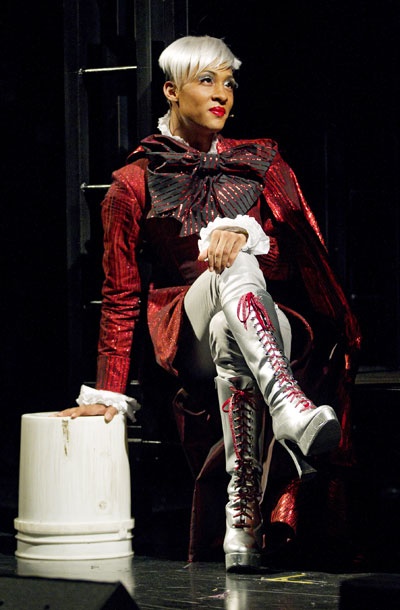
Loar and the ensemble of New Neo-York Futurists deconstruct the instructions of an obsessive control freak and create comedic art.  Following the model of Too Much Light, the troupe stages a physical reenactment of seven of O’Neil’s lesser known works.   As a narrator, played by Jacquelyn Landgraf describes the action, the ensembles mimic O’Neil’s stage directions with gestures that are over-dramatized and abundant with laughs.  There is no way anyone can watch this production and not walk away without having one moment in which they are doubled over in their seats from laughter.  Each of these plays deals with intense emotion and somber subject matter, however after New York Neo-Futurists get done with it, it became a vaudeville skit for the new millennium.  A red pail doubles for a fire in the Arizona desert; actors with shark fins on their heads imitate circling predators, an ensemble member places a puppet dinosaur over her hand and pretends to coo and cry like a baby, actors smear rouge on their face to display changes in emotion, a pig nose masquerades for an oddly shaped feature– all of it absurd and every bit of it comedic gold.

Overall, The Complete and Condensed Stage Directions of Eugene O’Neil is a 60-minute bacchanalia.  It is a brilliant, unique theatre going experience that elevates O’Neil’s work into a new realm all while bringing  America’s greatest playwright back to his beginnings.  If Benny Hill and Monty Python adopted a group of kids, New York Neo-Futurists would be their rainbow tribe.  Hats off to this kooky troupe for developing a new take on a theatre legend.

Photos:  Anton Nickel

A Testimony for RENT

Every Sunday those who are filled with the spirit, regardless of their denomination, attend church.  In the Baptist faith, there is a part of the service called devotion.  During this time, parishioners and visitors stand before the congregation and give their testimony, which generally consists of a narration that details the trials and tribulations that they have gone through and how they have overcome them (usually with  the assistance of god).  I spent season after season of my childhood in church listening to people’s testimonial; none of them were as dynamic as the affirmation I received after watching RENT.

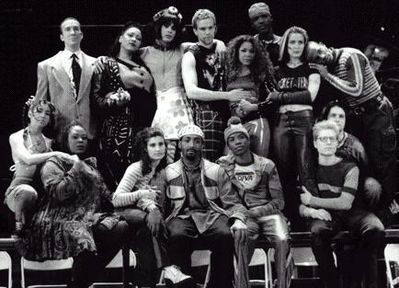
There is no doubt in my mind that Jonathan Larson’s most seminal piece of work was and still is the ultimate testimony of a life lived.  The story behind RENT is beyond legendary.  The fact that Larson died at 35 of an aortic aneurysm the night before its off-Broadway premiere in 1996 is a detail that epitomized the phrase “life imitating art.”  Like the character Angel, who looked after his friends after his death, it seemed as if his spirit departed this earthly plane so that he could be a guide, lifting this production on his shoulders, as he did in life, and ensuring that his labor of love lived on.  A labor, and a testimony in itself, Larson wrote RENT as a tribute to the friends he lost from AIDS.  And how his tribute has grown, becoming an entity of its own, when the rock opera completed its final Broadway performance on September 7, 2008, it had become the ninth longest-running Broadway.  Subsequently, it developed legions of zealous RENTheads, created several incarnations with American and European tours.  It even spawned a school edition (which toned down the language and other elements of the show) and a 2005 movie which featured the majority of the original Broadway cast. 

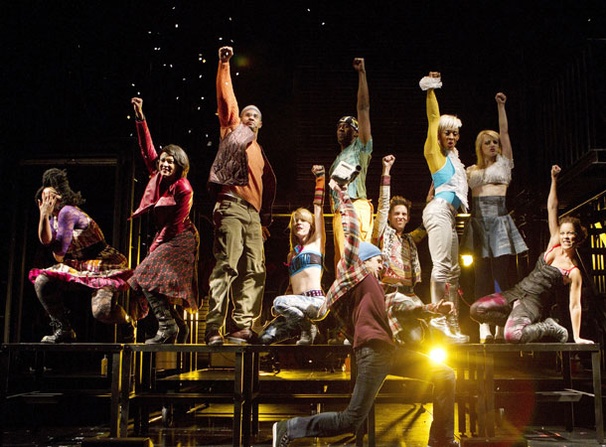
Now RENT has returned back to its Off-Broadway roots – full circle for a production that had been touted as the musical that spoke to Generation X the way Hair spoke to those who grew up in the 60s.  I have always believed there is a time and season for everything.   When RENT made its Broadway debut on April 29, 1996 at Nederlander Theatre, I had no desire to see it, despite the ravings of my colleagues.   I never listened to the soundtrack, nor had I watched one scene from its film adaptation.  Perhaps it was because I was too much of a rebel back in the 90s to believe anyone had my generation pegged.  Perhaps it was because I lost one brother to AIDS in 1988 and another in 1997 and had no desire to return to feelings of despair, hysteria, anger and grief of the AIDS epidemic of the late 80s and early 90s.  Perhaps it just was not my time to see it.  Suffice to say when I took my seat at New World Stages, I was a true RENT-virgin and what a cherry popping!  I sat behind a row of RENTheads who were already singing the songs before the performance started.  But once it did, they were right on queue, from the first “Voicemail” to the last.  Putting the production within the context of when it originally premiered, I understood how RENT was ahead of its time and definitely ushered in a new age of American musicals, laying out a blueprint that productions like American Idiot and Fela used.  What I was not prepared for was the flooding of tears that erupted from my eyes as I stood to give the cast the standing ovation it most definitely deserved.

There is no doubt that RENT is a masterpiece in any incarnation.  After I pulled myself together, I went home and immediately scoured the internet to view the movie and whatever videos I could find of the original cast.  Despite being overtaken with emotion by this powerful theatrical force of nature, the reviewer in me still needed to make comparisons.  Without question the shoes the current cast had to fill were larger than the Grand Canyon.  And they do so in an impressive scale, I did not feel as if I had been cheated by not seeing RENT on Broadway or in the movies.  The spirit of Jonathan Larson is still present and when they lifted there voices to sing every note, they did so with the sincerest passion to live up to the promise of the music and still make the character their own.  They delivered a dose of fabulosity that I will soon not forget.

To wax on about how wonderful RENT is would seem futile and unworthy of what I experienced.  Everyone knows it is phenomenal – a tour de force of the digital age.  Perhaps the best attempt to sum up RENT’s continual relevance on our culture is to give my testimony.  RENT hit me with a direct blow to the heart and as I cried I knew why I never saw this rock opera before.  I am a member of the bohemian class.  The group I belong to is the underground house community of New York City.  Some of us have belonged to this community for decades, others for a few months. Like the protagonists of Larson’s greatest musical production, our struggle has been to find the freedom to be ourselves without judgment from the outside world. Whether it has been The Paradise Garage, Sound Factory Bar, Body & Soul, Shelter or Soulgasm we have given our sweat, blood and spirit to the dance floor, finding our true selves in the bass and treble of the speakers, making connections with people who could only understand us because they were like us.  Now my beloved community seems to remain in an in a state of disrepair.  I have watched fellow members become ill and die.  I have viewed members dismantle precious relationships through petty actions.  I have witnessed New York City attack my culture, deeming it unworthy because we do not want to spend hundreds of dollars for bottle service or pose behind a velvet rope. As I watch cast sing “no day but today,” in the final scene, I realized RENT was created during the height of the New York clubbing experience.  I began to understand how the mistakes of our past are shaping the consequences of today and if Mimi got a second chance, maybe we would get a second chance too. 

RENT is to me what Marvin Gaye’s What’s Going On is to my mom and like that great musical work, will always be relevant.  Sure, some who go to see it may be in their twenties and can fully comprehend the idea of not selling out.  Others may be older and view it with through the reflection of hindsight, recognizing past mistakes and knowing they may have abandoned some principles to pay a mortgage or a child’s school tuition.  While the rest, will just hear the wonderful music and lyrics of Jonathan Larson and just be satisfied with that.  Because in the end, after you strip away all the back stories the greatest testimony of this rock opera is the music and because of it, RENT will never be evicted from the hearts and minds of anyone who sees it. 

Photos:  Joan Marcus