Love in Bloom

On a stage at the Westside Theatre, located at 407 West 43rd Street, the house lights dim and the stage lights brighten, a young girl with a shaggy blonde cut and pink nightie is sprawled unconscious across the bed, the oven door is open and “What the World Needs Now Is Love” is skipping on a record player. If not for the intervention of a geeky Good Samaritan, the young girl would be a goner. Sounds like a scene from Promises, Promises, right? But it is actually the opening scene of the hilarious revival of Cactus Flower. Cactus Flower debuted at the Royal Theatre on December 8, 1965 with Lauren Bacall, Barry Nelson, Brenda Vaccaro and Burt Brinckerhoff completing the original cast. After a close to three year run, the show closed and in 1969, it was adapted into a film starring Ingrid Berman, Walter Matthau and Goldie Hawn. There is no question of the show’s success as Vaccaro and Brinckerhoff were nominated for Tony Awards and Hawn won an Oscar, but the question that lingers for me is was this farce about love written by Abe Burrows or Puck? Cleary Burrows took inspiration from those misguided lovers from Athens and like A Midsummer Night’s Dream this romantic comedy is just as zany and genius as the Shakespeare classic.
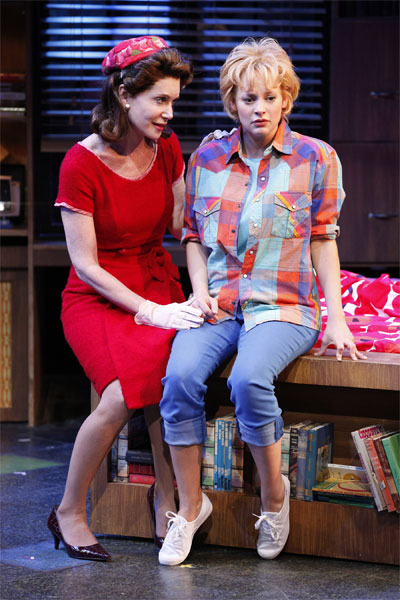 Cactus Flower grows around the love lives, and in a certain case lack thereof, of Dr. Julian Winston, Toni Simmons and Stephanie Dickinson. Julian is a good looking, middle-aged Park Avenue dentist and one hell of a ladies’ man. He claims to love Toni, a bright-eyed hopeless romantic that is in love with Julian despite the fact that he has told her that he is married with three kids. What makes this idyllic young girl love the dentist is his honesty about his ball and chains, but what she doesn’t know is that his wife and kids are figments of his imagination – an embellished cover to protect his liaisons. After Igor, the young, geeky writer next door, saves Toni from certain doom, Julian decides to marry her. But there is a problem, his wife and kids. Toni demands to meet his wife to ensure that she also consents to the divorce. Enter Stephanie, Julian’s old maid secretary. Last time she had a good time Eisenhower probably was in office. Her thorny, abrasive demeanor and efficiency in taking care of Julian mask her love for the good denstist. Julian, after much convincing, enlists Stephanie to help him in his web of lies, and the rollercoaster of laughs start from there. While keeping up his façade, thus keeping Toni in the dark , Julian winds up falling for Stephanie and Toni realizes that Igor is the man for her.
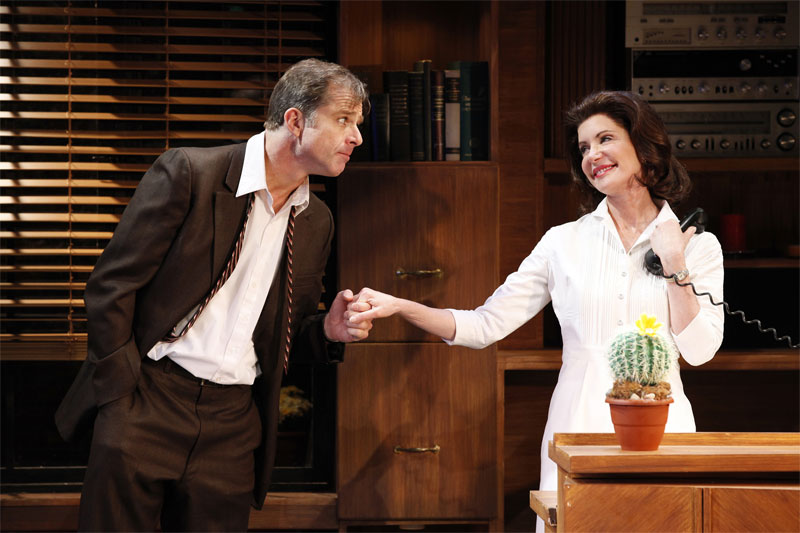 This revival of Cactus Flower tickles the funny bone and blossoms with stellar performances. Maxwell Caulfield may be best known for being Sandy’s cousin in Grease 2 and for his stint on Dynasty and The Colby’s, but as the philandering Dr. Julian, Caulfield is both deceitfully charming and amusing. Jenni Barber as Toni is probably the most delightful scatterbrain I have ever seen. Throughout the play her dizziness can drive you to want to jump on stage and shake until she finally displays a modicum of sense, but her immature quest to find perfection in love is admirable. Barber’s portrayl of the idealistic, young Toni is infectious. The character of Stephanie is the true star of the story. She is the cactus flower, prickly and barren that eventually bursts with femininity and sensuality. Lois Robbins simply flourishes as Stephanie Dickinson. She is witty, venerable at times and funny all the time. Stephanie may be the personification of a cactus flower, but Robbins is no shrinking violet. Her performance is as sweet as a rose. Jeremy Bobb is droll is the Igor Sullivan, the writer from next door. He knows his position and plays it well. The definite scene stealers in this production are John Herrera, Anthony Reimer and Robin Skye. Their portrayals as Señor Arturo Sanchez, Harvey Greenfield and Mrs. Durant are thigh-slapping, laugh-out-loud humorous. Anna Louizos received a Tony nomination for her set designs for In the Heights and High Fidelity. She creates another stunning visual setting to accompany a great cast of actors and direction from Michael Bush. Although the changes throughout the scenes were not seamless, it in no way diminished the authenticity of the show nor pulled the audience out of the fantasy. Cactus Flower’s new run will end at the Westside Theatre on May 29. I assure you, a desert plant has never been so entertaining. Cactus Flower provides a great 60s soundtrack, lively performances and smiles that will keep growing for days.
Photos courtesy of O&M Co.
Pompeii Rises from the Ashes

The Day After Tomorrow, Twister and Volcano are Hollywood’s idea of what a cataclysmic natural disaster would be like. But in August 72 A.D., Mother Nature played out its own story when the cities of Pompeii and Herculaneum were buried alive under ash and pumice from a colossal eruption from Mount Vesuvius. Very few natural catastrophes have ever rivaled the destruction of Pompeii and Herculaneum as an entire existence was obliterated in a 48-hour span.
 Pompeii and Herculaneum was inadvertently unearthed in 1599 and was once again forgotten about until 1738 when Herculaneum was rediscovered by workers digging for the King of Naples’ summer palace. Pompeii was found 10 years later. In 1860, archeologist Giuseppe Fiorelli took charge of the excavations and had the spaces left by the victims of the eruption filled with plaster to create perfect casts of the citizens that were unable to escape. Pompeii and Herculaneum also marked the first major find in the budding discipline of archaeology.
 What made the cities of Pompeii and Herculaneum such an ideal discovery was the cause of its demise. The pumice and ash created a tomb for the municipalities and its occupants. Everything about the Roman towns remained the same as it did when eruption began – lying undisturbed and waiting for human civilization to resurrect it from its petrified state. More than any other find, Pompeii and Herculaneum gave people the opportunity to witness what daily life in the ancient world was like. Now New Yorkers can incorporate this once thriving city and its surrounding town into their daily routine by visiting Pompeii the Exhibit: Life and Death in the Shadow of Vesuvius at Discovery Times Square.
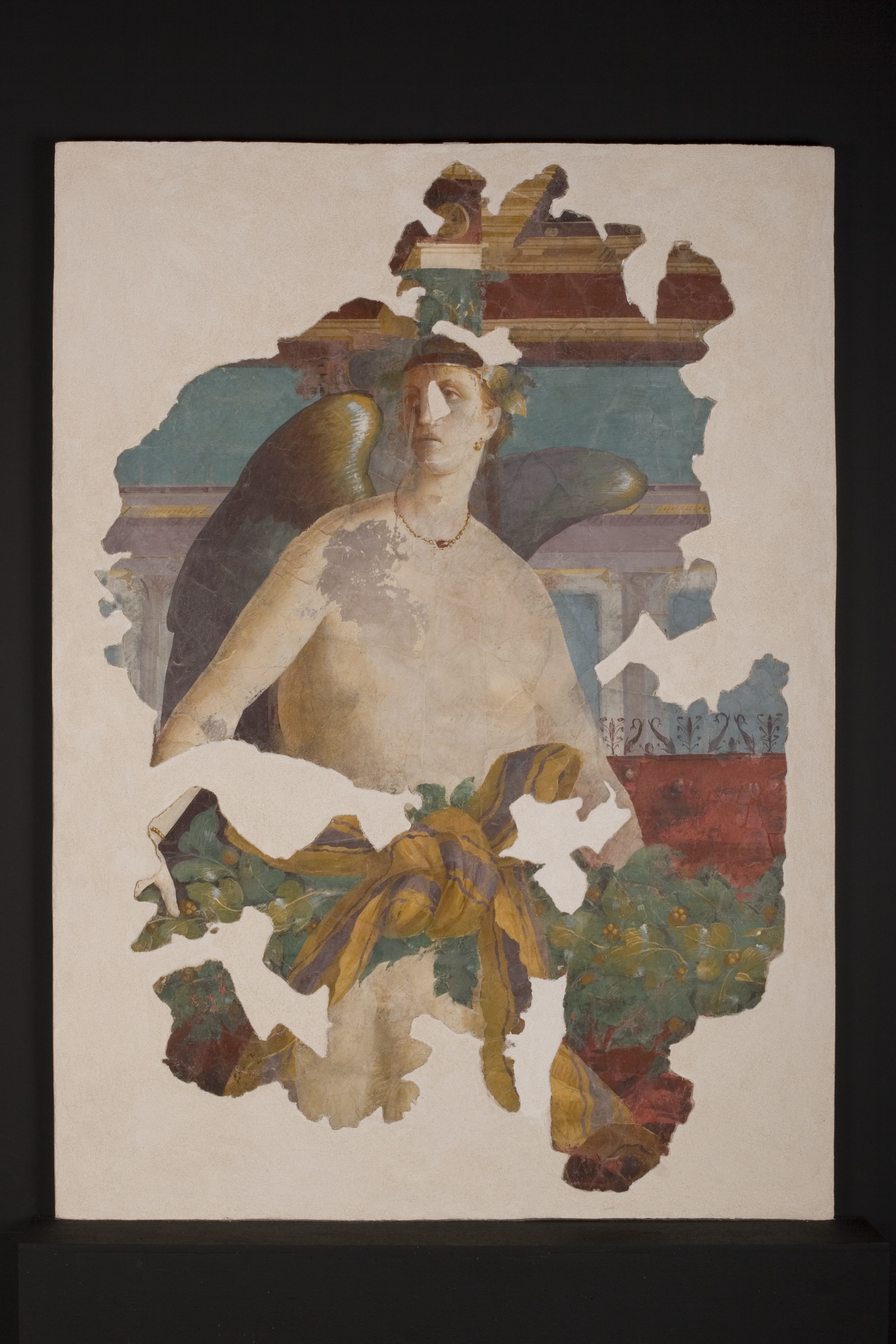
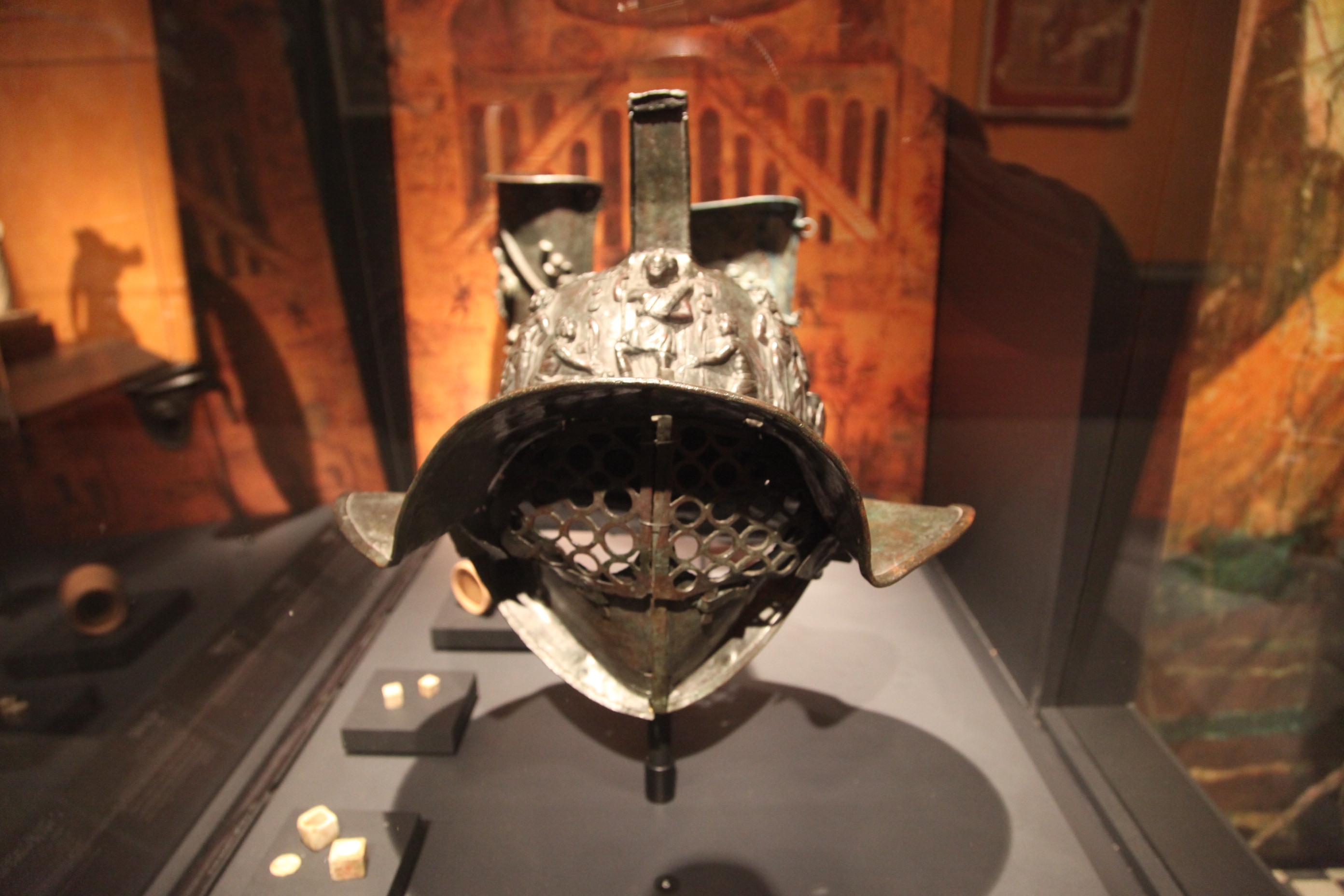 Pompeii the Exhibit is a comprehensive exploration into the commonalities of the human existence – a visual display that reminds of the audience that the song “Everything Old Is New Again” rings undeniably true. Over 250 artifacts are exhibited; we learn about Pompeii’s principle gods and goddesses, which were adopted from Rome, Greece and Egypt as well as view their money system, weights for measurement, a wall of graffiti, jewelry and a recreation of a room in a brothel. Also included were utensils, beans, a loaf of bread and partially restored frescos.
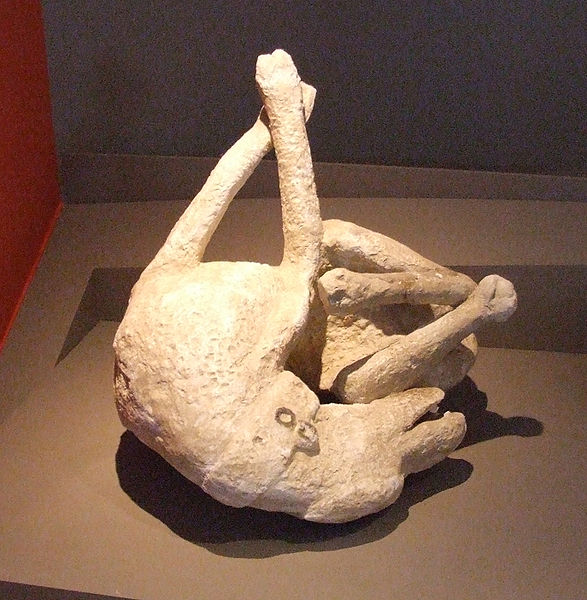 Perhaps the most creepy and bone-chilling aspect of the exhibit was the six-minute video that recreated the extermination of Pompeii and Herculaneum and the body casts and skeletal remains of those who perished. Patrons enter a dark room with a screen. Minute-by-minute the details of the eruption are witnessed as crashing, fiery effects are projected from the speakers and with a cold blast of air, the doors open to reveal the replicas of the citizens that endured the worst horror one’s mind could ever conceive. But what is equally fascinating and daunting was that unlike the rest of the exhibit, reality had been exhumed and presented right before our eyes. In other rooms of Pompeii the Exhibit: viewers could imagine a man entering the brothel room with his chosen lover or the gladiator that wore the helmet and shin guards that protected him in a glorious win. But there was no need to imagine the pain that was wracked in the face of a chained dog as he twisted on his back or the man that covered his face with his tunic to avoid inevitable suffocation. The room was filled with ghosts telling their story.
 Pompeii the Exhibit: Life and Death in the Shadow of Vesuvius will run at Discovery Times Square, located at 226 West 44th Street, until September 5. Like the King Tut exhibit, a portion of the proceeds of the exhibit will go toward the preservation of the Pompeii site. Ticket prices range from $19.50 to $25.00 and the last tickets are sold 90 minutes prior to closing.
Photos: F.A.M.E NYC Editor, MWW Group
American Apothecary’s New Prescription for Fall
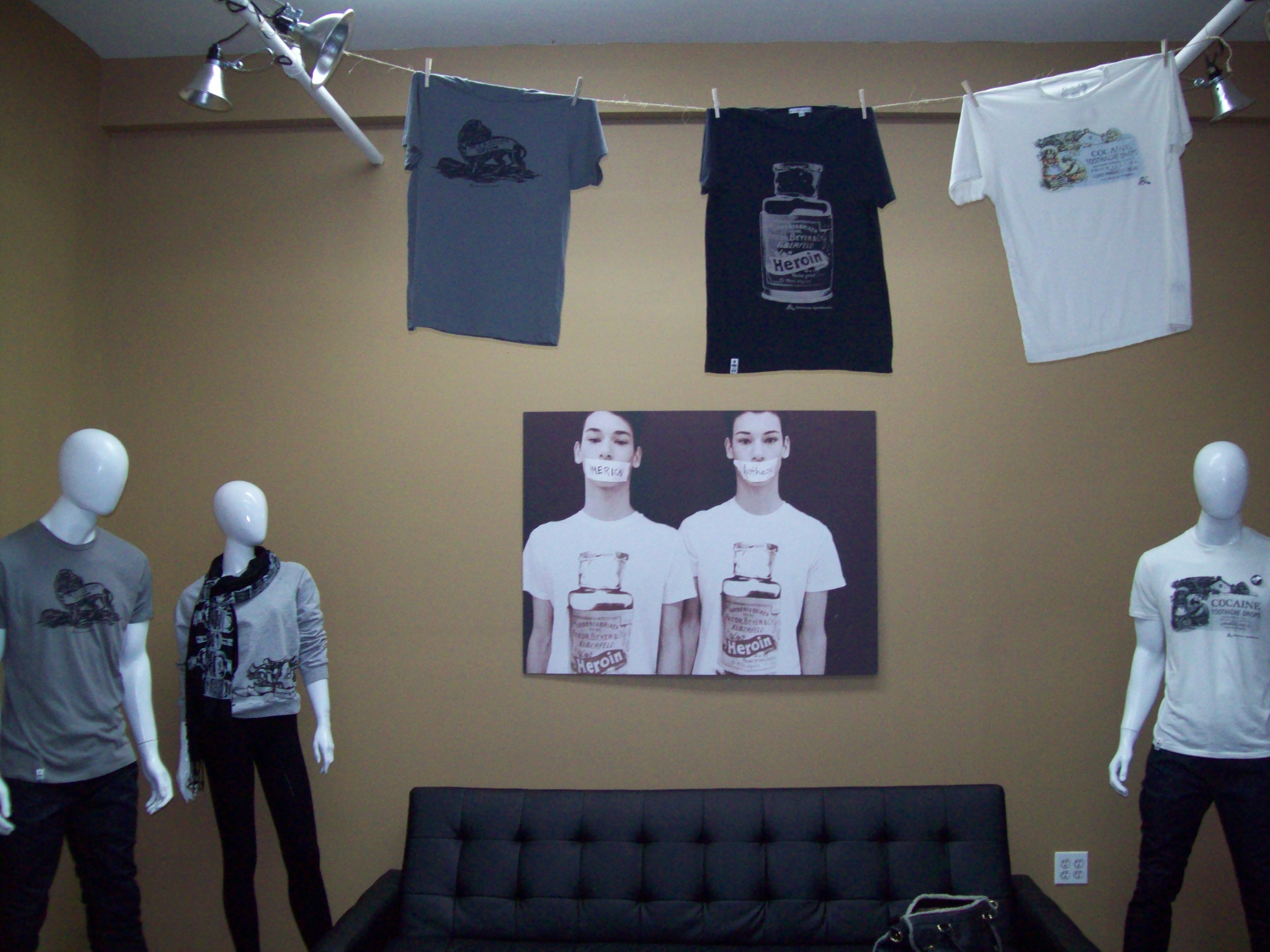
During Fashion Week we get to see a designer’s concept for their collection come to fruition right before our eyes – a one night only performance that will never be replicated again. This year American Apothecary merged the artistry of ballerinas and skate boarders for their Fall 2011 collection, and on Thursday the fashion rebels with a cause invited members of the press to a private preview in their Midtown galipot for a meet and greet with designer Anastasia Fokina.
There is always a welcoming, family atmosphere present when visiting American Apothecary’s showroom. It is more like a cool clubhouse than a space that displays fashion. While sipping on wine and eating an array of delectable cheeses and fruits, members of the press learned American Apothecary’s remedy for autumn is a palette of rich colors which includes, merlot, rust, Dijon, olive, royal blue and aqua. Printed logo scarves and sweatshirts add depth to a line that takes a closer look at how fashion can suit style, consciousness and art to a T.
Photo and slideshow: F.A.M.E NYC Editor
Video Shot the Photographer
Photographer D. Austin has made it his mission to pursue art through his camera lens. In an effort to evolve his craft, he has decided to say goodbye to still photography and is now producing HD videos set to music to showcase his love of imagery. D. Austin is an artisan that is consistently pushing the envelope of art. So without further ado, D. Austin presents Ghost Dance.
Video courtesy of D. Austin Photography
Pop Beats?

Many mourned the departure of Fat Beats when they closed the doors to their Manhattan and LA stores last year. But as a wise man once told me, nothing is ever really gone. The legendary record store is back and in Brooklyn, at least for day. That’s right, those who crave the crackle only vinyl can supply will be ecstatic to know that Fat Beats will begin a monthly pop-up shop in their warehouse, located in the DUMBO section of the borough at 110 Bridge Street, starting on March 5. On hand to bless Fat Beats’ reopening will be some of Brooklyn’s heavy hitters on the ones and twos, DJs Spinna, Evil Dee and Rich Medina. Doors will reopen at noon. If you consider yourself to be a true hip-hop head, mark your calendar for Saturday and pop-up at the pop-up shop.
Photo courtesy of Audible Treats, www.audibletreats.com.
Oscar-Nominated Actor Geoffrey Rush Reprises Madman One Last Time

To write a paragraph, or two, or three about the brilliance of Geoffrey Rush would not be waxing poetic, it would be waxing reality. If this Sunday’s Academy Awards ceremony was the Belmont Stakes, then Rush would be a shoo-in. After all, he has already won an actor’s Triple Crown (an Academy Award, a Tony Award and an Emmy Award) as well as two Golden Globes and three Screen Actors Guild Awards. I first saw the Australian actor and film producer in Shakespeare in Love, but it was not until I saw him playing the Marquis de Sade in Quills that I truly began to appreciate his ability be consumed by a role as well as his talent to portray a crackpot convincingly.
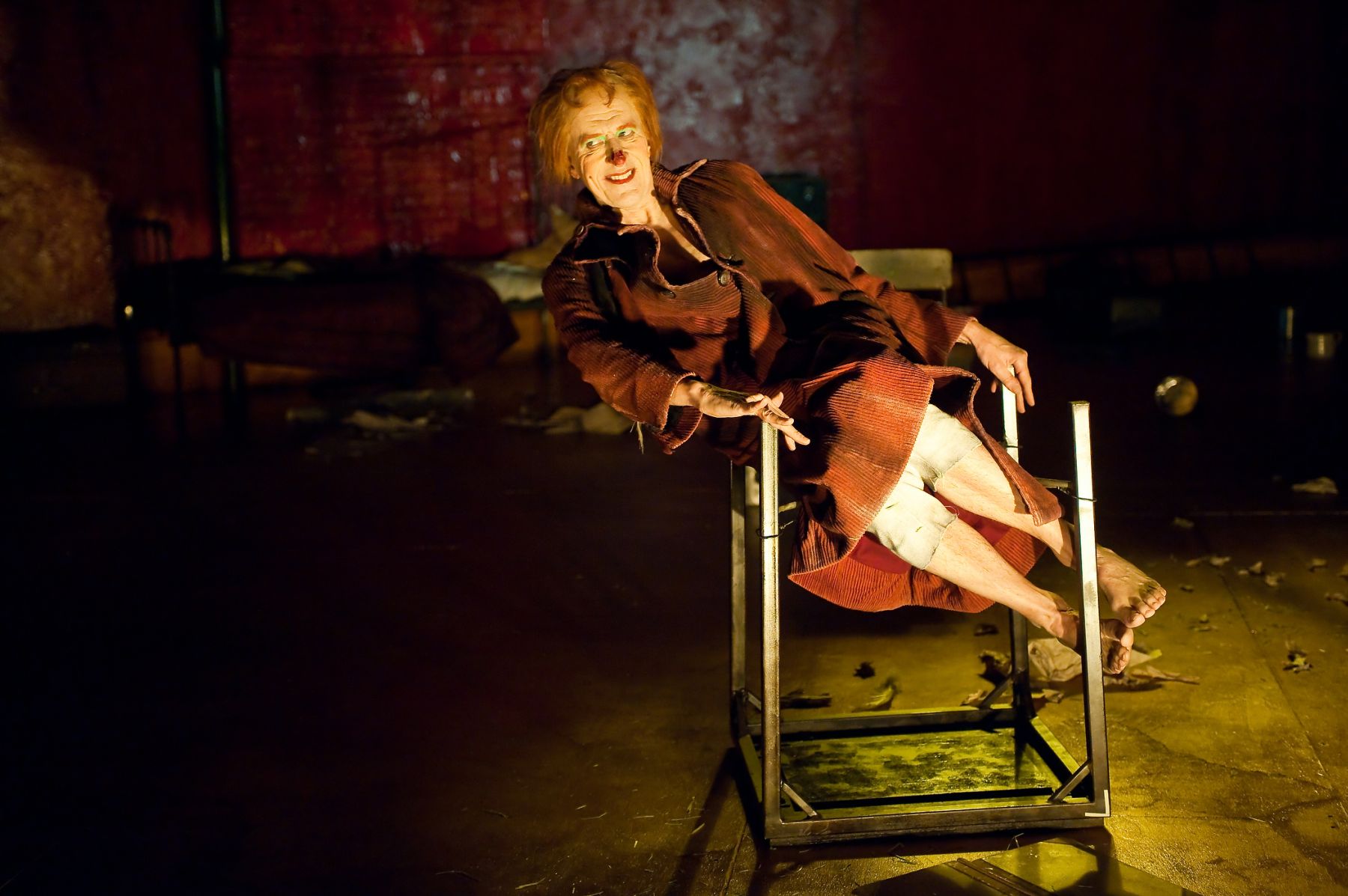 Although much of the media attention surrounding Rush at this time is dedicated to whether or not he will win the Oscar for Best Supporting Actor for The King’s Speech, this award season has been a very demanding one considering he is also starring in BAM’s US premiere of the Belvoir St Theatre’s The Diary of a Madman, directed by Neil Armfield. This is not Rush or Armfield’s first descent into lunacy, both men know Poprischin (the protagonist) quite well. The Belvoir St Theatre is one of the most acclaimed companies in Austrailia. Company co-founder Neil Armfield directed Rush in the initial run of The Diary of a Madman 22 years ago, it seems felicitous that they would echo this classic as Armfield’s swansong as the company’s artistic director. But for me, It seems appropriate that a story concerning quills would once again allow me the opportunity to acknowledge Rush’s genius.
 The Diary of a Madman is based on the 1835 short story by Russian novelist Nikolai Gogol. The story, written in first person format, focuses on Aksentii Poprischin, a low-ranking civil servant and chronicles his digression into delirium. Poprischin loathes his common status and despises the bureaucracy of St. Petersburg and his supervisor Mikhailov in particular. Despite his feelings for his boss, he is completely enamored with Mikhailov’s daughter Sophia. His yearning for her sends his imagination into the stratosphere as he believes he has overheard a conversation between Sophia’s dog Medji and another dog name Fifi. He spies on the two pooches in effort to learn more about Sophia. Eventually he convinces himself that he is to assume the throne of Spain and prepares for his coronation and move to Madrid, which is actually an asylum. Once inside the sanitarium, he believes the torture he receives to be some crude coronation ceremony, then part of the Inquisition. The heart of this tale is about a man who craves to rise above his proletariat status so desperately that his quest to shine drives him loco, a need that anyone who has ever swiped an employee badge can comprehend. David Holman, Neil Armfield and Geoffrey Rush’s adaptation of this story is a satirical masterpiece – dark comedy at its zenith.
 Geoffrey Rush breathes an eccentric life into Poprischin that is nothing short of fabulous. As the Marquis de Sade, Rush was frantic to procure quills so he could author his erotic stories and express himself freely. As a lowly clerk of the 9th grade, Rush is hired to mend quills as part of his “spoke in the wheel” position. But after work, he is at liberty to dip his feather in the inkhorn and allow his lucubrations to manufacture a world where dogs conversed like humans, and his true disdain for the bourgeoisie could flow unbridled, scenes full of romance and royalty where he could prove that he was more than his position in society allowed him to be. Along with a two-piece band that provided whimsical and stark sound effects, Rush entwines comedy and tragedy exquisitely. As he blathers on about his aversion to Mikhailov, being ignored by his landlady and the ignorance of Tuovi, the landlady’s Finnish maid, the audience cannot help but to break out in side-splitting laughter. Another aborning truth that becomes clear is that as Poprischin Rush is the poster boy for “going postal.” Rush brings out the calamity of this character so well that as his shift into madness increases, it becomes harder to make light of his situation. Every chuckle at his delusions is accompanied with uncomfortableness as you acknowledge he is losing his mind. In the final scene, where Poprischin is confined and mistreated in the asylum, the audience receives the literal understanding of laughter through tears. As Rush fails to understand why he, the king, is being treated so harshly the heartstrings of everyone in the theater are pulled to capacity, but in that most dramatic moment, he makes an absurd comment that is meet with sheer amusement. Yael Stone is sensational as Tuovi, the Finnish maid, the apparition of Sophia and Tatiana, the shrieking cell mate of Poprischin after he is committed. She adds another wonderful comedic layer to this play.
 My suggestion is that every New Yorker takes a queue from this incredible actor’s name and rush to go see The Diary of a Madman before it leaves BAM’s Harvey Theater on March 12. It is the Triple Crown of theatre going – engaging story, great acting and lots of emotion. Oscar or no Oscar for The Kings Speech, this production is an oration that you would be crazy to miss.
Photos: Stephanie Berger
Oz Comes This Way Soon
March is the season for gusty winds, sort of like the tornado winds that blew Dorothy from Kansas to the mythical Land of Oz. Fortunately for New Yorkers, Oz has come to us. French Street Artist Ugly-Kid GUMO will be exhibiting THIS IS OZ-NOTHING MAKES SENSE at the Fountain Art Fair, located on Pier 66, from March 3-6.
F.A.M.E NYC first introduced this artist to you back in November. Take a look at the video below to catch a sneak peek of GUMO and the Oz he lives in.
Video courtesy of Marianne Nems, Marianne Nems Gallery New York
Black Swans and Z-Boys: American Apothecary Fall 2011 Runway Show
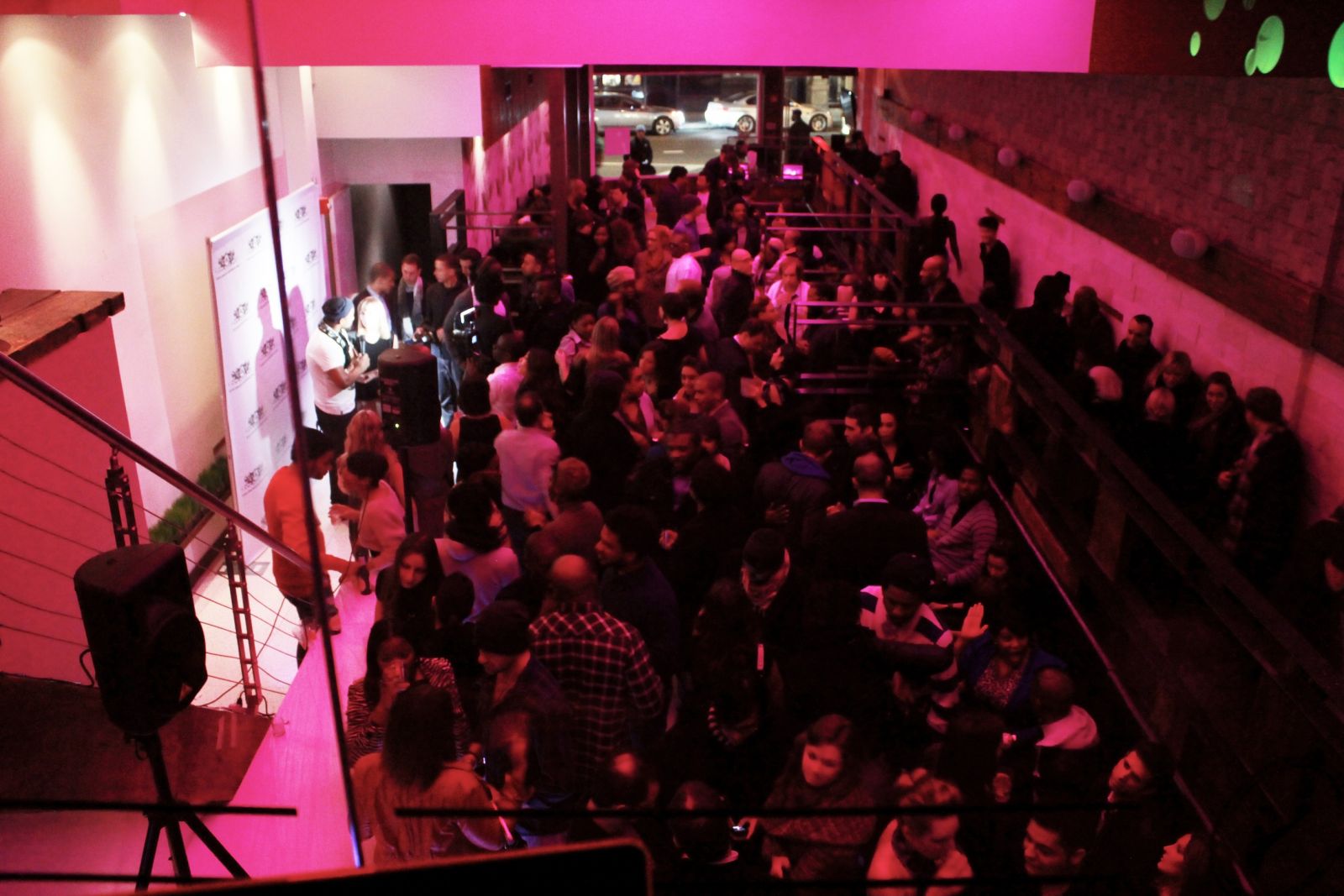
Fashion Week is known for its grand events and on February 16 American Apothecary did not disappoint as they unveiled their Fall 2011 collection during their first runway show at Restaurant i. The avant-garde fashion brand and A-List Entertainment put on one hell of an affair. NYC’s fashionable stood in a line that wrapped around the corner, once inside the crowd vibed out to the DJ’s selections while sipping on cocktails and munching on hors d’ oeuvres.
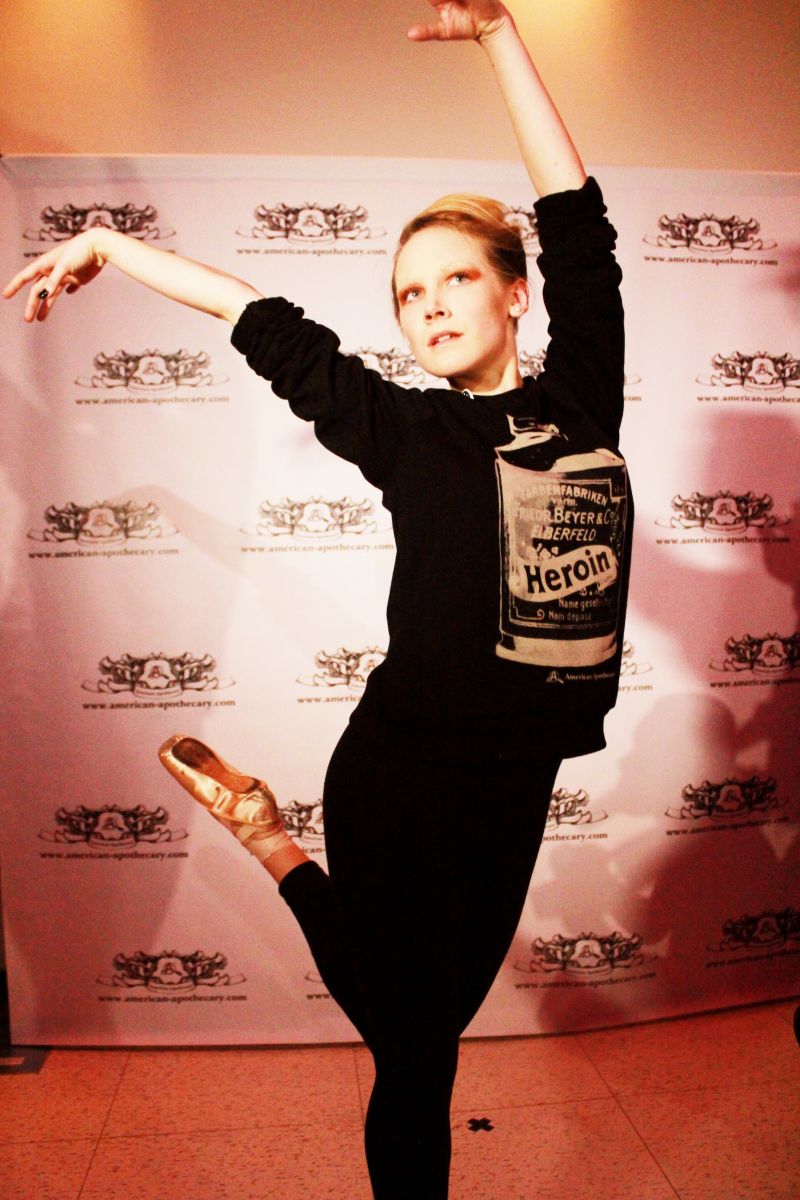 In the legendary Santa Monica neighborhood of Dogtown “the debris meets the sea,” but in the mind of lead designer Anastasia Fokina, “Sweet meets Street.” Ballerinas in toe shoes and skateboard-carrying models strutted down the runway as guests clamored to see the latest creations of a true artisan that knows how to blend fashion and art and spares no detail. Hats and shirts off to American Apothecary for once again pushing the boundaries of fashion!
Photos courtesy of American Apothecary.com
L.A.M.B. Fall 2011
Ralph Lauren Fall 2011
Videos
Galleries

This gallery contains 20 photos.

