The Great White Way Illuminates Bryant Park

Members of Zarkana perform at 106.7 Lite FM’s Broadway in Bryant Park


Having lunch in any one of the many parks in Manhattan is a delight that comes with summer, and on Thursdays in Bryant Park you can have lunch and a show.  Now in its 12th season, 106.7 Lite FM’s Broadway in Bryant Park continues to provide New Yorkers with a glimpse of the nightly magic of Broadway and Off-Broadway’s most popular shows.  The free event runs for a consecutive six week period through July and August, is sponsored by Resorts World Casino New York City and is hosted by a 106.7 Lite FM on-air personality.  

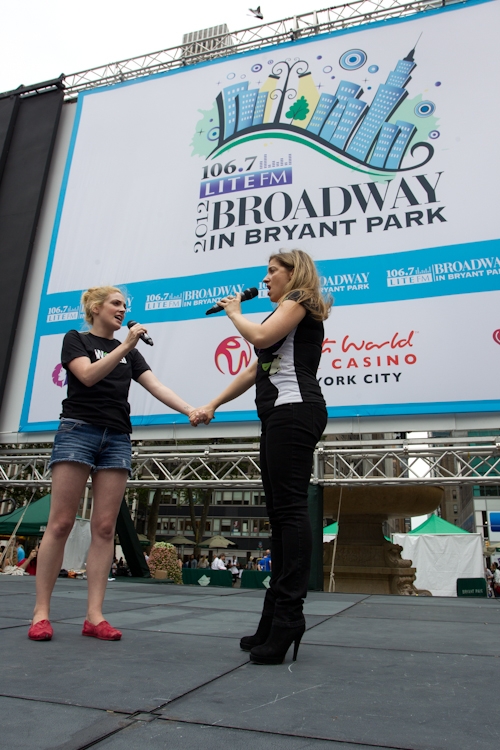
Donna Vivino and Fate Fahrner perform at 106.7 Lite FM’s Broadway in Bryant Park

Yesterday’s show was hosted by Christine Nagy.  The always awe-inspiring performers of Cirque du Soleil’s Zarkana kicked-off the festivities with a synchronized flag and animated feature show.  Donna Vivino and Fate Fahrner gave a wickedly good rendition of “For Good”.  Cast members from MEMPHIS transported the audience back to the golden era of rock and roll with “Music of My Soul”.  The women of Sister Act were fierce as they sang “Fabulous Baby” and the “Unchained Melody” of the Righteous Brothers rounded out the show as Richard Fleeshman of Ghost had the audience participating in a sing-along.

106.7 Lite FM’s Broadway in Bryant Park will run from 12:30-1:30 pm every Thursday ending with its final group of performances on August16.  Lawn seating is provided on a first-come, first-served basis. Attendees will also have the opportunity to win a family four pack of Broadway tickets for an entire year courtesy of Resorts World Casino New York City.  Enter by visiting the Resorts World Casino New York City tent on the Bryant Park fountain terrace from 11 am – 2 pm on any of the remaining performances.

Photos courtesy of DKCNews

Make ‘Em Laugh


Ok, so what happens when three old Jews, one young Jew, a goyim and a pianist are on stage …some of the funniest live theater I ever witnessed that’s what.  Old Jews Telling Jokes is a 90-minute laugh fest that provides side-cracking chuckles from beginning to end and proves that laughter is not only the best medicine, it is also a great equalizer. 

The concept for the funniest show to open Off-Broadway this year started in 2009 with the launch of a web series titled Old Jews Telling Jokes.  The viral sensation was created by Sam Hoffman and produced by Eric Spiegelman and Tim Williams.  In 2010, Sam Hoffman and Eric Spiegelman converted Old Jews Telling Jokes or OJTJ to paperback with the subtitle 5000 Years of Funny Bits and Not-So-Kosher Laughs.  Like the web series, the book is a treasure chest of jokes and humorous stores contributed by several Jewish funnymen and personalities.

This May, OJTJ makes it debut at the Westside Theatre and let me tell you, your face will hurt from laughter.  Old Jews Telling Jokes takes the old school jokes of Jack Benny, Henny Youngman, Mort Saul, Myron Cohen and others who graced the stages of The Catskills’ “Borscht Belt” and entertained millions on television and around the world and gives them a new twist.  Humor has been a long standing tradition in Judaism, which dates back to the Torah; OJTJ creates an arc of the Jewish experience in America that begins with birth and childhood and ends with old age and death.  Along the way the themes of assimilation, sex before marriage and sex after marriage are also explored.  The production isn’t just the retelling of jokes; it also contains a few musical numbers which provide the opportunity for audience participation and poignant monologues that perfectly accentuate the importance of humor in the fabric of not only the Jewish experience, but the human experience. 

At the heart of Old Jews Telling Jokes is a sense of celebration.  The preservation and reinvention of these jokes are just as much about honoring Jewish conventions as the lighting of the menorah during Hanukkah.   For the Jewish members of the audience, the show is more like a family reunion; many of them are familiar with the material and sometimes finish the jokes before the actors can deliver the punch line.  For audience members who aren’t Jewish, especially any that may be from Gen Y, the show is just plain funny, and although the themes are skewed from a Jewish perspective, anyone can relate to subject of family or sex.    The actors include Marilyn Sokol, Todd Susman, Bill Army, Lenny Wolpe and Audrey Lynn Weston.  Each night they take on the task of what I can only describe as linguistic gymnastics, sticking punch lines and musical numbers which can be changed daily. But it’s because of this reason that the show will remain fresh to the actors and the audience.

From the internet – to the pages of a book – to an Off-Broadway stage, Old Jews Telling Jokes has been knockin’ them dead wherever they go, I suspect that the Westside Theatre won’t be any different.  The tagline is “You’ll laugh ‘til you plotz.”  I didn’t plotz, but I did feel like I was leaving 10 pounds lighter after the crunch session my abs suffered as a result from laughing so hard.  Old Jews Telling Jokes is a history lesson, a workout and a ball of laughs all rolled into one fantastic show.  Go see it…the joke will be on you if you don’t.

Check out these videos of creators and the cast of Old Jews Telling Jokes:

Photo and videos courtesy of Serino/Coyne

2012 Tony Awards Film Series


As Broadway gears up for American theater’s biggest night, the spring 2012 season is well underway.  The nominations have been announced and Pre-Tony events are beginning to gear up.  Today and tomorrow the second annual Tony Award Film Series are being held.  The Tony Award Film Series is a collection of Broadway inspired films and interactive opportunities.  This year audiences can participate in panel discussions with Tony Award winners, a Carol Channing look-a-like contest and sing-a-long.  Best of all, it’s free to the public (a donation is suggestion to The Paley Center for Media).  So if you’re looking for a something to do in the city this weekend, you may want to give to check it out.

The Tony Awards, which are presented by The Broadway League and the American Theatre Wing, will be broadcast in a live from the Beacon Theatre, on CBS, Sunday, June 10, 2012.

Below is the schedule for the Tony Award Film Series:

WHERE:  The Paley Center for Media25 West 52nd Street

SCHEDULE: Saturday, May 12th

                              2:00 PM – 5:00 PM  

                              “The Standbys” World Premiere

**Talk-back panel of Tony-Award winning Broadway stars including Cady Huffman and Katie Finneran; and “The Standbys” director, Stephanie Riggs.

                              Sunday, May 13th

                              12:15 PM – 2:30 PM

                              “Carol Channing: Larger Than Life,” introduced by  director Dori Berinstein

**Guests are encouraged to come dressed as the Broadway legend for a Carol Channing Look-A-Like contest, hosted by Tony nominated-actor John Tartaglia.  

                           2:45 PM – 6:00 PM  

                            “Oklahoma!” screening and sing-a-long!

                **1999 RPTA film of Rodgers & Hammerstein’s OKLAHOMA! starring Hugh Jackman, courtesy of Richard Price, RPTA, Ltd.

TICKETS: Tickets will be available on a first come, first serve basis, as seating is limited.  Please limit two (2) tickets per person.  To RSVP, please send your ticket request and film preference to FilmSeries@TonyAwards.com

For more information on the Tony Awards Film Series and other news, please visit www.TonyAwards.com  and Facebook.com/TheTonyAwards and follow @TheTonyAwards on Twitter.

Photo courtesy of Slate PR

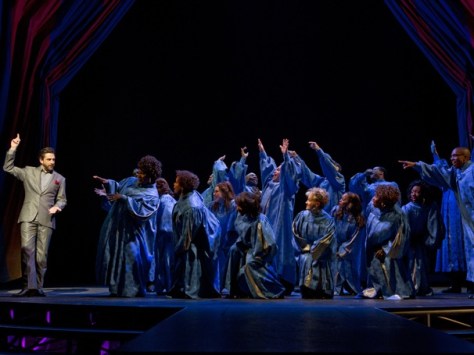
Let the Church Say Amen, Leap of Faith Soars

“Let’s make it rain” – the catchphrase for Jonas Nightingale and his sister Sam.  But when they say it, they don’t mean prayers for the drought in the Kansas town their Mercedes bus broke down in; they mean it in a pouring of dollars at a strip club sort of way.  That’s right Broadway; you got a con man in your midst.   And he is the son of a preacher man.  Let’s face it, the traveling confidence man promising rain is no stranger to Broadway or Hollywood.  In 1954, N. Richard Nash’s The Rainmaker debuted at the Cort Theatre.  In 1956, Burt Lancaster and Katherine Hepburn starred in the movie.  In 1963, a musical based on The Rainmaker titled 110 in the Shade premiered at the Broadhurst Theatre.  In 1999, the play was revived on Broadway.   However, this new musical is based on the 1992 dramedy that starred Steve Martin and Debra Winger.

Similar to the film, the musical centers on Jonas Nightingale is a traveling, “let the power of God work through my hands” faith healer bouncing from town to town, holding nightly revivals and playing on the hopes and fears of the local yokels.  After the third night (and a possible tryst or two) he blows town after bilking the townsfolk out of all of their money.   Although the concept of the musical is based on the film, it appears that musical doesn’t go by the book (no pun intended).  Besides Jonas and a local paralyzed boy who believes Jonas could make him walk again, the book of this production transforms the sheriff into a female love interest and adds a new cast to assist in raising the roof off of the St. James Theatre. 

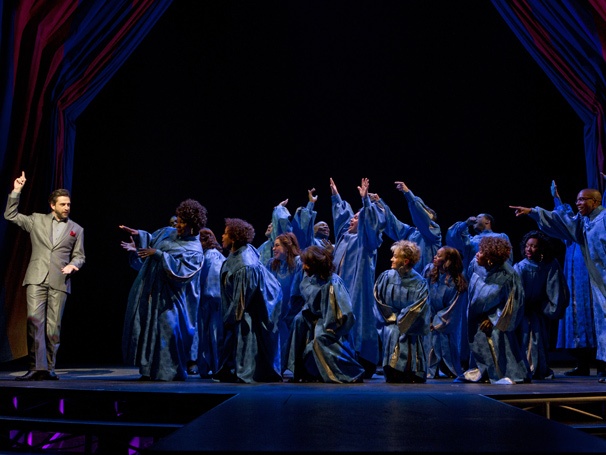
The musical begins before the curtain rises.  As the audience takes their seat, they are greeted with the sounds of gospel music, while a cameraman fine tunes his camera on stage.    Suddenly the audience realizes they are a part of show as their faces appear on the screens, located on opposite ends of the stage, and cast members hand out fake money to people seated the first few rows.  The show opens with an electrifying performance by the Angels of Mercy (Jonas’ choir) and Jonas beginning the last night his New York City revival by telling the audience about his road to redemption.  The audience then travels back a year as Jonas, his sister Sam and the Angels of Mercy decide what to do after their bus breaks down.  After realizing that Jonas is wanted in multiple states and the repairs on the bus will take a few days to fix, Jonas and his team choose to pitch their tent in the sleepy, drought stricken town and take them for what little they have. 

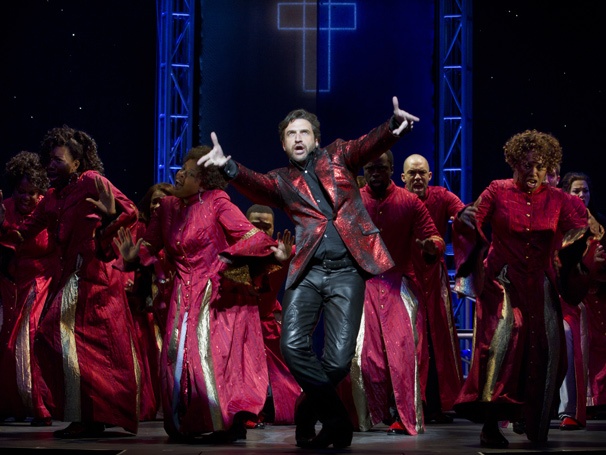
The scam is on but not before Sheriff Marla McGowan can give Jonas a stern warning, which does little to stop them.  As night one of the revival begins, Jonas’ has enough info on the town to make them believe has descended from heaven –mirrored jacket and all – to deliver rain.  His staunchest supporter is Jake McGowan, a disabled boy who happens to be the son of the sheriff.  He believes wholeheartedly that Jonas will make him rise up from his wheelchair and walk.   Jonas and his troupe aren’t the only newcomers to the town.  Isaiah Sturdevant, son of choir director Ida Mae Sturdevant and brother of Angels of Mercy ingénue Ornella Sturdevant, is hell-bent on saving his mother and sister from Jonas’ clutches and uncovering him for the charlatan that he is.

Although the sheriff wants Jonas gone, the two enter into an uneasy agreement with benefits and Jonas gets to finish his revival as long as he doesn’t aim any of his empty promises at her son.  Over the next two days, Jonas is exposed, falls in love, watches Jake’s faith give him the ability to walk again, questions his faith and decides to give his traveling church to Isaiah, a true believer.  Inspiring ending, right?  But I know what you FAMERS really want to know is, did Jonas make it rain?  Make it rain he did, literally and figuratively.  Leap of Faith soaks its audience with good vibes, wonderful voices and a new spin on an old tale.
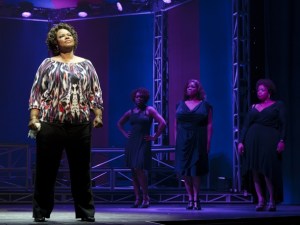
One issue I feel that a movie turned musical has to overcome is any lingering feelings that an audience may carry with them into the theatre about the previous work.  People attach emotion to works of art that have moved them – no matter the genre as well as to the actors that bring a characters alive.  So the question becomes, is this going to be a remastering of an already established work, or will be sad reincarnation of a script with music and dancing crammed in where it could fit in?  Luckily I had never seen the Steve Martin film, so I had the privilege of viewing this work with a fresh pair of eyes.  And to answer my own question, I never felt that this incarnation of Leap of Faith was a comedy with music and choreography shoved in willy-nilly.
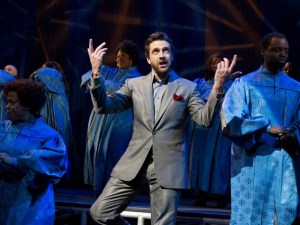
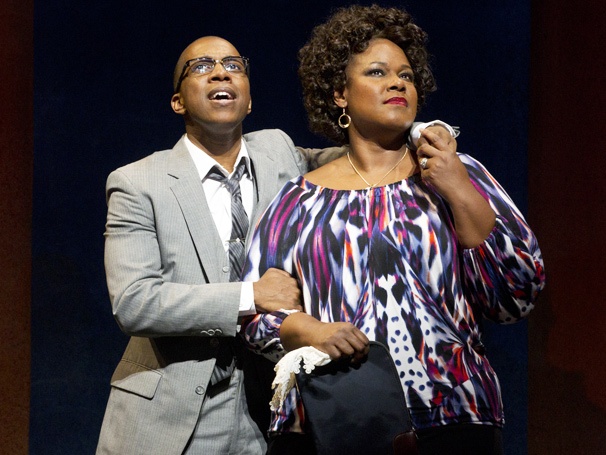
Leap of Faith carries enough of the “Broadway Formula” that it will be appealing to Broadway diehards and fresh enough to bring newbies out and into the seats.  Janus Cercone and Warren Leight wrote a book that parallels the movie, but still is its own entity.   Alan Menken’s music and Glenn Slater’s lyrics are crafted well enough to have the audience toe-tapping in their seats.  The choreography of Sergio Trujillo had a Horton- esque quality to it with the movements tailored to every member of the cast.  The cast makes good on the material – Raul Esparza shines brighter than those glittery suit jackets he wears as Jonas Nightingale, Jessica Phillips is convincing as the sadder but wiser sheriff scared to trust and Talon Ackerman’s earnest performance of Jake could melt anyone’s skeptical heart.  But what really makes Leap of Faith rise through to the stratosphere are the voices of Kecia Lewis-Evans, Leslie Odom Jr., Krystal Joy Brown and The Angels of Mercy choir.  They could give the New Jersey Mass choir a run for its money.  Esparza breaks the fourth wall periodically throughout the show, which I enjoy and with the audience being a part of the musical, the production provides an interactive experience.   The casts projects a universal feel not seen in a lot of musicals and I found the sight of all different body types dancing on the stage to be wonderfully refreshing.  They are not just toned dancers; instead they do feel like individuals you would meet at your local parish.  I don’t know when you visited church last, but the St. James Theatre is holding church every evening and twice on Saturday and Wednesday.  I suggest you hightail it down there and get your dose of hosanna with Leap of Faith.  It is a jump worth taking.

Photos courtesy of Broadway.com

Gershwin…Broderick…Who Could Ask For Anything More?


My first aural introduction to the work of George Gershwin was courtesy of TWA.  His “Rhapsody in Blue” was the soundtrack for their commercial campaign for many years and filled my ears with an explosion of breathtaking sound.  My first introduction to the Gershwin brothers was through An American in Paris.  Again, I fell down into a chasm of musical bliss – and why wouldn’t I – the Gershwin brother’s music and lyrics helped to ink the blueprint of the American standard song.  Everyone, from Ella Fitzgerald to Fred Astaire, has performed their music.   Hollywood and Broadway have been defined by their sound; after all, they have created some of the most memorable songs of the 20th century.

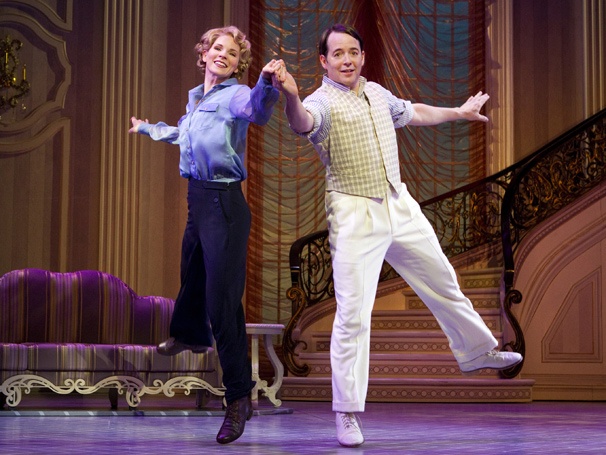
In January, Porgy and Bess, George Gershwin’s last theatrical work, was revived on Broadway.  While the all African American opera is certainly the Gershwin brother’s most controversial work, some of their more popular songs have manifested in the form of a brand new musical with old-school flair.  Nice Work If You Can Get It premiered at the Imperial Theatre, located at 249 West 45th Street, last week and it is a rhapsody in laughter. 

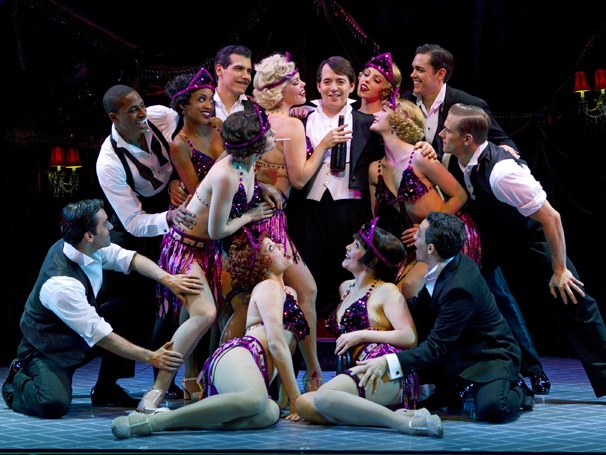
Nice Work If You Can Get It is a zany romantic musical set in New York City during the Prohibition era.  It centers on the unconventional, kooky love affair between Jimmy Winter, a wealthy playboy, and Billie Bendix, a hard nose bootlegger.  After leaving a his bachelor party for his fourth upcoming marriage, a saucy Jimmy runs into Billie, who is laying low from the feds while trying to protect her new shipment of booze.  As he attempts to make a pass at her, Jimmy reveals to Billie that he has an enormous estate in Long Island that his family never uses.  Billie and bumbling cohorts Cookie and Duke concoct the idea of storing the demon gin in the cellar of the mansion and the hijinks start from there.  Over a weekend Billie, Cookie, Duke, Jimmy, his icy betrothed Eileen, Eileen’s conservative senator father, his uptight sister, her G-men, a troupe of chorus girls, a police chief and even Jimmy’s mother all converge on the property creating a hilarious adventure by the melody of Gershwin.

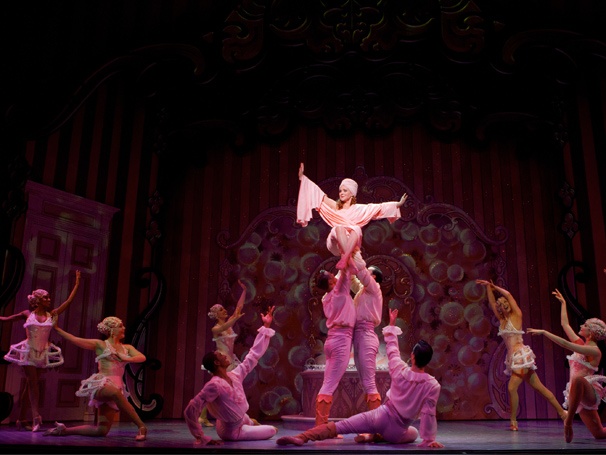
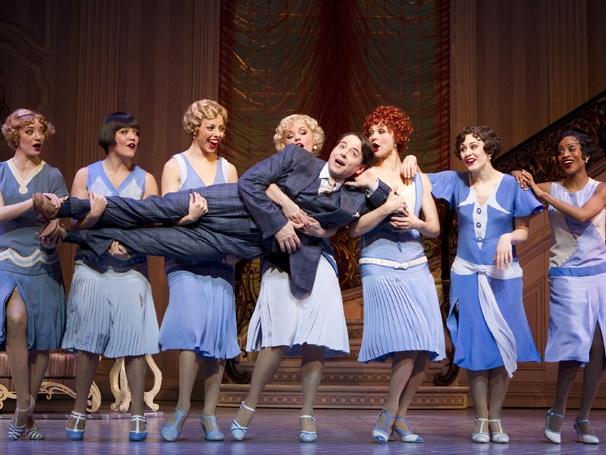
Writer John O’Hara once stated, “George Gershwin died on July 11, 1937, but I don’t have to believe it if I don’t want to.”   And after viewing this musical, I don’t believe it either.  The presence of both George and Ira Gershwin were more teeming than ever courtesy of this productionAs with any musical, the music and lyrics are the thing.   And this musical couldn’t have a better foundation.  The book pushes the production along; it is structure that is balanced on the music.  Joe DiPietro created one hell of a comedic story to go along with the blah-blah-blah-blithe musical numbers.  Derek McLane’s lavish set is extremely complimentary to the time period in which the musical takes place and director Kathleen Marshall’s choreography made me want to do the Charleston in my seat.

Ever since I saw Matthew Broderick pull one over on his parents and Dean Edward Rooney in Ferris Bueller’s Day Off, I knew he could never do anything wrong with me.  And his choices on screen and on stage have made me stand by that statement.  It’s been over 20 years since Broderick lip-synced to The Beatles and his boyish looks and charm can still convince an audience to buy whatever he is selling.  Watching him on stage can fill any theater with joy.  Kelli O’Hara is delightful.  She and Broderick have great chemistry.  Chris Sullivan gives a spot-on performance as dimwitted Duke Mahoney – Forrest Gump has nothing on him.  Judy Kaye is a pleasure to watch as Duchess Estonia Dulworth, and the rest of the cast provide fascinating rhythm. But if Broadway gave out awards for breakout performances, my vote would go to Michael McGrath.  As Cookie McGee, he gives some of the best zingers of the show.  He is more than just the comic relief, he is the comic godsend.

Nice Work If You Can Get It is more delicious than a slice of Junior’s cheesecake.  I could devour it and ask for seconds.  Call me old-school but musicals always showcase the best of what is great about Broadway and harkens back to a time when Hollywood produced royalty.  When a musical hits the mark, it is an undeniable bulls-eye.  During the April 24 red carpet premiere, Sarah Jessica Parker suggested that audiences should, “run; don’t walk” to see this show.  Now perhaps her assessment of this production could be biased since she is married to its star, but in this case I’m in total accord with Mrs. Broderick.  Nice Work If You Can Get It is absolutely the cat’s meow.  It’s fun, fun and more fun – the quintessential American musical done right. 

Win 2 Tickets To See The Wittiest Comedy On Broadway

The laughter isn’t over yet!

Win 2 Tickets

To See Our Pick for Top Play for 2011

Enter F.A.M.E NYC’S “Spring Recess” Ticket Giveaway!

To enter, please leave a comment to this post answering

the following question,

Which New York City institution of higher learning is the oldest in the State of New York

 and an Ivy League school?


 F.A.M.E NYC’S “SPRING RECESS” ticket giveaway ends 12 p.m. May 4, 2012.  The winner will be announced on Cinco de Mayo!  Good Luck FAMERS I’m waiting to hear from you.


Check out Seminar on Broadway:  http://www.facebook.com/seminaronbroadway and https://twitter.com/#!/seminaronbway 


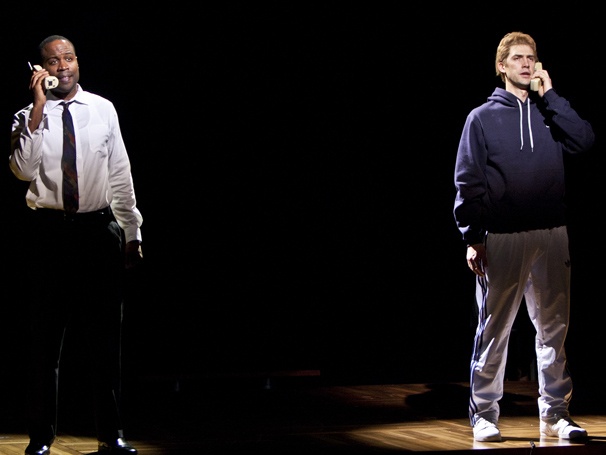
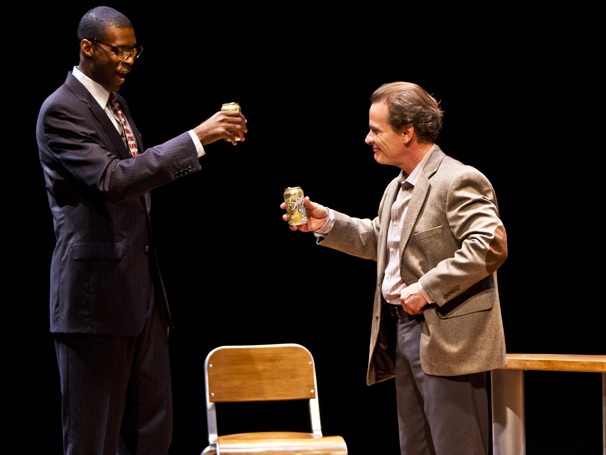
Magic/Bird Got Hops


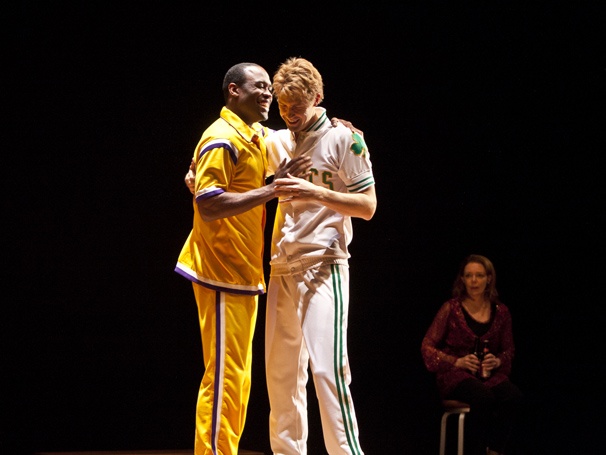
Rivalries between humans go back as far as Cain and Able.  Since the days of ancient Greece, sporting events have been the best venue to showcase the dedication, passion and majesty of competition.  Throughout the 20th century myriad genres of sports featured great rivalries – Ali and Frazier, New York Yankees and Boston Red Socks and Joe Louis and Max Schmeling.  But no sporting rivalry produced more pageantry than the skirmishes between Larry Bird and Earvin “Magic” Johnson.

The grudge match between Magic and Bird began in 1979 when Johnson and Michigan State beat Bird and Indiana State in the NCAA finals.  Their rivalry progressed to the pros as both were drafted to the NBA, Magic for the Los Angeles Lakers and Bird for the Boston Celtics.  The competition between the Celtics and Lakers did not start with Magic and Bird, these teams have had an adversarial history that predated both Hall of Famers entrance to the league, but with Magic and Bird the rivalry rose to mythical proportions.   Between 1984 and 1987, they went head to head in the finals four times with the Lakers winning the championship three times.    Their contrasting playing styles and obvious difference in skin color made great media fodder, helping to fuel the antagonistic relationship.  It also helped to resurrect a seriously ailing NBA.  Individually, their desire to dominate each other assisted them in being better players. 

In 2010, the production team of Fran Kirmser and Tony Ponturo brought the NFL center stage when they opened Lombardi at the Circle in the Square Theatre and scored a touchdown.  This spring they traded in the gridiron for the hardwood court of the NBA; Magic/Bird, their latest stage production, opened at the Longacre Theatre on April 11.  Magic/Bird is a contemporary retelling of an epic rivalry and the unlikely friendship that was forged from it.

The play opens in 1991 with Magic informing the world via press conference that he is retiring from the NBA due to the discovery that he had contracted HIV and follows Bird’s reaction.  The audience is then transported back, being introduced to Magic and Bird as collegiate players during the championship game that spawned their rivalry.  It then recounts their transition to the pros as well as their individual rise as stars of the NBA.  The production also depicts how their rivalry affected the fans as well as black/white relations during that time and the media’s role in exacerbating it.  Then suddenly in 1984, while most of the country was choosing sides, Magic and Bird were shooting a commercial for Converse.  While doing so they discovered commonalities within each other and forged the foundation that would develop into a long-lasting friendship.  The play ends coming full circle as Magic comes to terms with his announcement to the media and Bird contemplates retirement.  The two giants would make one last stand together playing for the U.S. Men’s Basketball Team during the Barcelona Olympics in what would be dubbed as the first Dream Team.

Playwright Eric Simonson penned an interesting narrative.  The play moves with the speed of a fast break; the energy is constant and never waivers.  These two men transcended their sport, eventually ascending to the immortal status of titans.  Sure, initially people will fill the seats because they were fans of either Magic or Bird and recall how they innervated the NBA.  But patrons will soon find as I did that what lies beneath this tale of basketball and fierce competition is a genuine human interest story of two men that were able to find the humanity within each other despite differences in style, background and race.  Like Lombardi, Magic/Bird won’t just appeal to sports fans but to anyone that enjoys an emotive drama.  Whether one knows what a power forward does or not is irrelevant, you will still leave the theater feeling as if you have learned more about men behind the legend.  In my book Magic/Bird scores a triple-double!

Part of my fondness for Magic/Bird is the innovative multimedia staging of the play.  Various excerpts of press conferences and games are intertwined with the action happening on stage.  The actors, with the exception of those portraying Magic and Bird, play multiple characters, which I found extremely entertaining.  I also appreciated the role call of the actors at the beginning of the play.  Kevin Daniels recreates the show time pizzazz of Earvin “Magic” Johnson and Tug Coker makes his Broadway debut in the role of the ever so serious Larry Bird.  Peter Scolari triumphs as Pat Riley, Red Auerbach, Jerry Buss and Bob Woolf.  Deirdre O’Connell is a comedic delight as Dinah Bird, Patricia Moore, bar owner Shelly and Georgia Bird.  Robert Ray Manning Jr. and Francois Battiste complete the cast.   All of them are MVPs.

During this time of year, the NBA kicks into high gear as the most dominate teams secure their place in the playoffs hoping to make it through to the finals.  Broadway in springtime shares the same feverish anticipation as the NBA, new shows open either proving themselves worthy or unworthy of a Tony nomination.   Whether or not Magic/Bird will make it to Broadway’s version of the finals is unclear, but I do commend this production for attempting to push the boundaries of American theater.

Photos courtesy of Broadway.com

If These Walls Could Talk, Clybourne Park Discusses the Tenets of Race and Residence

When Jefferson combined sentences from Richard Cumberland and John Locke to create the phrase “Life, Liberty and the pursuit of Happiness”, it might’ve not been evident to the Second Continental Congress that the pursuit of happiness actually meant property.  But as the original 13 colonies expanded, territories were drawn and invisible lines were created that dictated to citizens and noncitizens where they can cross and live, Jefferson’s underlying intention couldn’t be clearer.   The pursuit of property has always been at the heart of the American dream and is more patriotic than baseball or apple pie.  It can also be said that the pursuit of finding truth in art has been the desideratum of artisans ever since cavemen scribbled on ancient walls. 

Often times, real life experiences inspire art; playwright and author Lorraine Hansberry used her own family experiences to create the masterpiece, A Raisin in the Sun.    Other times, art serves as the genesis to create new art; actor and playwright Bruce Norris picked up where Hansberry left off when he created Clybourne Park, awarded the 2011 Pulitzer Prize  for Drama as well as Britain’s Olivier Award for Best New Play.    The plot for A Raisin in the Sun deals with the Youngers, a black family in 1950s Chicago that wishes to realize a dream and improve their circumstances by purchasing a home in the all-white neighborhood of Clybourne Park.  Despite turmoil within the family as well as threats and a bribe from a representative of Clybourne Park’s Improvement Association, the Youngers decide to move into the home thus attaining their dream.

Clybourne Park consists of two acts; Act I centers on Bev and Russ, the couple selling the home the Youngers are buying.  They have become disillusioned with the neighborhood after being ostracized by their neighbors in the wake of their son’s, a Korean War vet, sudden death.  While preparing for the move, they are visited by the local chaplain, neighbor Karl Lindner and Linder’s deaf, pregnant wife.  Linder has just returned from his failed attempt to coerce the Youngers not to move into the neighborhood.  Trying to use his persuasive tactics on Bev and Russ, he implores them not to go through with the sale, fearing that the Youngers will be the first in an influx of black families, the neighborhood would be adversely affected and property values will plummet. To prove that black and white neighborhoods should be segregated he feebly tries to enlist the help of Bev and Russ’ black maid and her husband, who recently arrived to pick her up.  As the conversation continues, tensions and words boil as animosities surface and spill over.

Act II takes place in 2009 in the same house.  The neighborhood of Clybourne Park is now predominately black.  The house, once the center of controversy, is now the victim of serious neglect.  The encroaching reality of gentrification is looming as a white couple with child wants to buy the house and renovate it and any signs of its past.  They meet with the their lawyer and a black couple representing a neighborhood association and their lawyer to discuss their planned alterations for the house, which are in dispute by the neighborhood committee due to the area’s  historical significance.   As they discuss the fate of the house, it’s revealed that Kathy, the lawyer of the white couple, is the daughter of the Linder’s,  who moved from the neighborhood right after she was born, and Lena is related to the Youngers.  Just as in the first act, the discussion of the house’s destiny slides into an exchange about race that exposes just how far we have really come in America when it comes to this often taboo topic.

Slick…piercing…irreverently pleasing, Norris digs deep into America’s well of issues that skim underneath the quest to achieve Jefferson’s declaration and strikes black and white gold.  He also creates a splendid new chapter to Lorraine Hansberry’s seminal work.  Clybourne Park is a flawless and timeless production worthy of the Pulitzer Prize.  One could bury this play in a time capsule and after the apocalypse dig it up and it will not only show what human nature was like in the 20th and 21st centuries, it’ll more than likely indicate what human nature is like in the future since human behavior doesn’t change.  Norris interweaves race, loss, fear, ignorance, good intentions, gentrification and real estate with a humorous thread that creates a banner for all to see and discuss.  As A Raisin in the Sun was and is a piece that is a must see, so is Clybourne Park.

Just as Norris weaves themes, the cast weaves characters, each of them playing a dual or multiple roles.  Annie Parisse plays Betsy and Lindsey, Frank Wood portrays Russ and Dan, Crystal A. Dickinson plays the role of Francine and Lena, Brendan Griffin depicts the roles of Jim, Tom and Kenneth, Damon Gupton portrays Albert and Kevin, Christina Kirk plays Bev and Kathy and Jeremy Shamos completes the cast depicting Karl and Steve.  In each act the cast is sharp and lusciously engaging.    They effortlessly push the themes and dialogue, making lasting impressions with each character they play and deserve every ovation they receive.  The only problem I find with Clybourne Park is that it playing a limited engagement at the Walter Kerr Theatre, located at 219 West 48th Street.  This old house only stands for 16 weeks; I suggest making your way to the Theater District to see what is surely going to be the Tony Award winner for Best Play.

Photos:  Joan Marcus

I Know It’s Only The Rolling Stones…But I Like It

The Temptations proclaimed, “Poppa was a rolling stone.”  Blues maestro Muddy Waters told folks that he was a rollin’ stone.  But little did he know when he recorded that tune for Chess Records in 1950 that the title would be the moniker for one of the most iconic and successful groups of the 20th century.  Known as the first bad boys of rock ‘n roll and complete with a “g” on the end, The Rolling Stones formed in 1962 when then guitarist and founding member the late Brian Jones christened the name while setting up a gig.  Little did he, Mick Jagger, Keith Richards, Charlie Watts, Bill Wyman or Ian Stewart know that they would help to cement the British Invasion of the 60s as well as become some of the architects of rock ‘n roll. 

Fifty years later, amid a few changes in bandmates, The Rolling Stones are just as relevant and popular as they ever were.  And as the band and their throngs of fans worldwide commemorate the legacy of music The Rolling Stones has created, it was Porter Contemporary that had me in its sway.  Last Thursday the gallery gave its own homage to the group that ranked number 10 on Billboard’s Hot 100 Top All-Time Artists when it debuted, A Rolling Stone.  The exhibition is not only a celebration for the 50th anniversary of The Rolling Stones,  it also inspired by the proverb, “A rolling stone gathers no moss,”  (a sentiment that  perfectly exemplifies the career and members of The Rolling Stones).   Displayed in A Rolling Stone are the works of Jason Bryant, Jennifer Murray, Johnny Romeo, Adam Normandin, JaH-HaHa and Naoto Hattori.  The show is concise and cohesive; the 10 pieces selected for the exhibit are a beautiful representation of the individual artists’ style as well as the theme of the show.  JaH-HaHa’s paintings feature a young Mick Jagger and Keith Richards atop sheets of music.   Jason Bryant created works based on The Rolling Stones’ iconic album Sticky Fingers, while Jennifer Murray’s work showcased the proverb.

The merging of music and art has always been a particular source of inspiration and enjoyment for me.  Wild horses couldn’t drag me away from seeing this exhibit, considering that I’m a huge admirer of The Stones.  Well curated, reflections of each member’s personality are inherent throughout the space.  But out of all the members, A Rolling Stone reminds me most of Charlie Watts, understated but with a driving back beat that is intrinsic and entrancing, A Rolling Stone will be on exhibit until May 26.  I recommend going to see it; I guarantee you will leave satisfied.

Formerly Raandesk Gallery, Porter Contemporary is located in Chelsea section of the Village at 548 West 28th Street and is open Wednesdays 11 a.m. to 6 p.m., Thursdays 11 a.m. to 8 p.m. and Fridays and Saturdays 11 a.m. to 6 p.m.

Photos courtesy of Porter Contemporary

Slideshow by F.A.M.E NYC Editor

Desiring Uncertainty at Porter Contemporary

Everyone has heard the idiom that the body is a vessel, so how ingenious was it of Jee Hwang to use one of the most intimate objects in one’s home to express that sentiment.  Desiring Uncertainty is a collection of paintings currently showing at Porter Contemporary, located at 548 West 28th Street.  The show opened February 23; last Thursday Porter Contemporary hosted an artist talk with Jee Hwang so viewers could hear firsthand what inspired her to create these works.

 Jee Hwang used a series of bathtubs as well as a crate; bag and even herself face down in a bed of grass to express desire, and its relationship to the state of presence and absence.  A bath at the end of the day seems to be the cure all for the world’s ills.  We draw a bath, soak, relax, wash away insecurities and pressures and utilize the water to restore us.  Then we release the water and do the same thing the next day.  While walking through the exhibit, I could feel the longing, the languishing for something to happen, but what that something is hasn’t been discovered.  The vivid detail of Hwang’s works made these cold, stationary items pop with verve, becoming stimulating to look at.  It is amazing how the bathtubs express the essence of desire as well as the loneliness that can come with unrequited desire and the changes that it can take over time.  I found her works to be remarkably introspective and alluring.

Artist Jee Hwang was born and raised in Seoul, South Korea, before migrating to Maryland in 2003.  She graduated from Pratt Institute with a MFA degree in 2009 and received a partial scholarship to the Vermont studio program in 2010.  Her first solo show was at A.I.R. Gallery as the 2009-2010 A.I.R. Emma Bee Bernstein Fellowship Artist.  Desiring Uncertainty will be on exhibition at Porter Contemporary until March 31.   If you can, I highly suggest taking a peek before it ends.

Photos courtesy of Porter Contemporary