Top Off-Broadway Play for 2010

Freud’s Last Session

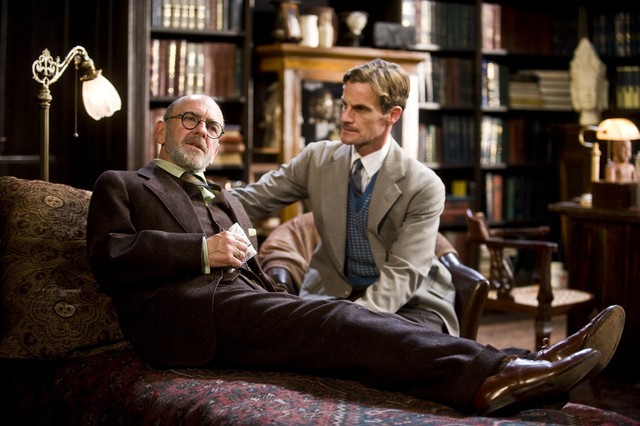
Imagine if Muhammad Ali and Mike Tyson had fought for the heavyweight crown, or Michael Jordan and Lebron James had a one on one game or Richard Pryor and Eddie Murphy had a 90-minute “Yo Mama” session.  Can you imagine that?  If you can, then you can picture the mental match that transpired between the 20th century’s greatest thinkers in what could possibly be the most sophisticated “what if” ever imagined.   I could not stop raving about Freud’s Last Session.  Even if it was fictional, the play offered audiences the opportunity to get up close and personal with Dr. Freud and C.S. Lewis.  It is my hope that Freud’s Last Session has not seen its last run in NYC.  To read F.A.M.E NYC’s full review of Freud’s Last Session, click https://famenycmagazine.com/2010/09/20/duel-on-the-couch-freud%e2%80%99s-last-session/.

Photos: Kevin Sprague

Top Off-Broadway Musical for 2010

The Scottsboro Boys

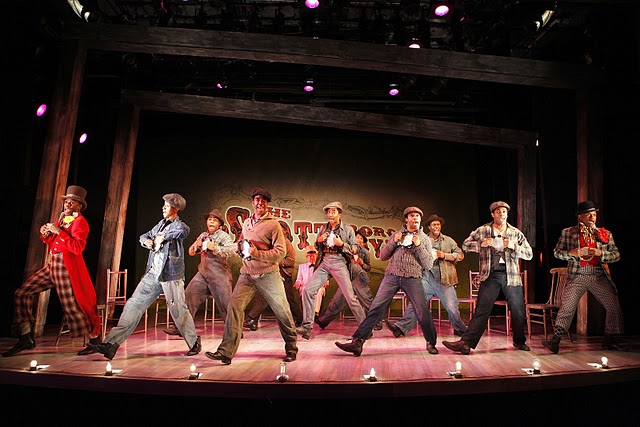
From Dixie…to the Vineyard Theatre …to Broadway, The Scottsboro Boys has had an eventful 2010.  When I saw this musical at the Vineyard Theatre I thought it would be criminal if this production did not make it to The Great White Way.  Luckily, I did not have to drop a dime to the theatre police because in the fall the musical debuted at the Lyceum Theatre.  Thrilling from beginning to end, The Scottsboro Boys took all the elements of great a musical production and created  a unique experience for its audience.  I hope it will return to Broadway once more this year.  To read F.A.M.E NYC’s full review of The Scottsboro Boys, click https://famenycmagazine.com/2010/04/13/time-traveling-with-the-scottsboro-boys/.

Photos:  Carol Rosegg  

Top Revival of a Musical for 2010

Promises, Promises

Do you know the way to Consolidated Life?  If not, then follow the timeless tunes of Burt Bacharach.  I love boys in dresses and who can resist Catherine Zeta Jones, but I believe this should have received more hardware at the 2010 Tony Awards.   After all, who could resist Neil Simon, or Sean Hayes, or Kristen Chenoweth?  The holidays are over for now, but if you have the temptation for some turkey-lurking, then go to the Broadway Theatre.  To read F.A.M.E NYC’s full review of Promises, Promises, click https://famenycmagazine.com/2010/05/19/promise-fulfilled/.

Photos courtesy of Broadway.com

Top Revival of a Drama for 2010

Fences

Gabriel blow your horn!  The angels certainly did sing for this revival of Fences, and August Wilson must have been smiling from heaven.  The play itself is a tour de force; add the direction of Kenny Leon along with the brilliant acting of Denzel Washington and Viola Davis, shake it up and you have lightning on stage.   I guess the best testament of this revival’s home run is the three Tony Awards it received.  This one knocked it over the fence and out of the theatre.  To read F.A.M.E NYC’s full review of Fences, click https://famenycmagazine.com/?s=Fences.

Photo: Joan Marcus, http://fencesonbroadway.com.

Top Art Exhibit for 2010

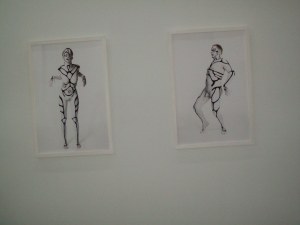
Jason Covert’s CARNIVORA

Epic and wondrous to behold, Jason Covert’s CARNIVORA was a mystical journey of sight and sound.  This multimedia extravaganza gave new meaning to the Big Bang Theory as Jason explored man’s primitive ancestry and polytheistic creation myths.  I was truly inspired by the complete vision that started from doodling in a college classroom.   I think the Gods were very pleased.  To read F.A.M.E NYC’s interview with Jason and view the slideshow of CARNIVORA, click https://famenycmagazine.com/2010/09/27/carnivora/.

Photo:  F.A.M.E NYC Editor

To Be Real

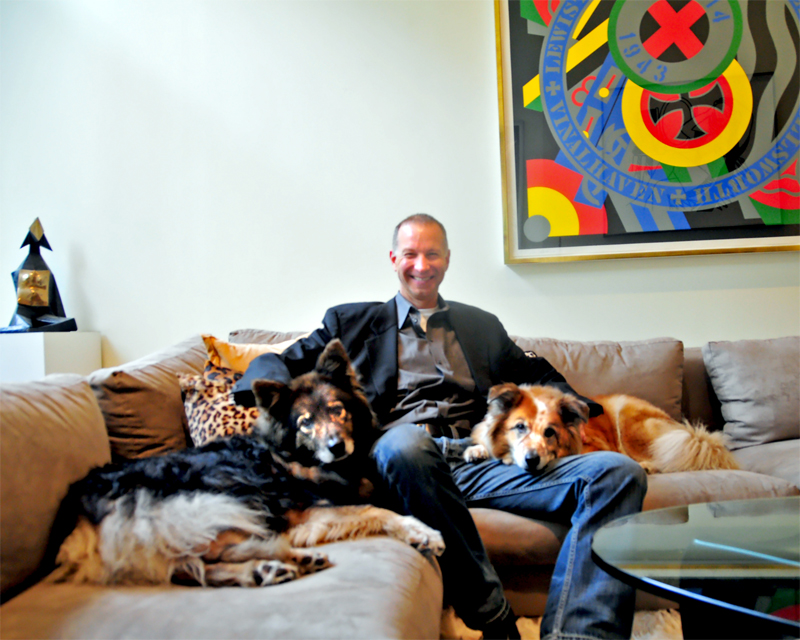
The first time I met Skot Foreman was during a Purvis Young exhibit at Gallery Bar in 2008.  I was pulled in Purvis’ world of struggle and redemption. I spoke with Skot briefly that evening and left thinking how Purvis Young had a real champion in Skot Foreman; he was someone that would fight to ensure the legacy of this artist (who was in failing health) would be properly maintained and not exploited.  But as I got to know Skot I came to the conclusion that it was not just Purvis that made him zealous.  Skot Foreman is passionate about three things: his two dogs Cassie and Reva and art.  Another thing I learned after getting to know him over the past two years is that Skot is a rebel.

Unlike the famed General Sherman, Skot made his march in reverse conquering one city at a time.  He opened Skot Foreman Fine Art in 1994 using various locations within the greater Miami area.  In 2001, he moved to Atlanta opening up a space in Castleberry Hill, the city’s gallery district.  Skot moved to Manhattan in 2004 and opened a gallery first on the upper eastside.  Currently, he is settled in Tribeca.  “I always had a connection to New York,” he states.  He admits that his journey to “the hub of the international art market” was one filled with baby steps.  Originally wanting to migrate to New York after 9/11, Skot re-thought the notion and moved three years later.   “I have always been one to swim upstream,” he states.  Skot called his initial move to the upper eastside “strategic,” and feels that living downtown is more indicative to his personality.  “It’s more creative and laid back…more on the DL,” he says, “There is a new discovery around every corner.” 

One of those discoveries happened to be situated underneath Skot’s Tribeca home and would eventually lead to an innovative union between Skot Foreman Fine Art and fashion brand Grown and Sewn.  Skot was introduced to Grown and Sewn’s founder and head designer Rob Magness through Rob’s wife Sara, an award- winning interior designer.  Over a glass of wine they discussed the space that would become Grown and Sewn’s home, 184 Duane Street.  Both had the desire to use the space for their creative endeavors and Sara suggested collaborating.  “Rob and I looked at each other and you could see the light going off in one another’s head,” he says.  Skot believes the synergy between he and Rob created magic.  “The word that keeps coming back to me is authentic because so many people that do walk in the space seem to respond to the fact that we’ve combined art and craft, which is truly a human thing but I think it’s probably been lost through the later half of the twentieth century and we wanted to rediscover that.”

Skot Foreman Fine Art amasses contemporary art of the 20th and 21st centuries and features the works of prominent artists such as Pablo Picasso, Henri Matisse, Purvis Young, Keith Haring, M.C. Escher and many others.  “I try not to show artists that are the flavor of the day,” he asserts, “I try to show artists that have stood the test of time.  It starts with a chord that artist may have struck with me so it’s hard to remove any personal bias because if I don’t believe in it, if I don’t have conviction, then how can I share it with a friend or turn a collector on if I’m not passionately behind the work.”  Skot believes his penchant for pop art stems from his surroundings growing up in Florida and recalls being cognizant of signs, billboards and other media.  He also has a deep appreciation for artists that can take a sheet of paper and illustrate.  “I’m a little bit old fashioned in that regard,” he shares, “I like [artists] who have got some chops, knows how to draw, came up through the ranks and paid their dues.” 

Skot understands that artists are the visionaries of their times, no matter what genre one may choose t, which brings me full circle to how Skot and I met:  a showing of Purvis Young’s work.  Skot loves to “turn people on” to his work.  He describes Purvis’ art as shamanistic; indeed there is an other-worldly aesthetic to his pieces.  Skot and Purvis (who died in April) shared a friendship that spanned over 20 years.  One of Skot’s favorite stories about Purvis Young involves another shaman of sorts, the late rapper Tupac Shakur.  “I sent Tupac a portfolio of Purvis’ work to look at.  I wasn’t there; it was through a third party.  Tupac opens it up, starts looking at it, eyes start bugging, closes the portfolio up and says, this shit is fucking dope,” he recalls as we both begin to laugh.  It is no surprise to me that kismet made Skot Foreman one of the preeminent collectors of Purvis Young’s work. Besides both men being Floridians, Purvis’ work projects a naked genuineness that obviously comes from within.   It is that same frank verisimilitude that resonates from Skot’s demeanor and is the reason why they were kindred entities.

When it comes to the art that has been reflected during first decade of this millennium, Skot discloses that he has not been a fan of the new conceptual, instillation media that is meaningless but relies on the story behind it or the process of creation to hold its validity.  He is not concerned with the back-story of a work of art, and would like to see a renaissance of the fundamentals of drawing and painting develop.  “Everything is so media or marketing driven, and I think that’s probably why one day there is going to be a return back towards things that are authentic and accessible.   Things that are real.  People can see through all the smoke and mirrors.”

Photos courtesy of Skot Foreman

Warhol and Kax, an American Story

 “What’s great about this country is that America started the tradition where the richest consumers buy essentially the same things as the poorest. You can be watching TV and see Coca-Cola, and you know that the President drinks Coca-Cola, Liz Taylor drinks Coca-Cola, and just think, you can drink Coca-Cola too. A Coke is a Coke and no amount of money can get you a better Coke than the one the bum on the corner is drinking. All the Cokes are the same and all the Cokes are good. Liz Taylor knows it, the President knows it, the bum knows it, and you know it. “  – Andy Warhol

 Andy Warhol (August 6, 1928 – February 22, 1987) was a New York icon widely regarded as “the Pope of pop art.”  His mastery of fusing commercialism and expression not only made him a trailblazer in the art world, but also an oracle of American culture.  He was as American as apple pie, baseball or Coca-Cola.  The stamp he created during his lifetime is still present in the art world today.  He is among an elite class of artists whose work has sold for $100 million.  The son of immigrants, it is no doubt that he was a true American original with a keen ability to amalgamate myriad forms of people and media to present us with the best and worst of our society.

“An artist is somebody who produces things that people don’t need to have.”  – Andy Warhol

The fashion industry as a whole could be summed up in this quote.  It is an entity that thrives on desire.  People desire to have a closet full of dresses, slacks, and shoes and dressers filled with different brands of T-shirts, jeans and intimate apparel, but it is not a requirement necessitates our survival (at least for most of us).  Clothing is used to help define who we are just as much as the art hanging on our walls communicates aspects of our personality.  If Warhol was “Pope of pop art,” then khakis and jeans are one half to the All-American uniform.  Everyone owns at least one pair.  

 “They always say time changes things, but you actually have to change them yourself.”  – Andy Warhol

 For all of the innovation and creativity seen on the runways of New York City, Milan or Paris, fashion is an industry that is slow to embrace change, Grown and Sewn is label that is on the forefront of changing attitudes in fashion. Their “Kax” combines a khaki and jean into a unique, durable and stylish product. They are also an eco-friendly company that produces their clothing in the U.S.  Like Andy Warhol, they are American originals that have the potential to become a bellwether for American fashion as Warhol was for art.

“I have Social Disease. I have to go out every night. If I stay home one night I start spreading rumors to my dogs.” – Andy Warhol

 The holidays are more than just a time to indulge in sales and fattening foods, it is also a time for gathering with friends and family and creating lasting memories.  Grown and Sewn and Skot Foreman Fine Art have collaborated once again to showcase the pinnacle of vicissitude.  Grown and Sewn’s December 17 holiday party opened an exhibit of works by Andy Warhol and other prominent artists at their Tribeca showroom, located on 184 Duane Street.  Rob Magness and Skot Foreman are continuing the thread of celebrating American innovation and creation that was started with the Purvis Young exhibit a year ago.

 “Once you ‘got’ Pop, you could never see a sign again the same way again. And once you thought Pop, you could never see America the same way again.” – Andy Warhol

Collaboration played a major role in Andy Warhol’s creative process and manufacturing.  In some respects, collaboration is the American way.  After all, what is American culture but the partnering of several different ethnicities working to produce an imprint that is distinct.    Grown and Sewn’s and Skot Foreman Fine Art’s collaborations have altered the way people view art and fashion.  In this sense, they are the new millennium Factory. 

Photos and Slideshow: F.A.M.E NYC Editor 


The Great Bubble Burst

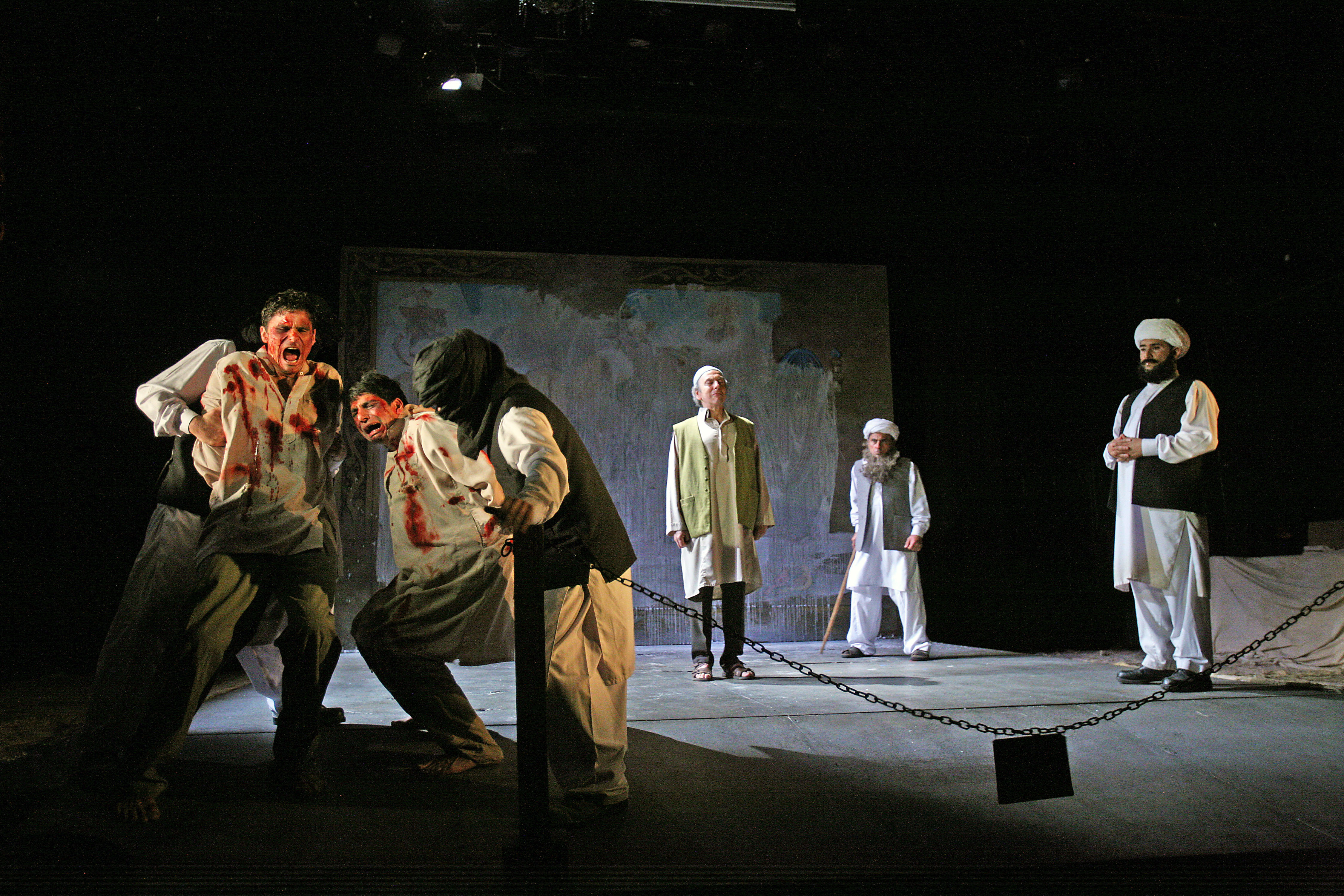
I’m going to say it plain, as Americans we live in a bubble of our own creation.  Before September 11, 2001, how many of us could say we knew anything about Afghanistan, much less locate it on a map.  But after the events of that tragic day, our bubble popped (like it did 60 years before on Pearl Harbor).  Afghanistan, Iraq, the Taliban, Al Qaeda and Islam became the enemy.  Afghanistan was portrayed as a poppy growing, heroin producing, woman hating, tribal fighting, terrorist harboring disaster zone that needed to be cleansed and saved from itself.  But how many leaders…how many superpowers…how many extremists have tried to save Afghanistan from itself, while really serving their interest and not that of the indigenous people?  This question is powerfully and intelligently explored in The Great Game: Afghanistan, now playing at NYU’s Skirball Center until December 19.

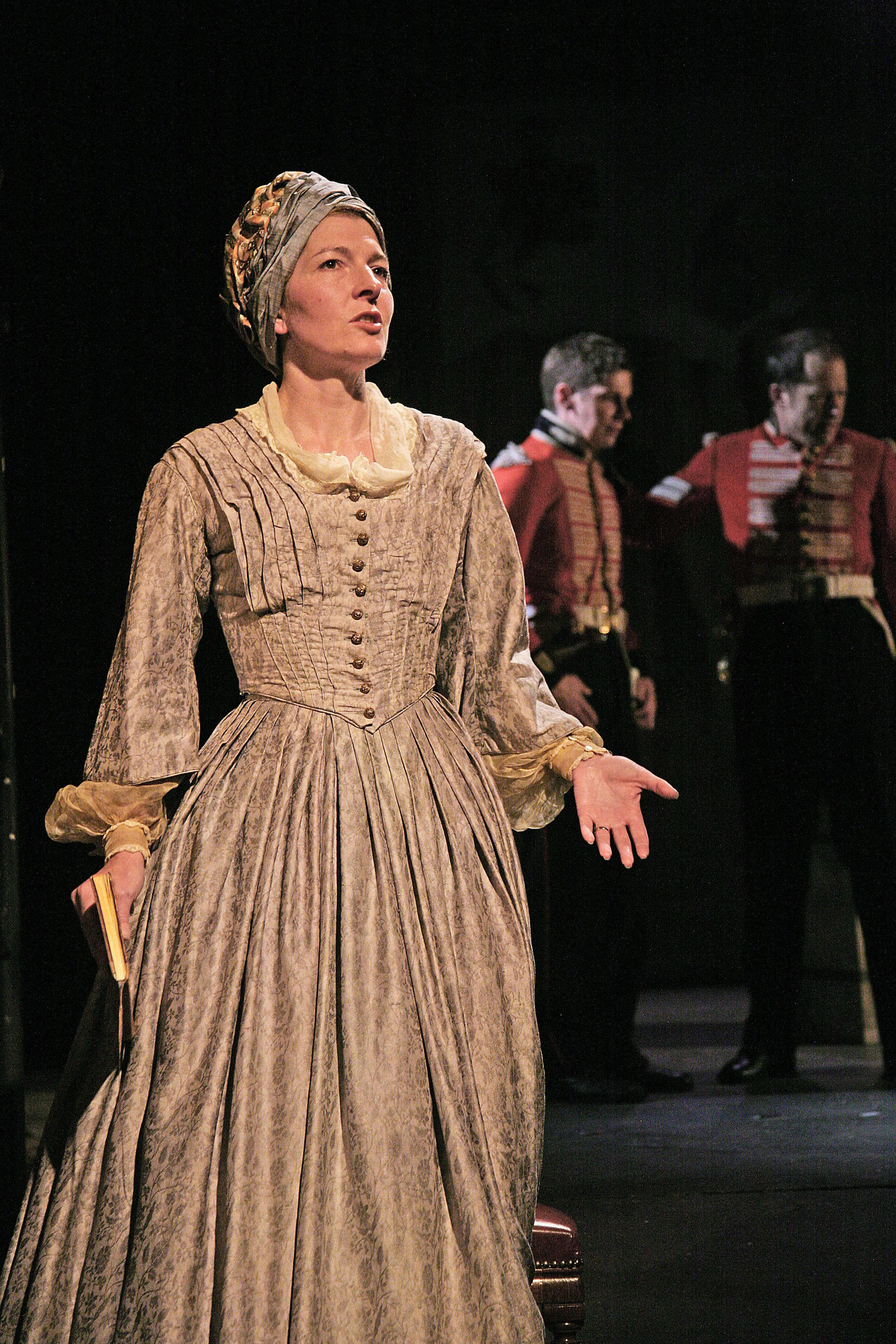
The Great Game: Afghanistan is a series of short plays told over three productions presenting audiences with a stark account of this country’s turbulent history from 1842 to the present day.  Broken into one installment per evening or an all-day marathon, The Great Game: Afghanistan breathes new life into the term miniseries.  The first installment titled Invasions and Independence covers the time period of 1842 to 1929.  The first play, Bugles at the Gates of Jalalabad, was written by Stephen Jeffreys. Four buglers outside of Jalalabad keep watch for William Brydon, the lone survivor of the Massacre of Elphinstone’s Army in 1842, while on the other side of the stage, Lady Florentia Sale who was kidnapped in 1842 during the First Anglo-Afghan War reads from the diary she kept while in captivity.    The buglers and Lady Sale recount the British invasion of Afghanistan to impede the Russians and protect India (the crown jewel of their empire), the bribes to tribal warlords which eventually stopped, as well as the gory details of how the Afghan fighters hacked the British army and camp followers to pieces during the massacre.  But the sub-plot of the play is one of intolerance and underestimating the Afghan people.  Bugles at the Gates of Jalalabad closes with the telling of Afghan heroine Malalai, a young woman who helped to rally Afghan soldiers during the Battle of Kandahar.  The second play Durand’s Line was written by Ron Hutchinson and details a fictitious conversation between Amir Abdul Rahman and Sir Mortimer Durand before the signing of the 1893 Durand Line Agreement which refers to the border between Afghanistan and Pakistan and established a line for the British that the Russians were not to cross.   The segment then speeds up to 2010 with Campaign by Amit Gupta.  While trying to create an exit strategy for the British out of Afghanistan, a politician from the UK coalition government tries to coerce a Pakistani intellectual to assist him in manufacturing propaganda that centers on Mahmud Tarzi, considered one of Afghanistan’s greatest intellectuals and modernist.  The final play of Invasions and Independence also features Mahmud Tarzi.  Now is the Time, by Joy Wilkinson, shifts back to 1929 and focuses on Mahmud Tarzi, his daughter Queen Soraya Tarzi and son-in-law King Amanullah Khan as their escape out of Kabul is threatened when their Rolls Royce gets stuck in the snow.

The second installment of plays is titled Communism, the Mujahideen and the Taliban and covers the time period of 1981 to 2001.  Communism, the Mujahideen and the Taliban begins with Black Tulips by David Edgar, which backtracks the Soviet war in Afghanistan from 1987 to 1981 from the USSR’s point of view.  While constantly reminding new soldiers that “They had been invited to Afghanistan,” various Soviet officers give newly deployed soldiers a pep-talk as to why their intervention is necessary.  Wood for the Fire by Lee Blessing zeros in on two CIA operatives as they work with Pakistan’s Inter-Services Intelligence to supply the Mujahideen with weapons and terrorist training to oppose the Soviets.  In Miniskirts of Kabul by David Greig a British journalist imagines a meeting with President Mohammed Najibullah while he is on house arrest in the UN compound in Kabul in 1992.  They discuss the Spice Girls, women being allowed to wear miniskirts, his beliefs and why he refused to go into exile once his regime had collapsed.  Communism, the Mujahideen and the Taliban ends with The Lion of Kabul by Colin Teevan showcasing the history Marjan, the one-eyed lion in the Kabul Zoo as told by a Taliban leader as a female UN director and her interpreter wait to find out news about two UN aid workers.  Upon learning the workers have been killed, the UN director reluctantly allows the Taliban to render punishment to the men responsible for the aid workers’ deaths, which happens to be feeding them to Marjan.

The third segment of The Great Game: Afghanistan is Enduring Freedom which spans from 2001 to the present day.  Enduring Freedom opens with Honey by Ben Ockrent and focuses on a CIA agent who tries to enlist the help of Ahmad Shah Massoud right before his assassination on September 9, 2001.  The title of the play refers to the “honey pot” Massoud was promised for his assistance.  After Massoud is assassinated, footage of the World Trade Center attack on 9/11 is shown.  Following the 9/11 attacks The Night is Darkest before Dawn by Abi Morgan centers on an Afghan widow that returns to her village to re-open her deceased husband’s school and recruit her niece as a student.  On the Side of the Angels by Richard Bean is the penultimate skit and features an aid worker who is forced to get involved in Afghan politics after a girl is betrothed to an older man to settle a dispute.  The play comes full circle with Canopy of Stars written by Simon Stephens.  It centers on two British soldiers guarding the Kajaki Dam; they exchange views on military intervention in Afghanistan right before a battle. 

The Great Game: Afghanistan and its myriad of carefully crafted skits reveal that the true game played in Afghanistan was an exhaustive, expensive game of chess in which the pawn became such a powerful player that it began to usurp control from the strategists setting the rules.  The realities of the effects of war and the manipulation behind it become all too real after watching The Great Game: Afghanistan.  Whether viewed in its entirety or in segments, this play gives its viewer as much as it takes away.  It represents what is great in theater; it expands your consciousness and challenges your perception of the world we live in.   Upon walking into this production your views about global terrorism, 9/11, Islam may be clear, but by the end of the play your perception may be a little muddled.  The Great Game: Afghanistan is the equivalent to walking into a snow globe that pops while shaking.  Before the shaking all your ideas are calm, resting in the annals of your mind, but afterwards the certainty of your thoughts are scattered and can never be collected back into the bubble.  It my sincere hope that The Great Game: Afghanistan will return to NYC soon so that all New Yorkers will have the opportunity to witness this stimulating work.  The actors, who play multiple roles, are intense; their dedication to the entire production exquisitely shines through in every play.  In the times we live in, The Great Game: Afghanistan is a must see –it is a mental marathon, but one well worth running.

Photos: John Haynes

Alvin Ailey American Dance Theater Blazes New York City Center Stage and Passes the Torch

The first time I saw Alvin Ailey American Dance Theater perform I was 11-years-old, my parents had taken me to Symphony Hall in Newark, NJ.  Watching these powerful, magnificent performers’ radiate boundless energy and emotion left a distinct imprint on my brain cells that still remain.  Viewing Revelations, Ailey’s most recognized ballet, scratched my soul.  It spoke about the Black experience in a way that I had never witnessed before or after.  It spoke about my parents’ and grandparents’ experience.  It spoke about me, the legacy of triumph and struggle that I had inherited from past generations and would be responsible to pass on to the generation that followed me.  It spoke about my Sundays spent in church, the ability of a people to build a history without a full comprehension of where they came from and the sense of pride we carried throughout our journey.  After seeing Revelations, no one can walk out of the theater and not know what it feels like to be Black in America; it touches every fiber of the Black experience and can still make tears swell in my eyes.  The exquisite beauty of Alvin Ailey Dance Theater’s dancers and choreography still beckon to me.  As an adult I make sure to make a pilgrimage to what I consider to be the dancing Mecca of the world at least once a year.   
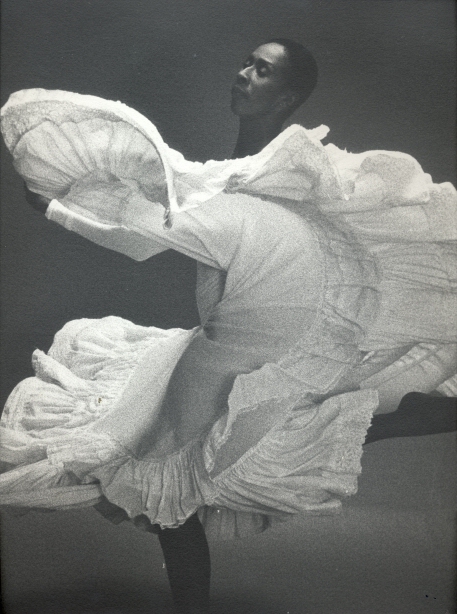
The roots Ailey planted when he first formed the company in 1958 have extended to touch the hearts and souls of citizens around the globe.  It is no wonder the company is called the “Cultural Ambassador to the World.”  There is one reason why Alvin Ailey American Dance Theater has sustained such a high level of accolades and success, they are artistry of movement set to music personified. Revelations and all of the works that Ailey and others have choreographed for the company are rich in spirit, motion, music and drama.  After Alvin Ailey’s untimely death in 1989, Judith Jamison became the Artistic Director.  For me, Judith Jamison was the epitome of a female dancer. Her long, liquescent limbs made me pray (to no avail) for longer legs.  She brought a sense of regality with her on stage, a presence that still can be seen today.  Watching footage of her performing Cry will provoke the action to fall from your eyes. “Cry is a dance for all black women everywhere, especially our mothers. Dancing Cry, I was to be a woman who did the most servile of work but was never defeated by it. I didn’t even know about the special dedication until he (Alvin) showed me the program the night of my first Cry performance,” Ms. Jamison noted.  “It took eight days for Alvin to choreograph it.  I learned Cry in sections and Alvin gave me images of powerful women to use to express his vision. When performing Cry, you have to dig down deep, be venerable, use your dignity and of course passion! Looking back, Alvin gave me this dance and it’s a priceless gift.   I’ll always have it, along with the wisdom he passed down to me and that I pass down to women who perform Cry now.” 
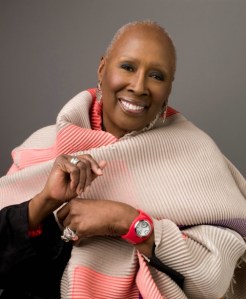
Judith Jamison’s tenacity for preserving Alvin Ailey’s vision is one of the reasons why Alvin Ailey American Dance Theater is the most beloved modern dance companies ever – an unyielding force of nature.   When asked her feelings regarding AAADT’s 50th anniversary in 2008, Ms. Jamison stated. “We’re living in his resonance, and in his vision that dance is for the people and should be delivered back to the people. We’ve performed worldwide and brought in many spectacular choreographers. For 50 years we’ve grown and expanded his goal.  Ailey II, The Ailey School, Ailey extension, and Arts in Education program are just a few examples of how AAADT has achieved Alvin’s goal.  Alvin Ailey will always be the root of this magnificent tree and his spirit will always be living through it.”

The 2010-2011 season for AAADT is bittersweet, this is Judith Jamison’s final year as Artistic Director as well as the 50th anniversary for Revelations.  In April, Ms. Jamison announced her retirement and named Robert Battle as her successor.  Currently he serves as Artistic Director Designate with Ms. Jamison until she assumes Emerita status on July, 1 2011.  In a press release Judith Jamison stated, “Robert has his own company and is a maverick in his choreography. He’s edgy and forward‐thinking, very talented and savvy—a lovely, intelligent person who in many ways reminds me of Alvin. He also has a worldview and is capable of taking this company in new directions, while at the same time understanding our traditions. Choosing Robert Battle is the giant leap I want to take to ensure that this company stays vibrant in the future.”  One of those traditions will be performing Revelations.   Each time I see Alvin Ailey American Dance Theater perform I wait with bated breath until the curtain rises and “Pilgrim of Sorrow” begins.  I exhale and inhale this brilliant work, but I know that I am not the only one in the audience doing this. Although Revelations speaks to the Black experience, there is a cord running throughout the piece that everyone can connect to.  Everyone knows what it is like to feel down-trodden and experience pain, yet somehow transcend the tribulation and still project pride and exuberance.  When asked about Revelations universal appeal and longevity Ms. Jamison said, “The dancers have fully given themselves to this piece and I believe audiences can see and feel that, and that in itself touches them. We all want to leave the theater, being touched, inspired, or feeling something. Revelations always closes Ailey performances and audiences always leave the performances with more than just smile, they leave with their spirits raised.”

Alvin Ailey American Dance Theater will end their season with five weeks of performances at the New York City Center.   The company is pulling out all the stops with three premieres,  Anointed (choreographed by Christopher L. Huggins), The Hunt (choreographed by Robert Battle) and The Evolution of a Secured Feminine (choreographed by Camille A. Brown) as well as new productions of Cry, Three Black Kings and Mary Lou’s Mass, all originally choreographed by AileyFrom December 15 through December 19 Winton Marsalis and the Jazz at Lincoln Center Orchestra will join AAADT.  Grammy Award-winning vocal ensemble Sweet Honey in the Rock will join Alvin Ailey American Dance Theater in a special rendition of Revelations on New Year’s Eve.  Celebrating Judith Jamison on January 2 will be their season finale. 

On December 2, Target and AAADT gave New Yorkers an early holiday gift by reducing the ticket price to commemorate the 50th anniversary of Revelations.  The vibe in the audience exuded the atmosphere of church – everyone knew someone and some came in groups.  The air of family carried on stage as the dancers performed Matthew Rushing’s Uptown – a pulsating multi-media extravaganza that celebrates the Harlem Renaissance in its entirety, Ronald K. Brown’s  Dancing Spirit – a must-see for anyone who has the soul of a dancer and Revelations.  As I sat in the audience, I did not feel as though I was looking at a group of performers, instead I felt like I was watching members of my own family cut up at a gathering.  I also felt the presence of Alvin Ailey and Judith Jamison.  While these talented disciples of Ailey’s dance style continue to entertain and inspire, his spirit is there looming like a proud father watching his child grow up to do great things.  I look forward to Alvin Ailey American Dance Theater’s future with Robert Battle at the helm and am positive that he will continue what I believe is AAADT’s true legacy – producing art at its highest caliber.

Photos: AAADT in Alvin Ailey’s Revelations by Paul Kolnik, Judith Jamison by Max Waldman and Andrew Eccles,  Judith Jamison and Robert Battle by Andrew Eccles,  AAADT in Robert Battle’s The Hunt by Paul Kolnik, AAADT in Ronald K. Brown’s Dancing Spirit by Christopher Duggan


The Truth of Dr. Suzan Johnson Cook

“Ain’t I a woman?” the famous 1851 speech delivered by Sojourner Truth at the Ohio Women’s Rights Convention in Akron, Ohio served to be a rallying call for all women seeking to fulfill the destiny of equal citizenship for women in the U.S.  Born into bondage in New York State in 1797, Isabella Baumfree took her fate and future into her hands when on June 1, 1843 she changed her name to Sojourner Truth and told her friends, “The Spirit calls me, and I must go.”   On that day she became a woman of destiny traveling the country and preaching about abolition and women’s rights.

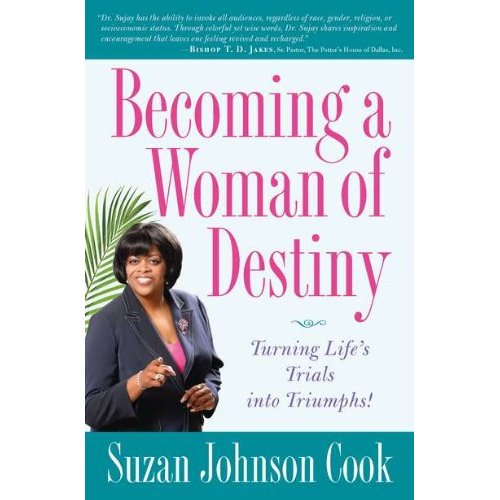
Over 150 years after Sojourner Truth gave her acclaimed address, another anointed woman from New York has created a beacon all women can use to harness their power and begin claiming their future.  In September, Dr. Suzan Johnson Cook published Becoming a Woman of Destiny Turning Life’s Trials into Triumphs! through Tarcher/Penguin.  Dr.  Cook, better known as Dr. Sujay, has led a life of blazing trails.  In 1996, she founded and served as the Senior Pastor of the Bronx Christian Fellowship until her retirement in 2009.  She was the first black woman to become the Senior Pastor of the American Baptist Churches of the USA and was the first female President of the Hampton University Ministers’ Conference.   But her list of firsts does not end there, Dr. Sujay was the first woman appointed Chaplain of the New York City Police Department and the first female Baptist minister to receive a White House Fellowship serving with President Clinton.  She is also empress of the lunchtime worship service, initiating the “Lunch Hour of Power” service for city, civic and court workers and the “Wonderful Wall Street Wednesday” service.

Dr. Sujay has provided mentorship and spiritual guidance to many, including Presidents Clinton and Obama, and authored nine previous books.  With her 10th book, Becoming a Woman of Destiny Turning Life’s Trials into Triumphs!, she now applies her extensive knowledge and experience to create a masterful template for women in transition.    As women we were are gifted with the task of bringing forth generations – becoming the first teachers of our children, as well as becoming life partners to our husbands.   But Dr. Sujay knows that God has placed us here to be more than wives, mothers or even professionals, and is cognizant that during the myriad seasons life holds, one might have issues moving from one season to the next.  For women facing the uncertainty of change, Becoming a Woman of Destiny holds the key to unlocking their fate.

Dr. Sujay uses the biblical figure Deborah as a model.  Deborah was a highly respected prophetess, judge, wife and warrior – accompanying the army of Israel into battle.   Deborah is also an ancient example for what women refer to today as a superwoman – a woman that finds strength, balance and harmony in performing the various roles she is allotted in her life’s journey.  Dr. Sujay applies Deborah’s life in the development of four pillars (intelligence, spirituality, action and community) which a woman can utilize as she discovers her path to a greater self.  The pillars are divided by chapters, with two chapters dedicated to each pillar.  Women learn that during a transitional period, we are sometimes beckoned to walk a path we did not know existed and can use times of adversity to generate fresh possibilities.   Women grasp the understanding of the importance of prayer, quiet moments with self and following intuiton as well as how to conduct themselves with honor.  Lastly, they ascertain the significance of relying on other women by initiating destiny circles – building a sisterhood that can support one another in achieving goals.  Each pillar begins with a prayer and a series of prayers and meditations await the reader at the end of the book.  Also each chapter ends with questions and a checklist to be used in destiny circle meetings.

With Becoming a Woman of Destiny Dr. Sujay shows you how through faith and belief in God you can bring out the best in yourself and find the true purpose of your life by employing the talents the most high has blessed each of us with.   It is the gospel for the new millennium woman.  As a woman, I find the stories Dr. Sujay shares and the advice she dispenses to be invaluable and have already started to apply the book’s principles to my life.  The holidays are always a time of transition as an old cycle ends and a new one begins.  New promises are made and I encourage everyone to purchase this book as a gift to themselves or for a cherished woman in their life.  The benefits that come from Dr. Sujay’s expertise can only be compared to a never ending well.

Humans are the Lord’s vessels – each of us has a specific path in life we must travel.  When Harriet Tubman was born into slavery in 1820, she did know her route would take her from master’s home to the Underground Railroad leading over 70 slaves to freedom.  Dr. Sujay has already been compared to Harriet, another iconic figure that symbolizes the embodiment of a destiny fulfilled, when The Rev. Dr. Gardner C. Taylor stated that she was the Harriet Tubman for women in the ministry.  After reviewing Becoming a Woman of Destiny and discussing it with destiny circle members other readers will come to know what I know – Dr. Sujay is not just a Moses for women in the ministry, she a Harriet Tubman for all women, assisting each of us to find our own predetermined promise lands with wit, wisdom and a whole lot of grace.