The Great Bubble Burst

I’m going to say it plain, as Americans we live in a bubble of our own creation.  Before September 11, 2001, how many of us could say we knew anything about Afghanistan, much less locate it on a map.  But after the events of that tragic day, our bubble popped (like it did 60 years before on Pearl Harbor).  Afghanistan, Iraq, the Taliban, Al Qaeda and Islam became the enemy.  Afghanistan was portrayed as a poppy growing, heroin producing, woman hating, tribal fighting, terrorist harboring disaster zone that needed to be cleansed and saved from itself.  But how many leaders…how many superpowers…how many extremists have tried to save Afghanistan from itself, while really serving their interest and not that of the indigenous people?  This question is powerfully and intelligently explored in The Great Game: Afghanistan, now playing at NYU’s Skirball Center until December 19.
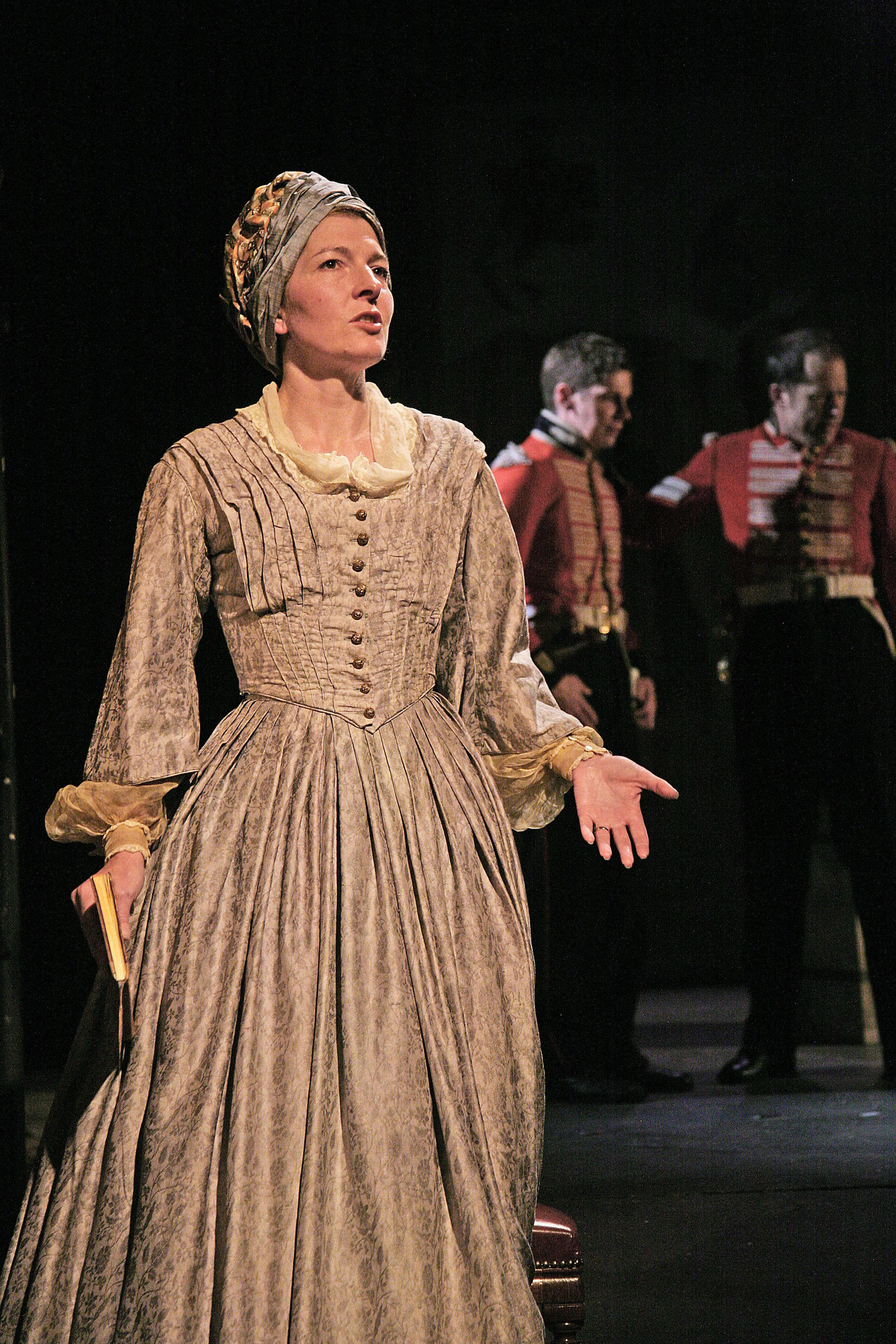
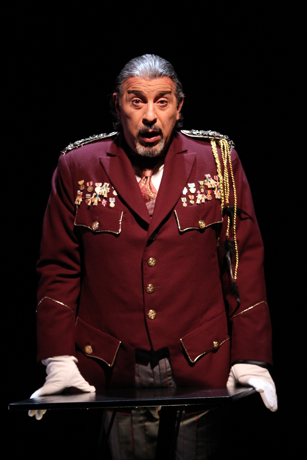
The Great Game: Afghanistan is a series of short plays told over three productions presenting audiences with a stark account of this country’s turbulent history from 1842 to the present day.  Broken into one installment per evening or an all-day marathon, The Great Game: Afghanistan breathes new life into the term miniseries.  The first installment titled Invasions and Independence covers the time period of 1842 to 1929.  The first play, Bugles at the Gates of Jalalabad, was written by Stephen Jeffreys. Four buglers outside of Jalalabad keep watch for William Brydon, the lone survivor of the Massacre of Elphinstone’s Army in 1842, while on the other side of the stage, Lady Florentia Sale who was kidnapped in 1842 during the First Anglo-Afghan War reads from the diary she kept while in captivity.    The buglers and Lady Sale recount the British invasion of Afghanistan to impede the Russians and protect India (the crown jewel of their empire), the bribes to tribal warlords which eventually stopped, as well as the gory details of how the Afghan fighters hacked the British army and camp followers to pieces during the massacre.  But the sub-plot of the play is one of intolerance and underestimating the Afghan people.  Bugles at the Gates of Jalalabad closes with the telling of Afghan heroine Malalai, a young woman who helped to rally Afghan soldiers during the Battle of Kandahar.  The second play Durand’s Line was written by Ron Hutchinson and details a fictitious conversation between Amir Abdul Rahman and Sir Mortimer Durand before the signing of the 1893 Durand Line Agreement which refers to the border between Afghanistan and Pakistan and established a line for the British that the Russians were not to cross.   The segment then speeds up to 2010 with Campaign by Amit Gupta.  While trying to create an exit strategy for the British out of Afghanistan, a politician from the UK coalition government tries to coerce a Pakistani intellectual to assist him in manufacturing propaganda that centers on Mahmud Tarzi, considered one of Afghanistan’s greatest intellectuals and modernist.  The final play of Invasions and Independence also features Mahmud Tarzi.  Now is the Time, by Joy Wilkinson, shifts back to 1929 and focuses on Mahmud Tarzi, his daughter Queen Soraya Tarzi and son-in-law King Amanullah Khan as their escape out of Kabul is threatened when their Rolls Royce gets stuck in the snow.
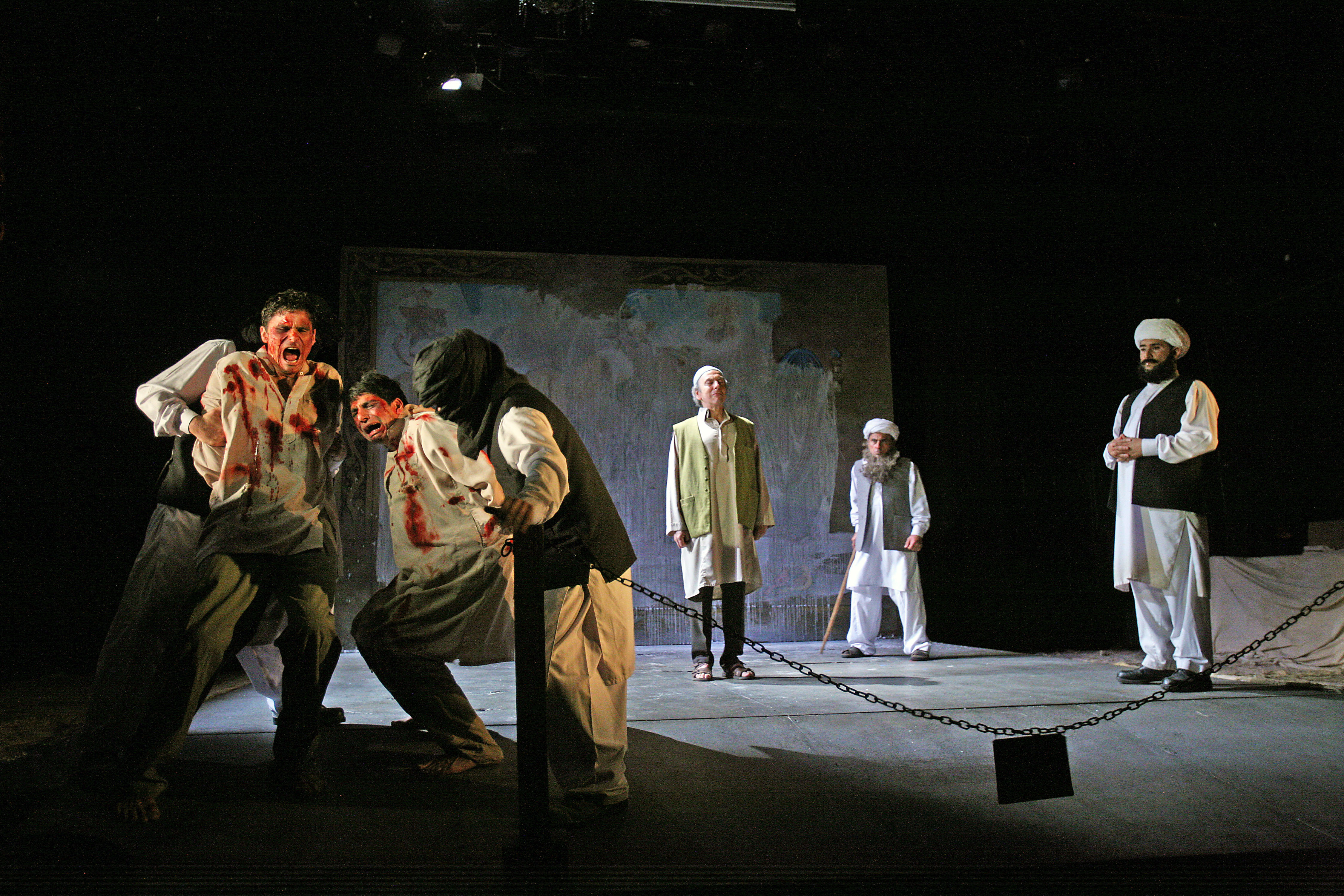
The second installment of plays is titled Communism, the Mujahideen and the Taliban and covers the time period of 1981 to 2001.  Communism, the Mujahideen and the Taliban begins with Black Tulips by David Edgar, which backtracks the Soviet war in Afghanistan from 1987 to 1981 from the USSR’s point of view.  While constantly reminding new soldiers that “They had been invited to Afghanistan,” various Soviet officers give newly deployed soldiers a pep-talk as to why their intervention is necessary.  Wood for the Fire by Lee Blessing zeros in on two CIA operatives as they work with Pakistan’s Inter-Services Intelligence to supply the Mujahideen with weapons and terrorist training to oppose the Soviets.  In Miniskirts of Kabul by David Greig a British journalist imagines a meeting with President Mohammed Najibullah while he is on house arrest in the UN compound in Kabul in 1992.  They discuss the Spice Girls, women being allowed to wear miniskirts, his beliefs and why he refused to go into exile once his regime had collapsed.  Communism, the Mujahideen and the Taliban ends with The Lion of Kabul by Colin Teevan showcasing the history Marjan, the one-eyed lion in the Kabul Zoo as told by a Taliban leader as a female UN director and her interpreter wait to find out news about two UN aid workers.  Upon learning the workers have been killed, the UN director reluctantly allows the Taliban to render punishment to the men responsible for the aid workers’ deaths, which happens to be feeding them to Marjan.

The third segment of The Great Game: Afghanistan is Enduring Freedom which spans from 2001 to the present day.  Enduring Freedom opens with Honey by Ben Ockrent and focuses on a CIA agent who tries to enlist the help of Ahmad Shah Massoud right before his assassination on September 9, 2001.  The title of the play refers to the “honey pot” Massoud was promised for his assistance.  After Massoud is assassinated, footage of the World Trade Center attack on 9/11 is shown.  Following the 9/11 attacks The Night is Darkest before Dawn by Abi Morgan centers on an Afghan widow that returns to her village to re-open her deceased husband’s school and recruit her niece as a student.  On the Side of the Angels by Richard Bean is the penultimate skit and features an aid worker who is forced to get involved in Afghan politics after a girl is betrothed to an older man to settle a dispute.  The play comes full circle with Canopy of Stars written by Simon Stephens.  It centers on two British soldiers guarding the Kajaki Dam; they exchange views on military intervention in Afghanistan right before a battle. 

The Great Game: Afghanistan and its myriad of carefully crafted skits reveal that the true game played in Afghanistan was an exhaustive, expensive game of chess in which the pawn became such a powerful player that it began to usurp control from the strategists setting the rules.  The realities of the effects of war and the manipulation behind it become all too real after watching The Great Game: Afghanistan.  Whether viewed in its entirety or in segments, this play gives its viewer as much as it takes away.  It represents what is great in theater; it expands your consciousness and challenges your perception of the world we live in.   Upon walking into this production your views about global terrorism, 9/11, Islam may be clear, but by the end of the play your perception may be a little muddled.  The Great Game: Afghanistan is the equivalent to walking into a snow globe that pops while shaking.  Before the shaking all your ideas are calm, resting in the annals of your mind, but afterwards the certainty of your thoughts are scattered and can never be collected back into the bubble.  It my sincere hope that The Great Game: Afghanistan will return to NYC soon so that all New Yorkers will have the opportunity to witness this stimulating work.  The actors, who play multiple roles, are intense; their dedication to the entire production exquisitely shines through in every play.  In the times we live in, The Great Game: Afghanistan is a must see –it is a mental marathon, but one well worth running.

Photos: John Haynes
The Art Of A Great Bamboozle


This season the essence of C.S. Lewis is alive and well on stage.  One incarnation of the atheist turned Christian apologist, novelist, lay theologian and academic was in the form of the man himself in Freud’s Last Session, a drama depicting a fictional meeting between Lewis and Sigmund Freud.  The other appears in an adaptation of The Screwtape Letters, one of his most popular works, by the Fellowship for the Performing Arts.  The book, published in 1942, is a series of letters authored by Screwtape (a senior demon in the dominion of hell) to his nephew Wormwood (a junior tempter just recently sent into the world).  Screwtape’s annotations offer the young demon a guide on how to lead a man down the path of damnation towards “Our Father Below” (the Devil) and away from “The Enemy” (God).

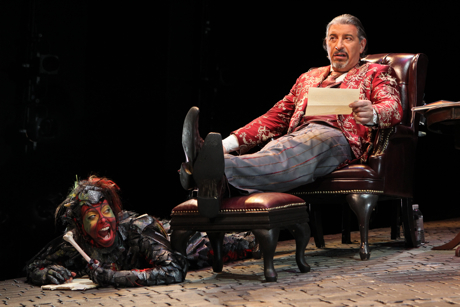
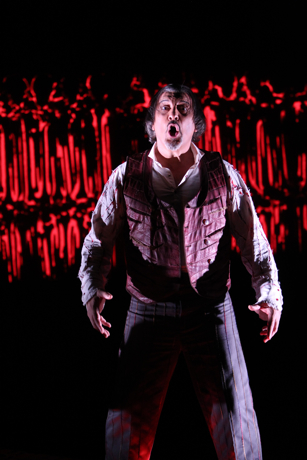
Playing at the Westside Theatre, The Screwtape Letters is a 90-minute mental gobstopper.  As the play opens, His Abysmal Sublimity Screwtape is addressing The Graduation Banquet at the Tempters College for Young Demons.   As the spirits of Hell feast on the numerous human souls they have swayed from “The Enemy,” Screwtape reminds the neophytes that although the substance of their supper does not have quite the same zing as true evil-doers like Hitler, there are plenty of humans willing to take the slow methodical road to the underworld by committing smaller sins.  His chilling speech is an eerie reminder of the phrase, “We are in the last days,” an expression my aunt would always say when adding her two cents about the news.  But it was not until I witnessed this scene that I realized the last days did not mean the 20th or 21st century, in fact, my aunt was referring to every day after the infamous apple bite.  Following the banquet scene, the rest of the production is carried out in Screwtape’s office, which is constructed of bones. 

Besides his scowling, transforming minion Toadpipe (played by Beckley Andrews), Screwtape is the only character that appears on stage.  Wormwood, “The Enemy”, “Our Father Below”, Slobgob, “The Patient” (The young man Wormwood is attempting to beguile) and “The Woman” (The Patient’s love interest) are all unseen characters that are vividly resurrected through Screwtape’s salacious soliloquy.   The Screwtape Letters is a timeless piece of work that needed to be reintroduced to the public more than ever before.  Indeed with the global economic state, constant threat of terrorism and conflict and the slow disintegration of man’s respect for nature and his fellow man, there is not one human being that can afford to miss this production.

Max McLean co-wrote and co-directed this adaptation and brings the letters to life in glorious fashion.  As Screwtape he is evil personified.  The disdain he exhibits for humans and God as well as the lusty pleasure he receives from devouring souls is completely convincing and compelling.  I was gobsmacked by the God smack that was delivered to my state of consciousness.    In fact, amusement is only one of the functions of this show, the other (and I believe chief) reason for this production is to present a thriving, thorough account of how man can be so easily led down the primrose path.  Screwtape, Wormwood and those who work for “The Enemy” are spirits, humans, as Screwtape puts it, are “amphibians—half spirit and half animal.”   It is the animal half he instructs Wormwood to target when tempting “The Patient’s” spirit.  He outlines how pride, religion, pleasure (a device created by God) can be viable tools for manipulation.  He details how prayer can cause immediate action by “The Enemy” and a demon’s best time to strike is during quiet times of reflection.  But the most significant disclosure Screwtape shares with his nephew is the law of Undulation which is, “the repeated return to a level from which they (humans) repeatedly fall back, a series of troughs and peaks.”  The satirical commentary ends with Wormwood losing “The Patient” to “The Enemy” and becoming worm bait for Screwtape and Toadpipe.

Revelations 20:20 is an idiom I say when referring to the clarity that is gained by hindsight.  Watching The Screwtape Letters brought to life on stage offered more of a revelation than I ever anticipated.  The audience learns that every transgression counts.   In the end, all of Screwtape’s devices to entice us with vices leads to one well-known (but often forgotten) conclusion, the Devil and his sycophants are liars whose misdirection is the most direct passageway to becoming tasty morsels at Hell’s buffet.  Hats off to Max McLean for reminding us that we are all soldiers in the war for our souls, The Screwtape Letters ends its New York run on January 9, FAMERS make sure this show is the only trip to Hades you ever take.

Photos:  screwtapeonstage.com/gallery

Mistakes Is a Good Thing


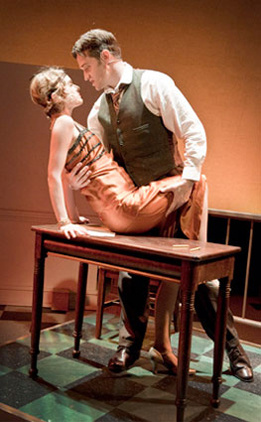
Mistakes Were Made could be an apropos slogan for the Democrats considering the colossal clobbering they received on November 4 in Washington, but in this case Mistakes Were Made happens to be the title of a riotous play written by Craig Wright, directed by Dexter Bullard and showcasing the extraordinary talent of Michael Shannon.

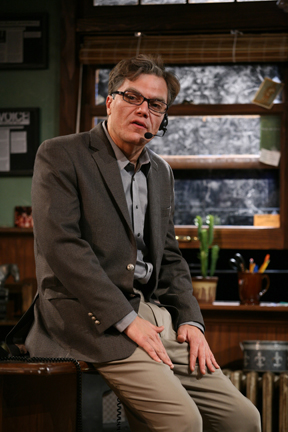
Shannon plays Felix Artifex a man with big dreams and even bigger failures.  He is a B-List (teetering on C-List) Off-Broadway producer whose character can best be described as one part good guy and three parts BS artist.  Felix is obsessed with three things: bringing Mistakes Were Made to Broadway, contacting his estranged wife and feeding is fish to the point of peril.  The audience is introduced to him sitting in a cluttered office filled with scripts, board games and posters of past pedestrian productions.  Believing that Mistakes Were Made will emancipate him from the lackluster life he has led, the slippery slope Felix rides to utter insanity, then clarity begins with him on the phone trying to convince the Hollywood actor du jour to star in Mistakes Were Made, a play based on the French Revolution.  When the actor begins to edit the script, Felix goes into schmooze mode feeding the actor a line of malarkey longer than 5th Avenue in order to get what he wants.   He then does the same to playwright who refuses to change the play.  With all the lines of his telephone blowing up, Felix slides deeper into an abyss of bombastic blunders as he tries to cajole then bully the young writer into altering his original vision all while desperately attempting to reach his wife and back out of a business deal gone awry.

The only thing keeping him sane is the reflective talks he has with Denise, his fish, while overfeeding her.  He shares with her his dreams of making Mistakes Were Made a smash hit and of the mediocre career he has led which will surely be rectified with this show.  The fish is the perfect reflection of his personality.  Her ambition to eat every pellet of food will ultimately lead to her destruction as Felix’s half-truths will lead to his debacle.  His constant reference to the title Mistakes Were Made is suitable considering he is making so many on his road to glory.  Eventually his zealousness leads to an epic explosion of his dreams and the death of his beloved Denise.  As he sinks to the floor in utter despair, I could not help but focus my eyes on the Sorry board game resting underneath a shelf.  Perhaps that game exquisitely sums up his attitude about the events that have transpired.  As the play closes Felix begins to earn the redemption he so desperately seeks as he ventures to repair the damage that he caused by calling the playwright to extend an olive branch.

So I ask can mistakes be a good thing.  Absolutely when it involves Michael Shannon, he holds this riveting character study on his shoulders with the same ease as Atlas lifting up the world.  Shannon makes Felix a shyster with a soul.  His desire to become greater and repair past errors is relatable and commendable and the manner in which he does it is amusing as hell.  Fueled by great dialogue, Mistakes Were Made is hands down the wittiest show I have seen all season. It is a comical glimpse of what happens behind the scenes of a production before it hits the stage.  Mistakes Were Made will be playing at the Barrow Street Theatre until January 2, any theatergoer that misses this show will themselves have engaged in a folly that is unforgivable.  

Photos:  Ari Mintz

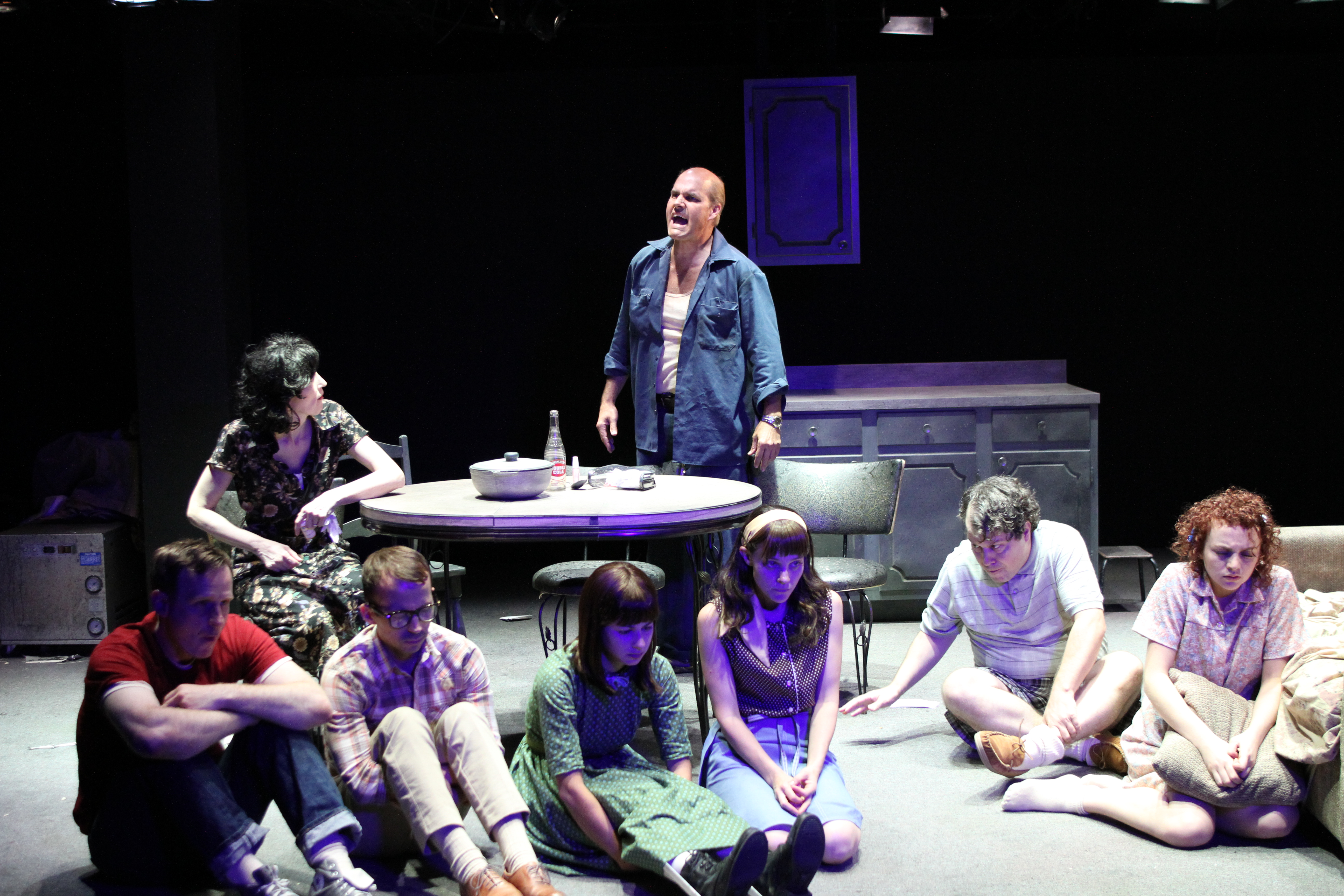
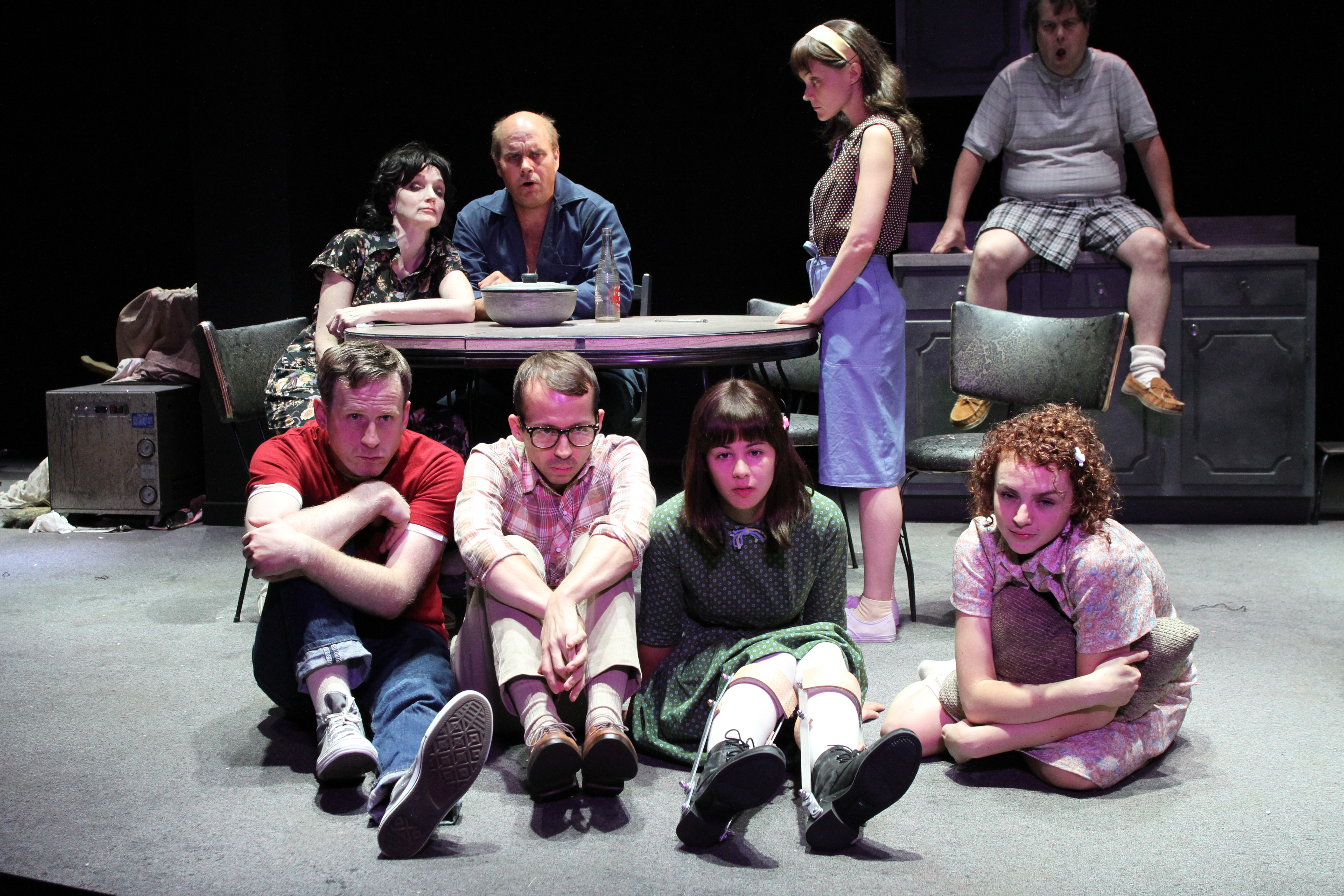
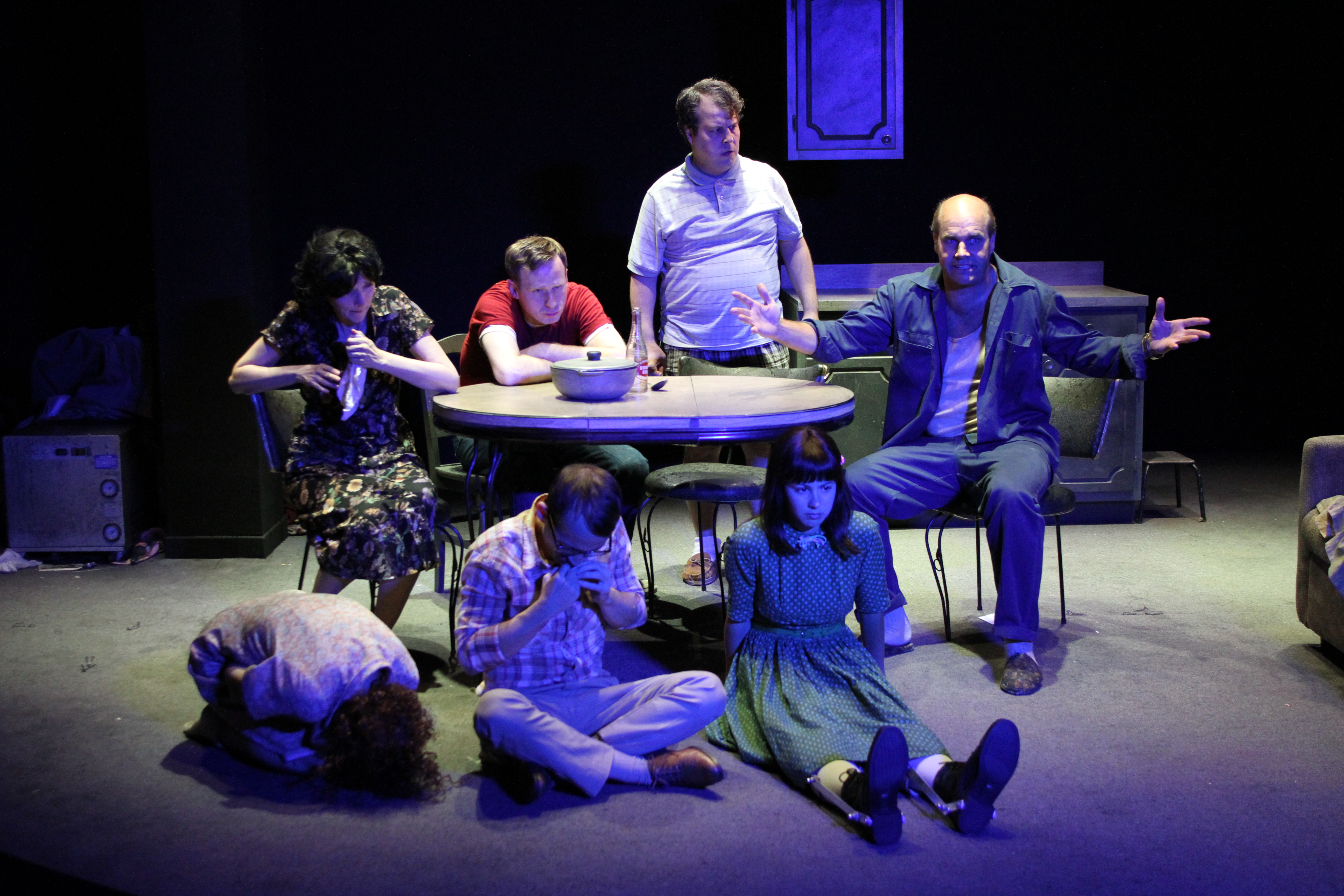
What Lies Underneath

In 1965 a teenage girl and her polio riddled sister entered the Indianapolis home of Gertrude Baniszewski.  As the landscape of America radically shifts with the Vietnam War, civil rights movement and the Beatles, the reality of this 16-year-old girl also dramatically changes, she is systematically tortured for three months by the woman who was suppose to take care of her and her sister.  Baniszewski also enlists neighborhood kids and her own children to assist in the torture.  On October 26, the young girl died of a brain hemorrhage, shock and malnutrition; her name was Sylvia Likens.

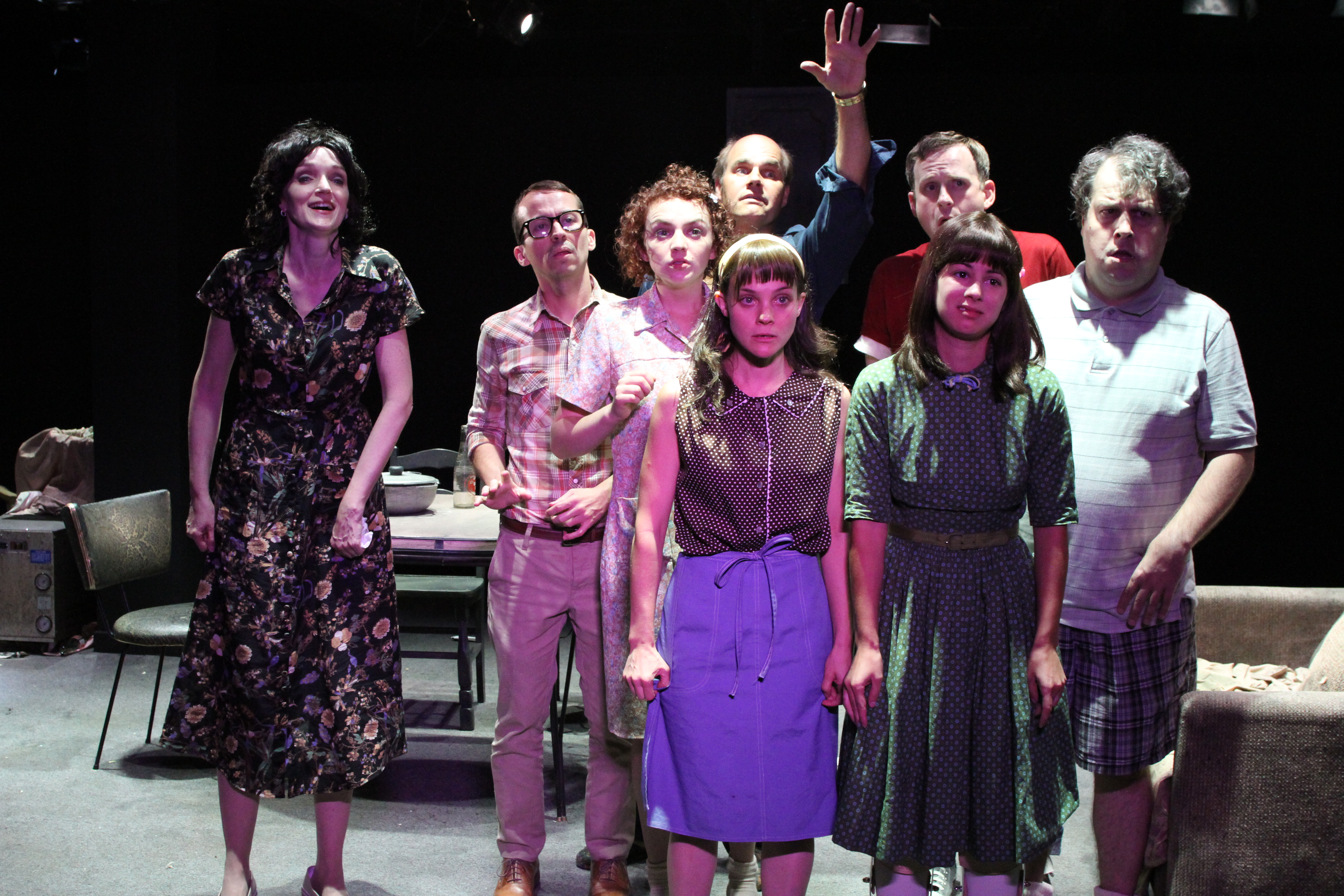
Just in time for Halloween, Axis Company resurrects the spirit of Sylvia Likens and the events surrounding her death in Down There.  From the moment you receive the program (a blank white sheet with the words “down there” written in lowercase and outlined in red crayon) the awareness that the production will not be a regular night at the theatre becomes heightened. Down There is playwright Randy Sharp’s chilling, dark multimedia showcase of an individual’s spiraling descent into madness and violence.  Although the play is based on the torture and murder of Sylvia Likens, the plot mainly centers on Pat Menckl (Gertrude Baniszewski).   A sickly, unhappy woman, Pat Menckl and her boyfriend Frank appear to be on the edge of destruction and the hint of abuse is apparent in the opening scene.  Her kids Jim and Paula and Rickie and John (the other teenagers entrusted to her care) are the poster children for dysfunction.  This thrown-together family unit appears to be experts on the trickle down theory – Frank humiliates Pat who demeans Paula who degrades John.  The only time the audience is presented with some modicum of family harmony is when forced smiles are presented as Casey Kindens (Sylvia Likens) and her sister Joyce are dropped off and later when Casey becomes the object of their abuse.

Pat is woman who has clearly grown up and lived “the hard way.”  Her frail figure, red lipstick and vacant eyes look more macabre under the naked spotlight and she wears her dysphoria like a church frock.  Casey’s bubbly, talkative personality not only clashes with Pat’s “misery loves company” approach, but seems to set Pat on her path of terrorism.   She seems hell-bent on breaking Casey’s spirit and showing her the harsh reality of life.  The violence Casey endures in the basement of the Menckl home is not graphic, but the suggestions of torture coupled with visions of Casey’s innocent smile on the monitor and her voice as she recites a note she is forced to write her parents explaining her bruises, haunt the audience with the reality of Casey’s demise.

The cast is comprised of Axis Company members; they deliver fright better than any modern horror flick.  Laurie Kilmartin portrayal of Pat combines all the elements of a villainess – she is Mrs. Bates, Mrs. Voorhees and Cruella De Vil rolled into one.  Lynn Mancinelli gives a convincing depiction of the Casey, her naivety and her eagerness to make the best of her situation is as compelling as her smile.  David Crabb and Brian give the scariest performance in this production as Rickie and John.  The willingness to participate in Casey’s torture and the fiendish pleasure they take in doing so tingles the skin with itches that cannot be stratched.  Britt Genelin and Jim Sterling are equally as troubling as Paula and Frank.  They give stark portraits of unbalanced people.  The set displays a dreary home and the mute Joyce, played by Regina Betancourt, becomes part of the bleak backdrop.  Her somber disposition and unwillingness to speak adds another layer of torture to this production.

Morbid and uncomfortable to witness Down There leaves the audience without a cathartic experience or sense of understanding as they rise from their seats.  Other than the fact of pure lunacy, the reason for their heinous acts remains a mystery.  But what is clear is that sometimes what lurks below a smile and display of normalcy can be a beehive festering with evil – a thought more disturbing than the boogeyman under the bed but necessary to know.  Down There will be playing at Axis Company, located at 1 Sheridan Square, until October 30.

 Photos courtesy of Axis Company

Under the Sea

There is something about a puppet show that seems to resonate with the child in all of us.  Regardless if you are seven or 70, live in a penthouse or a one bedroom walk up or are mother and father of 10 or singles looking to relive your childhood for just a brief moment, a puppet show equalizes all playing fields with smiles and laughter.  And pure joy is what awaits anyone that spends 50 minutes in the undersea world that John Tartaglia creates.

John Tartaglia’s Imaginocean! is a delightful sub-aquatic excursion that brings the three dimensional world of the deep to life with a musical that is treat for children and adults.  The main characters in this romp of currents and discovery are a fish named Dorsel, his sister Bubbles and their friend Tank.  Through their quest for treasure these friends find more than money, they meet new friends and learn lifelong lessons.

The freshness of John Tartaglia’s Imaginocean! comes in the form of black-light, which makes the color puppets pop and become animated.  The audience feels as if they are below the depths of the sea with the fishy friends and experience every laugh, song and dance in a much livelier way than other puppet productions.  Filled with good music and good times, John Tartaglia’s Imaginocean!  is one of off-Broadway’s best productions for a family.  This show is smart, innovative and cool, I have no doubt it will continue to swim in a wave of success.

Stomping Through the Decades

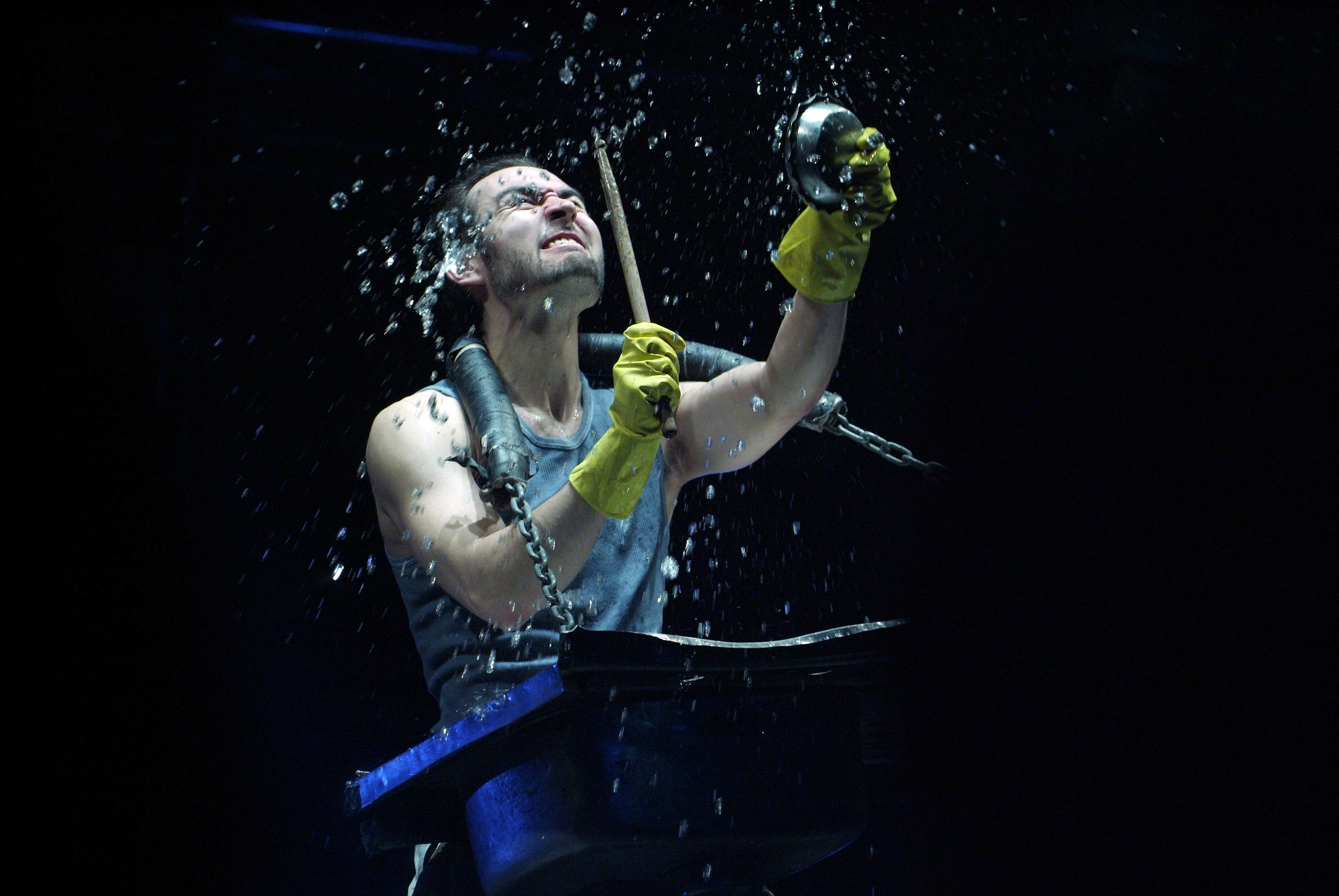
Thumping, bumping, jumping, banging, crashing, ripping, prancing, dancing and running literally, Stomp has been entertaining audiences at the Orpheum Theatre since 1994 and is one of the theatre world’s longest running productions.  It is also one of the world’s most recognizable productions.

Stomp is an anomalous theatrical sensation that unifies its cast and the audience through rhythm, energy and movement.  This non-traditional dance collective was created in the U.K. by Steve McNicholas and Luke Cresswell after first working together in 1981.  In the summer of 1991, a decade after their initial union, Stomp premiered at Edinburgh’s Assembly Rooms.   From 1991 through 1994 the original cast, which had been expanded to 30 members, brought this unique multi-dimensional experience to audiences in Sydney, Hong Kong, Barcelona and Dublin, and also began its run in New York.  Currently, Stomp is still running in the U.K. and Manhattan and has tours in the U.S., Europe and Japan. 

After 19 years abroad and 16 in New York City in particular, Stomp continues to wow audiences with its dynamic brand of performance theatre.  Last weekend I decided to start of my July 4th celebration by finally seeing this production for myself.  Sure, after all the buzz Stomp has created over the years I have seen excerpts of performances on television, but nothing is like seeing the real thing live.  I was not prepared for the stunts I saw.   Talk about spectacle …Macy’s 4th of July fireworks looked like a Lite-Brite exhibition compared to the electrifying commotion displayed on stage.

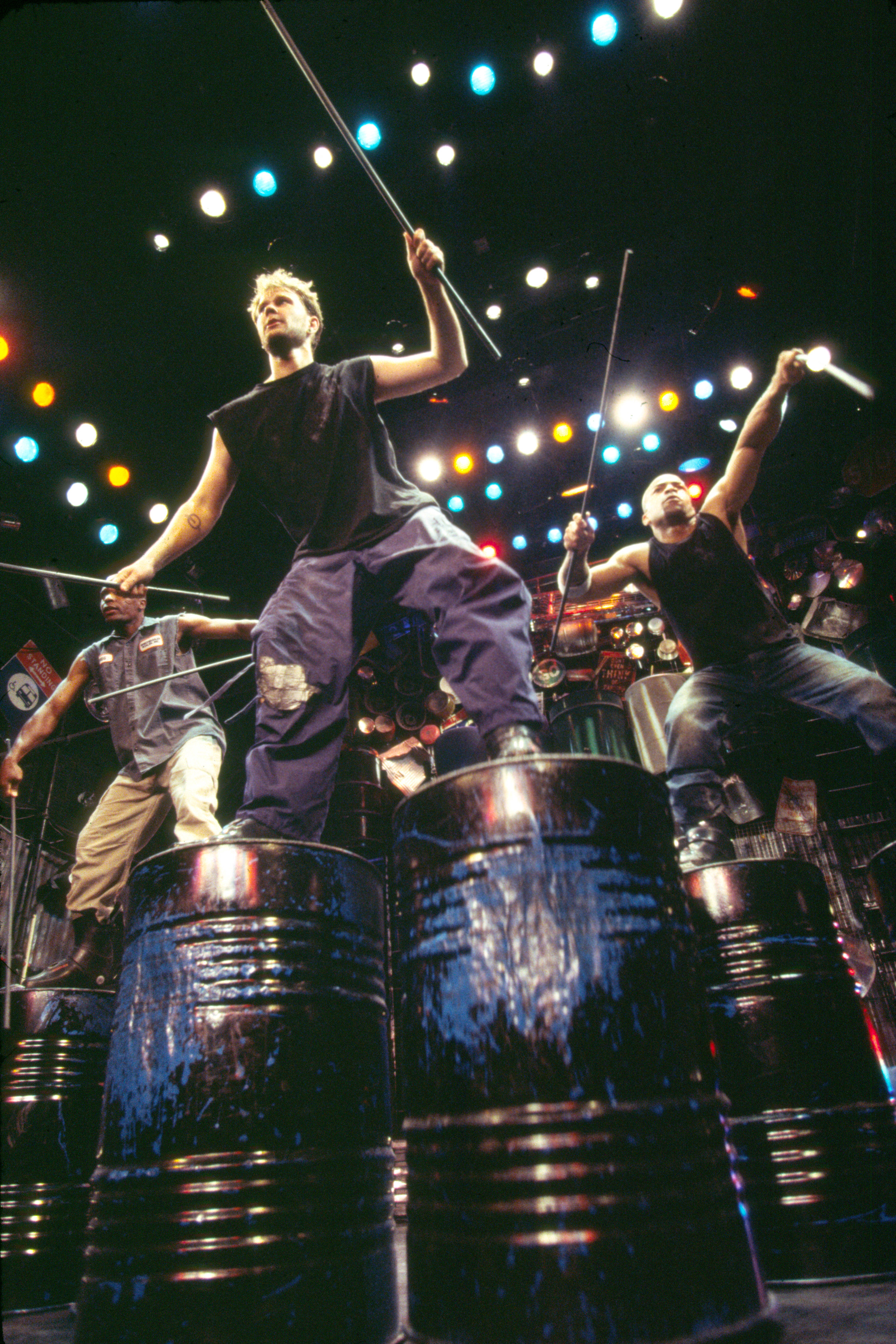
The walls of the Orpheum Theatre were littered with a hodgepodge of discarded items included traffic, subway and street signs,  huge plastic garbage cans, fans, pipes, mannequin tops and bottoms, fans, hub caps, ski boots, car grills and computer keyboards.  The components, dilapidated and carefully hung on the walls, appear to regain their value and look more like a collage about movement and the way humans interact with inanimate objects than a bunch of junk.  The show runs without an intermission and is a mind-bending ride of pure adrenaline.  There is no dialogue, recognizable musical score or traditional choreography.  But there is plenty of synchronized velocity.  The show has a rotating cast and unlike some productions the sum of the cast’s vivacious exchange on stage is greater than its parts.  Using their feet, hands, pipes, sinks, plastic bags aluminum trash cans and lids, newspapers, matchboxes, brooms and Zippo lighters, the cast turn random objects into a symphony of beats even getting the audience involved.  Through clapping and snapping of fingers and hands, the swapping of energy comes full circle and the cast and audience becomes one.

At its core, Stomp is about fusing diversity and commonality. The dancing and music that is created possesses a very tribal feel and through the rhythmic and comedic elements in the show the audience realizes that no matter where we come from, we are all from the human tribe.  A revolution then and a revolution now, Stomp is still one of the most unique theatre experiences on off-Broadway.   Entertaining on multiple levels, great for families as well as couples and singles, Stomp is a shot of fun made for everyone.  After experiencing it for myself, I completely understand why this pulsating production has had such longevity.  If all these sci-fi films are correct and space is the final frontier, I predict Stomp and its many incarnations will still be around clanging on hulls of old spacecrafts and bouncing on crevices of the moon.

Photos:  Junichi Takahashi and Steve McNicholas courtesy of Stomponline.com

Gawk and Awe

Dozens of strangers corralled into a wide dark space unsure of what will happen next.  Strobe lights are overhead as the DJ spins electro-tech sounds.  I’m no stranger to clubs (in fact they are my second home) and this definitely feels like one.  There is barely anywhere to sit and I began to think to myself, “I thought I was going to see a show.”  But before I could get lost in my thoughts, it began.

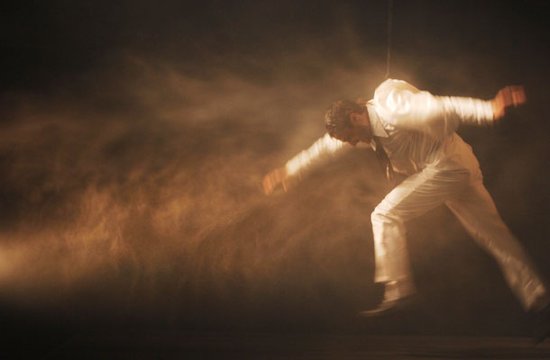
A man dressed in a white suit begins to run on a treadmill.  He accumulates speed as simulated wind and rain try to block him.  In a flash a loud shot rings in the air, my heart briefly stops.  He is shot and pauses, but the action is just beginning.

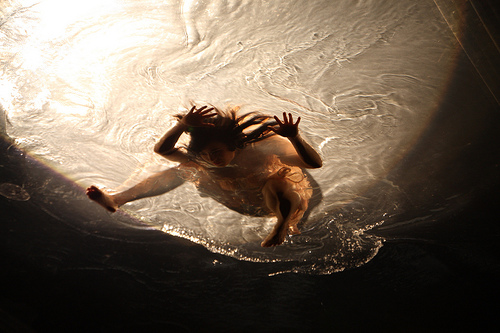
Fuerza Bruta Look Up is an explosion of performance art.  From start to finish it is a marathon of aerial acrobatics and constant movement, even the audience gets to participate.  As a member of the audience you move from one end of the theater to another following the show as the cast moves from one form of movement to the next.  You become part of the experience as the cast joins the audience to revel, break boxes of confetti over willing audience members’ heads and dance as water is sprayed from above.  And if you enjoy watching women in baby doll frocks slosh around in water, Fuerza Bruta Look Up has that too. 

It does not matter how you feel when you enter.  The vibes are so kinetic that you will leave soaked with bolts of energy to carry you through the rest of the night.  Fuerza Bruta Look Up is an out-of-the-box celebration that can be enjoyed by young and old.  It is provocative and absolutely the best fusion of art, nightlife and theater I have ever witnessed.  It is carnival on steroids.  Look up, look left, look right, but I guarantee you will not look away.


Photos courtesy of  fuerzabrutanyc.com

Paradise Rediscovered

Did the paradise F. Scott and Zelda Fitzgerald constantly crave eventually evaporate, or was it ever really there to begin with?  This is the question that has made the public fascinated with F. Scot Fitzgerald and his wife Zelda since the roaring ‘20s.  It may have been a question that they separately explored before their untimely deaths.  It certainly seemed to be the focus of This Side of Paradise, the engaging new musical playing at the Theatre at St. Clements until May 23. 

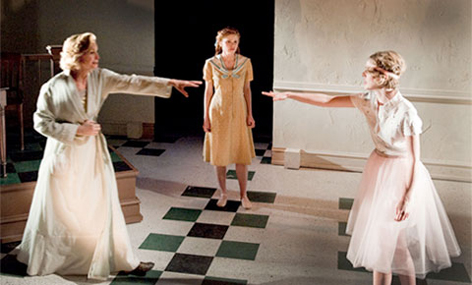
This Side of Paradise examines the lives of F. Scott and Zelda Fitzgerald and finally gives Mrs. Fitzgerald her say.  The musical is told through Zelda’s perspective and opens with Zelda in a psychiatric hospital trying to make sense of her life with F. Scott Fitzgerald by obsessively reading his novels.  As she opens up to the doctor, played by Michael Sharon, the audience is able to peer into the past and watch as The  Fitzgeralds meet, fall in love, become the toast of the jazz age and ultimately grow farther and farther apart.  Because the musical is told through Zelda’s eyes, the story is even more fascinating.  In each one of F. Scott Fitzgerald’s novels we are able to see his perception of life and love; it is stimulating to witness a piece of fiction that expresses Zelda’s point of view.

Although the paradise of the Fitzgerald’s world may have been far reaching or even nonexistent, the rapture of their care-free, hedonistic, somewhat reckless yet always intriguing relationship with the public is wonderfully and tragically captured in this production.  Born from concept of Nancy Harrow’s jazz compilation Winter Dreams which details in song the relationship between F. Scott and Zelda Fitzgerald, This Side of Paradise is as rich with beautifully crafted music and lyrics as the language in one F. Scott Fitzgerald’s novels. 

Nancy Harrow really hits the mark.  The music in This Side of Paradise truly illustrates the zany, status seeking relationship that the Fitzgerald’s shared as well as the obsession with youth and beauty that Zelda possessed throughout her life.  Songs like “Belle of the Ball”, “This Side of Paradise” and “Oh God, I’m Sophisticated” bring the world of the Fitzgerald’s jazz age to life with energy and vigor.  “Lost Lady”, “Until It Comes Up Love” and “The Extra Mile” paint a picture of the sadness of unrequited satisfaction. 

The cast absolutely excels in bringing Nancy Harrow’s music and lyrics and Will Pomerantz’s choreography alive.  Maureen Mueller’s voice is a treasure; she is completely mesmerizing as Zelda.  Rachel Moulton’s and Michael Shawn Lewis’ portrayal of F. Scott and Young Zelda Fitzgerald is superb. Together they seize every opportunity to show the Fitzgerald’s rollercoaster relationship and captivate the audience the way the real F. Scott and Zelda did in life.  Though the part of Scottie, the Fitzgerald’s only child, is small, Mandy Bruno is exhilarating and makes an indelible impression.  Her voice is as lively as a breath of fresh air.

Although the scene changes can be a bit distracting, This Side of Paradise provides an animated understanding about the complex world of F. Scott and Zelda Fitzgerald that may have been overlooked in books.  Co-book writers and creators Nancy Harrow and Will Pomerantz have a stuck musical gold.  Whatever happiness Zelda failed to achieve in life the success of this musical has surely made up for it. 

 Photos:  Lee Wexler

Time Traveling With The Scottsboro Boys

All aboard!  This train is travelling to Dixie, but not the “Hooray Dixie Land” sung in lyrics, it is Jim Crow’s Dixie that is the subject matter of this musical.  The Scottsboro Boys, playing at the Vineyard Theatre, is a portal into a time in America’s history that has been forgotten.  It almost seems peculiar that a story as heavy as the Scottsboro Boys trial,  a series of trials in which nine black youths were tried and convicted of raping two white women, would end up on stage as a musical, but it is the musical numbers that makes the subject matter more palatable.  The musical takes on some of elements of minstrel show and is a nonstop rollercoaster of emotions.  At times I was offended, other times I was brought to the brink of tears and at certain times I could not help but to burst with laughter, regardless of what I was feeling I was always entertained.

I enjoy viewing productions in which the actors play multiple roles because the audience gets a true glimpse of the actors’ range.  The cast with exception of Sharon Washington (the omnipresent female figure) play several parts and the character changes are as smooth as the choreography. 

Each character was thoroughly developed and the passion for the material was reflected in the actors’ performances. Another interesting aspect of the production is the cast with exception of the Interlocutor, brilliantly portrayed by two-time Tony award winner John Cullum, are all black.   Watching black actors playing white southerners so convincingly proved the level of depth and talent that illuminated the stage.  Lights make the actors come alive, but it is the actors that make the stage come alive.   

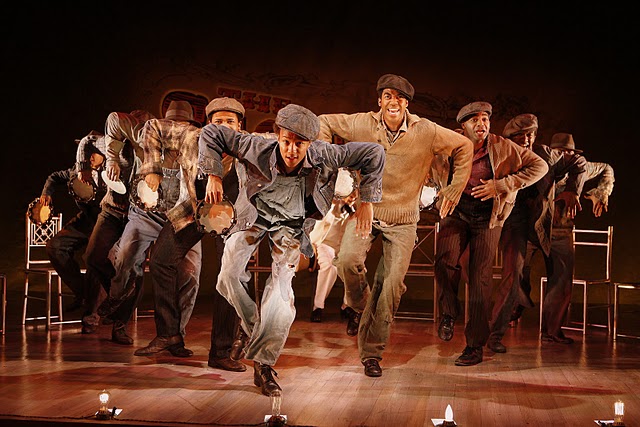
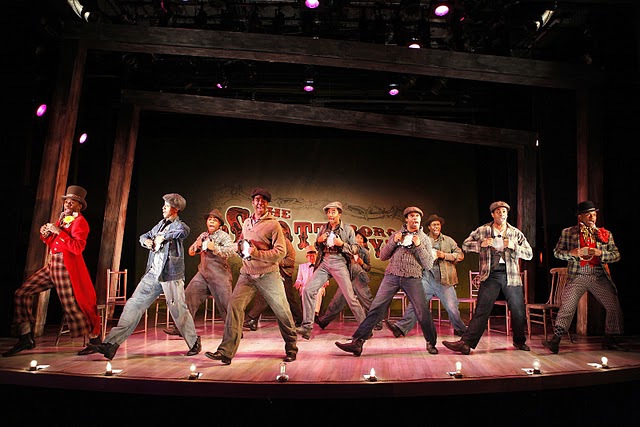
When the curtain opens with a woman waiting to get on a bus then the mood suddenly becomes electric as Mr. Bones, Mr. Tambo and the Scottsboro boys make a raucous entrance down the aisle steps to the stage for the first musical number “Hey, Hey, Hey, Hey.”    The set is basically comprised of chairs and wooden planks that are seamlessly transitioned by the cast to suit a scene or musical number, and it is the musical numbers that are the real treat of this production.  “Financial Advice” was a scream, “Make Friends with the Truth” was equally as hilarious, “You Can’t Do Me” was compelling, but my favorite was “Electric Chair.” 

The thought of turning capital punishment into a song and dance may appear to be reaching, but reaching is exactly what John Kander, Fred Ebb and Susan Stroman did and the result is a thrilling tap sequence that Bojangles and Gregory Hines would have been proud of.  From the opening number to the closing one, the songs and choreography transformed The Scottsboro Boys from experimental theater into a rootin’ tootin’ time.  I was completely mesmerized.

Bold, contemporary and filled with vigor, The Scottsboro Boys sizzles with electricity, hats off to the team of John Kander and Fred Ebb and Susan Stroman.  I also salute the cast; they worked like a well-oiled machine oozing with experience and raw soul.  In the wake of President Obama’s historic ascension to the highest office in our country, it may be easy for some, the youth in particular, to overlook this nation’s turbulent history with regards to race.  The most important component about The Scottsboro Boys is that it builds a bridge between the past and present and through quality art like this production an interest can be sparked inspiring us to learn more about the countless stories that prelude the day Rosa Parks decided not to go to the back of the bus.

Photos:  Carol Rosegg    

The Memory of Fashion

The pair of jeans I wore when I went roller skating and met the worst mistake of my life…the black suit that I have worn to every funeral since I was 25…the denim jumper I wore when I got my ears pierced at the age of 12…the navy blue straight leg silk pants with embroidered baby’s breath flowers I wore on my first overnight date with the man that taught me what true love really meant… all articles of clothing cloaked in memories.  It is true that women cling to the clothing they wore as events fill the chapters in the books of our lives, after all what’s a story without the accessories that give it vivid detail.  This notion is brilliantly and hilariously explored in the off-Broadway production of Love, Loss and What I Wore playing at The Westside Theatre.


Nora Ephron and Delia Ephron

Based on the best-selling book by Ilene Beckerman (and adapted for the stage by Nora and Delia Ephron) Love, Loss and What I Wore is a collection of stories performed by an all-star rotating cast that has included Rhea Perlman, Rosie O’Donnell, Rita Wilson and Tracee Ellis Ross.  Each cast performs in four week intervals.  The March cast stars Didi Conn, Fran Drescher, Jayne Houdyshell, Carol Kane and Natasha Lyonne. The play starts and ends with Gingy’s Story with other narratives woven in between.  The cast, dressed in black, sit and deliver the monologues. The set is a tapestry of dresses changing in color. 

March Cast

The play covers the full gamut of emotions from a fashionable perspective.  At times I was bursting with laughter and at others I found myself fending off the lump forming in my throat.  It even covers topics like the frenzy women experience when trying on outfits in the dressing room, the obsession with being fat or thin, the hell women put their feet through for a pair of sexy stilettos, all topics that drive women schizophrenic.   Other stories are more personal like Boots, an anecdote about neglect, even fashion icon Madonna was paid homage.

Beautiful, touching and filled with humor Love, Loss and What I Wore intimately tell tales that any woman can relate to and provide a little insight into a woman’s mind for the men sitting in the audience.  In fact, my greatest confirmation that this play is a must see was provided by the man that accompanied me.  This is a man that I thought had the inside track on women, but to my surprise he left the theater enlightened.  Mental note, the plum dress and limited edition patchwork Timberlands I wore when I helped a man from Mars learn more about the planet Venus.  A new memory has been created.

Photos:  Carol Rosegg courtesy of O&M Co.